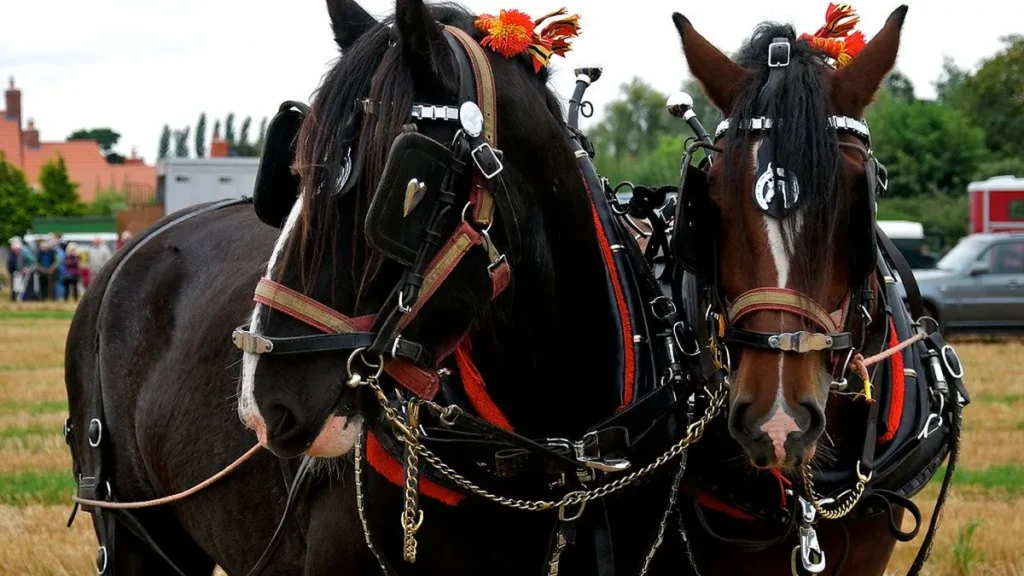
These dice games for 560 players take over an old village harness maker’s workshop for a full day, and every game here grows out of a real part of a driving harness. The workshop smells of leather and wood, the work tables are covered with straps and buckles, and the dice decide everything from the opening roll to the closing tally. Five hundred and sixty players sounds like a crowd, yet the day runs smoothly because the players are divided into small groups and every group plays the same nine games.
Each group has eight players at one work table, so seventy tables fill the workshop and the open ground outside it. A host stands at the front and calls each round, the tables roll their dice, and the tally sheets fill up round by round. Nobody needs to know anything about horses before the day starts. The games teach each harness part as the day moves on, and the rules are short enough to explain in a minute.
The whole day is built on points alone. No money is involved, and the only prize is the highest tally when the ninth round ends. What follows is the full plan: the shape of the day, the nine games, a table that sums them up, the points system, a short checklist, and answers to the questions every host asks.
Key takeaways
- 560 players play in 70 groups of eight, with nine rounds and one game per round.
- Every game uses a real part of a driving harness, from the hame to the collar.
- Points only; no money is involved at any point in the day.
- Each round lasts about fifteen minutes, with breaks between rounds.
- The winning group is the one with the highest tally when the ninth round ends.

How 560 Players Fit Into One Day
The day starts with the host dividing the players into seventy groups of eight. Each group takes a work table, and each table gets two dice, a tally sheet, and a pen. The host explains the opening game, the tables play it, and the tally sheets are updated before the next game begins. The toll-house dice games for 559 players ran the same way, with groups of eight and a host who called each round from the front of the workshop.
Nine rounds fill the day, and each round lasts about fifteen minutes. A ten minute break follows round three and another follows round six, with a longer pause for lunch after round five. The breaks matter more than they look. They give the host time to check the tally sheets, they give the players time to stretch and drink water, and they keep the pace brisk through the afternoon rounds.
Every table plays every game, so nobody sits out and nobody waits long for a turn. The dice stay at the table the whole day, and the only thing that moves between rounds is the game itself. By the end of round nine, each table has a full tally sheet, the host reads the totals aloud, and the day has a clear winner.
The Nine Games
The nine games follow the harness from front to back, starting with the hame that sits on the collar and ending with the collar itself. Each game uses two dice or fewer, takes about fifteen minutes, and can be explained in a minute. The treen maker dice games for 558 players used the same nine-round shape, with one game per round at each table.
1. Dice Harness Hame
The hame is one of the two curved wooden pieces that sit on the collar and carry the straps that run from the collar to the vehicle. Without two matching hames, the weight of the vehicle has nowhere to travel, so the harness maker shapes each hame to match the horse it serves. This opening game asks each table to build three full hames from a rack of separate halves.
Each table has a rack of wooden hame halves, and every half carries a number from one to twelve. Players roll two dice and add the totals. The total picks a hame half from the rack, and two halves with the same number make one full hame. The table that completes three full hames soonest takes ten points, the next table takes seven, and every other table takes three points for each full hame it finished.
2. Dice Harness Terret
The terret is the small loop of metal on the harness through which the reins pass, and a full harness carries a terret for every rein that runs from the driver to the horse. The maker puts each terret with care, because a rein that passes through the wrong loop pulls the horse off course. This game turns that careful work into a race against the dice.
Each table has a board with nine terrets, one after another, and a length of rein to pass through them. Players roll one die, and the number tells them which terret to pass through next. A roll of six lets the player pass through two terrets at once. Passing through the wrong loop costs the table its next roll. The table that threads all nine terrets soonest takes ten points, and every other table takes points for each terret it threaded before the round ended.
3. Dice Harness Crupper
The crupper is the strap that passes under the tail and keeps the harness from sliding forward over the horse. It must sit snug without pinching, so the maker cuts it to suit the horse exactly. This game asks each table to find the right length by the dice alone.
Each table gets a crupper strap with holes numbered from one to twelve, and a fixed peg that marks the length the strap must reach. Players roll two dice and add the totals. The total is the hole the table must use, and the table earns points for how close that hole sits to the peg. A roll that lands exactly on the peg earns double points. The table with the highest total takes ten points, and the rest take points in the same way as the earlier games.
4. Dice Harness Breeching
The breeching is the broad strap around the hindquarters that slows the vehicle when the way runs downhill. It takes the weight of the vehicle on every descent, so the maker sets its tension with care. This game asks each table to choose a tension number and then live with what the dice give.
Each table chooses a number between two and twelve before the round begins, and that number stays fixed for the whole round. Players roll two dice and add the totals. If the total sits within one of the chosen number, the table earns two points. An exact match earns five points. The table with the highest total takes ten points, and every other table keeps the points it earned along the way.
5. Dice Harness Martingale
The martingale runs from the strap under the belly to the noseband, and it steadies the head of the horse so the reins stay even. A martingale that is too tight pulls the head down, and one that is too slack lets it toss. This game rewards a steady rise, because a rising run of totals steadies the head just as a good martingale does.
Each table rolls three dice and adds the totals, one roll after another. If each roll is higher than the one before it, the head steadies and the table earns three points for the run. If a roll comes in lower than the one before it, the run breaks and the table starts again from nothing. The table with the longest rising run takes ten points, and every other table takes points for its best run.
6. Dice Harness Blinkers
The blinkers are the leather flaps beside the eyes of the horse that limit what it sees to the front. A horse that can see sideways spooks at every movement, so the maker shapes the blinkers to block the side view and keep the horse calm. This game puts the players behind blinkers of their own, because they must call a dice total they can only partly see.
The host covers part of the dice with a blinker card, so each table can see only a corner of the roll. Players call the total from what they can see, and a correct call earns three points. A wrong call loses the points for that roll. The table with the most correct calls when the round ends takes ten points. A single pip hidden under the card can turn a seven into a nine.
7. Dice Harness Buckle
The buckle holds every strap on the harness together, and a harness carries more buckles than any other single piece. The maker keeps buckles in three sizes, and each strap needs three buckles of the same size to hold it firm. This game asks each table to gather matching buckles by the dice, and the table that finishes two straps soonest takes the round.
Each table has a pile of buckles in three sizes. Players roll one die. An odd number takes a small buckle, and an even number takes a large one, while a roll of six takes a buckle of any size the table chooses. Three buckles of the same size complete one strap. The table that completes two straps soonest takes ten points, and every other table takes three points for each strap completed.
8. Dice Harness Rein
The reins run from the driver to the bit, and they must stay even or the horse turns toward the shorter rein. The maker cuts the two reins to the same length, and the driver checks them before every journey. This game asks each table to keep two totals close together, because a wide gap between them means the reins have gone uneven.
Players roll two dice, one for each rein. If the two numbers sit within one of each other, the table earns three points. If they differ by more than three, the table loses one point. The table that keeps its reins even the longest earns five bonus points at the end of the round. The table with the highest total takes ten points.
9. Dice Harness Collar
The collar carries the weight of the vehicle, and it must suit the horse that wears it. A collar that is too small pinches, and one that is too large slips and rubs. The maker keeps collars in many sizes and matches each one to its horse by eye. This closing game asks each table to match collars to wooden horse models by the dice.
Each table has collars in five sizes and wooden horse models in the same five sizes. Players roll two dice, and the total picks a collar size. The table puts that collar on a model of the same size, and a correct match earns three points. A collar on a model of the wrong size earns nothing and costs the table its next roll. The table with the most correct matches when the round ends takes ten points and closes the day.
| Game | Players | What it tests | Minutes |
|---|---|---|---|
| Dice Harness Hame | 8 | Matching numbers | 15 |
| Dice Harness Terret | 8 | Passing terrets | 15 |
| Dice Harness Crupper | 8 | Closest hole wins | 15 |
| Dice Harness Breeching | 8 | Tension numbers | 15 |
| Dice Harness Martingale | 8 | Rising totals | 15 |
| Dice Harness Blinkers | 8 | Hidden totals | 15 |
| Dice Harness Buckle | 8 | Matching buckles | 15 |
| Dice Harness Rein | 8 | Two totals close | 15 |
| Dice Harness Collar | 8 | Collar sizes | 15 |
How the Points Work
The points system is the same for every game, so players never have to learn new rules between rounds. The best table in a round takes ten points, the next takes seven, and every other table takes three points for each part of the game it finished. Where every table finishes, the points come from the totals earned during the round. The host writes the points on the tally sheet after every round, and the sheet is read aloud so every table knows where it stands.
Bonus points are rare by design. A perfect roll in the crupper game earns double points for that roll, and the longest even run in the rein game earns five bonus points. Nothing else earns a bonus. The bowyer dice games for 557 players kept the same points-only rule, with no money involved.
At the end of round nine, the host adds the nine round totals for each table. The table with the highest tally wins the day. If two tables end even, a single extra round of Dice Harness Buckle decides it, and the table that completes one strap soonest takes the day. The host reads the final tally aloud, the winning table earns a round of applause, and the day closes.
Your 560-Player Dice Checklist
- Seventy work tables, eight players at each, with two dice at every table.
- Extra dice in a bag at the host table, in case a die rolls off a table.
- A tally sheet and a pen for every table, plus extra sheets for the host.
- Drinking water and a shaded rest area between rounds for every player.
- A clear plan for breaks: ten minutes after round three and after round six, with a longer lunch pause after round five.
- A printed list of the nine games, so every table knows what comes next.
Frequently Asked Questions
How long does the whole day take?
About five hours. Nine rounds of fifteen minutes make a little over two hours of play, and the breaks, the lunch pause, and the tally readings fill the rest. A host who starts at ten in the morning finishes before three in the afternoon.
Do we need real leather and brass?
No. The games use wooden models, paper tally sheets, and ordinary dice, and nothing in the games needs real harness leather. Real leather and brass are welcome on display at the front of the workshop, but the games work just as well without them.
Can children take part?
Yes. The games use simple addition, and every table can adjust the totals so younger players keep up. Children play at the same tables as adults, and the martingale game suits younger players, because it only asks them to tell whether each roll is higher than the one before it.
What if a table has fewer than eight players?
Tables with fewer players still play, and the host gives the table a fixed number of points for each missing player at the start of every round. The fixed number is three points, the same as the points a table earns for finishing a part of a game.
How do we keep the tally honest?
One host covers every ten tables, and the tally sheets are checked after every round. Totals are read aloud at the end of each round, so every table can hear its own total and raise a question at once if a total looks wrong. A tally that is read aloud is a tally that stays honest.
How do we settle an even finish?
A single extra round of Dice Harness Buckle decides it. The two tables roll in turns, and the table that completes one strap soonest takes the day. If the extra round also ends even, the host rolls one die for each table, and the higher roll takes the day.
The Bottom Line
Nine games, one workshop, and 560 players add up to a day that any group can run with dice, tally sheets, and a host who keeps the rounds moving. The harness gives the day its shape, the dice give it its surprises, and the points give every table a reason to care about the next roll.
Start with the hame, end with the collar, and let the tally decide the winner. A day built this way needs no special skill to run and no special knowledge to enjoy, and the players leave knowing nine real parts of a driving harness.