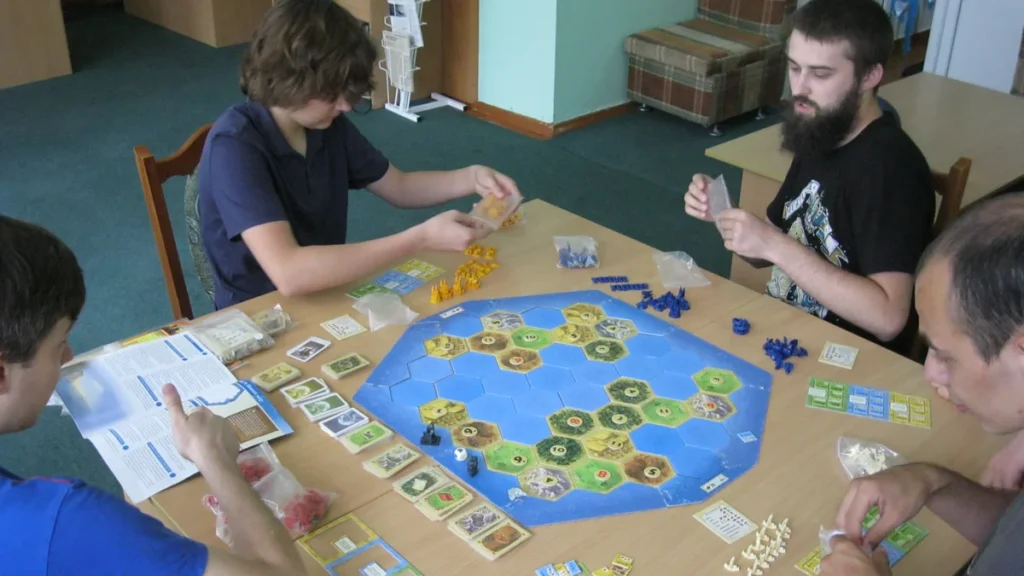
Four hundred and sixty-six players, one hall, and a basket of dice sounds like a recipe for chaos. It is not, as long as every table plays the same game at the same time and nobody waits for a turn that may never come. The trick is to treat dice night as dozens of small kitchens cooking the same dish at once.
That is why this guide is built around food. Every game below uses a kitchen or market idea anyone can picture in seconds, from a pasta night to a midnight snack scramble. Nobody needs to learn a complicated rulebook, and nobody needs to know anything about cooking. The food theme also gives hosts something to talk about between rolls.
The nine games here were chosen for a group of exactly this size. They work in a school hall, a community centre, or any hired venue with long tables and a loudspeaker. If you have run dice games for 465 players before, the shape of the night will feel familiar, but every game, every menu, and every scoring twist in this guide is new.
Key takeaways
- Split 466 players into tables of six, each with one shared dice kit and score sheet.
- Run every table on the same clock, with a host calling each round.
- Use food themes so new players understand each game from its name alone.
- Score with points and stamps, not money, and keep rounds under ten minutes.
- Rotate hosts between games so no table carries the whole night.

How to Run Dice Games for 466 Players
The first decision is the table plan, and it is the only one that really matters. With 466 players, tables of six give you 77 full tables and one table of four, which is 78 tables in total. Tables of eight would need fewer dice kits, but eight players around one tray means long waits between rolls.
Give every table the same kit before anyone sits down: dice, a tray to roll in, a pencil, a score sheet, and a card with the current rules. With identical kits, the host explains each game once, and a player who moves tables already knows where everything is. Buy dice in bulk and count them back afterwards.
Sound is the second thing to sort out. A hall with 466 people is loud even when everyone behaves, so use a loudspeaker with speakers at both ends of the room. Agree on one signal for the start and end of each round, such as a bell. Tables that finish early wait for the bell rather than starting the next game alone.
Keep scoring simple enough for a tired volunteer to add up without a calculator. Give one point for each completed dish or stall, and stamp the score sheet at the end of each game. At the end of the night, the table with the most stamps wins a small prize, such as a box of biscuits. Keep the prizes light.
The Nine Games at a Glance
The table below shows the shape of the whole evening in one place. Use it to plan your timings or print it on the back of the programme. Every game takes five to ten minutes, and the full set fits into an evening with a break.
| Game | What players collect | Time | Best for |
|---|---|---|---|
| Dice Pasta Night | Pasta shapes | 8 minutes | Warming up the room |
| Dice Salad Bowl | Salad ingredients | 8 minutes | Quiet, steady tables |
| Dice Cookie Jar | Cookies | 10 minutes | Fast, noisy rounds |
| Dice Farmers Market | Market stalls | 10 minutes | Trading and talking |
| Dice Spice Jar | Spice jars | 6 minutes | A quick breather |
| Dice Cake Decorating | Cake decorations | 10 minutes | Creative tables |
| Dice Fruit Stall | Fruit crates | 8 minutes | Families and mixed ages |
| Dice Kitchen Dash | Finished dishes | 10 minutes | The big energy peak |
| Dice Midnight Snack | Snack plates | 6 minutes | A gentle finish |
Notice that the two quickest games sit in the middle and at the end of the list. That is deliberate. A short game after the two longest ones gives tired tables a rest, and a short game at the end lets the night finish on time.
The 9 Dice Games for 466 Players
Each game below follows the same pattern so hosts can learn them quickly: how it works, the setup per table, and why it scales to 466 players.
1. Dice Pasta Night
Dice Pasta Night is the warm-up game, and it works because everyone already knows what a bowl of pasta looks like. Each player rolls two dice and adds a pasta shape to a shared table bowl: 2 penne, 3 spaghetti, 4 fusilli, 5 rigatoni, 6 tomato sauce, 7 cheese, 8 basil, 9 mushrooms, 10 olives, 11 garlic bread, 12 free choice. The first table to complete a bowl with all eleven items wins the round.
Setup is light. Each table needs a printed pasta bowl with eleven empty spaces, two dice, and a pencil. One player rolls, the whole table calls out the item, and the next player rolls. Because the bowl belongs to the table, nobody is knocked out early and nobody sits out a turn.
It scales because the rules fit on a postcard and the list is printed on the bowl itself. A host can explain it in under a minute, and a late arrival can learn it by watching one roll. A table that rolls badly still finishes, just a minute later.
2. Dice Salad Bowl
Dice Salad Bowl is the calm game of the evening, and every big night needs one. Each table shares a salad bowl, and each roll adds an ingredient. One die is rolled: 1 lettuce, 2 tomatoes, 3 cucumber, 4 carrots, 5 peppers, 6 dressing. If the ingredient is already in the bowl, the player tosses instead and scores a point. The first table to collect all six ingredients and three toss points wins.
Setup needs a printed bowl with six ingredient boxes and three toss circles, one die, and a pencil per table. The single die is a deliberate choice: no adding up, no fast player racing ahead, so a table with younger or older players can keep up without help.
It scales because it is quiet: after the noise of the first game, the room settles and the hosts catch their breath. It also uses only one die per table, so spare kits cover any table that loses a die under a chair.
3. Dice Cookie Jar
Dice Cookie Jar is the first fast game, and it is the one that gets the room shouting. Each table is a kitchen, and each player rolls two dice to bake cookies for the afternoon rush. Doubles bake two cookies at once, a total of seven bakes a full batch, and any other total bakes one cookie from a short menu. The table that bakes twelve cookies first wins.
Setup needs two dice per table, a printed cookie sheet with twelve empty boxes, and a pencil. The menu is short on purpose: chocolate chip, oatmeal, ginger, shortbread, sugar, and double chocolate. A player rolls, calls the cookie, and ticks a box. The table chooses which cookie a double bakes.
It scales because speed comes from the players, not from the host. The host only watches the clock and calls the leaders, while the tables run themselves. A table that bakes its twelfth cookie rings its bell, and the whole room hears it.
4. Dice Farmers Market
Dice Farmers Market is the trading game, and it is the most social game of the night. Each table starts with a random set of market goods, and each roll lets a player buy, sell, or swap. A roll of 1 or 2 buys a vegetable, 3 or 4 buys a fruit, 5 buys a flower, and 6 lets the table swap any two goods with the table next door. The goal is to hold one of every kind: vegetables, fruit, flowers, bread, cheese, and jam.
Setup needs a printed market stall card for each table, two dice, a pencil, and six small tokens to stand for the goods. The swap rule is what makes the game work at scale. Limit swaps to one per roll and only with the table on the left, so trading stays orderly.
It scales because it turns the size of the room into an advantage. With 78 tables in rows, the swap chain runs the length of the hall, and a jar of jam can travel five tables in five minutes. For more ideas on running a big room, the guide to party games for 464 players covers the same table-and-bell structure.
5. Dice Spice Jar
Dice Spice Jar is the shortest game of the night, and it works as a breather between the two longest games. Each player rolls one die and names a spice from the table card: 1 cinnamon, 2 paprika, 3 cumin, 4 turmeric, 5 nutmeg, 6 free choice. The table collects spice jars on its card, and the first table to collect all six wins. The whole game takes about six minutes.
Setup is a printed card with six empty jars, one die, and a pencil per table. That is all. There is no board, no tokens, and nothing to lose under a table. The free choice on a six keeps the game moving when a table is stuck on one spice.
It scales because it asks almost nothing of the players or the hosts. A tired table can play it without thinking hard, a new player can join without an explanation, and the host can run it while the next game’s kits are being handed out. Short games hold the evening together.
6. Dice Cake Decorating
Dice Cake Decorating is the creative game, and it gives players something to show each other at the end of the round. Each table shares a large printed cake with empty decoration spaces. A roll of two dice gives a decoration: 2 cherries, 3 sprinkles, 4 icing swirls, 5 candles, 6 chocolate curls, 7 strawberries, 8 edible flowers, 9 nuts, 10 sugar stars, 11 ribbon, 12 free choice. The first table to decorate the whole cake wins.
Setup needs a printed cake sheet with eleven decoration spaces, two dice, and a pencil per table. The decoration list is printed on the cake itself, so players do not need to remember anything. A player rolls, names the decoration, and ticks the space, and the table decides together where it goes.
It scales because the finished cake is visible from across the room. When one table holds up a completed cake, the tables around it can see the goal and speed up. It also rewards cooperation over speed alone.

7. Dice Fruit Stall
Dice Fruit Stall is the family game of the night, and it is the easiest for mixed ages to play together. Each table runs a fruit stall, and each roll stocks a crate: 1 apples, 2 oranges, 3 bananas, 4 grapes, 5 lemons, 6 free choice. The first table to stock all six crates wins the round. The rules fit in two sentences, which means a child can explain the game to a grandparent.
Setup needs a printed stall card with six crate boxes, one die, and a pencil per table. One die keeps the game slow enough for young players and fast enough for adults. The free choice on a six is the only twist, and it keeps the game from dragging when a table is missing just one fruit.
It scales because it is the game you can put at the tables with the widest mix of ages and abilities and trust it to work. It needs no reading beyond the fruit names, no adding up, and no strategy a new player could miss. On a night this big, a game everyone can play beats a clever game only half the room understands.
8. Dice Kitchen Dash
Dice Kitchen Dash is the peak of the evening, and it should be played when the room is at its loudest. Each table is a kitchen in the middle of a dinner rush, and each player rolls two dice to finish a dish. Totals of 2 to 4 finish a starter, 5 to 8 finish a main course, 9 to 11 finish a dessert, and 12 finishes a dish of the table’s choice plus a bonus point. The first table to finish two starters, two main courses, and two desserts wins.
Setup needs two dice per table, a printed kitchen sheet with six dish boxes, and a pencil. The three bands of totals are the key to the game: a low roll is never wasted, a middle roll is never boring, and a high roll is never too rare to matter. The table decides together which dish each roll finishes.
It scales because it is built for noise. The countdown, the shared decisions, and the race to six dishes all push the volume up, and a loud room at the peak of the night feels like a celebration. Several tables usually finish within seconds of each other.
9. Dice Midnight Snack
Dice Midnight Snack is the closing game, and it is deliberately gentle. Each table builds a snack plate for a late-night feast. A player rolls one die and adds a snack: 1 biscuits, 2 cheese, 3 fruit, 4 nuts, 5 crackers, 6 chocolate. The first table to complete a plate of all six snacks wins, and the host ends the round as soon as three tables have finished, so the night closes on time.
Setup needs a printed plate with six snack spaces, one die, and a pencil per table. That is the lightest kit of the night, which is the point: by the last game, the hosts are tired and nobody wants new pieces to learn. One die and one card is all anyone has to manage.
It scales because it knows when to stop. A closing game that runs long spoils the ending, while a short, sweet game sends people home smiling. It also fits the theme: after pasta, salads, cookies, markets, spices, cakes, fruit, and kitchens, a midnight snack is the obvious last course. The travel-themed dice games for 463 players close in a similar way, with a short final round and a quick prize-giving.
Checklist for the Night
Use this checklist in the week before the event. Most big-night problems come from a small item that was forgotten, not from a big plan that failed.
- Count 78 tables of six and one table of four, and label every table with a number.
- Pack 78 identical dice kits, each with dice, a tray, a pencil, and printed rule cards.
- Test the loudspeaker from the back of the hall before anyone arrives.
- Print a spare set of score sheets and rule cards for every game.
- Choose a bell or whistle signal and tell every host what it means.
- Agree the prize table and the closing time before the first game starts.
Frequently Asked Questions
Can 466 players really play dice games at the same time?
Yes, as long as they play in small tables rather than as one group. With 78 tables, every player rolls every few minutes, and the host runs the clock for the whole room. No table waits for another to finish.
How many dice do we need for 466 players?
Plan for about 140 dice. Most games use one or two dice per table, so 78 tables need between 78 and 156 dice. Buying in bulk keeps the cost low.
What if a table has only three or four players?
Play exactly the same way. The games use shared table goals, so a smaller table simply takes a little longer, and the bell ends the round for everyone. Do not change the rules for small tables, because different rules cause arguments.
How long does the whole night take?
About two hours, including a break. The nine games take roughly 76 minutes, and the rest is introductions, the break, and the prize-giving. If you are short of time, drop one ten-minute game from the middle.
Do players need to know about cooking already?
No. The food theme only names things everyone already recognises. A player who has never cooked can still roll a die and match a number to a topping. The theme helps new players understand the goal, and it does not test any real knowledge.
Are the food dice games played for money?
No. Every game here is scored with points and stamps, and the prizes are small, such as biscuits or a printed certificate. Keep money out of the night entirely, because it changes the mood and causes arguments a fun evening does not need.
The Bottom Line
A dice night for 466 players works when the room is organised into small tables, every table has the same kit, and every game is simple enough to explain in a minute. The food theme does the heavy lifting: it gives each game a name anyone can picture, a goal anyone can understand, and a reason for tables to talk while they play. Start with the pasta, build through the cookie jar and the market, peak with the kitchen dash, and close with a midnight snack. Do that, and 466 players will leave talking about the same night.