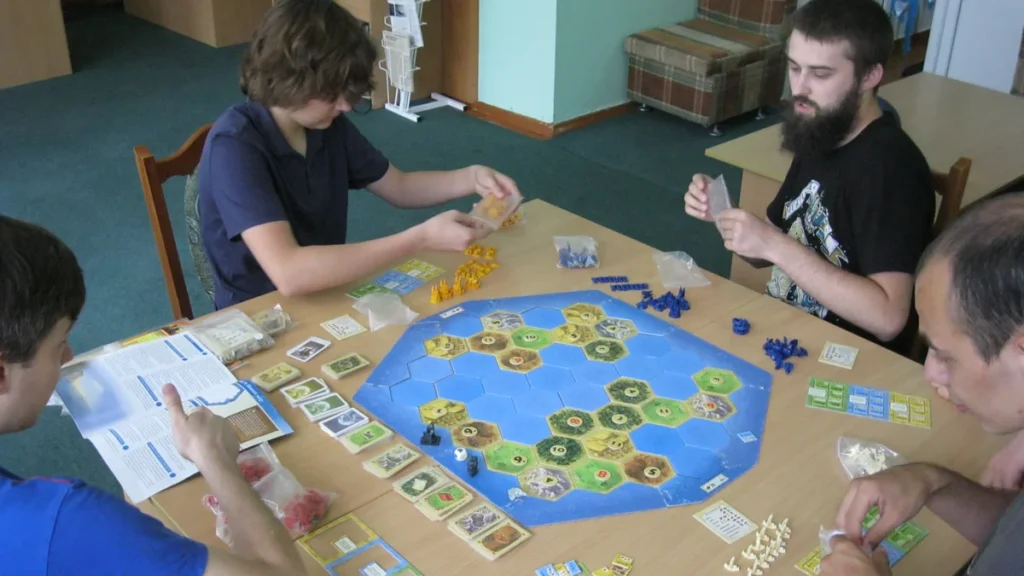
Four hundred and sixty-five players in one place sounds like chaos, but dice games turn that chaos into something a host can actually run. A single die costs almost nothing, a roll takes two seconds, and nobody needs to learn a long rulebook before the fun starts. When every table in the room is rolling at the same time, the whole hall fills with the same small sound, and even people who arrived as strangers start cheering for the same lucky numbers.
The trick is picking games that do not need a turn order stretching across the whole room. Nobody can wait for 464 other people to take a turn, so the best huge-group dice games run in parallel. Each table of six or eight players runs its own small game, the tables compare scores at the end of each round, and a floor captain keeps every table on the same clock. That is how a garden party, a school hall, or a community centre can hold hundreds of players without the night grinding to a halt.
This guide gives you nine garden-themed dice games built exactly that way, with the setup, the rules, and the reason each one scales. Every game uses ordinary six-sided dice, a pencil, and a score sheet, and works for children, grandparents, or a mix of both. If you want a different flavour for your next night, the travel-themed dice games in our earlier guide use the same table system with journeys instead of gardens.
Key takeaways
- Split 465 players into tables of six to eight so every table plays at the same time.
- Give every table the same kit: dice, score sheets, pencils, and one printed rules card.
- Keep rounds short, ten to fifteen minutes, so no table sits waiting for long.
- Use one shared clock and a floor captain per zone to keep all tables in step.
- Score tables against each other at the end of each round, not player against player across the room.

How Dice Games Work With 465 Players
The first decision is the table plan, and it matters more than the choice of game. With 465 players, tables of six give you 77 tables with three players left over, while tables of eight give you 58 tables with one player left over. Most hosts pick tables of six or seven and place the leftover players as floaters who join whichever table needs a hand. Either way, the maths is simple, and the room stays fair because every table plays the same game for the same length of time.
Each table needs one set of dice, and that is where the budget stays small. A table of six sharing two dice can finish a round in about ten minutes, while a table with four dice moves faster and suits younger players who like to roll often. Score sheets matter just as much, because a table that cannot record its score cannot join the hall-wide contest.
The shared clock is the part hosts forget, and it is the part that saves the night. A whistle or a bell every twelve minutes tells every table to stop, add up, and hand in its top score. The host reads out the leading tables, the room applauds, and the next round begins with a fresh game or a fresh twist on the same one. Nobody waits, nobody is left behind, and the night moves at a pace that keeps energy high for two hours without wearing anyone out.
| Game | Players per table | Dice needed | Round length |
|---|---|---|---|
| Dice Sunflower Planting | 6 | 2 | 12 minutes |
| Dice Herb Garden | 6 | 3 | 10 minutes |
| Dice Butterfly Chase | 8 | 2 | 12 minutes |
| Dice Rainy Day Puddle | 6 | 2 | 10 minutes |
| Dice Bird Watching | 8 | 3 | 15 minutes |
| Dice Picnic Basket | 6 | 2 | 12 minutes |
| Dice Tree Climbing | 8 | 2 | 12 minutes |
| Dice Flower Market | 6 | 3 | 15 minutes |
| Dice Firefly Night | 8 | 2 | 10 minutes |
Set Up Your Garden Dice Night
Good setup takes about half an hour, and it is worth every minute. Arrive early, lay out the tables in zones of ten, and put a coloured flag or balloon at the end of each zone so players can find their area from the door. Place one rules card, one score sheet per player, and a pencil at every seat, and keep the dice in a small cup in the middle of each table so they do not roll onto the floor.
- Count the chairs first and confirm you have seats for 465 players plus a few spares.
- Pack one kit per table with dice, score sheets, pencils, and a printed rules card.
- Number the tables and group them into zones with a named floor captain for each zone.
- Test the whistle, bell, or speaker before the first players arrive.
- Put a water station and a spare dice tub at the host table in the middle of the room.
- Print a big scoreboard where the leading tables can be seen from every seat.
The 9 Dice Garden Games for 465 Players
These nine games share one garden theme, so the whole night feels like a single party rather than nine separate ideas. Each game is simple enough to explain in one minute, and each one gives every player at the table a roll in every round. Play them in order, or pick your favourites and repeat the best ones with a twist in the second half of the night.
1. Dice Sunflower Planting
Each player is a gardener racing to grow the tallest sunflower. On a turn, a player rolls two dice and adds the total to their sunflower’s height, writing the new height on the score sheet. A roll of doubles lets the player plant a second seed at the same height, and the player keeps the taller of the two when the whistle blows. The table winner is the gardener with the tallest sunflower.
Setup is a score sheet and a pencil each, plus two shared dice. No board is needed and no pieces can be lost, which matters with hundreds of players in the room. It scales because every table runs the same race at the same time, and the hall contest simply compares the tallest sunflower from each table. A round takes about twelve minutes, and the host can read out the top five sunflowers in under a minute.
2. Dice Herb Garden
Each number on the dice stands for a herb, from one for basil to six for mint, and players collect the herbs their rolls give them. A player rolls three dice and writes down the herbs shown, trying to collect a full set of six different herbs before anyone else at the table. Rolling the same herb twice in one turn lets the player swap it with a neighbour, which keeps the trading lively and stops anyone being stuck on five herbs all round.
Setup needs three dice per table and a small herb chart on the rules card so nobody has to remember which number means which herb. It scales because the trading rule keeps every player involved even when their own rolls are unlucky. With 465 players, the host simply asks each table for its fastest full set, and the quickest tables in the hall take the round.
3. Dice Butterfly Chase
A butterfly flutters around the garden, and the players chase it with their dice. The host names a target number from two to twelve, and each player rolls two dice in turn trying to hit it exactly. A player who hits the target moves the butterfly one flower closer to their seat, and the first player to bring the butterfly home wins the table. If nobody hits the target for a full circuit, the host calls a new target and the chase starts again.
Setup is two dice and a paper butterfly in the middle of the table, which gives younger players something to watch. The target changes every round, so no table settles into a fixed pattern. It scales because the chase is short and loud: players call out their rolls, neighbours groan when a target is missed by one, and eight players per table means plenty of rolls per circuit.
4. Dice Rainy Day Puddle
Rain has filled the garden paths with puddles, and each roll decides whether a player splashes through or steps neatly around. Players roll two dice and add the total to their puddle count, but a roll of seven means a splash, and the player loses their last two points to the puddle. The player with the highest dry score when the whistle blows wins the table, and the splash rule keeps the lead changing right up to the last roll.
Setup is two dice and a score sheet, plus a small puddle drawing on the rules card showing the number seven with a splash mark. Children enjoy the splash rule because it gives the player in last place a real chance to catch up. It scales because the game needs no equipment beyond the dice, so a table can start the moment its players sit down, and ten minutes a round is enough.
5. Dice Bird Watching
Each player is a bird watcher with a notebook, and the dice decide which birds visit their corner of the garden. A roll of two dice gives a number from two to twelve, and each number stands for a bird on the chart, from two for a wren to twelve for a heron. Players write down each bird they spot, and the first to spot six different birds wins the table. A roll of doubles counts as a rare bird, which fills any one gap in the notebook.
Setup needs three dice per table and a bird chart on the rules card, with the birds named in plain words so children can follow along. It scales because the rare-bird rule keeps slow tables moving and stops any player waiting too long for one missing bird. For a change of pace, the music-themed dice games use the same chart idea with songs instead of birds. Fifteen minutes is the right round length here.

6. Dice Picnic Basket
Each player is packing a picnic basket, and the dice decide what goes inside. A roll of two dice gives a food item from the chart, from two for bread to twelve for strawberries, and the player writes it into their basket. The first player to pack six different foods wins the table, but a roll of doubles means a wasp has visited, and the player must cross out one item of their choice. The wasp rule keeps the lead moving and gives trailing players a way back.
Setup is two dice, a score sheet, and a food chart on the rules card with foods everyone knows, so no time is lost explaining it. It scales because every table packs at the same pace, and the hall contest is simply the fastest full basket from each table. The game also suits a real garden party, since it can be played on picnic blankets as easily as at tables, and twelve minutes a round keeps the pace brisk.
7. Dice Tree Climbing
Each player climbs a tree one branch at a time, and the dice decide how far each climb reaches. A player rolls two dice and climbs that many branches, writing the new height on the score sheet, but a roll of two or twelve means a slippery branch, and the player slides back three branches. The first player to reach twenty branches wins the table, and the slippery rule means the finish is never certain until the last roll.
Setup needs two dice and a score sheet with a simple ladder of numbers from one to twenty printed down the side, so players can see their progress at a glance. It scales because the race is easy to follow and the whole table can see who is ahead without any counting. Eight players per table works well, since more climbers means more slips and more comebacks, and the game is perfect for the second half of the night when energy starts to dip.
8. Dice Flower Market
Each player runs a stall at the flower market, and the dice decide which flowers arrive each morning. A roll of three dice gives three flowers from the chart, and players write them down, trying to collect a full stall of six different flowers. Rolling the same flower three times in one turn is a bumper crop, and the player may swap any one flower with a neighbour, which keeps the market trading all round long.
Setup needs three dice per table and a flower chart on the rules card, with the flowers named simply so nobody is slowed down by unfamiliar words. It scales because the bumper-crop rule gives every player a reason to stay alert, even when their own rolls are poor. A table of six finishes in about fifteen minutes, and the host can compare the fastest full stalls across the hall without any extra scoring.
9. Dice Firefly Night
As the evening darkens, fireflies come out, and each roll lights one more in the garden. Players roll two dice and add the total to their firefly count, but a roll of doubles lights two extra fireflies. The player with the most fireflies when the whistle blows wins the table, and the whole hall counts down the last minute together, which makes a gentle ending to a busy night.
Setup is two dice and a score sheet, plus a small firefly drawing on the rules card to set the mood. The game is deliberately calm, with no penalties and no lost points, so it works well as the last game of the night when players are tired but still want one more round. It scales because it needs nothing but dice and a score sheet, so even a table that has lost its rules card can play from memory after one explanation.
Frequently Asked Questions
Can 465 players really play dice games at the same time?
Yes, because the players are split into tables of six to eight, and every table plays the same game at the same time. The hall contest compares the best score from each table, so nobody waits for 464 other people to take a turn. A shared clock and a floor captain per zone keep all the tables in step from the first roll to the last.
How many dice do we need for 465 players?
Plan on two to three dice per table, which means roughly 120 to 170 dice for the whole hall, depending on your table size. Keep a spare tub at the host table and collect them at the end of the night. Ordinary six-sided dice are all you need for every game in this guide.
What if a table has only three or four players?
A small table plays exactly the same way, and the games still work, because every player rolls in turn and the table winner is simply the best score at that table. If a table is very small, give it a floater from the leftover players, or let it play with a slightly shorter round so it finishes at the same time as the rest of the hall.
How long does the whole night take?
Allow about two hours for six rounds, with a short break in the middle for drinks and snacks. Each round lasts ten to fifteen minutes, plus two or three minutes to collect scores and announce the leading tables. Arrive half an hour early to set up, and the night will run smoothly from the first whistle to the last.
Do players need to know about gardening already?
No, the garden theme is only a way of naming the numbers, and every game explains itself on the rules card. The charts name the herbs, birds, flowers, and foods in plain words, so a player who has never gardened can still play well. The theme makes the numbers easier to remember, and that is all it needs to do.
Are the garden dice games played for money?
No, these games are played for fun, small prizes, and the pleasure of the hall contest. The host can offer ribbons, seed packets, or garden vouchers for the leading tables, which suits the theme far better than cash. Keep the prizes light, keep the mood friendly, and the night stays enjoyable for every age in the room.
Bottom Line
Dice games work for 465 players because they are cheap, quick, and fair, and a garden theme gives the whole night a friendly shape that every age can enjoy. Split the hall into small tables, keep the rounds short, and let the floor captains keep the clock. If you want more ideas for nights this size, the party games built for huge groups use the same table system with a different flavour. Set out the dice, open the garden gate, and let the rolling begin.