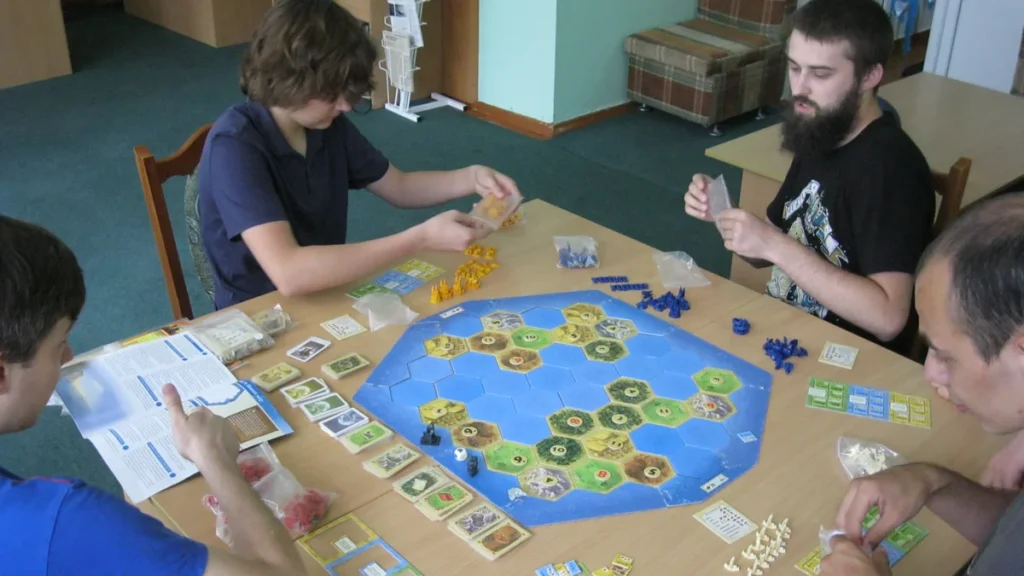
Four hundred and seventy five players sounds like a crowd that no dice game could ever hold together, yet the trick is not to play one giant game at all. You split the room into small tables, give every table the same simple rules, and let the dice do the talking. Nobody waits for a turn that never comes, nobody stands at the back trying to see a board, and the whole hall fills with the sound of dice rolling at the same time. That is what makes a night like this work, and it is why animals make such a good theme for it.
Animals are easy to picture, easy to explain, and easy to cheer for. Everyone in the room knows how an elephant stomps, a monkey swings, or a rabbit hops, even if they have never seen the animal up close. When a roll of the dice becomes a tiger pounce or a kangaroo jump, players understand the game in seconds and start shouting for their table before the first round is over. The animal theme also gives every game a clear picture in the mind, so the host does not need long speeches to keep the night moving.
This guide gives you nine dice games built around animals, each one made for a table of four to six players and quick to learn. You will find a setup plan, a table that sums up all nine games, full rules for every game, a scoring system for 475 players, a checklist, and answers to the questions every host asks first. Set the tables, hand out the dice, and let the games begin.
Key Takeaways
- Split 475 players into tables of four to six, with every table playing the same nine games in the same order.
- Use animals as the theme because every player can picture an elephant, a monkey, a tiger, or a rabbit without a long explanation.
- Give every table the same kit of dice, score cards, and pencils so no table has an unfair edge.
- Keep every round short, with a clear winner at each table, and move the whole room on together with a bell or a whistle.
- Score by table points, not by single rolls, so the night stays fair and the final result stays close until the end.
The 9 Games at a Glance
| Game | Players at a table | You need | Round length |
|---|---|---|---|
| Dice Elephant Stomp | 4 to 6 | Two dice and a score card | About 10 minutes |
| Dice Monkey Swing | 4 to 6 | Three dice and a score card | About 10 minutes |
| Dice Tiger Pounce | 4 to 6 | Two dice and a score card | About 10 minutes |
| Dice Bear Hug | 4 to 6 | Two dice and a score card | About 10 minutes |
| Dice Rabbit Hop | 4 to 6 | Two dice and a score card | About 10 minutes |
| Dice Fox Dash | 4 to 6 | Three dice and a score card | About 12 minutes |
| Dice Owl Hoot | 4 to 6 | Two dice and a score card | About 10 minutes |
| Dice Kangaroo Jump | 4 to 6 | Two dice and a score card | About 10 minutes |
| Dice Giraffe Stretch | 4 to 6 | Two dice and a score card | About 10 minutes |
How to Set Up the Night for 475 Players
Start by counting tables, not players. With tables of five, you need 95 tables, and with tables of six, you need 80 tables, so count your chairs and floor space first. A hall with long rows works well, and so does a set of smaller rooms joined by a loud bell, as long as every table can hear the signal to start and stop. Leave a clear lane down the middle for the floor captains, who will walk it all night with spare dice and fresh score cards.
Give every table the same kit, counted out before the doors open. Each kit holds the dice for the nine games, score cards, pencils, and a one page sheet listing the nine games in order. When every table has the same kit, nobody can say another table had better dice, and the host can fix a problem by swapping one whole kit for a spare. Keep at least ten spare kits at the front desk, because dice roll under tables and pencils break.
Appoint a floor captain for each zone of about ten tables, and give each captain a whistle and a clear job. The captain starts each round, watches for tables that fall behind, and collects the score cards at the end of each game. The captains also settle the small disputes that always appear when dice are involved, and they do it fast, with a smile, so the game never stops for long. If your group loved the circus themed dice games for 473 players, this animal night uses the same table system, so any captain who worked that night will feel at home here.
Run the nine games in the same order at every table, and move the whole room together. The host calls the game, the tables play for about ten minutes, the bell rings, the captains collect the scores, and the host calls the next game. Nobody finishes early and sits bored, and nobody is still playing when the rest of the room has moved on. That shared rhythm is what turns 475 separate players into one crowd, and it is the single most important part of the whole night.
The 9 Dice Games for 475 Players
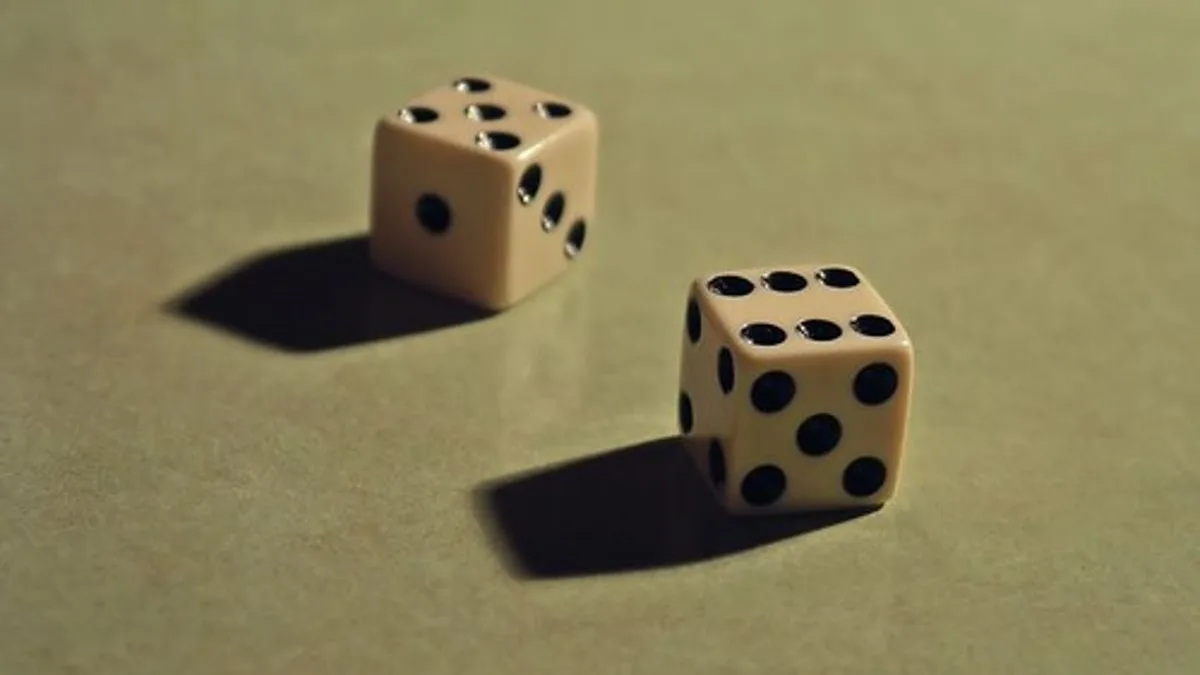
Each game below uses the same idea: a roll of the dice stands in for an animal in action, and the best roll at the table wins the round. Read the rules aloud once, play one practice roll together, and then let the table play on its own. Every game fits in about ten to twelve minutes, and every game ends with a clear table winner.
1. Dice Elephant Stomp
In Dice Elephant Stomp, each player is an elephant marching down a trail, and every roll moves the elephant forward. Each player rolls two dice on their turn and moves forward by the total, and the first player to reach thirty steps wins the march. A roll of doubles makes the elephant trumpet and lets the player roll again at once, which can turn a slow start into a sudden lead.
The fun is in the stomping, because tables love to thump the table softly with each step and trumpet when doubles appear. The lead changes hands often, and a player at the back can catch up with two good rolls.
2. Dice Monkey Swing
Dice Monkey Swing turns three dice into a race through the trees. Each player rolls three dice on their turn and adds the numbers together, and a total of twelve or more swings the monkey to the next branch for two points, while a total of fifteen or more swings twice for three points. A total of eleven or less means the monkey misses the branch and scores nothing, so every roll brings a small moment of hope before the dice settle.
Players take six swings in a round, and the highest total wins the table. The double swing gives a trailing player a real chance to catch up, and a single lucky roll can change the whole table in seconds.
3. Dice Tiger Pounce
In Dice Tiger Pounce, each player is a tiger creeping through long grass, waiting for the right moment to leap. Each player rolls two dice on their turn, and a total of ten or more is a clean pounce that catches the prey and scores a point, while a total of seven to nine is a near miss that scores nothing. A total of six or less means the prey heard the tiger coming, and the player loses a point.
This game suits players who like a little risk, because every roll can win a point or lose one. A player who pounces well early can build a lead, but one bad roll can give it all back, so nobody is safe until the last turn.
4. Dice Bear Hug
Dice Bear Hug is a warm and simple game built around the biggest hug in the forest. Each player rolls two dice on their turn, and a total of eight or more is a fine big hug that scores a point, while a total of six or seven is a small hug that scores nothing. A total of five or less means the bear is sleepy and curls up instead, so the player loses a point.
Each player takes five turns in a round, and the player with the most points wins the table. The game is friendly and easy to follow, which makes it a good choice for tables with younger players. For a calmer change of pace, the book themed dice games for 472 players use the same gentle turn taking.
5. Dice Rabbit Hop
In Dice Rabbit Hop, each player is a rabbit hopping down a garden path, and every roll moves the rabbit closer to the carrot patch. Each player rolls two dice on their turn and hops forward by the total, and the first rabbit to reach thirty hops wins the race. A roll of doubles is a big bounce that lets the player roll again at once, which can turn a slow start into a sudden lead.
The lead changes quickly, because a rabbit at the back can catch up with two good rolls while the leader rolls low numbers. The finish is often decided by a single roll when two rabbits are both close to the patch.
6. Dice Fox Dash
In Dice Fox Dash, three dice decide how fast each fox runs through the fields. Each player rolls three dice and adds the numbers, and the total is the distance covered in that dash. A total of fourteen or more counts as a full sprint and adds two extra points, while a total of eight or less means the fox stops to sniff the air and loses a point. Players run five dashes, and the highest total distance wins the table.
This game rewards steady running as much as lucky rolls, because a fox who runs well in every dash will usually beat one who runs a single huge dash and then fades. The extra points for a full sprint keep the last dash tense.
7. Dice Owl Hoot
Dice Owl Hoot is a test of staying awake, with every roll deciding whether the owl keeps its eyes open through the night. Each player rolls two dice on their turn, and a total of five or more keeps the owl awake and scores the total as points, while a total of four or less means the owl nods off and scores nothing. Each player takes six turns through the night, and the highest total wins the table.
The game is quieter than the chasing games, and that is its strength, because it gives the room a moment to breathe between the louder rounds. A nod at the wrong moment can cost a player the lead.
8. Dice Kangaroo Jump
In Dice Kangaroo Jump, each player is a kangaroo bounding across the outback, and every roll decides how far the jump carries them. Each player rolls two dice on their turn, and a total of eight or more is a clean jump that scores a point, while a total of six or seven is a short hop that scores nothing. A total of five or less is a stumble that loses a point, so every roll carries real risk.
Each player jumps five times in a round, and the player with the most points wins the table. The game moves fast, because every jump is over in seconds and the next player is rolling before the last cheer has faded.
9. Dice Giraffe Stretch
In Dice Giraffe Stretch, each player is a giraffe reaching up for the highest leaves on the tallest tree. Each player rolls two dice on their turn, and a total of eight or more reaches the leaves and scores a point, while a total of eleven or more reaches the very top and scores two points. A total of seven or less falls short and scores nothing, so every roll is a stretch toward the branches.
Each player takes six turns in a round, and the player with the most points wins the table and takes the final game of the night. When the bell rings after this game, every table has a winner and the room is ready for the final scores.
Scoring That Works for 475 Players
Keep the scoring simple, or the night will drown in paper. Each table winner earns five points, the second earns three, and the third earns one, added up across all nine games. The captains write the table total on one card per game, and the host adds the cards up at the end.
Announce the leading tables after the third game and again after the sixth, but do not announce every score, or the room will spend more time listening than playing. A short announcement with the top five tables is enough to build excitement. Groups that ran the winter dice games for 471 players found that two short announcements work better than one long one.
Hand out a small prize to the winning table, and a smaller prize to the table that cheered the loudest. The prizes can be simple, such as a box of sweets or a set of dice, and the point is the cheer when the winners are named. Keep the prize giving short, and let the room applaud before anyone starts packing up.
Your Night of Checklist
Use this list on the day itself, and tick each item off as you go. If every item is done before the doors open, the night will run itself.
- Count the tables and chairs, and set out 95 tables for groups of five or 80 tables for groups of six.
- Pack one kit for every table, with dice, score cards, pencils, and a one page list of the nine games.
- Put ten spare kits, spare dice, and spare pencils at the front desk.
- Brief the floor captains, give each one a whistle, and show them the lane they will walk.
- Test the bell or whistle from the back of the hall, so every table can hear it clearly.
- Print the score cards and the final results sheet, and keep a pen for the host at the front desk.
Frequently Asked Questions
Can 475 players really play dice games at the same time?
Yes, because the players are split into small tables of four to six, and every table plays the same game at the same time. The host starts each round for the whole room, and the bell moves everyone on together.
How many dice do we need for 475 players?
Each table needs three dice at most, so 95 tables need 285 dice, and 80 tables need 240 dice. Buy a few extra packs, because dice roll under tables and go missing, and spares at the front desk save more time than any other preparation.
What if a table has only three or four players?
A table of three or four players works well, because every game here is built for four to six players. The scoring stays the same, with five points for the winner, three for second, and one for third. Do not move players between tables in the middle of a game, as that slows the whole room down.
How long does the whole night take?
The nine games take about ninety minutes of play, with a few minutes between games for scoring and a short break in the middle. With the welcome and prize giving, the whole night runs to about two and a half hours.
Do players need to know about animals already?
No, because every game explains the animal in the rules themselves, and the dice do the work. A player who has never seen a tiger can still roll for a pounce, and a player who has never watched a monkey can still swing through the trees. The animal theme is there to make the games easy to picture, not to test what players already know.
Are the animal dice games played for money?
No, the games are played for points, table wins, and small prizes only. Nobody pays to play and nobody wins money, which keeps the night friendly for every player.
The Bottom Line
Nine simple animal games, small tables, the same kit everywhere, and a bell to move the room together are all it takes to give 475 players a night they will remember. Set the tables, trust the captains, and let the dice decide the winners.