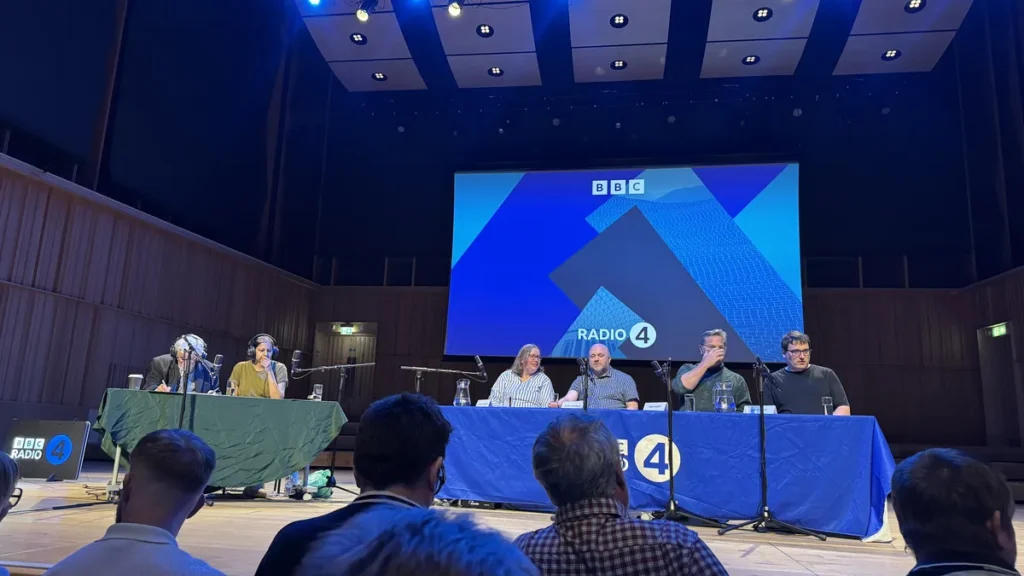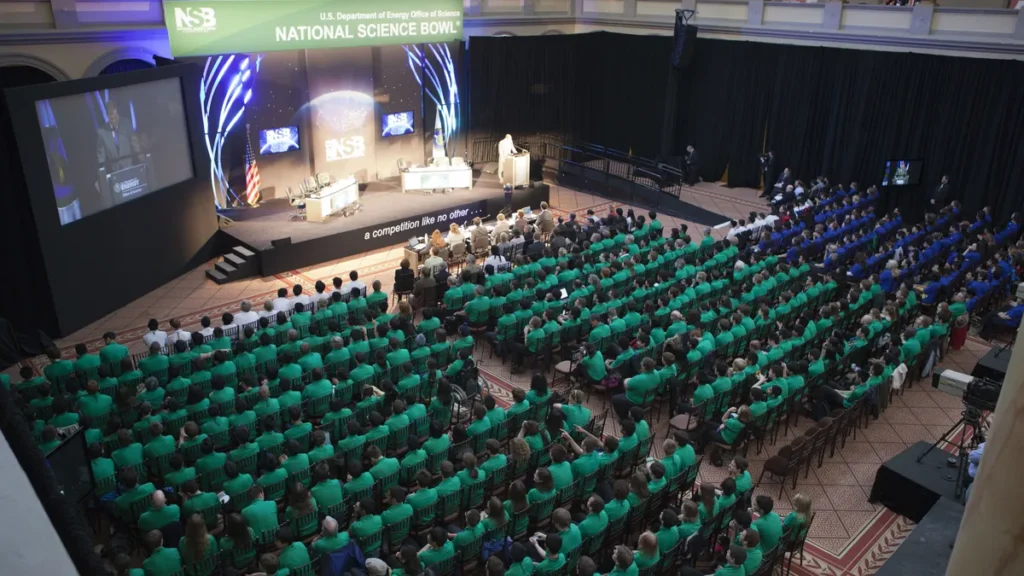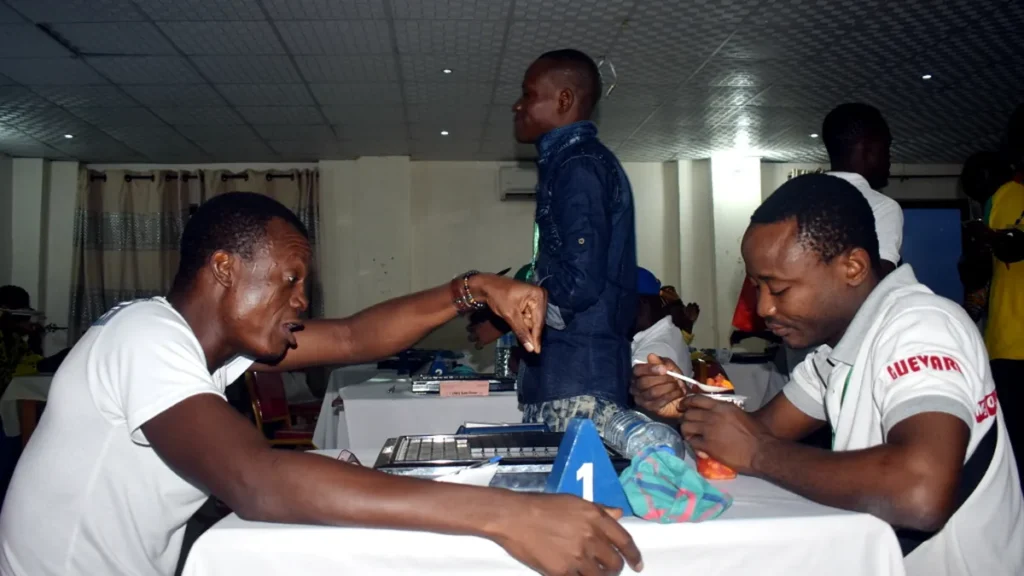
Five hundred and five players in one hall sounds like chaos, yet word games are one of the few formats that can hold a crowd that size without falling apart. Words need no board, no dice and no expensive kit. A caller, a loudspeaker and a stack of paper slips are enough to keep every table playing at once, and every player can answer at the same time instead of waiting for a turn that never comes.
This set of nine games is built on figures of speech, the tricks of language that writers have used for centuries. Each round takes one figure, explains it in plain words and turns it into a team challenge. Players do not need to know the technical terms before they arrive. They learn each figure by playing with it, and the scoring rewards clear thinking more than quick shouting.
The day runs as nine rounds of about twenty minutes each, with short breaks between rounds so scores can be checked and read out. Teams stay in the same seats all day, which keeps the hall calm and the scoring simple. By the final round every team has tried every figure, and the winners are the teams that stayed steady rather than the teams that burned bright and faded.
Key Takeaways
- 505 players form 25 teams of 20, with a five-person panel of judges and callers making up the full number.
- Nine rounds cover nine different figures of speech, from pleonasm to hyperbaton.
- Every round uses paper slips and a loudspeaker, so no team waits for a turn.
- Points reward correct answers first and speed second, which keeps the contest fair.
- No player needs to know any technical terms in advance; each figure is taught by playing.
How 505 Players Break Into Teams
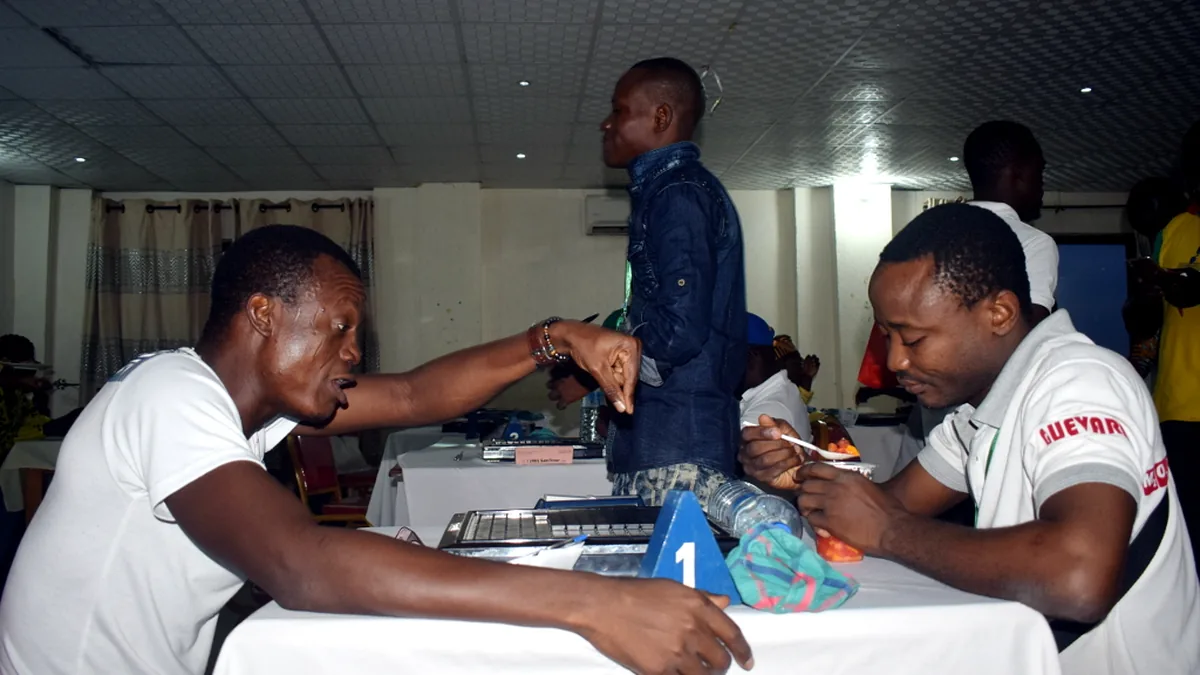
Split the hall into 25 teams of 20 players, and seat each team at its own table or in its own marked block of chairs. Give every team a letter from A to Y and a colour, and write both on a card at the table so scorers can find teams fast. The remaining five people form the panel: one caller who reads the rounds, two judges who settle disputes and two scorers who collect the slips and keep the running totals.
Mix strong word players with newcomers on every team, because a team of experts against a team of beginners makes for a dull afternoon. The format here builds on the team system in Word Games for 503 Players That Keep Huge Groups Playing, with fresh rounds for a slightly larger crowd. A short practice question before the first round helps every team learn how to write, fold and hand in a slip without fuss.
The 9 Word Games at a Glance
| Game | What It Tests | Round Length |
|---|---|---|
| Pleonasm Patrol | Spotting wasted words | 20 minutes |
| Antithesis Act | Building balanced contrasts | 20 minutes |
| Diacope Dash | Repeating a word for effect | 20 minutes |
| Anthimeria Act | Switching a word to a new job | 20 minutes |
| Prolepsis Play | Answering an objection early | 20 minutes |
| Hypallage Hunt | Finding shifted descriptions | 20 minutes |
| Enallage Exchange | Spotting deliberate grammar slips | 20 minutes |
| Catachresis Call | Judging stretched word use | 20 minutes |
| Hyperbaton Hop | Untangling turned-around sentences | 20 minutes |
The 9 Games
1. Pleonasm Patrol
Pleonasm means using more words than the meaning needs. A free gift is a pleonasm, because a gift is already free. Past history, end result, added bonus and advance planning all carry the same kind of extra word, and spotting the extra word is the whole game. The caller reads out a list of phrases, and each team writes down the word that could be cut without changing the meaning.
Give one point for every extra word found, and a bonus point when a team can rewrite the phrase cleanly. Teams that guess wildly lose a point for each wrong answer, which stops the room from shouting every word on the list. Keep the phrases ordinary and everyday, because the fun of this round is realising how often wasted words slip into normal speech.
2. Antithesis Act
Antithesis puts two opposite ideas side by side in a balanced shape. Charles Dickens opened a famous novel with it was the best of times, it was the worst of times, and Patrick Henry used the same shape when he said give me liberty, or give me death. The balance is what makes the line stick in the memory, because the ear hears the two halves match. In this round teams complete half-written antitheses, so the second half must answer the first.
The caller reads the first half of a sentence, such as it is not the size of the team that matters, and each team writes a matching second half, such as but the size of its ideas. Judges award two points for a clean opposite that keeps the same shape, and one point for a fair attempt that gets the meaning right but loses the balance. Warn teams that a random opposite is not enough; the two halves must feel like they belong together.
3. Diacope Dash
Diacope is the repetition of a word with a few words in between, and it is one of the oldest tricks in public speaking. Free at last, free at last, thank God Almighty, we are free at last builds its power by returning to the same word, and burn, baby, burn works the same way in three short beats. In this round the caller gives each team a word, and the team must build a short line that repeats it with feeling.
Give two points for a line that repeats the word clearly and sounds natural when read aloud, and one point for a line that works on paper but stumbles when spoken. Read the best lines out over the loudspeaker between rounds, because hearing good diacope teaches the room faster than any explanation. Keep the lines short; a diacope that runs on for a whole paragraph loses its punch.
4. Anthimeria Act
Anthimeria happens when a word takes on a new job, such as a noun used as a verb. People now Google a question, friend a stranger and adult their way through a hard week, and each of those verbs started life as something else. In this round the caller gives each team an ordinary noun, and the team must use it as a verb in a sentence that still makes sense.
Award two points for a sentence that is both grammatical and funny, and one point for a sentence that works but raises no smile. The judges should reject sentences where the new verb is unclear, because anthimeria only counts when the meaning still comes across. This round usually produces the loudest laughter of the day, so leave time for the caller to read out the best answers.
5. Prolepsis Play
Prolepsis means answering an objection before anyone has raised it. A speaker who says you may wonder why we start with the hardest round, and the answer is simple has used prolepsis, because the doubt is named and settled in the same breath. In this round each team is given a claim, such as word games are too slow for a big hall, and must write a reply that names the doubt and answers it.
Give two points for a reply that names a real objection and answers it fairly, and one point for a reply that answers a doubt nobody would actually hold. The judges should be strict here, because a straw objection is easy to knock down and teaches nothing. The best replies sound like a calm conversation, not an argument, and they leave the room nodding rather than bristling.
6. Hypallage Hunt
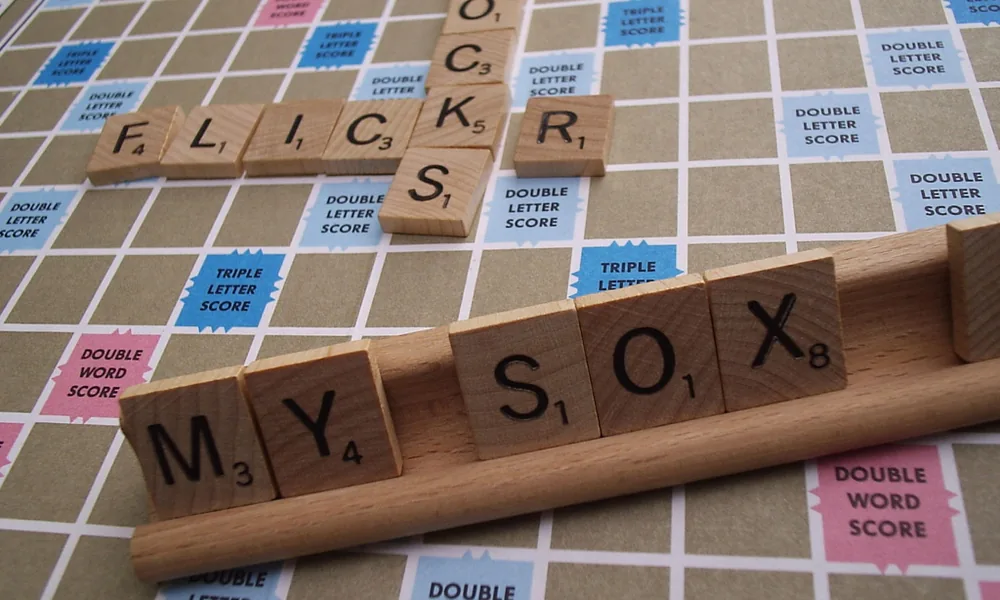
Hypallage, also called a transferred epithet, moves a describing word from the thing it belongs to onto a nearby thing. A sleepless night is the classic example, because the night does not sleep; the person lying awake does. The cruel sea and a lonely road work the same way, lending a feeling to something that cannot feel it. In this round teams hunt for the shifted word in a list of phrases and name the thing it really describes.
Score one point for each shifted word found, and a bonus point when a team can rewrite the phrase with the word put back where it belongs. A sleepless night becomes a night when I could not sleep, which is accurate but far less poetic, and that gap is the point of the game. Keep the list mixed, because some phrases hide their shift well and others give it away at once.
7. Enallage Exchange
Enallage is a deliberate slip of grammar, using one form where another is expected. We was robbed is the famous example, a plural subject with a singular verb, and it works because the mistake itself carries the feeling of the complaint. In this round the caller reads sentences that each hold one deliberate slip, and teams must find the slip and say what the plain form would be.
Give one point for finding the slip and one more for giving the plain form, so careful teams score twice on every sentence. Warn teams that not every mistake is enallage; a plain typing error earns nothing, and the slip must look deliberate. This round suits teams with an ear for speech, because enallage is far more common in talk than in writing.
8. Catachresis Call
Catachresis stretches a word into a job it was never meant to do. Shakespeare wrote of taking arms against a sea of troubles, and a sea cannot be fought with weapons, yet the image lands because the feeling is right. The leg of a table and the mouth of a river are quieter examples of the same stretch, words borrowed because no better word exists. In this round teams judge a list of stretched phrases and decide which ones work and which ones fall flat.
Award two points when a team gives a clear reason for its verdict, and one point for a verdict with no reason behind it. The discussion matters more than the answer here, because two good judges can disagree about a single phrase and both be right. Let the caller read out one disputed phrase per round and take a quick show of hands, which keeps the whole hall involved in the argument.
9. Hyperbaton Hop
Hyperbaton turns the usual order of a sentence around, putting a word where the ear does not expect it. Object there was none, wrote Edgar Allan Poe, and the turned-around order makes the line feel heavier than the plain form. The plain version would say there was no object, which is correct and completely forgettable. In this round teams are given turned-around sentences and must rewrite them in plain order, then turn a plain sentence around themselves.
Score one point for each correct plain version and two points for a turned-around sentence that still reads smoothly. The second half is the harder skill, because a clumsy inversion sounds like a mistake rather than a choice. Read the best inversions aloud, because hyperbaton is a trick for the ear as much as for the eye, and hearing it is half the lesson.
How to Run the Whole Day
Open the hall an hour before the first round so teams can find their tables and settle in. Run the nine rounds back to back with five-minute breaks, which puts the playing time at about three hours plus breaks, and read the scores aloud after every third round so no team drifts too far behind without knowing it. Keep water and paper slips at every table, and keep a spare loudspeaker battery within reach, because a dead microphone in a hall of 505 people ends the day fast.
Close each round the same way, with the caller reading the answers and the scorers collecting the slips before the next round begins. The routine matters more than the timetable, and the timing advice in How to Play Word Games for 501 Players covers the same pattern for a hall of a similar size. If a round overruns, cut the next break short rather than cutting a game, because players forgive a short break and resent a lost round.
Scoring That Stays Fair
Keep the scoring visible on a board at the front of the hall, with all 25 teams listed in order. Update it after every third round, and read the top five aloud so the leading teams get their moment and the trailing teams can see the gap is still closable. Accuracy always outranks speed in these games, so a team that writes a careful answer after thinking should never lose to a team that shouts the first thing that comes to mind.
Settle disputes at the judges table and nowhere else, with the two judges agreeing before any score changes. A team that argues its case calmly gets a fair hearing, and a team that shouts gets the original score, which is a rule worth announcing before the first round. The fair-play notes in Word Games for 499 Players That Keep Huge Groups Playing set out the same approach for large halls, and it holds up well at this size too.
Your Checklist for the Day
- Paper slips, pens and a box for each team, with spares for the teams that lose theirs.
- A loudspeaker, a spare microphone battery and a printed copy of every round.
- A scoreboard at the front of the hall with all 25 team letters and colours.
- Name cards for the five judges and callers, so players know who settles disputes.
- Water at every table and a clear plan for the breaks between rounds.
- A small prize for the winning team and a round of applause for every team that finishes.
Frequently Asked Questions
How do you split 505 players into teams?
Form 25 teams of 20 players, and use the remaining five people as the panel of judges and callers. Mix strong word players with newcomers on every team so no table is left behind, and give each team a letter and a colour so scorers can find them fast.
How long does the whole day take?
Nine rounds of about twenty minutes take three hours of play, plus five-minute breaks between rounds and a longer break halfway through. Most halls finish in about four hours from the first call to the final scores, which leaves the afternoon free.
What equipment do we need?
A loudspeaker, paper slips, pens, a scoreboard and a printed copy of every round are enough. No team needs a board, a set of dice or any special kit, which is why the format works so well for a crowd of this size.
Can children play alongside adults?
Yes, and mixed-age teams often do well, because the games reward fresh thinking as much as book learning. Seat younger players with adults who can explain a figure the first time it appears, and keep the scoring the same for every team.
How do you stop one strong team from winning every round?
Score accuracy first and speed second, and use nine different figures so no single strength carries the day. A team that leads early still has to survive rounds that suit other teams, and the scoreboard stays close when the rounds are varied.
What happens if a team disputes a score?
The team speaks to the judges table, the two judges agree on an answer, and the score changes only if both judges agree. Announce this rule before the first round so every team knows where disputes go and how they are settled.
The Bottom Line
Five hundred and five players, nine figures of speech and one loudspeaker are all this day needs. The games ask for clear thinking, fair scoring and a steady pace, and they give back a hall full of people who have learned something about language without noticing they were taught.
Keep the teams mixed, the rounds on time and the judging calm, and the final scores will take care of themselves. The best team on the day will be the one that stayed steady through all nine rounds, and every other team will still leave with a new trick of language to try at home.