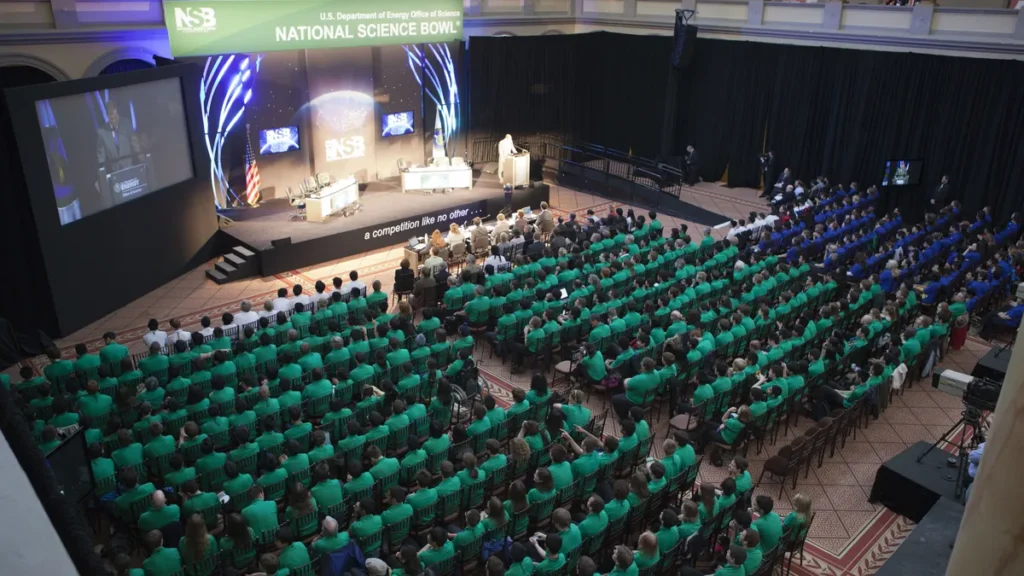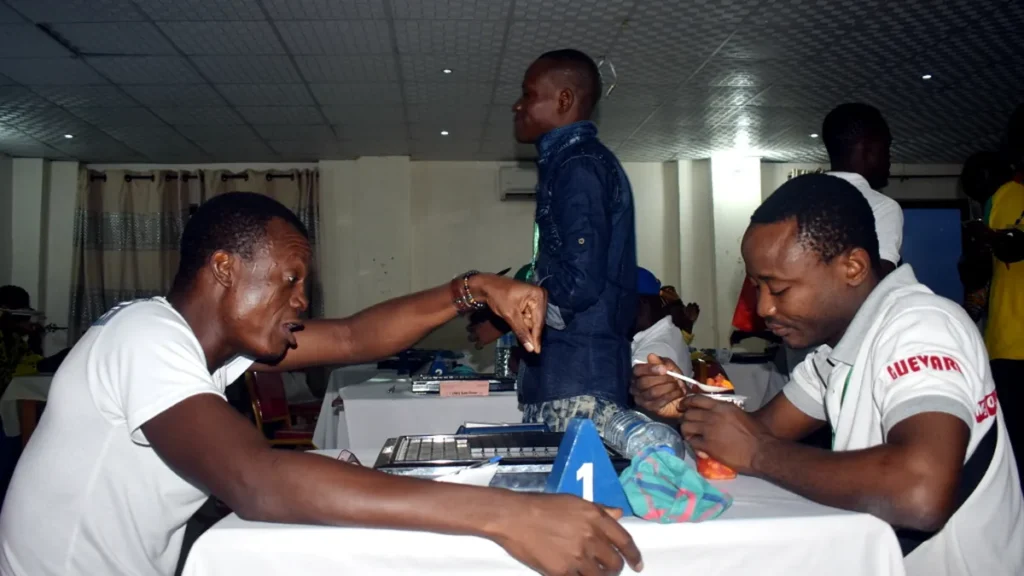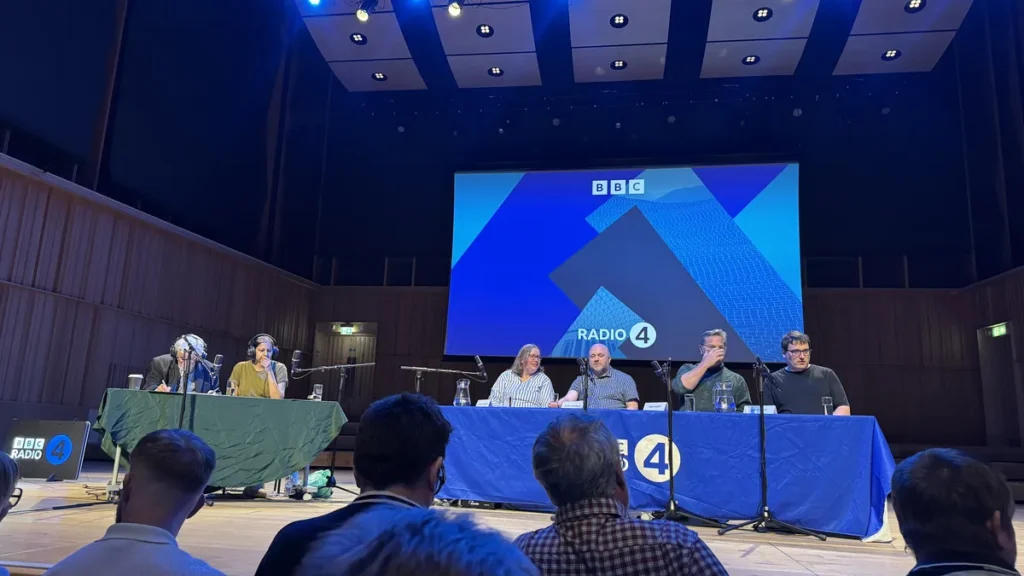
Five hundred and seven people in one room, seventy-odd teams, nine rounds, and one host with a microphone: that is a trivia night at the edge of what a single evening can hold. It sounds chaotic, and the first ten minutes usually are, but the format below has been tested at this scale and it holds together. The secret is not clever questions. It is a simple shape, repeated nine times, with clear scoring and a room plan that lets every team hear the host.
This guide gives you that shape. You get nine rounds built around well-known names and places, each with ten questions and a hosting tip, plus a room plan, a scoring plan, and a checklist for the night itself. If you have never hosted at this scale, the 505-player edition shows the same format with a slightly smaller crowd, and it is a useful dry run for this one.
The nine rounds move from old objects to living things, from crafts of the hand to planted displays, so every team finds a round that suits it. Read the guide once, print the checklist, and hand the answer sheets out early. The rest is just reading questions slowly and keeping the scoreboard honest.
Key takeaways
- Split 507 people into teams of six to eight and seat about seventy teams in zones.
- Play nine rounds of ten questions, ninety points in total, with a written tie-break ready.
- Keep each round to twelve minutes, counting marking time.
- Give half points for a right century, county, or coast when the full answer is out of reach.
- Finish with the tie-break and the prizes before the room starts to empty.

How a 507-Player Trivia Night Works
Start by splitting the crowd into teams of six to eight. With 507 people that gives you roughly seventy teams, which sounds like a lot until you seat them in zones of six or seven teams each, with a helper assigned to every zone. Each team gets one answer sheet per round and one pen, and the host reads every question twice before moving on.
Each round has ten questions, so the night has ninety points on offer, plus a written tie-break held back for the end. Teams swap sheets with the next table to mark, the host reads the answers, and the running totals go up on a board where everyone can see them. Twelve minutes a round, counting marking, keeps the whole evening inside two hours, with a short break after round five.
The Nine Rounds
The nine rounds below are the heart of the night. Each one is built around a single well-known category, with ten questions that mix easy openers, solid middle questions, and two hard ones at the end. Read each round’s tip before you start it: the tips are where the small scoring tricks live.
| Round | Category | Ten Questions About |
|---|---|---|
| 1 | Famous Antiquarians | Old objects and the people who gathered them |
| 2 | Famous Bowyers | Bows, woods, and the craft of shaping them |
| 3 | Famous Armourers | Plate, mail, and the weight of a full suit |
| 4 | Famous Knife Throwers | Spinning blades, pine boards, and steady nerves |
| 5 | Famous Quill Makers | Feathers, nibs, and the pens behind great documents |
| 6 | Famous Sponge Divers | Warm water, deep dives, and the sponge trade |
| 7 | Famous Lepidopterists | Butterflies, moths, and the people who studied them |
| 8 | Famous Hop Fields | Green rows, bitter cones, and picking season |
| 9 | Famous Rose Gardens | Named varieties, scent, and planted displays |
Round 1: Famous Antiquarians
Antiquarians spent their lives among old objects, gathering coins, seals, carved stones, and odd curiosities into private collections that often outlived them. Your questions can ask who gathered what, in which century they lived, and where their collections ended up. John Aubrey, who walked the English countryside noting old stones and old stories, and Elias Ashmole, whose collection opened England’s first public display of curiosities, make strong opening questions, with harder ones drawn from the dates and the objects themselves.
Keep this round gentle at the start, because few teams will know the names cold. Ask for the century first and the name second, so a team that knows the period can still score. Tip: give half a point for the right century alone, and save the hardest question, the one about a single named object, for question ten.
Round 2: Famous Bowyers
Bowyers shaped the bow from a single stave of wood, and the choice of wood mattered as much as the shape. Yew was the classic pick, with ash and elm behind it, and a good bow took months to season before it could be strung. Ask which wood was prized above the rest, how long a stave was left to dry, and what the string was made from. Bows raised from a Tudor warship give you a fine hard question, since the wood survived centuries under water and still told its story.
Teams enjoy this round because the answers feel guessable even when they are not known. Offer the wood question early, then move to the workshops and the old centres of the craft. Tip: ask one question about each part of the bow, the stave, the string, and the grip, so teams that know a little about any part can score.
Round 3: Famous Armourers
Armourers turned flat metal into plate that could turn a blade, and the best of them signed their work. Ask how much a full suit weighed, which metal the finest plate was made from, and in which century plate reached its peak. The royal armouries hold suits made for kings and princes, and the names of the workshops behind them, in London and in the German lands, give you questions that range from easy to very hard.
Round 4: Famous Knife Throwers
Knife throwers were the steady hands of the variety stage, spinning blades at pine boards while a partner stood calmly against them. Ask how far the thrower stood from the board, how many turns a blade made in the air, and what wood the target was made from. The famous husband-and-wife acts who toured for decades give you names to ask for, and the numbers give you questions that any team can attempt with a guess.
This is the round where the room gets noisy, because everyone has an opinion on the distance. Read the numbers slowly and let teams argue for a moment before they write. Tip: ask for the number rather than the name on the hardest questions, so a good guess can still earn the point.
Round 5: Famous Quill Makers
Quill makers cut goose feathers into pens, and for centuries every letter, ledger, and law was written with one. Ask which bird gave the best quills, which side of the feather was used, and what tool cut the nib. The pens behind great documents give you your hardest questions, since the makers themselves are rarely named, while the feathers and the cuts are facts any team can learn in a minute.
Demonstrate the cut if you can, or at least describe it: a sharp knife, one clean stroke, and a nib shaped to write with. Teams remember the image long after the round ends. Tip: give half a point for the bird and the full point for the cut, so the round rewards partial knowledge.

Round 6: Famous Sponge Divers
Sponge divers worked the warm water of the Mediterranean and the Caribbean, diving without tanks to bring up the soft skeletons that filled every bath and kitchen. Ask how deep they went, what gear they carried, and which ports sent out the most boats. The old diving crews, who could stay under for minutes on a single breath, give you names and numbers that feel almost unbelievable until the host reads the answer.
Round 7: Famous Lepidopterists
Lepidopterists spent their lives among butterflies and moths, pinning, naming, and chasing them across the world. Vladimir Nabokov, better known for his books, was a serious butterfly student who named new kinds, and Margaret Fountaine filled diaries with fifty years of travel in search of new species. Ask which species each one chased, where they found it, and how many specimens a great collection could hold.
Latin names are worth double points in this round, and you should say so before you start, because it changes how teams answer. A team that knows the common name can still score, but the team that risks the Latin earns the extra point. Tip: put the two hardest Latin questions at the very end, so the round builds to them.
Round 8: Famous Hop Fields
Hop fields are low green rows of climbing bines, and the bitter cones they bear give beer its bite. Ask which county led the growing in England, in which month the cones were picked, and which part of the plant is used. Kent gives you your easy questions, and the picking season gives you the harder ones, since the dates moved with the weather from year to year.
This round suits a picture question if you have a screen, because the rows are so recognisable once you have seen them. Even without pictures, the county and the month are fair questions that most teams can attempt. Tip: give one point for the county and one for the month, so a team that knows the place but not the season still scores.
Round 9: Famous Rose Gardens
Rose gardens are planted displays where every bed has a name, and the famous ones are remembered for a single variety as much as for their size. Ask which variety was named for a person, which colour won the most prizes, and where the oldest planted display still blooms. Scent questions work well here, since the old varieties were bred for perfume before they were bred for looks.
End the night on this round, because the answers are warm and the room relaxes into it. Save your easiest question for last, so every team finishes with a point on the board. Tip: ask the colour question first and the named-variety question last, and watch the scores tighten at the top.
Setting Up the Room for 507 Players
A hall that seats seventy teams needs zones, not rows. Lay out about ten zones of six or seven teams each, with a clear walkway between them so helpers can reach every table without squeezing past chairs. Put the top table at the front, the screens where the back row can see them, and the speakers halfway down the hall rather than at the front, so the sound reaches the far end without blasting the front. The 504-player edition used the same zone plan, and it kept the marking swaps quick even with a full house.
Set out one answer sheet per team per round, with spares at the top table, and put a jug of water on every table before the doors open. Test the sound from the back row, not the front, and test it with the room full if you can, since a crowd soaks up sound. A spare pen on every table costs almost nothing and saves a dozen interruptions.
Scoring Without the Arguments
Ninety points are on offer, ten per round, and the simplest system is the best one: one point per right answer, half points only where the round tip says so, and no points for a blank. Teams swap sheets with the next table to mark, the host reads each answer once, and the totals go up on a board after every round. When the board is public, nobody argues, because everyone saw the same numbers go up at the same time.
Keep a written tie-break in an envelope on the top table from the start, so a tie at the top is settled in two minutes instead of twenty. The tie-break should be a single number question, with the nearest answer winning, and a second one ready behind it in case the first is also tied. Announce the system before round one, and repeat it once after the break.
Keeping the Night Fair
Fairness at this scale is mostly about phones and noise. Ask every team to put phones away at the start, face down on the table, and say plainly that a lit screen means a lost round. One sheet per team keeps the writing honest, and swapping sheets for marking means no team marks its own work. Helpers in each zone watch for wandering eyes and wandering feet, and a quiet word from a helper settles most things before they become a scene.
Read every question twice and at the same pace, so the far end of the hall gets the same chance as the front. If a team says it did not hear, repeat the question once for the whole room rather than for one table. The night stays friendly when the rules are the same for all seventy teams, and the host is the only voice that matters.
Your Night-Of Checklist
- Book a hall that seats seventy teams with room for helpers to walk between tables.
- Print nine answer sheets per team, plus spares, and one tie-break sheet per team.
- Test the sound from the back row before the doors open.
- Brief the zone helpers on swapping sheets and watching for phones.
- Put the prizes and the tie-break question in an envelope on the top table.
- Arrive an hour early and walk the room once, checking sight lines to the screens.
Frequently Asked Questions
A second worked example, the 503-player edition, follows the same nine-round shape with different rounds, and it is worth a look if you want to see how the format bends without breaking.
How long does a trivia night for 507 players take?
Plan on about two hours of play plus a short break. Nine rounds at twelve minutes each come to just under two hours, and a fifteen-minute break after round five lets teams stretch and lets helpers catch up on the totals. Add ten minutes at the end for the tie-break and the prizes, and the whole evening runs to about two and a half hours.
How many teams should 507 players form?
Teams of six to eight work best, which gives you between sixty-five and seventy-five teams. Six is the sweet spot: big enough for a spread of knowledge, small enough that everyone gets a say. Avoid teams of ten or more, since the quieter members stop contributing and the sheet ends up in one person’s hand.
Do we need special equipment for a crowd this size?
You need a sound system that reaches the back row, two screens or one very large one, printed answer sheets, spare pens, and a board for the running totals. A simple timer on the top table keeps the rounds honest. You do not need buzzers or a stage: a clear voice, good speakers, and a board everyone can see will carry the night.
How do we stop teams from cheating?
Phones go face down on the table at the start, and a lit screen costs the team the round. Teams swap sheets to mark, so nobody marks its own work, and helpers in each zone keep an eye on the room. Reading each question twice also helps, since teams stop shouting for repeats and stop leaning toward the next table to compare notes.
What happens if teams tie at the top?
Use the written tie-break: one question with a number for an answer, nearest wins. Have a second one ready in case the first is tied as well. If two teams are still level after both, share the prize rather than dragging the night out. Announce this before round one so nobody feels cheated by a finish they did not expect.
Can children play in a 507-player trivia night?
Yes, on mixed-age teams. The questions suit ages twelve and up, and younger children do best paired with adults who can talk through the answers with them. Keep the pace gentle in the first two rounds so younger teams settle in, and consider a small prize for the best junior team so they have something of their own to aim for.
The Bottom Line — A 507-player trivia night works when the shape is simple: nine rounds, ten questions each, clear scoring, and a room where every team can hear. Pick your teams, print your sheets, and let the questions do the work.