Best trivia games for 561 players work when nine clear rounds, one host voice and a simple points plan hold a very large room together. With 561 people in the hall, nobody needs a clever format. They need questions they can hear, teams they can find and a pace that never leaves a table waiting too long for the next clue.
This guide gives you nine rounds that fit that room. Each round has a plain theme, a short introduction and one sample question, so a host can read it aloud without extra notes. The themes move from wading birds to small wild felines, then to a sea fish and three well loved foods from different parts of the world. Variety keeps the evening moving, and it gives every table at least one round where somebody knows a useful fact.
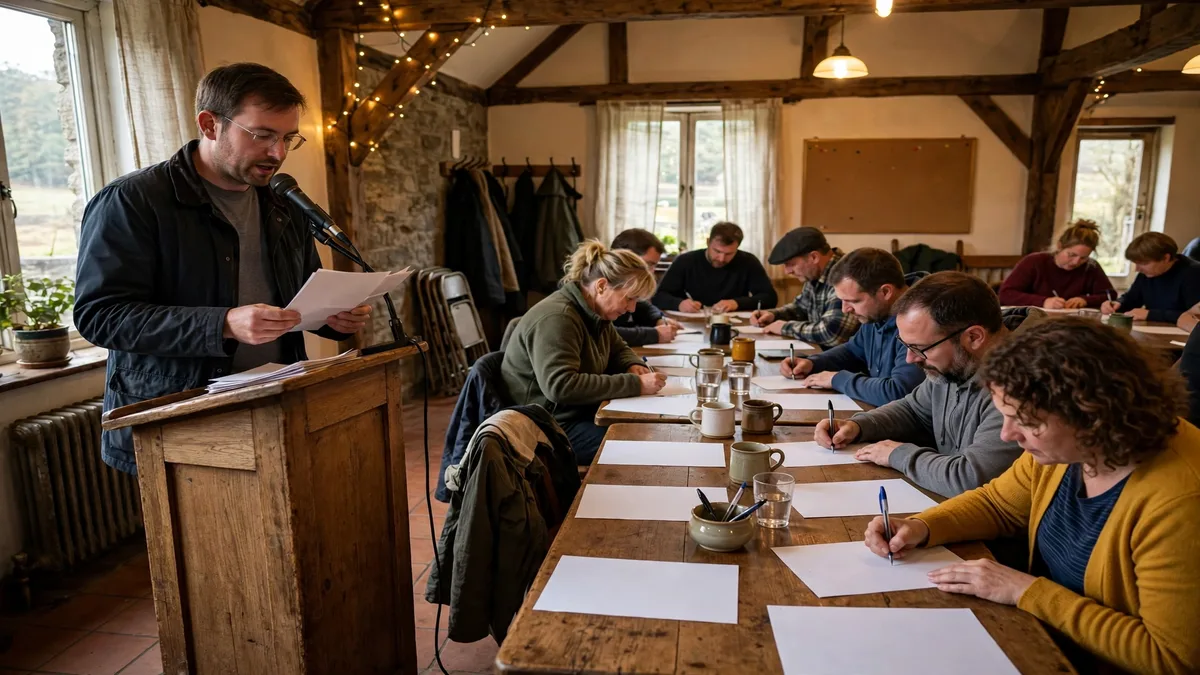
You can run the whole evening with paper answer sheets, pencils and one buzzer per table. Split the room into teams of nine, give each team a number, and keep the same host reading every round. That steady rhythm matters more than any single question, because 561 people notice confusion at once and they notice calm at once too.
Key takeaways
- Nine rounds, one sample question in each, keep a 561 player evening simple to host.
- Teams of nine give 62 full teams, with three people left to form a small team of three.
- One host, one buzzer per table and paper answer sheets beat complicated equipment.
- Mix birds, wild felines, a sea fish and world foods so every table finds a strong round.
- Read each question twice, allow a short pause, then collect sheets before the next round.
If you want a wilder animal lineup, the trivia games for 559 players build their rounds around aardwolves, fossas, markhors, shoebills, secretary birds, coelacanths, mudskippers, flapjacks and scotch eggs.
How 561 Players Fit Into One Evening
Start with teams of nine. Sixty two teams of nine use 558 people, and the remaining three people form one small team of three, which gives 63 teams in total. Put each team at its own table where possible, and give every table a number card that stays visible all evening. When a team knows its number, the host can call for sheets by number and the room stays orderly.
Allow about ten minutes per round, including reading, thinking time and collection. Nine rounds then take about ninety minutes, with a short pause in the middle for drinks and a stretch. Keep the pause short, because a large room cools quickly when nothing is happening, and a host who returns on time earns the room back at once.
Score each round out of ten. A team earns one point for each correct answer, and the host reads the answers aloud at the end of each round so teams can add up their own totals. A visible running total on a board at the front helps, and it gives the room a shared story as the evening moves from birds to foods.
The Nine Rounds
1. Famous Avocets
Avocets are elegant wading birds with long legs, black and white plumage and a fine bill that curves upward at the tip. They feed in shallow coastal water, sweeping the bill from side to side through the water to catch small creatures. In Britain the avocet became a symbol of wetland protection after it returned to breed in Suffolk in the middle of the twentieth century, and it now appears on the logo of a leading bird protection charity.
Ask about the bill shape, the black and white plumage and the muddy shore habitat, and most tables will have at least one person who has watched waders at the coast. Keep the facts visual, because a picture in words helps a large room picture the bird even when nobody has seen one in person.
Sample question: Which wading bird has a long bill that curves upward and black and white plumage? Answer: the avocet.
2. Famous Godwits
Godwits are long legged wading birds with long straight bills and a habit of feeding in deep mud. The black tailed godwit and the bar tailed godwit are the two best known kinds, and the bar tailed godwit makes one of the longest non stop flights of any bird, travelling thousands of miles across open ocean without landing to feed or rest.
This round works well after avocets, because the two birds share a habitat and a feeding style, yet they differ in the bill shape and in the migration story. Ask which godwit holds the long flight record, and ask where the birds feed, so the round rewards both identification and a memorable fact.
Sample question: Which godwit makes one of the longest non stop flights of any bird? Answer: the bar tailed godwit.
3. Famous Caracals
Caracals are medium sized wild felines with sandy coats, long black tufted ears and a short tail. They live across Africa and parts of Asia, hunting at dawn and at dusk, and they can leap high into the air to catch birds in flight. Their name comes from a Turkish word meaning black ear, which describes the dark backs of those tall ears.
Ask about the ear tufts, the leap and the meaning of the name, and the round stays visual and concrete. Most tables will know the animal by sight even if they have never heard the name, so a short description before the questions helps everyone join in.
Sample question: Which wild feline has long black tufted ears and a name meaning black ear? Answer: the caracal.
4. Famous Margays
Margays are small spotted wild felines from the woodlands of Central and South America. They are excellent climbers, with large eyes for night hunting and ankles that can turn so the animal can climb down a tree head first. Their spotted coat looks like that of a much larger wild feline, yet a margay is only about the size of a domestic pet feline.
Ask about the climbing skill, the night vision and the spotted coat, and keep the comparison with a larger spotted feline as a hint rather than a question. The round rewards careful listening, because the climbing fact is the one most people remember.
Sample question: Which small spotted wild feline can climb down a tree head first? Answer: the margay.
5. Famous Pine Martens
Pine martens are slim woodland mammals with rich brown fur, a pale creamy throat patch and a long bushy tail. They live in trees, hunt at night and eat a wide diet that includes small mammals, birds, eggs and berries. In Britain and Ireland they were once rare, and their return to many woodlands is one of the best known wildlife recovery stories of recent decades.
Ask about the throat patch, the tree dwelling habit and the recovery story, and the round gives every table a fact to hold on to. The pale throat patch is the clearest identification feature, so use it in the opening description and again in the sample question.
Sample question: Which woodland mammal has rich brown fur and a pale creamy throat patch? Answer: the pine marten.
The trivia games for 558 players take a coastal turn with lampreys, guppies, orthodontists, anchovies, gyros, optometrists, sea urchins, quays and causeways.

6. Famous Herrings
Herrings are silvery sea fish that travel in huge shoals through cold northern water. They have been a staple food for centuries, eaten fresh, smoked and pickled, and whole coastal communities once depended on the seasonal herring catch for work and income. The fish feed on tiny plankton, and in turn they feed many larger sea creatures, so they sit at the centre of a cold water food web.
Ask about the shoals, the smoked and pickled forms and the long history as a staple food, and the round connects a familiar food with a wider natural history. Keep the questions about the fish itself, not about fishing methods, so the round stays simple for a mixed room.
Sample question: Which silvery sea fish travels in huge shoals through cold northern water? Answer: the herring.
7. Famous Tortillas
Tortillas are thin flat wraps made from corn or wheat flour, central to the cooking of Mexico and popular far beyond it. A corn tortilla is made from ground maize dough pressed flat and cooked on a hot surface, while a wheat flour tortilla is soft and pliable and often used to wrap fillings. They appear at breakfast, lunch and dinner, filled with beans, eggs, meat, vegetables and fresh herbs.
Ask about the two main kinds, the maize dough and the hot cooking surface, and the round gives every table a familiar food to talk about. The difference between corn and wheat flour tortillas is the fact most people remember, so make it the centre of the round.
Sample question: Which thin flat wrap is made from ground maize dough pressed flat and cooked on a hot surface? Answer: the corn tortilla.
8. Famous Naans
Naans are soft flat leavened wraps from South Asia, traditionally cooked against the hot wall of a clay oven. They are made from wheat flour, yeast and yoghurt, and they are served warm beside curries, grilled meats and vegetable dishes, often brushed with melted butter and sprinkled with fresh herbs. The soft texture and the slight char from the oven wall make them easy to recognise.
Ask about the clay oven, the yoghurt in the dough and the warm serving style, and the round stays close to the kitchen. Most tables will have eaten naan with a curry, so the questions feel friendly rather than academic, and that warmth suits the second half of the evening.
Sample question: Which soft flat wrap is cooked against the hot wall of a clay oven? Answer: naan.
9. Famous Banh Mi
Banh mi is a Vietnamese filled loaf with a crisp crust and a soft inside, filled with savoury meats, pickled carrot and daikon, fresh herbs, chilli and a spread of mayonnaise or pate. It grew from French colonial baking meeting Vietnamese flavours, and it is now sold from street stalls and small shops across Vietnam and in many other countries too.
Ask about the crisp crust, the pickled carrot and daikon and the mix of French baking with Vietnamese flavours, and the round ends the evening on a bright note. The pickled vegetables are the clearest identification detail, so use them in the opening description.
Sample question: Which Vietnamese filled loaf has a crisp crust and pickled carrot and daikon inside? Answer: banh mi.
Round Summary
| Round | Focus | Sample question | Points |
|---|---|---|---|
| 1. Famous Avocets | Upcurved bill and black and white plumage | Which wading bird has a long bill that curves upward? | 10 |
| 2. Famous Godwits | Long flight and deep mud feeding | Which godwit makes one of the longest non stop flights? | 10 |
| 3. Famous Caracals | Black tufted ears and high leap | Which wild feline has long black tufted ears? | 10 |
| 4. Famous Margays | Climbing and night hunting | Which small spotted wild feline climbs down head first? | 10 |
| 5. Famous Pine Martens | Pale throat patch and woodland life | Which woodland mammal has a pale creamy throat patch? | 10 |
| 6. Famous Herrings | Huge shoals and staple food | Which silvery sea fish travels in huge shoals? | 10 |
| 7. Famous Tortillas | Corn and wheat flour wraps | Which thin flat wrap is made from ground maize dough? | 10 |
| 8. Famous Naans | Clay oven and yoghurt dough | Which soft flat wrap is cooked in a clay oven? | 10 |
| 9. Famous Banh Mi | Crisp crust and pickled vegetables | Which Vietnamese filled loaf has pickled carrot inside? | 10 |
How to Run the Evening
Open with a welcome, a clear explanation of the points plan and a practice question that every table can answer. A practice question calms nerves, tests the sound and shows the room how the answer sheets work. Read the practice question twice, allow thirty seconds, then read the answer aloud and move on without a long discussion.
Keep the host in one place at the front, with a microphone that reaches the back tables. A host who walks around while reading loses the back of the room, and a host who reads too fast loses the tables that are still writing. Read each question twice, pause, and only then move to the next one. That rhythm is the whole skill of hosting a very large quiz.
The trivia games for 557 players mix hornets, snails, shrimps, clams, chutneys, buskers, wells, newts and cisterns.
Collect sheets at the end of each round, not at the end of the evening. A team of helpers can gather sheets by table number while the host reads the answers, and the points can be added up during the pause. Announce the leading three teams after round five and again after round eight, so the room has a story to follow into the closing round.
Checklist for the Host
- Print 63 answer sheets per round, plus spares, and number every table clearly.
- Place one buzzer, pencils and a points card on every table before people arrive.
- Test the microphone from the back tables and keep a spare battery nearby.
- Read each question twice, allow a short pause, then read the answer aloud.
- Collect sheets by table number after every round and add up points during the pause.
- Announce the leading three teams after round five and after round eight.
Frequently Asked Questions
How long does a trivia evening for 561 players take?
Allow about ninety minutes for nine rounds, plus a short pause in the middle. Add thirty minutes before the start for seating and team numbers, and fifteen minutes at the end for the closing total and thanks.
How do we stop cheating?
Keep the room well lit, ask team leaders to keep phones face down, and use a fresh answer sheet for every round. A host who reads clearly and keeps the pace brisk leaves little room for quiet searching, and helpers walking the room help too.
What if a team has fewer than nine people?
Let small teams play as they are and score them out of the same ten points per round. A team of three can still enjoy the evening, and the points plan stays fair because every round is scored the same way for every team.
Can children join a 561 player trivia evening?
Yes, if the questions are read slowly and the evening is kept to ninety minutes. Mix ages across teams where possible, because a mixed team usually knows more across nine different rounds than a team of similar ages.
Do we need a buzzer on every table?
A buzzer helps the host spot a team that wants to ask a question, but it is not essential. Paper sheets, pencils and a clear host voice carry the evening, and a buzzer is a useful extra rather than a requirement.
What happens when two teams finish tied at the top?
Read one extra question to the tied teams only, with the same host and the same time limit. The team that answers correctly takes the higher place, and the other team keeps its place just behind.
The Bottom Line
Best trivia games for 561 players need nine plain rounds, teams of nine, one steady host and a points plan that everyone can follow. Avocets and godwits open the evening, caracals, margays and pine martens carry the middle, and herrings, tortillas, naans and banh mi bring it home with familiar foods. Read each question twice, collect sheets after every round, and the room will stay with you from the opening welcome to the closing total.