Finding trivia games for 383 players sounds impossible until you stop picturing one table and start picturing a tournament. No single board, buzzer set, or question sheet is built for 383 people at once, and no host can keep 383 voices in one room on the same question at the same time. The trick is not a bigger game. It is a bigger structure, one that lets small groups play real trivia while the whole crowd shares one scoreboard, one clock, and one final.
That is exactly what this guide does. It treats 383 as the top of a range that starts at three players, not as a fixed headcount that demands a stadium. A family of three can play the same formats in a living room, a school can run them for a year group, and a company, conference, or community festival can scale them up to 383 players with teams, stations, and heats. The games stay the same. Only the organisation grows.
Below you will find seven formats that genuinely work at this scale, a comparison table to help you choose, a practical plan for running the night, and a short checklist to use on the day. Every format below is judged on the same four tests: can everyone play, can everyone follow the questions, does the scoring stay fair, and does the night stay fun?
Key takeaways
- Think in teams of three to six, not in 383 individuals, and the numbers become manageable at once.
- Split the crowd into stations or heats so every player answers questions instead of watching others play.
- Use one shared scoreboard and one clock so a huge room still feels like a single event.
- Mix written rounds, buzzer rounds, picture rounds, and audio rounds so different strengths get a turn.
- End with a short stage final between the top teams so the night builds to a moment everyone can watch.
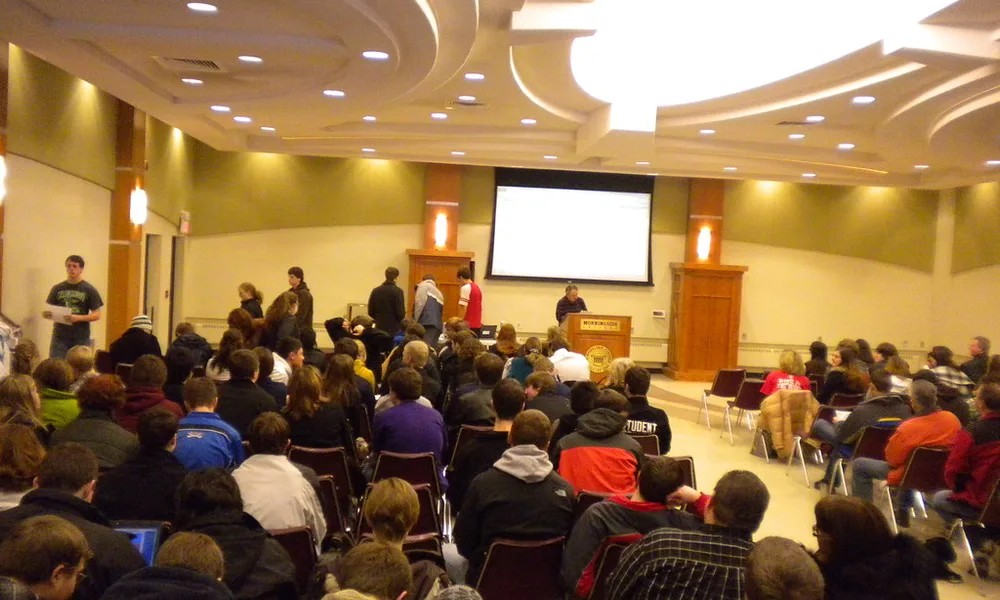
What 383 Players Really Means
The number 383 looks awkward because it is. It is not a round number, it does not divide neatly into equal teams, and it is far too many people for one table. That awkwardness is actually useful. It forces you to design for a range instead of a single room, and a design that works for 383 players will work for 30, 120, or 250 as well. Start with the structure, and the headcount stops mattering.
The 3-to-383 Range
Every format in this guide works from three players up to 383. At the small end, three players can sit together, take turns as question master, and play any of these games with a single sheet of paper. At the large end, the same games run in parallel across many tables, with a host calling the questions over a speaker system and a scoreboard everyone can see. Nothing about the questions changes. Only the number of copies, tables, and scorekeepers grows.
Teams Are the Scaling Unit
The unit that makes 383 players possible is the team. Divide the crowd into teams of three to six, and 383 players become roughly 64 to 128 teams, which is a number a host team can actually manage. Each team needs one table or one patch of floor, one answer sheet, and one pen. Each team nominates a captain who hands in the sheet and a scorer who checks it. Suddenly the host is dealing with about a hundred sheets, not 383 shouting voices, and the night runs on time.
Team size is a real decision, not a detail. Teams of three give everyone plenty to do, but they struggle on broad general knowledge rounds. Teams of six cover more topics, but quieter players can disappear inside them. For a crowd of 383, teams of four or five are the sweet spot: big enough to share knowledge, small enough that everyone still answers. If you have never hosted a big night before, our guide to running a pub quiz walks through team sizes, answer sheets, and scoring in more detail, and it is worth reading before you print anything.
Stations, Heats and a Final
Even with teams, 383 players cannot all do the same thing in the same room at the same moment without chaos. The answer is to split the event into parts. Stations work well for the first half of the night: teams rotate between tables running different rounds, such as a picture round, a music round, and a general knowledge round, spending ten minutes at each. Heats work well for buzzer games: groups of teams play short matches on a stage while the rest of the crowd watches, answers along on paper, or plays a written round of their own.
Both approaches end the same way, with a final. The top eight or ten teams from the stations or heats come to the stage for a short buzzer final, while everyone else watches and plays along for fun. This is the moment the whole room becomes one audience again, and it is what people remember. A final that lasts twenty minutes is long enough to feel dramatic and short enough to hold the attention of 383 people who have already been playing for two hours.
The Best Trivia Games for 383 Players
These seven formats are the ones that survive the four tests set out above: everyone plays, everyone can follow the questions, the scoring stays fair, and the night stays fun. They are ordered from the easiest to organise to the most theatrical, so you can pick one format for a simple evening or combine three or four for a full event. The comparison table gives the quick version, and the sections below explain how each format actually runs with a crowd this size. They build on the games we picked for 380 players, with the station and final formats strengthened for the extra teams.
| Format | Players per game | Best for | Setup needed |
|---|---|---|---|
| Team pub quiz | 3 to 383 | Whole-room evenings | Answer sheets, pens, speaker |
| Buzzer quiz bowl | 3 to 383 | Stage finals and heats | Buzzers, stage, scoreboard |
| Station rotation trivia | 3 to 383 | Festivals and large halls | One station per round |
| Picture round relay | 3 to 383 | Mixed ages and abilities | Printed picture sheets |
| Speed trivia rounds | 3 to 383 | High energy, short nights | Timer, short question sets |
| Music and audio rounds | 3 to 383 | Parties and social nights | Speaker, playlist, clips |
| Grand final showdown | 3 to 383 | Closing a big event | Stage, buzzers, top teams |
1. Team Pub Quiz
The classic team pub quiz is still the most reliable format for 383 players, because it asks the least of the room. One host reads the questions, every team writes its answers on a sheet, and the sheets are marked between rounds. With a good speaker system and a projected question slide for each round, a hall of 383 people can play at exactly the same pace as a pub table of six. The questions should be mixed in difficulty so that every team gets some right and no team runs away with the night in the first round.
2. Buzzer Quiz Bowl
A buzzer quiz bowl puts teams on a stage, gives each team a buzzer, and rewards the fastest correct answer. It is the most exciting format to watch, which is why it works best as heats and a final rather than as the whole night. Run four heats of four teams on the stage, keep each heat to fifteen minutes, and let the rest of the crowd answer the same questions on paper for a parallel score. The winners of the heats meet in the final, and the room gets a genuine contest to cheer for.
3. Station Rotation Trivia
Station rotation is the format that best handles a crowd of 383 in a large or awkward space. Set up six to eight stations around the hall, each running a different round, and give every team a rotation card. Teams spend ten minutes at a station, hand in their sheet, and move on when the bell rings. Because only a fraction of the crowd is at any one station, the noise stays manageable, the queues stay short, and a team that is weak at general knowledge can still win the picture or music station.
4. Picture Round Relay
A picture round relay asks teams to identify a set of images, such as famous landmarks, film stills, logos, or close-up photographs of everyday objects. It is the most inclusive format in this guide, because it does not depend on quick recall of facts or fast reading. Print one picture sheet per team, give ten minutes, and mark it as a group. For 383 players, picture rounds are also the cheapest to scale: printing a hundred extra sheets costs almost nothing, and no extra equipment is needed at all.
5. Speed Trivia Rounds
Speed trivia compresses the classic quiz into short bursts: twenty questions in ten minutes, with thirty seconds per question and no time to look anything up. It suits a crowd of 383 because it keeps the energy high and the gaps between rounds short. Run three speed rounds with different themes, such as food, sport, and geography, and mark them immediately so the scoreboard changes fast. The pace stops larger teams from debating every answer for minutes, which is the single biggest cause of delay in a big-room quiz.
6. Music and Audio Rounds
Music rounds ask teams to name the song, the artist, or the film a short clip comes from, and they change the mood of a night more than any other format. A clip of five to ten seconds is enough, and the whole room hears it at the same time through the speaker system, so no team has an advantage. For 383 players, keep the playlist broad: a mix of decades, genres, and familiar film themes means every age group in the room recognises something. Mark the round generously, with a point for the song and a point for the artist, so partial knowledge still counts.
7. Grand Final Showdown
The grand final showdown is not a standalone game but the ending every large trivia night needs. Take the top eight teams from the earlier rounds, put them on the stage in pairs, and run a short knockout of buzzer questions until one team remains. Give the watching crowd a fun answer sheet so they stay involved, and keep the questions slightly easier than the earlier rounds so the final produces drama rather than silence. Twenty minutes is enough. A final that drags on loses the room, however good the questions are.
How to Run a 383-Player Trivia Night
Running trivia for 383 players is an exercise in logistics as much as in question writing. The games themselves are simple, and the formats above are proven, so most of what can go wrong is practical: not enough pens, a speaker that does not reach the back of the hall, a scoreboard that nobody can read, or a schedule that slips by ten minutes a round. Plan the practical side first, write the questions second, and the night will largely run itself.
Room and Station Layout
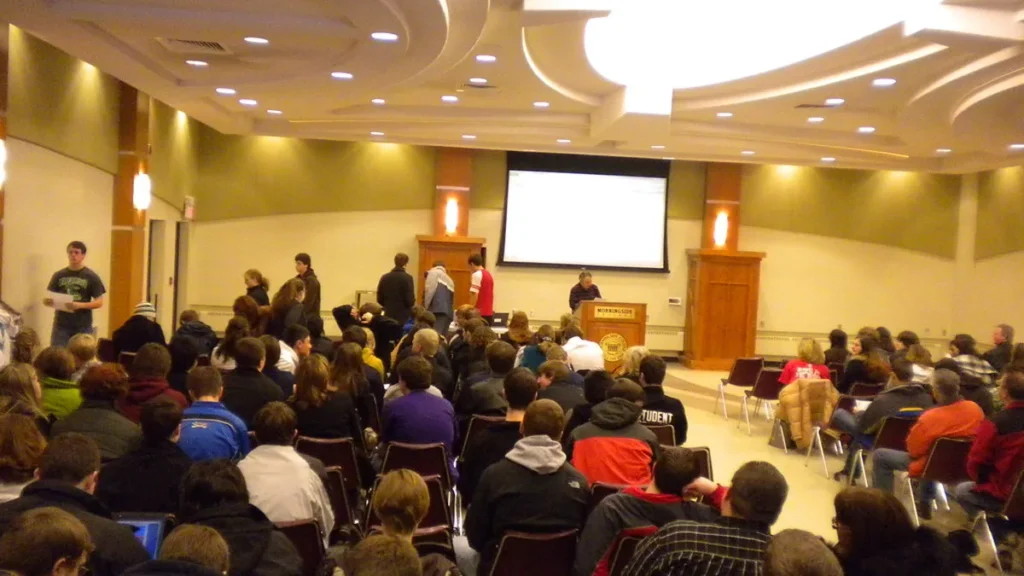
Walk the room before you plan anything else. Count the tables, check the sightlines to the stage and the screen, and stand at the back while someone speaks through the microphone. If you cannot hear clearly at the back, 383 players will not be able to either, and you need a second speaker or a different room. Arrange the tables in rows facing the stage with a clear aisle down the middle for the scorekeepers, and keep the stations around the edges so rotating teams do not cross the seated crowd. Put the scoreboard where every table can see it, and put the question slides on a screen big enough to read from the last row.
Scoring That Survives 383 Players
Scoring is where large trivia nights usually fail, so keep it simple and visible. One point per correct answer, with a bonus point for a perfect round, is enough. Avoid half points, complicated multipliers, and tie-break rules that need explaining, because every complication multiplies across a hundred teams. Use the same scoring approach we used for 381 players, with a single scorekeeper per ten teams and a central scoreboard updated after every round, so no team waits more than a few minutes to see where it stands. If two teams tie for the final places, settle it with one sudden-death question on the stage rather than a recount.
Timing and Rounds
A 383-player night should last about two hours of play plus breaks, and the schedule should be printed and visible. Six rounds of ten questions, with five minutes of marking between rounds, fills that time comfortably. Announce the time remaining at the halfway point of each round, and do not extend rounds because one table is slow; the other hundred teams will notice and lose patience. Build in one fifteen-minute break after the third round, and protect the final twenty minutes for the stage showdown.
Checklist: Your 383-Player Trivia Setup
Run through this list the day before the event, not on the night itself. Everything on it is cheap or free, and every item prevents a problem that is much harder to fix with 383 people already in the room.
- Count the teams and print one answer sheet per team per round, plus twenty spare sets for late arrivals and mistakes.
- Test the microphone and speakers from the back of the room, and check that the question slides are readable from the last row.
- Prepare a visible scoreboard, whether a projected spreadsheet, a whiteboard, or a printed league table updated each round.
- Assign one scorekeeper per ten teams, give each a clear stack of sheets, and agree on the marking standard before the first question.
- Set up the stations or the stage the night before where possible, including buzzers, timers, and a backup set of questions.
- Print the schedule and the rules on a single page per table so every team knows the format, the rounds, and the final.
Frequently Asked Questions
Can 383 players really play the same trivia game at the same time?
Yes, if the game is built around teams and written answers. One host, one speaker system, and one set of projected questions can serve 383 players at once, because every team answers on paper at the same time. Buzzer games are the exception: those work best as heats on a stage, with the rest of the crowd playing along on paper.
How many teams should 383 players be split into?
Teams of four or five work best, which gives you roughly 77 to 96 teams from 383 players. Teams of three give everyone more to do but cover fewer topics, while teams of six or more let quieter players hide. If the numbers do not divide evenly, let a few teams have three or six players rather than forcing an exact split.
What equipment do you need for 383 players?
Less than most people expect: a microphone and speakers that reach the back of the room, a screen or projector for the questions, printed answer sheets, pens, and a scoreboard. Buzzers and a stage are only needed if you run a quiz bowl heat or a final. A timer, a bell for station rotation, and spare sheets cover almost everything else.
How long does a trivia night for 383 players take?
About two to two and a half hours, including a fifteen-minute break and a twenty-minute stage final. Six rounds of ten questions with short marking gaps fit comfortably into that time. The most common mistake is letting rounds overrun, so use a visible timer and start each round on schedule even if a few teams are still writing.
What if some players arrive late or leave early?
Design for it from the start. Teams can join at the next round without breaking the scoring, because each round is scored separately. Keep twenty spare answer sheet sets ready, and let a team that loses a player continue with fewer members. Nobody should be turned away from a trivia night because they missed the first ten minutes.
Do you need prizes for 383 players?
You need prizes for the winners, not for everyone. A single prize for the winning team, a smaller prize for second place, and a fun prize for the best team name are enough. The shared experience is the real reward for most players, and a short, sincere presentation of the prizes at the end matters more than their value.
Bottom Line
The best trivia games for 383 players are not the biggest games, but the best organised ones. Teams of four or five, a mix of written rounds, stations, and a buzzer final, one shared scoreboard, and a schedule that respects the clock will turn an impossible headcount into a genuinely enjoyable night. Start with the classic team pub quiz, add a picture round and a music round for variety, and finish on the stage with the top teams. If you do that, 383 players will not feel like a crowd to manage. They will feel like a room full of people playing the same game together, which is exactly what a great trivia night should be.