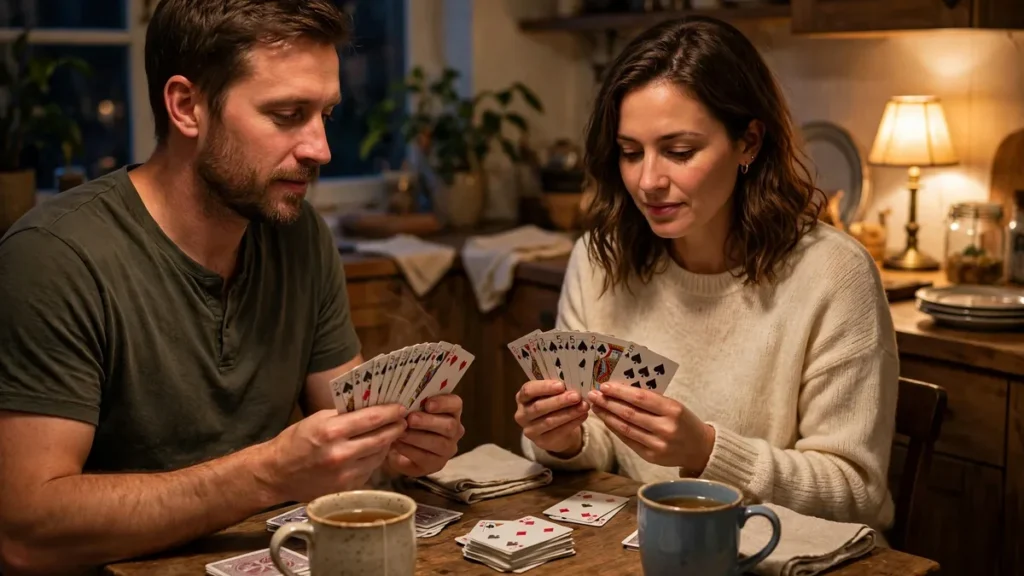
Finding the best trivia games for 115 players starts with an honest fact: no single trivia game seats 115 people around one table. A group this large needs a different kind of plan, one built on teams, tables, and a host who can keep the whole room playing at the same time. When the format is right, 115 players is not a problem at all. It is the size of a lively quiz night, a school assembly, a company social, or a community fundraiser.
The best trivia games for 115 players work because they split the crowd into teams of four to six, give every team the same questions at the same time, and score the answers together at the end of each round. Nobody waits for a turn, nobody sits out, and the quietest person in the room still contributes.
This guide covers ten formats that scale cleanly to 115 players, from a classic pub quiz to a whole-room music round and a fast digital poll. Each one explains how it works, what equipment to prepare, and who it suits best. Use the comparison table to pick a format in minutes, then follow the checklist to run the night without a hitch.
Key takeaways
- No single game seats 115 players, so split the room into 20 to 28 teams of four to six and score by team.
- Give every team the same questions at the same time, with one host, one microphone, and one clear answer sheet.
- Mix question types across rounds, including general knowledge, pictures, music, and speed rounds, to keep every team in the game.
- Keep rounds short, score between rounds, and announce a running leaderboard so energy stays high.
- Choose the format by your room, your equipment, and your crowd, not by the name on the box.

How trivia works for 115 players
A group of 115 players sounds huge until you divide it. Twenty-three teams of five is a comfortable room, and twenty-eight teams of four works just as well if you have more tables. The host reads each question once, teams discuss quietly for thirty to sixty seconds, and every team writes its answer down. Scoring is simple: one point per correct answer, with a bonus point for a perfect round.
The room matters as much as the questions. Arrange tables in rows or a gentle arc so every team can see and hear the host, and keep walkways clear for the people collecting answer sheets. A microphone is essential in a room this size, and a screen or printed sheets help for picture and music rounds. If you are planning a smaller version of the same night first, the ideas in Best Trivia Games for 114 Players show how the same team format scales by a single player.
Timing is the other half of the plan. A good large-group quiz runs for about ninety minutes, with six rounds of ten questions and short scoring breaks. Build in a break after round three, keep the host moving, and announce the top five teams after every round so teams at the bottom still have a reason to keep playing.
The team model that makes 115 work
Teams of four to six are the sweet spot. Smaller teams feel exposed, and larger teams let a few voices dominate while the rest go quiet. Let people form their own teams where possible, then balance any leftover players into mixed teams so nobody plays alone. Give each team a name and a number, and the room will organise itself.
Assign one captain per team to write the answers and hand the sheet in. The captain is not the smartest player, just the most organised one. A second person can act as a runner if the room is large, collecting sheets and returning them after scoring.
Room layout and sound for a whole-room game
Place the host at the front, slightly raised if possible, with a speaker system that reaches the back tables. Test the microphone before anyone arrives, and ask a friend at the farthest table whether every word is clear. For picture rounds, print one picture sheet per team or project the images large enough to see from the back row.
Keep the scoring table near the host, with a visible scoreboard on a whiteboard, a flip chart, or a projected slide. Teams love watching the leaderboard move, and a visible score keeps the competition friendly. Put spare pens and answer sheets on every table before the night starts.
The best trivia games for 115 players
The ten formats below all work for 115 players, but they suit different rooms, crowds, and occasions. Read the short description of each one, then use the comparison table to narrow the list to the two or three that fit your night best. Every format uses the same team model, so you can combine two of them in one evening.
1. Classic team pub quiz
The classic team pub quiz is the most reliable format for 115 players, and the best place to start if you have never hosted a large quiz. The host reads six rounds of ten questions, covering general knowledge, geography, history, sport, food, and entertainment. Teams write their answers on a sheet, swap sheets with a neighbouring team for marking, and the host reads the answers aloud.
What makes this format work at scale is its simplicity. Every team plays every question, so nobody is eliminated early, and swapping sheets for marking means the host does not need to check 23 sheets between rounds. Vary the difficulty within each round, with three easy questions, five medium ones, and two hard ones, so every team scores something. A tie-breaker question, written down in advance, settles any draw at the top.
2. Picture round relay
A picture round relay adds a visual break to a night of spoken questions. Each team receives a printed sheet with ten pictures, such as famous landmarks, animals, or close-up photos of everyday objects. Teams have five minutes to identify as many as they can, and the sheet is collected for marking.
Picture rounds suit mixed-age crowds because they reward observation as much as memory. A child can spot a cartoon character while an adult recognises a capital city, and both answers count the same. Keep the pictures large and clear, with one picture per question. A well-chosen picture round often becomes the most talked-about part of the night.
3. Music intro challenge
In a music intro challenge, the host plays the first few seconds of a well-known song, and teams write down the title and the artist. Ten songs make one round, and the host plays each clip twice so teams at the back hear it clearly. This format brings instant energy, because the whole room reacts the moment a familiar song begins.
Choose songs across decades so every age group has a fair chance, and mix genres rather than sticking to one era. Include a few easy songs that almost everyone knows, plus two or three harder ones for the music fans. Check the sound system in advance, keep each clip short, and pause between songs so teams can agree on an answer.
4. Buzzer tournament
A buzzer tournament turns trivia into a contest between teams. Four teams at a time face the host, and the first team to buzz in answers the question. Correct answers score a point, wrong answers pass the question to the next team, and the winning team moves on to face a new challenger. With 115 players, run the tournament in heats and bring the heat winners together for a final.
This format suits a confident crowd that enjoys competition, but it needs careful hosting so the teams waiting their turn stay involved. Give the waiting teams their own answer sheets and let them play along silently for points, or run the buzzer rounds between regular written rounds. Keep questions short and punchy, and use a simple set of buzzers or a phone app that acts as one.
5. Whole-room trivia bingo
Whole-room trivia bingo combines a quiz with a bingo card, and it is one of the easiest formats to run for 115 players. Each player receives a bingo card printed with answers instead of numbers, such as capital cities, animals, or famous names. The host reads out questions, and players mark the matching answer. The first player to complete a line or a full card calls out and wins a small prize.
This format works because every player has their own card, so 115 people can play at once without waiting. It also suits a relaxed social event, because players can chat between questions and nobody feels put on the spot. If you want a livelier version, look at the ideas in Best Party Games for 114 Players for ways to add team challenges around the bingo rounds. Print the cards in advance, use a different card layout for each table, and keep the questions at a friendly difficulty.
6. Lightning speed round
A lightning speed round is a short, fast burst of questions that wakes the room up. The host reads twenty quick questions in five minutes, one after another, and teams write one-word answers as fast as they can. There is no discussion time beyond a few seconds, so teams rely on instinct. It is loud, funny, and often produces the biggest surprises of the night.
Use this format once, in the middle of the evening, rather than as the main event. It works best with simple questions that have short answers, such as colours, numbers, animals, and everyday facts. Score it immediately, announce the fastest-scoring team, and then return to the regular pace.
7. Themed table tournament
A themed table tournament gives each table its own topic for one round, then rotates the topics so every team tries every theme. One table starts with film, another with sport, another with food, and after ten minutes the topics move on. This format suits a crowd with wide interests, because a team that struggles with history may shine at music or geography.
Prepare one question sheet per theme, with ten questions each, and print enough copies for every table. Collect the sheets for central marking, or appoint a table judge for each round. Themed rounds also suit a special occasion, such as a holiday party or a fundraiser, because you can match the themes to the event.
8. Trivia relay race
A trivia relay race adds movement to a quiz night. Each team lines up, and one player at a time runs to the front, answers a question, and tags the next player. Correct answers earn points, and the team that finishes first earns a bonus. With 115 players, run the relay in heats of four or five teams, with the rest of the room cheering from their tables.
This format suits a younger crowd, a school event, or an outdoor party where there is space to move safely. Keep the questions short, the running distance short, and the floor clear of bags and chairs. It is not the right choice for a formal dinner or a room with limited space, but in the right setting it is the most memorable format on this list.
9. Digital live poll quiz
A digital live poll quiz uses phones to collect answers from all 115 players at once. The host shows each question on a screen, players answer on their phones, and the results appear live as a bar chart or a leaderboard. This format feels modern and fast, and it removes the need for paper answer sheets entirely.
This format needs reliable Wi-Fi, a projector or large screen, and a quiz platform that supports more than a hundred players. Test the connection before the night, ask players to join with a simple code, and keep a paper backup in case the Wi-Fi drops. It suits a company event or a tech-friendly crowd. Keep each question on screen long enough for everyone to read it, and read it aloud as well.
10. Mystery box challenge
A mystery box challenge gives each team a sealed box or envelope containing ten clues, objects, or questions to solve together. Teams open the box at the same time, work through the contents at their own pace, and hand in their answers when they finish. The contents can include riddles, word puzzles, and short trivia questions, so every team member finds something they enjoy.
This format suits a longer event, such as a fundraiser or a team-building day, because teams can work on the box for twenty or thirty minutes while the host prepares the next round. Prepare identical boxes for every team, number the contents clearly, and include a simple answer sheet inside each box. If you enjoy puzzle-style play, the formats in Best Board Games for 114 Players offer more ideas for table-based games that pair well with a mystery box round. Check that every box is complete before the night starts.
Comparison table: best trivia games for 115 players
| Format | Best for | Equipment needed | Energy level | Setup time |
|---|---|---|---|---|
| Classic team pub quiz | Any crowd, first-time hosts | Microphone, printed sheets, pens | Medium | 30 minutes |
| Picture round relay | Mixed ages, visual learners | Printed picture sheets | Medium | 30 minutes |
| Music intro challenge | Social nights, all ages | Speakers, song clips | High | 30 minutes |
| Buzzer tournament | Competitive crowds | Buzzers or buzzer app | High | 45 minutes |
| Whole-room trivia bingo | Relaxed social events | Printed bingo cards | Medium | 30 minutes |
| Lightning speed round | Mid-evening energy boost | Microphone, printed sheets | Very high | 15 minutes |
| Themed table tournament | Special occasions, wide interests | Printed theme sheets | Medium | 45 minutes |
| Trivia relay race | Schools, outdoor parties | Open floor space, question cards | Very high | 45 minutes |
| Digital live poll quiz | Company events, tech-friendly crowds | Wi-Fi, projector, quiz platform | High | 60 minutes |
| Mystery box challenge | Fundraisers, team building | Identical boxes, printed clues | Medium | 60 minutes |
How to run a 115-player trivia night
Running a trivia night for 115 players is mostly about preparation. Write the questions in advance, print more answer sheets than you think you need, and test the sound system before the first guest arrives. A calm host with a clear plan will always run a better night than a nervous host with a clever format.
Brief your helpers before the doors open. Give each helper a job, such as collecting sheets, updating the scoreboard, or handing out prizes, and make sure everyone knows the running order. If something goes wrong, such as a question with two possible answers, accept both answers and move on.
Checklist for a smooth 115-player quiz
- Split 115 players into 20 to 28 teams of four to six, with a named captain for each team.
- Prepare six rounds of ten questions, plus a tie-breaker, and print spare answer sheets for every table.
- Test the microphone, speakers, and projector before guests arrive, and ask someone at the back table to confirm the sound is clear.
- Set up a visible scoreboard and announce the top five teams after every round.
- Plan a break after round three, with drinks and a chance for teams to stretch their legs.
- Prepare small prizes for the winning team, the best team name, and the highest-scoring round.
Frequently asked questions
Can one trivia game really seat 115 players?
No single table game seats 115 players, and any game that claims to do so is really a whole-room format. Split the room into teams of four to six, give every team the same questions, and score by team. That way all 115 players take part in every round, even though no one table holds more than six people.
How many teams do I need for 115 players?
You need 20 to 28 teams, depending on team size. Twenty-three teams of five is the most comfortable split, with a few teams of four or six to make the numbers work. If a few players drop out on the night, rebalance the teams before the first round.
How long should a 115-player trivia night last?
Plan for about ninety minutes of play, plus a break and time for arrival and prizes. Six rounds of ten questions, with scoring breaks between rounds, fits neatly into that time. A night much longer than two hours will tire the room.
What equipment is essential for a group this large?
A microphone and speakers are essential, because the host must be heard at the back of the room. Printed answer sheets, pens, and a visible scoreboard come next. A projector helps for picture and music rounds, but neither is essential for a classic pub quiz.
How do I keep the scoring fair with so many teams?
Use the same questions for every team, swap answer sheets between neighbouring teams for marking, and read the correct answers aloud so everyone can check. Announce the scores after every round, keep the scoreboard visible, and have a written tie-breaker ready.
What prizes work best for a large trivia night?
Small prizes work best, because the point of the night is the game, not the reward. A box of chocolates, a gift voucher, or a fun trophy for the winning team is plenty, plus a small prize for the best team name.
The bottom line
The best trivia games for 115 players are the ones that let everyone play at once, and that means teams, not a single table. Split the room into teams of four to six, pick a format that fits your room and your crowd, and run the night with clear questions, quick scoring, and a visible leaderboard. Start with the classic team pub quiz if you are unsure, add a picture or music round for variety, and finish with a speed round to send the room home smiling.