Five hundred players is not a party. It is a small town arriving at once, with different ages, different energy levels, and different ideas about what counts as fun. A single game for everyone at the same time would leave most people standing around, watching a few confident players take over. The trick is to stop thinking of the day as one big game and start thinking of it as a festival with nine clear stations, each one built to keep a large group moving, laughing, and taking part.
The plan in this guide splits 500 players into ten teams of 50. Each team has a captain, a colour, and a simple scorecard, and the teams move from station to station in a fixed order. Nobody waits long, because every station runs in short heats and every game splits its team into smaller squads, so a fresh group is always playing.
What makes these nine games work at this size is that each one has a job for everyone. Some players run, sweep, or search, while others blow, pick up, sort, or keep time. A quiet player can be the best spotter or counter on the team, and a loud player can be the best cheerleader or starter. If your guest list shifts by a couple of people, our guide to party games for 498 players shows how a slightly smaller gathering runs on the same station system, and the timetable there transfers directly to this plan.
Key takeaways
- Split 500 players into ten teams of 50, each with a captain, a colour, and a scorecard.
- Run nine stations in parallel so no team waits long and every player has a clear job.
- Keep every round short, with simple rules that a new player can learn in under a minute.
- Mix running, blowing, sweeping, spotting, and craft games so different strengths all matter.
- Score every station the same way, and finish with one clear winner and plenty of small prizes.

How to Run a 500-Player Party Day
Start with the ground. You need enough space for nine stations with a clear walking lane between them, plus a central meeting point where teams gather at the start and the end of the day. A school field, a large park lawn, or a community sports ground all work well. Mark every station with a coloured flag and a simple sign showing the game name, the rules in three short lines, and how points are scored.
Next, build the timetable. Nine stations at twenty minutes each give three hours of play, with five minute changeovers adding forty five minutes between rounds. Add thirty minutes at the start for welcome and team photos, and thirty minutes at the end for the final scores and the closing ceremony, and the whole day runs to about four hours and forty five minutes. The party games for 496 players guide runs on the same station idea, with teams rotating on a fixed timetable and a volunteer with a whistle at every station.
Scoring should be simple enough for a volunteer to run with a clipboard. Award ten points for first place at a station, eight for second, six for third, and four, two, and one for the rest, so every team scores something at every station. Give every station one leader, one timer, and one scorekeeper, and keep the jobs separate so nobody has to do two things at once. Start and end every round together with a whistle or a horn, and keep the gaps between rounds short. Do that, and 500 players feel like ten small parties instead of one enormous crowd.
Party Games for 500 Players at a Glance
Use this table to plan your space, your timetable, and your shopping list before the day begins. Every game below fits the same rotation, so you can swap the order without breaking the plan.
| Game | Team size | Space needed | Time per round | Energy level |
|---|---|---|---|---|
| Mega Feather Blow Race | 50 players | Covered tables | 20 minutes | Low |
| Giant Broom Ball Sweep Relay | 50 players | Marked lane | 20 minutes | High |
| Mega Ping Pong Cup Target Rally | 50 players | Covered tables | 20 minutes | Low |
| Giant Shoe Scramble Relay | 50 players | Open lawn | 20 minutes | High |
| Mega Chopstick Pickup Relay | 50 players | Covered tables | 20 minutes | Low |
| Mega Cotton Ball Scoop Dash | 50 players | Covered tables | 20 minutes | Medium |
| Giant Birdwatching Spotter Rally | 50 players | Open grounds | 20 minutes | Low |
| Mega Straw Pom Pom Transfer Relay | 50 players | Covered tables | 20 minutes | Medium |
| Giant Cloud Shape Tale Relay | 50 players | Open lawn | 20 minutes | Low |
The 9 Games
Each game below explains how to set it up, how a round works, and why it suits a group of 500 players. Read the set up notes first, then let the station leader run the round while the timer keeps the day on schedule.
1. Mega Feather Blow Race
Set a long table with a marked lane down the middle and a light feather at the start line. Each player kneels at the table and blows the feather along the lane using only their breath. No hands, no fans, and no leaning on the table are allowed. If the feather falls off the edge, the player picks it up, puts it back at the last marked line, and blows again from there.
The fun of this game is that it looks easy and turns out to be hard. A strong puff sends the feather off course, while a soft steady breath keeps it moving straight. Score the team by its fastest clean run through the lane, with a five second penalty added for every time the feather falls off the table.
2. Giant Broom Ball Sweep Relay
Mark a lane on flat ground with cones at each end and place a large soft ball at the start. Each player takes a broom, sweeps the ball around the far cone, and sweeps it back to hand the broom to the next player. The ball must stay on the ground the whole way, and the player may not pick it up or kick it. If the ball rolls outside the lane, the player brings it back to the spot where it left and carries on from there.
This is a loud, cheerful station, and every big day needs one. Score the team by its fastest clean squad time, with a five second penalty added for every time the ball leaves the lane.
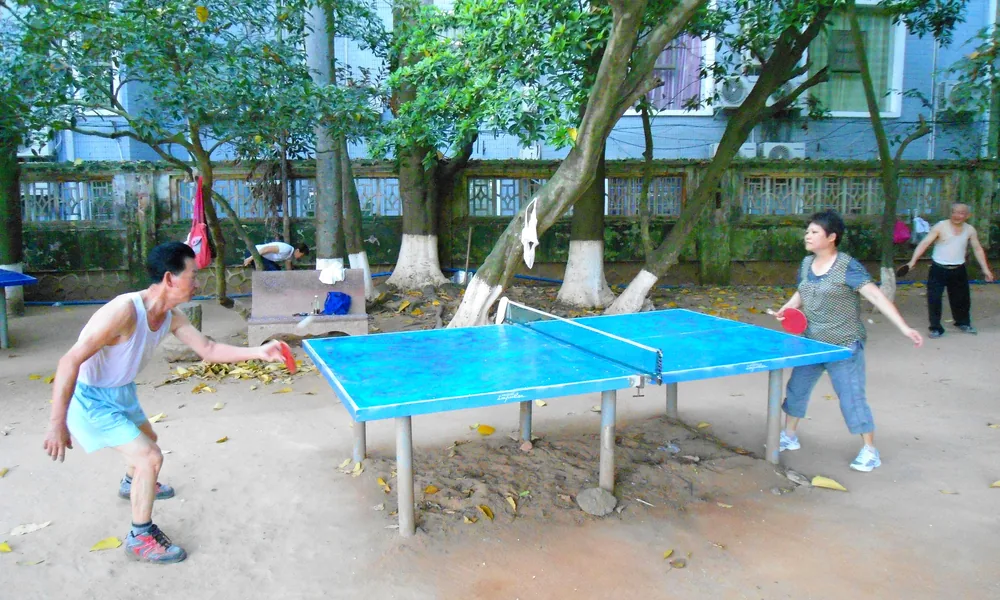
3. Mega Ping Pong Cup Target Rally
Set a table with a row of five cups at the far end, each one worth a different number of points, and a line of ping pong balls at the near end. Each player stands behind the throwing line and bounces one ball on the table, aiming to land it in a cup. A ball that lands in a cup scores the points written on that cup, and a ball that misses is collected and set aside. Players throw one at a time, in squad order, while the rest of the squad watches from behind the line.
This is a calm station, and every big day needs one. It gives tired legs a rest, it gives shy players a game where nobody is watching them run, and it is easy to score, because the scorekeeper simply adds up the points on the cups.
4. Giant Shoe Scramble Relay
Ask every player in the squad to take off one shoe and drop it in a big pile at the far end of a marked lane. On the whistle, the first player runs to the pile, finds their own shoe, puts it on, and runs back to tag the next player. No player may pick up a shoe that is not theirs, and a player who brings back the wrong shoe must return it to the pile and search again.
The fun here is the search, not the run. Score the team by its fastest clean squad time, with a ten second penalty added for every wrong shoe carried back from the pile.
5. Mega Chopstick Pickup Relay
Cover a long table with two bowls for each squad, one full of small soft balls and one empty, plus a pair of chopsticks for every player. Each player picks up one ball with the chopsticks, carries it to the empty bowl, and drops it in, then hands the chopsticks to the next player. No fingers are allowed, and a dropped ball goes back to the full bowl before the player tries again.
This station rewards a steady hand under time pressure, and it gives quiet players a real chance to lead. A careful player who never drops a ball is worth more here than fast legs. Score the team by the number of balls moved in twenty minutes, with a bonus point for the squad that finishes with no dropped balls at all.
6. Mega Cotton Ball Scoop Dash
Set out a large tub full of cotton balls, a big spoon, a pair of oven mitts, and an empty bucket for each squad. Each player puts on the mitts, scoops up as many cotton balls as the spoon will hold, and tips them into the bucket, then passes the spoon and mitts to the next player. Cotton balls that fall on the table stay where they are, and the player may not pick them up with their hands.
The mitts turn a simple job into a real test of patience, and that is what makes the station funny to watch. Score the team by the number of cotton balls in the bucket at the end of twenty minutes, and weigh the bucket in front of the squad so the count stays open and fair.
7. Giant Birdwatching Spotter Rally
Give every squad a picture list of ten common birds that live around the grounds, a pair of binoculars, and a pencil. Squads walk a marked loop around the site, look and listen, and tick off every bird on the list they can spot. No bird may be chased, fed, or called with loud noises, and a tick only counts if at least two players in the squad saw the bird and agreed on what it was.
This game works because it turns waiting into playing, and it gives the whole day a quiet corner where patient players shine. Score the team by the number of birds ticked off in twenty minutes, with a bonus point for the squad that spots the rarest bird on the list.
8. Mega Straw Pom Pom Transfer Relay
Cover a table with two trays for each squad, one full of soft pom poms and one empty, plus a drinking straw for every player. Each player holds a pom pom against the end of the straw by sucking gently, carries it to the empty tray, and lets it drop in, then hands the straw to the next player. No hands are allowed to touch the pom pom, and a dropped pom pom must be picked up with the straw again at the spot where it fell.
Speed matters, but a steady breath matters more, and that balance is what makes the game fair for teams of different ages. A player who rushes drops the pom pom halfway, while a player who breathes slowly and walks calmly delivers it cleanly. Score the team by the number of pom poms moved in twenty minutes, minus one point for every pom pom that falls on the floor.
9. Giant Cloud Shape Tale Relay
Send each squad out to a patch of open lawn with a blanket to lie on and a notebook to share. The squad looks up at the sky, picks one cloud, and agrees together on what shape it looks like. Then the squad builds a one minute tale about that shape, with every player adding at least one line, while the note taker writes down the best lines. The tale is told aloud to the station leader at the end of the round.
This is a gentle station that suits players who like making things up together, and it ends the circuit on a calm and happy note. Score the team on imagination, teamwork, and how well the tale fits the shape the squad picked, with bonus points for the funniest tale at the station.
Party Day Checklist
Run through this list on the morning of the party, before the first team arrives.
- Print ten rotation cards, one per team, with the nine stations in order and the start time for each round.
- Mark every station with a coloured flag, a sign with the rules, and a clear walking lane to the next station.
- Count the equipment for every game, including spare feathers, soft balls, ping pong balls, chopsticks, straws, pom poms, and cotton balls.
- Brief every station leader, timer, and scorekeeper together, and hand out a whistle or a horn to each station.
- Set up water stations along the walking lanes and a shaded rest area near the central meeting point.
- Charge the binoculars batteries where needed, print the bird lists and cloud notebooks, and test every spoon, straw, and broom before the first squad starts.
Frequently Asked Questions
How do you split 500 players into fair teams?
Divide the group into ten teams of 50, and mix ages and abilities in every team rather than grouping friends together. Give each team a captain, a colour, and a printed rotation card, and let the captain count heads at every changeover so nobody gets lost between stations.
How long does a 500-player party day take?
Plan for about four hours and forty five minutes. Nine stations at twenty minutes each give three hours of play, five minute changeovers add forty five minutes, and welcome and closing take about an hour together. If you want a shorter day, cut each round to fifteen minutes and drop the closing ceremony to a quick prize moment.
What if it rains on the day?
Move the feather blow, ping pong cup target, chopstick pickup, cotton ball scoop, and straw pom pom stations under cover first, because they need dry tables. Keep the other four stations outside if the rain is light, and move them under a large tent if the rain turns heavy.
Do younger players get a fair chance?
Yes, if you set the throwing lines closer for the ping pong cup target station, and let younger squads use a shorter lane for the broom ball sweep and the shoe scramble. For more ideas on mixing ages in one big group, see the party games for 494 players guide for a slightly smaller crowd.
How much equipment do we need?
Count one full set per station, plus spares for the items that break or run out, such as feathers, soft balls, ping pong balls, chopsticks, straws, pom poms, and cotton balls.
Can we run this plan with fewer volunteers?
You need at least one leader per station, plus a small team at the central meeting point to keep time and add up scores. If you are short of people, pair two quiet stations under one leader.
The Bottom Line
A party for 500 players works when the day is built around teams, stations, and short rounds, rather than one big game that leaves most people watching. Split the crowd into ten teams of 50, give every team a captain and a colour, and let nine simple games do the work. Mix running, blowing, sweeping, spotting, and making up tales, score every station the same way, and finish with one clear winner and plenty of small prizes. Do that, and the crowd will remember the day as a festival, not a queue.