Four hundred and seventy-four players is not a party. It is a small village gathered on one field, and it changes every rule you thought you knew about party games. A game that works beautifully for twenty people can collapse with half the guests standing around wondering what to do while the other half plays. The difference between a legendary day and a long afternoon of waiting is not the budget or the venue. It is the structure you build before the first whistle blows.
The good news is that huge groups are easier to entertain than small ones, once you stop thinking in single games and start thinking in waves. With 474 players you never need everyone doing the same thing at the same moment. You need nine strong games, played in rotation, with clear stations, simple rules that can be explained in one minute, and results that everyone can see from across the field. When games are built for scale, the size of the crowd becomes the entertainment itself, because every cheer is louder and every finish is more dramatic.
This guide gives you nine games designed for exactly that scale, plus the schedule, the station plan, and the checklist that keep 474 players moving all day. Every game below works with big teams, needs only basic equipment, and can be run by a small crew of organisers. If you have ever wondered how the best party games for 472 players keep a crowd of nearly five hundred engaged, the answer is the same system you will find here: short rounds, visible scores, and games that let everyone play at once.
Key Takeaways
- Split 474 players into nine teams of about fifty and rotate them through nine game stations, so nobody waits more than a few minutes for a turn.
- Choose games with one-minute rules and visible results, because long explanations lose a huge crowd before the game even starts.
- Give every station a captain, a whistle, and a scoreboard, so each game runs itself while the organisers watch the whole field.
- Mix active races with calm skill games, so players of every age and energy level have a game where they can shine.
- Keep rounds short, around ten to fifteen minutes, and finish the day with one whole-group finale that brings all nine teams together.
The Nine Games at a Glance
| Game | Players per Round | Setup Time | Best Moment |
|---|---|---|---|
| Giant Ladder Golf Toss Rally | 48 | 10 minutes | The final toss that decides the round |
| Mega Jump Rope Wave Relay | 52 | 5 minutes | The whole team jumping in rhythm |
| Giant Bocce Ball Court Challenge | 48 | 15 minutes | A perfect roll that knocks rivals away |
| Human Caterpillar Crawl Race | 54 | 5 minutes | The caterpillar crossing the line together |
| Giant Connect Four Drop Challenge | 50 | 10 minutes | The winning four in a row appears |
| Giant Shuffleboard Slide Challenge | 50 | 10 minutes | A slow slide that stops on the top score |
| Giant Kickball Home Run Derby | 54 | 15 minutes | A long kick sailing over the fielders |
| Giant Croquet Lawn Challenge | 52 | 15 minutes | A ball rolling through the final hoop |
| Human Wheelbarrow Relay Race | 56 | 5 minutes | The fastest pair sprinting to the line |
How to Run 474 Players Without Chaos
Start by dividing the crowd into nine teams of about fifty players each, and give every team a colour, a captain, and a starting station. The captains are the secret to the whole day. They count players, move the team on the whistle, and report scores after each round. With nine captains doing that job, four or five organisers can run the whole event.
Space the nine stations in a wide circle or two rows, with at least fifteen metres between them, so balls, ropes, and running players never cross into the next game. Put the loud, active games on the outside of the circle and the calm skill games in the middle, which keeps the noise and the movement where they belong. Each station needs a hand-painted sign with the game name and the three main rules, because players read a sign faster than they listen to a speech.
Score every game the same way, with ten points for first place, seven for second, five for third, and one point for every team that finishes, so the leaderboard stays close and every team has a reason to keep trying in the last round. Post the running totals on one big board near the centre of the field where everyone can see them, and update it after every rotation. A visible scoreboard turns nine separate games into one contest, and gives the crowd something to talk about between rounds. The format borrows the same team rotation idea that makes party games for 470 players work for huge groups, where the structure matters just as much as the games themselves.
The Nine Games
1. Giant Ladder Golf Toss Rally
Ladder golf is a tossing game where players throw a pair of balls joined by a rope, called a bola, at a three-rung ladder, and the giant version scales it up for a crowd. Set up four ladders in a row and divide the team into four lines, so four players throw at the same time and the rest of the team cheers them on. Each player gets three bolas, and the team scores for every bola that wraps around a rung, with the top rung worth the most points. It works for 474 players because the equipment is cheap, the ladders can be built from plastic pipe in an afternoon, and the game rewards a steady hand rather than speed or strength. The best moments come when a bola that looked like a miss wraps around the top rung and the whole team erupts.
2. Mega Jump Rope Wave Relay
The mega jump rope wave uses two very long ropes turned by four volunteers while the rest of the team runs in, jumps three times, and runs out the other side. Mark a clear entry and exit point with cones, and let players go in a steady stream so the rope never stops turning. The team scores one point for every clean pass through the rope, and loses the point if a player catches the rope, which keeps the line moving at a quick but safe pace. It works for a huge group because the whole team is involved even when they are not jumping, since the turners, the counters, and the cheerers all have a job. The rhythm builds as the round goes on, and by the final minute the team is moving like a wave, with players timing their entry to the turn of the rope.
3. Giant Bocce Ball Court Challenge
Bocce is a gentle rolling game where players try to get their heavy ball as close as possible to a small target ball, and the giant version uses oversized balls on a long marked court. Lay out two courts side by side so two groups of twenty-four can play at once, and give each player two rolls per turn. The nearest ball to the target scores, and a well-aimed roll can knock a rival ball away, which is the moment the crowd loves most. This is the calm game in the rotation, and every big party needs one, because it gives tired legs a rest while keeping the competition sharp. The final roll of each round often decides the whole station score.
4. Human Caterpillar Crawl Race
The human caterpillar is a team race where players line up in a long chain, each person holding the ankles of the person in front, and the whole chain crawls forward together. Divide the team into three caterpillars of about eighteen players each, and race them over a short course of twenty metres marked with cones. The chain must stay connected, so if it breaks, the caterpillar stops and reconnects before moving on, which is where most of the laughter comes from. It needs no equipment at all, and the spectacle of three giant caterpillars crawling across the grass is unforgettable. It rewards teamwork over speed, since the fastest caterpillar is the one that moves smoothly instead of rushing and breaking apart.
5. Giant Connect Four Drop Challenge
Connect Four becomes a team sport when the board is taller than a person and the discs are the size of dinner plates. Build or hire a giant board with seven columns, and let two teams take turns dropping a disc into a column while their team-mates call out advice from behind a line. The first team to line up four discs in a row wins the round, and the next two teams step up while the crowd watches the board fill. The game is ideal for a huge group because the board is visible from twenty metres away, so the whole team can follow the strategy and shout suggestions. Play short rounds of three games, and let the winning team stay on to face the next challenger.
6. Giant Shuffleboard Slide Challenge
Shuffleboard is a sliding game where players push a disc along a long court and try to stop it in the highest scoring zone, and the giant version uses big discs and long pushers on a court marked out with chalk or tape. Set up two courts so two halves of the team play at once, and give each player three slides per turn. The disc that stops closest to the far end without sliding off scores the most, and a gentle touch beats a hard shove, which surprises first-time players every time. The best moments are the slow slides that seem to stop short, then creep forward into the top zone while the whole team holds its breath.
7. Giant Kickball Home Run Derby
Kickball is the big-ball cousin of baseball, and the home run derby version turns it into a hitting contest that a whole team can enjoy. Set up a pitching area and a field with marked distance zones, then let each player kick three pitched balls and score for distance, with bonus points for clearing the far boundary. Fielders retrieve the balls and keep the game moving, so everyone has a role even between kicks. The game is loud and fast, the rules are familiar to most people, and the equipment is just a few large rubber balls and some cones. The longest kick of the day usually becomes a story the crowd retells at every break.
8. Giant Croquet Lawn Challenge
Croquet is a classic lawn game where players use a mallet to tap a ball through a series of hoops, and the giant version uses oversized mallets and balls on a course of six hoops. Lay out two short courses so two groups can play side by side, and let each player take one shot per turn while the team discusses the best line. The ball that passes through the final hoop first wins the round, and a careful tap often beats a powerful swing. This is the most relaxed game in the rotation, and it gives players a chance to chat, plan, and enjoy the lawn while still competing.
9. Human Wheelbarrow Relay Race
The wheelbarrow race is a partner race where one player walks on their hands while their partner holds their legs, and the relay version turns it into a team event with a baton passed at each changeover. Split the team into pairs and mark a course of fifteen metres with a turn cone at the far end, then race the pairs in heats of six at a time. The pair that finishes fastest without falling wins the heat, and the winning pair stays to face the next challengers. This is the funniest game on the list, and it works for a huge group because the heats are short, the course is small, and the crowd can watch every wobble from the sidelines.
A Schedule That Fits 474 Players

A full day of nine games fits comfortably into four hours if you keep the rotations tight and the breaks short. Give each round fifteen minutes, with five minutes to move between stations, which means nine rounds take three hours, leaving an hour for the welcome, the lunch break, and the finale. Start with a ten-minute welcome where the organisers explain the rotation, introduce the captains, and walk the teams to their first stations.
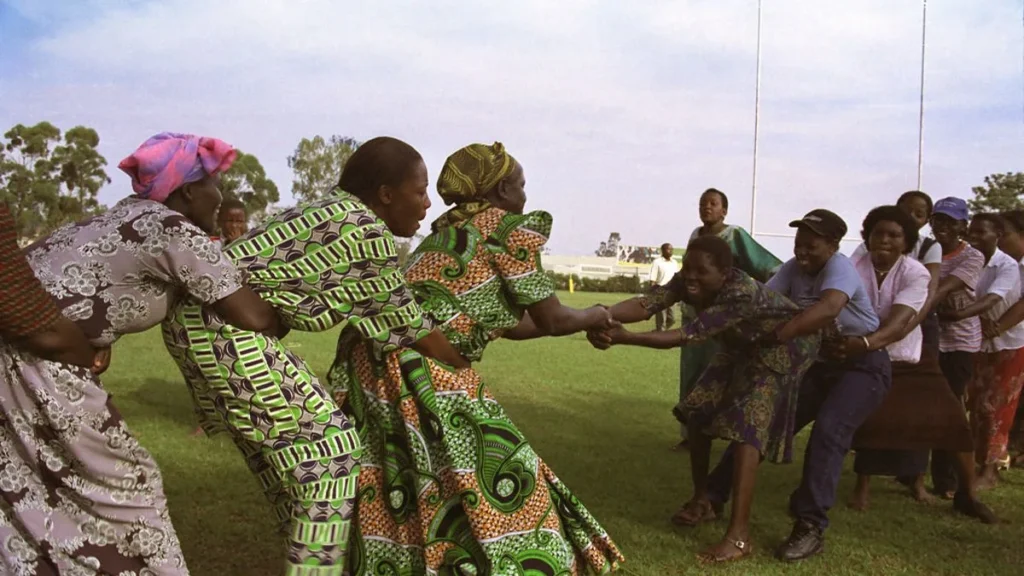
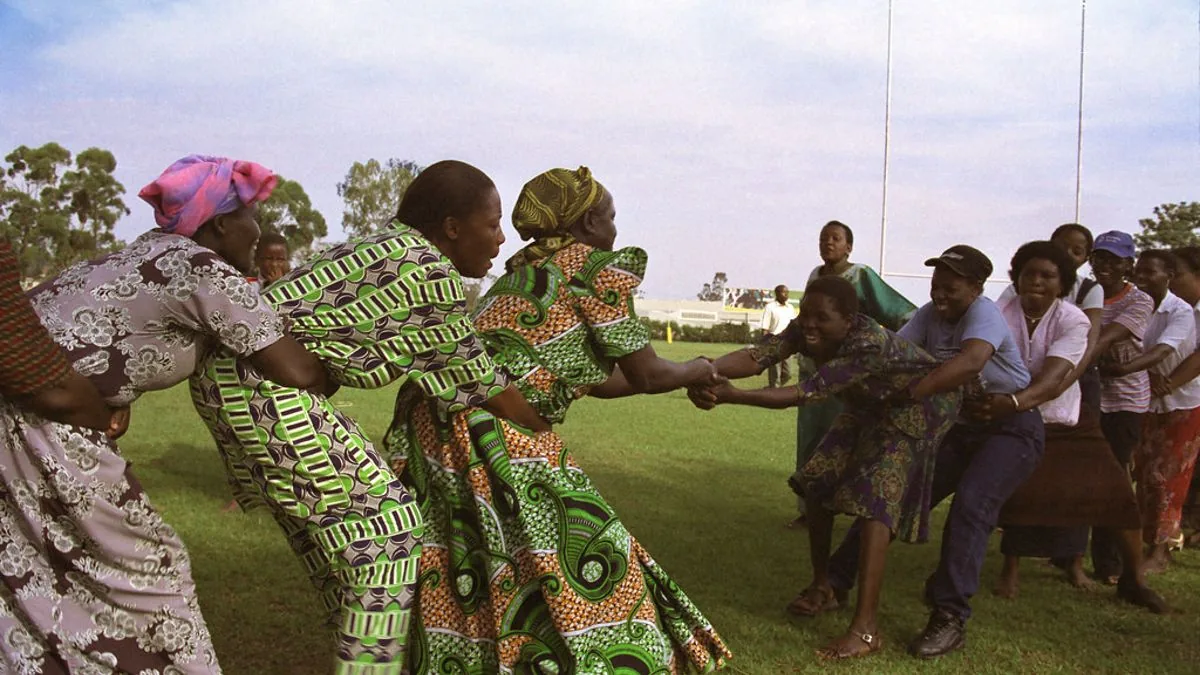
Put the lunch break after the fifth round, when the teams are halfway through the circuit and ready for a rest. Thirty minutes is enough for food, water, and a look at the leaderboard, and it gives the station crews time to reset their equipment. After lunch, run the final four rounds, then bring all nine teams together for a fifteen-minute finale, such as a whole-group jump rope wave or a giant tug of war, where every player takes part at once. Finish with the results, the prizes, and a team photo. The same timing works for slightly smaller crowds too, which is why the best party games for 468 players follow a similar rhythm of short rounds, a midday break, and one big finish.
Your 474-Player Party Checklist
- Divide 474 players into nine colour-coded teams of about fifty, and name a captain for each team before the day begins.
- Mark nine stations in a wide circle with signs, cones, and at least fifteen metres of space between them.
- Pack a kit for every station with its equipment, a whistle, a scorecard, and a one-page sheet of the three main rules.
- Set up one big leaderboard near the centre of the field and update it after every rotation.
- Arrange water, shade, and a first aid point within easy reach of every station, and plan a thirty-minute lunch break after round five.
- Brief the captains together the day before, so they can answer questions on the field without calling the organisers.
Frequently Asked Questions
Can 474 players really play the same nine games?
Yes, because the players never all play one game at the same time. The crowd splits into nine teams of about fifty, and each team plays one game at a time while the other teams play the other eight. Every team visits every station once, so all 474 players try all nine games.
How much space do we need for a 474-player party?
A sports field or a large park lawn of about one hectare works well, with room for nine stations, a central leaderboard, and space for spectators. Keep at least fifteen metres between stations, and place the active games on the outside of the circle so running players never cross into the calm skill games.
How long does a full day of nine games take?
Plan for four hours in total, with nine rounds of fifteen minutes, five minutes to move between stations, a thirty-minute lunch break after round five, and fifteen minutes for the welcome and the finale.
What if it rains halfway through the day?
Move the calm games, such as Connect Four, shuffleboard, and bocce, under cover first, and pause the running races until the ground is safe. Keep a sheltered area ready for the leaderboard and the lunch break, and have a shortened indoor version of the finale prepared so the day can still end together.
What equipment should we buy first?
Start with cones, whistles, scorecards, and signs, then buy or hire the game equipment for your stations. Ladder golf, bocce, croquet, and shuffleboard sets can be hired from party suppliers, while the jump ropes, balls, and cones are cheap to buy outright.
Can younger children and older guests play all nine games?
Yes, because the nine games mix active races with calm skill games, so every player has games where they can shine. Captains can adjust roles, for example by letting younger players throw from closer to the target or older players take the strategy roles in Connect Four and bocce.
The Bottom Line
Party games for 474 players work when the day is built around nine strong games, nine clear stations, and nine captains who keep their teams moving. Choose games with simple rules and visible scores, mix active races with calm skill games, keep the rounds short, and finish with one moment that brings everyone together. Do that, and a crowd of 474 stops feeling like a problem to manage and starts feeling like the best part of the party.