539 players sounds like a crowd that no dice game could ever come together, yet dice games for 539 players work beautifully when the evening is built around one plain theme and every group plays the same 9 games in the same series. The theme is an old village basket maker’s workshop, where withies, osiers, splints, sedge and raffia give every game a job to do. Nobody needs to know basket making before they arrive: each game uses plain words, a handful of dice and simple materials, and the points-only style keeps the whole evening friendly from the first roll to the very end.
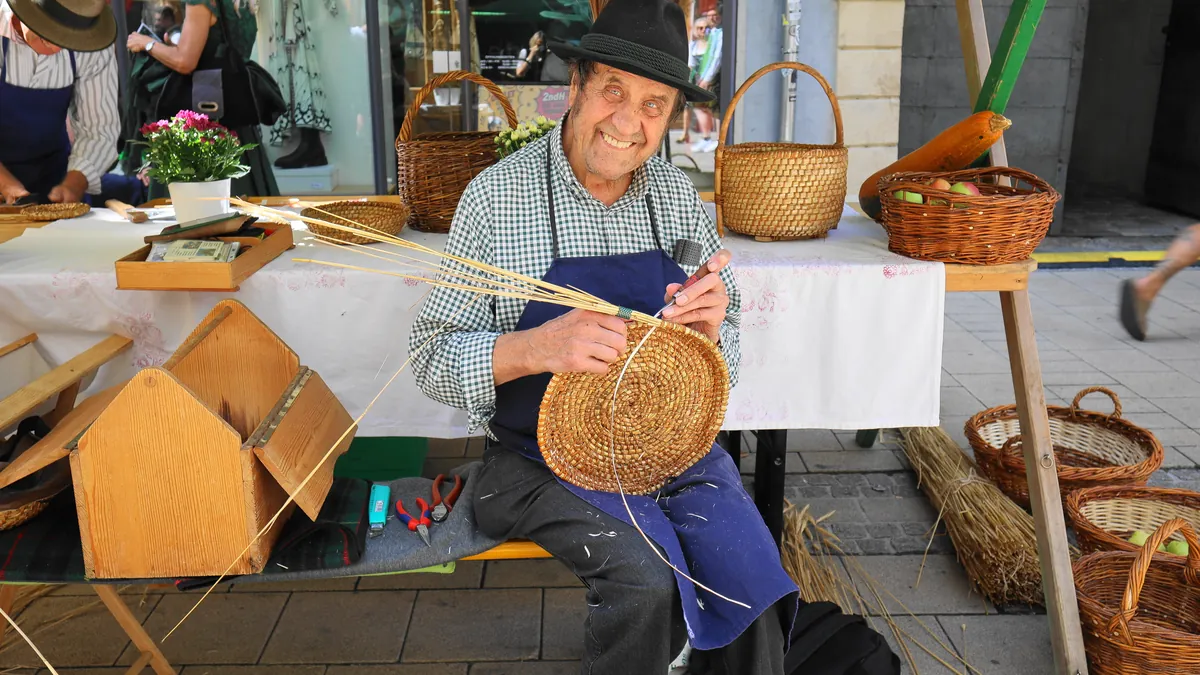
A basket maker’s workshop suits a huge group because the work itself is patient, hands-on and simple to watch. One person flexes a withy while the others in the group look at the shape, one person binds osier pieces while the others announce the points, and nobody sits idle for long. Some games ask groups to arrange materials one after another, and some ask them to work out how many pieces a basket needs. The setting gives the evening a cosy feel: daylight, the smell of damp willow, and half-made baskets along the back of the venue.
What follows is a complete plan: takeaways, a summary of the 9 games, three setup sections, instructions for each game, a six-item checklist, six answers to what players ask most, and a short ending section. Read it once from the start, collect the kit the evening before, and you can greet 539 players with confidence.
Key Takeaways
- Dice games for 539 players need one theme, 9 games and the same kit for every group.
- An old village basket maker’s workshop gives every game a plain job, from withy laps to raffia skeins.
- Groups of six to eight players work best, with one points keeper named for each group.
- Every game runs for points only, with no money changing hands at any moment in the evening.
- Keep the evening to about two hours, with a short pause for refreshments after the fifth game.
At a Glance: The 9 Basket Maker Dice Games
| Game | What each group needs | Minutes |
|---|---|---|
| Dice Withy Lap | Two dice, 6 withy pieces, points paper | 10 |
| Dice Osier Bind | Three dice, raffia lengths, points paper | 10 |
| Dice Splint Foot | Two dice, 12 splints, points paper | 12 |
| Dice Sedge Stake | Three dice, sedge stems, points paper | 10 |
| Dice Withy Lash | Two dice, withy pieces, raffia lengths | 12 |
| Dice Raffia Skein | Two dice, raffia skeins, points paper | 10 |
| Dice Trug Handle | Three dice, a wooden trug, points paper | 12 |
| Dice Creel Fill | Two dice, a creel, wooden counters | 10 |
| Dice Wale Stake | Three dice, stakes and long pieces, points paper | 12 |
How to Run a Basket Maker Dice Night for 539 Players
539 players divide neatly into groups of six or seven. Seventy-seven groups of seven gives exactly 539, so try for groups of seven wherever possible. The brewery games in our dice games for 536 players run on the same points-only idea, with no real ale anywhere near the play, and the same group sizes work there too.
Work Out How Many Groups You Need
Before the evening, plan for seventy-seven groups, then adjust the arithmetic on the night as people arrive. Give each group a name drawn from the workshop: Withy, Osier, Splint, Sedge, Raffia, Trug, Creel and Wale give you eight names, and add Willow and Birch with a colour in front, such as Amber Sedge, for the others. Put the group names on the points paper in advance.
Arrange the venue so groups can see the front of the venue without craning their necks. A long venue with groups facing the front works better than a circular arrangement, because the person explaining each game needs to be visible to all seventy-seven groups at once.
Give Every Group the Same Kit
Every group receives an identical kit: three ordinary six-sided dice, an extra basket to hold the dice between games, a notebook for points, and the materials for the 9 games listed above. The fish-market games in our dice games for 535 players also hand every group the same kit, so nobody starts ahead. Dampen the withy and osier pieces the evening before, so they flex without coming apart.
Prepare the kit in labelled baskets, one basket per group, and place the baskets at the front of the venue so each group can collect its own as it arrives. Inside each basket, place the dice in a paper packet, the notebook on the bottom, and the pieces in separate paper packets, so nothing tangles.
Name a Points Keeper for Every Group
Each group names one points keeper before the first game begins, and that person keeps the notebook for the whole evening. The points keeper records the points after every game, reads the addition aloud so the group can hear it, and hands the notebook to a helper when the evening ends. Ask another player to roll while the keeper writes.
Keep the points simple: two points for a game well played, one for a game played to the end, and a bonus point for the group with the most inventive answer. At the end of the evening, helpers add up the notebooks and announce the three leading groups, who receive a prize. The paper-mill games in our dice games for 534 players show how a craft theme can carry 9 very different games.
The 9 Basket Maker Dice Games
Play the 9 games below in that series, with a short pause for refreshments after the fifth game. Each game takes about 10 to 12 minutes, and the points keeper records the points before the next game begins.
1. Dice Withy Lap
A withy is a long, slender willow stem, and a lap is the place where two withy ends overlap and bind together in a basket side. Each group places 6 withy pieces side by side on the worktop and rolls two dice. The dice show how many pieces the group must lap together before the next roll: a roll of seven means seven overlaps, each bound with a short length of raffia. If a withy comes apart, the group loses the points for that overlap.
The group with the most overlaps still holding at the end of 10 minutes earns two points, and every group that laps at least 4 overlaps earns one. Damp withies flex easily and hold a lap well, while dry withies resist and come apart.
2. Dice Osier Bind
Osier is the basket maker’s name for willow rods grown for basket work, and binding is the plain work of fastening pieces together with raffia. Each group receives a handful of osier pieces and three dice. The group rolls the dice, adds the pips together, and binds that many osier pieces into a neat handful with raffia. The binding must sit snug against the worktop, with the raffia wrapped three rounds around the middle.
After 10 minutes, helpers look over each group’s handfuls. A handful earns two points when every piece lies parallel and the binding sits tight, and one when the pieces lie roughly parallel with a binding that holds. A handful that falls apart when a helper lifts it earns no points, though the group can rebind it and try again in the time remaining.
3. Dice Splint Foot
The foot of a basket is the flat woven base on which the whole basket sits, and a splint is a thin strip of wood that lies across it. Each group receives 12 splints and two dice, and the dice decide how the foot grows. Roll a 2 and the group places 2 splints side by side; roll a 6 and the group places 6, laying them over the ones already down. The foot must lie flat on the worktop, with no splint rising above the others
12 minutes gives most groups a foot of 12 splints, though a run of low rolls can leave a foot half made. The points keeper records two points for a foot that lies flat with all 12 splints in place, and one for a foot of at least 8 splints that lies mostly flat. A foot that rises in the middle earns no points, and the group can take it apart and begin again if time allows.
4. Dice Sedge Stake
Stakes are the upright pieces around which a basket maker works, and sedge is a grass-like plant whose long stems make fine, flexible stakes once dampened. Each group receives sedge stems and three dice. The group rolls the dice and picks out that many stems, then places them upright in an oval on the worktop, spacing them evenly so the oval looks balanced from above. A stem that leans against the one beside it must be moved until it remains upright on its own; a stem that will not remain upright goes back to the reserve stock.
After 10 minutes, the oval with the most upright stems earns two points, and any oval of at least 10 upright stems earns one. The points keeper uses no ruler; a glance is enough, and the group agrees the result together before the points land in the notebook. Sedge stems vary in thickness, so wise groups choose the thicker stems for the oval and leave the thin ones in the reserve stock.
5. Dice Withy Lash
Lashing is the basket maker’s way of joining two withy pieces where they meet, fastening raffia around the joint until it sits firm. Each group receives withy pieces, raffia lengths and two dice. The group rolls the dice, and the pips decide how many lashings the group must make: a roll of eight means eight lashings, each one joining two withy pieces at a joint. The withy pieces lie across one another on the worktop, and the group fastens the raffia around each joint with three rounds, pulling it snug without breaking it.
After 12 minutes, helpers look over each group’s lashings, awarding two points to the group with the most firm lashings, and one to every group with at least 6 firm lashings. A lashing that comes undone when a helper raises it earns no points, though the group can lash it again if time remains. The game teaches the value of a steady pull, because raffia pulled too tight breaks, while raffia left too loose lets the withies slip apart.

6. Dice Raffia Skein
A skein is raffia rolled for storage, and a neat skein pulls free without tangling when the basket maker needs it. Each group receives several raffia skeins and two dice. The group rolls the dice and loops that many turns of raffia into a fresh skein, looping the raffia around two fingers and then tying the middle with a short piece of the same material. The skein must keep its shape when lifted, with no loose ends dangling
10 minutes gives most groups 3 or 4 skeins, and the points keeper records two points for the group with the most neat skeins, and one for every group with at least two neat skeins. A skein that unwinds when lifted earns no points, and the group can loop it again if time remains.
7. Dice Trug Handle
A trug is a shallow wooden basket with a handle, used in gardens for carrying flowers and vegetables, and fitting its handle is a job that needs four hands. Each group receives a wooden trug without its handle, a handle piece, and three dice. The group rolls the dice, and the pips decide how many turns of raffia the group may loop around the handle joint: a roll of 9 means 9 turns, looped tight and even.
After 12 minutes, helpers examine each trug and award two points where the handle sits firm and even, and one where the handle sits firm but a touch uneven. A handle that wobbles when lifted earns no points, and the group may rewind it if time allows.
8. Dice Creel Fill
A creel is a deep woven basket, and filling one evenly is harder than it looks, because the contents must sit even or the creel tips. Each group receives a creel, wooden counters in a basket, and two dice. The group rolls the dice and places that many counters in the creel, spreading them so the surface remains even. A roll of eleven means eleven counters, and the group must place them one at a time, without dropping them in a heap.
After 10 minutes, the creel with the most counters sitting even earns two points, and every creel holding at least 20 counters even earns one. The points keeper records the points while another player gently shakes the creel to see if the counters move. A creel that tips earns no points for that roll, though the group can right it and carry on.
9. Dice Wale Stake
A wale is a woven strip worked around the stakes of a basket, and it gives the basket its strength. Each group receives stakes and long pieces, plus three dice. The group rolls the dice and works that many rounds of the wale around the stakes, taking each piece over one stake and under the next, keeping the strip even as it rises. A round that sits higher than the one below it must be eased down before the next roll.
After 12 minutes, the wale that sits most even around its stakes earns two points, and any wale of at least six even rounds earns one. The points keeper records the points while the group shows its basket to the helpers. The game closes the evening well, because it uses everything the groups have practised: damp pieces, steady hands, even work and a points keeper who looks over the whole thing.
Your Setup Checklist
- Dampen the withy, osier and sedge pieces in a trough of water the evening before.
- Make up one identical kit per group: three dice, a notebook for points, and the materials for the 9 games.
- Write the group names on the points paper in advance, and name one points keeper for every group.
- Leave a wide aisle down the middle of the venue for helpers.
- Plan refreshments for the pause after the fifth game, with enough for all 539 players.
- Keep a reserve stock of dice, withy pieces and raffia at the front for replacements.
Frequently Asked Questions
Can 539 players really play dice games at the same time?
Yes. Seventy-seven groups of seven play the same 9 games in the same series, each with its own kit and points keeper. The evening works because nobody waits for another group to end: every group rolls at its own pace, and the points keeper records the points before the next game begins.
How many dice do we need for 539 players?
Three dice per group, which means 231 dice for seventy-seven groups, plus about 30 dice in the reserve stock for replacements. Ordinary six-sided dice are all you need, and the dice live in a basket between games so they do not roll off the worktop.
What if a group has only six players?
Six players is a fine size for every game in this article. The games ask for hands and eyes, not for many players, so a group of six plays exactly as a group of seven does, with one player rolling while another records the points.
How long does the whole evening take?
About two hours, including the pause for refreshments after the fifth game. Each game takes 10 to 12 minutes, the explanations take a minute or two each, and the pause takes about fifteen minutes.
Do players need to know basket making already?
No. Every game explains its own job in plain terms, and the materials do the teaching: a damp withy shows how it flexes, a splint shows how a foot lies flat, and a wale shows how a woven strip holds a basket together.
Are the games played for money?
No. Every game in this article runs for points only, and no money changes hands at any moment in the evening. The prizes are modest: a woven basket, a paper certificate, or the honour of choosing the theme for the next evening.
The Bottom Line
Dice games for 539 players work when the evening has one theme, 9 games, the same kit for every group and a points keeper who records the points after every game. The old village basket maker’s workshop gives the evening its shape: damp withies, neat osier handfuls, flat splint feet, upright sedge stakes, firm withy lashings, neat raffia skeins, firm trug handles, even creels and fine wales. Collect the kit the evening before, dampen the pieces and name the points keepers.