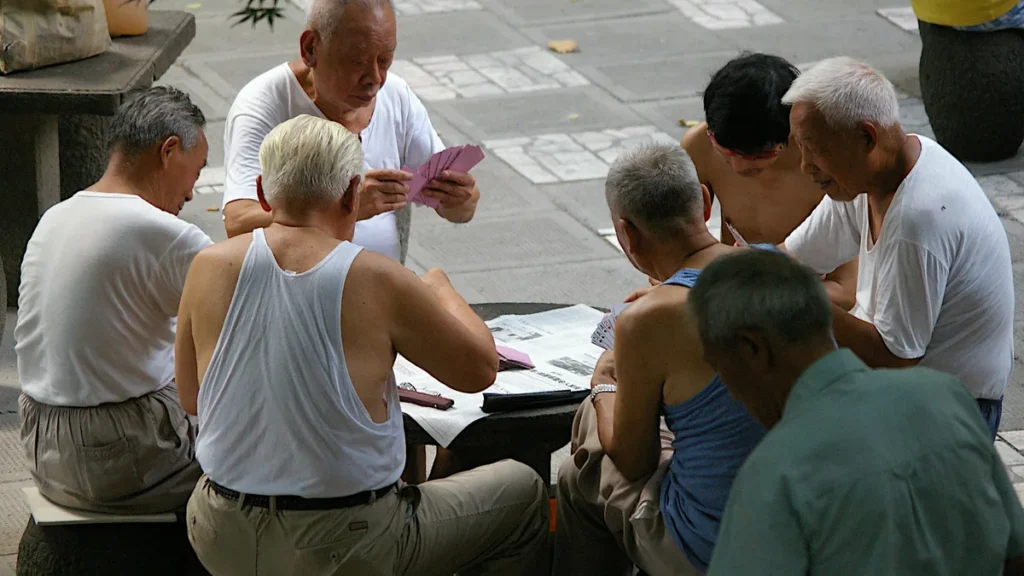
Five hundred players is not a card night. It is a small festival that happens to be played with cards, and it only works when the day is built around stations instead of one enormous table. Nobody can seat 500 people around a single game and expect everyone to get a turn, so the plan in this guide splits the crowd into nine stations, puts a different game at each one, and moves every team through the full circuit on a fixed timetable.
The nine games below were chosen for exactly that shape of day. Every one of them is quick to teach, cheap to buy in bulk, and easy to score, so a volunteer can run a station with a printed rules card and a timer. Some are loud and fast, some are quiet and thoughtful, and together they give every kind of player a table where they can do well.
What matters most is not the size of the prize table or the fanciness of the decks. It is the flow. Give every team a colour, a captain, and a printed rotation card, and put a host with a whistle at every station. Do that, and 500 players feel like nine small card nights happening side by side instead of one impossible crowd.
Key takeaways
- Split 500 players into nine stations, with about 55 players at each station, and rotate every team through the full circuit on a fixed timetable.
- Run each game in short rounds of 10 to 20 minutes, so a station can welcome a fresh team every half hour and nobody waits long for a turn.
- Pick games that a new player can learn in under a minute, with simple scoring that a volunteer can run from a printed card.
- Mix fast, loud games with quiet, thoughtful ones, so every kind of player gets a station where they can do well.
- Score every station the same way, add the points up at the end, and crown one winning team at the closing ceremony.

How 500 Players Play Card Games Together
Start with the teams. Nine stations and 500 players mean about 55 players arrive at each station at the same time, which is far too many for one table. The fix is to split each station into tables of four to six players, so a station with 55 players runs about ten tables at once. Every table plays the same game, every table scores the same way, and the best score from each team at that station goes onto the team scorecard.
Next, fix the timetable. Nine stations at 20 minutes each give three hours of play, with five-minute changeovers adding 40 minutes between rounds. Add 30 minutes at the start for welcome and team photos, and 30 minutes at the end for the final scores and the closing ceremony. The nine-station rotation below follows the same pattern as the best card games for 498 players, with teams moving together on a fixed timetable and a host calling every rotation.
Then sort out the supplies. Buy or borrow at least two copies of each game per station, so a table that finishes early can start a fresh round while the others catch up. Print the rules for each game on a single card, in large type, and tape it to the table. Keep spare decks, score sheets, pens, and a whistle at every station, and give each station host a small bag with everything they need, so nobody has to leave their post to fetch supplies.
Finally, keep the scoring simple enough for a tired volunteer to run at the end of a long day. Award three points for a table win, two for second place, and one for taking part, then add a small bonus point for the best team spirit at each station.
The 9 Games at a Glance
| Game | Players per table | Time per round | Why it fits 500 players |
|---|---|---|---|
| Loonacy | 2 to 5 | 5 minutes | Pure matching at full pace |
| Chrononauts | 2 to 6 | 20 minutes | Time travel with easy rules |
| Aquarius | 2 to 5 | 15 minutes | Quiet pattern play that calms a loud hall |
| The Grizzled | 2 to 5 | 20 minutes | Teamwork under gentle pressure |
| Get Bit! | 3 to 6 | 15 minutes | Fast rounds with big laughs |
| Dungeon Mayhem | 2 to 4 | 10 minutes | Quick battles with simple cards |
| Bears vs Babies | 2 to 5 | 20 minutes | Silly building that everyone enjoys |
| Muffin Time | 2 to 6 | 15 minutes | Wild cards that keep tables talking |
| High Society | 3 to 5 | 20 minutes | Clever bidding with real tension |
The 9 Games
1. Loonacy
Loonacy is a matching game played at full tilt, and it is the perfect opener for a huge hall because nobody needs to wait for a turn. Every player holds a hand of cards showing colourful pictures, and everyone plays at the same time, matching pictures to the two piles in the middle. There are no turns, no downtime, and no chance for a shy player to hide, because the whole table is shouting and slapping cards down together from the first second.
A round lasts about five minutes, which makes Loonacy the fastest station in the circuit and a great pressure valve for the day. Teams that arrive wound up from a slower station can burn off energy here, and the host can run three or four quick rounds inside a single 20-minute slot.
2. Chrononauts
Chrononauts is a time-travel card game in which players collect cards to build their own chain of historical events, then play paradox cards to change the past and rewrite what comes after. The rules fit on a single printed card: draw, play a card, and try to finish your chain of events before anyone else does. New players grasp the idea within a minute, and the jokes on the cards keep the table laughing while they learn.
This station suits the thinkers in the crowd, the players who like a puzzle they can turn over in their hands. A round takes about 20 minutes, which fills a full rotation slot without rushing anyone. The host only needs to watch for one common mistake, which is a player forgetting to check whether a paradox has changed their chain of events, so a quick reminder at the start of each round keeps the game moving.
3. Aquarius
Aquarius is a calm, pretty card game about connecting elements in a row, and it gives a loud hall a quiet corner where players can breathe. Each player holds element cards and lays them down to build a line of matching symbols, aiming to connect seven cards of their own element before anyone else does. The artwork is bright and clear, the rules take a minute to explain, and the game rewards patient thinking more than quick hands.
Put this station near the edge of the hall, away from the loudest tables, and it becomes a natural rest stop for players who need a breather. A round takes about 15 minutes, and the host can run a second short round for early finishers.
4. The Grizzled
The Grizzled is a cooperative card game in which the whole table works together to survive a shared ordeal, and it is the station where teams bond fastest. Players take turns playing cards that represent hardships, supporting each other with kind gestures, and deciding together when to push on and when to rest. Nobody wins alone here, which makes it a lovely change of pace in a day full of contests.
The theme is serious, set in the trenches a century ago, so the host should frame it gently for younger players and keep the tone warm rather than grim. A round takes about 20 minutes, and the shared struggle gives every team a story to tell at the closing ceremony. Score it as a team result: if the table survives the ordeal, every team member earns full points, and if the table falls short, everyone still earns a point for taking part.
5. Get Bit!
Get Bit! is a quick, silly card game about swimmers trying not to be eaten by a shark, and it produces the loudest laughter of any station in the circuit. Each round, every player secretly picks a swim card, and the slowest swimmer loses a limb to the shark, which is represented by a little rubber shark that the host can wave around for comic effect. The rules take less than a minute to teach, and the game is over in about 15 minutes.
This station works best with a lively host who leans into the silliness, narrating each round like a sports commentator and celebrating every narrow escape. Because the game is so short, the host can run two full rounds in a single slot and average the scores. It is also a fine station for mixed ages, since children and grandparents grasp the idea at once and enjoy it equally.

6. Dungeon Mayhem
Dungeon Mayhem is a fast battle card game in which each player picks a hero, draws a hand of attack and defence cards, and tries to be the last hero standing. The cards are big, bold, and funny, the turns take seconds, and a whole game is over in about ten minutes. It is the most energetic station after Loonacy, and it suits players who like a direct contest with plenty of table talk.
The short rounds are a gift for the timetable, because the host can run two games per slot and let the winners stay on for a champion round. Warn the host to keep the banter friendly, since a battle game can get heated, and a quick reminder about good sportsmanship at the start of each round does the job.
7. Bears vs Babies
Bears vs Babies is a monster-building card game in which players draft parts to build the strangest creature they can, then send it into battle against the babies. The game is gloriously silly, the artwork is bright and odd, and the rules are simple enough that a brand-new player can join a table mid-round and still have fun. A full game takes about 20 minutes, which fills a rotation slot neatly.
This station is a magnet for the creative players in the crowd, the ones who like to show off a weird creation and tell its story. The host should encourage players to name their monsters and announce them with pride, because the naming is half the fun. Score it by the battles won, and give a bonus point for the best monster name at each table, voted on by the table itself.
8. Muffin Time
Muffin Time is a wild card game full of traps, twists, and sudden reversals, in which the lead can change hands on the very last card. Players collect cards, spring traps on each other, and race to gather the cards they need while dodging everything their rivals throw at them. The humour is broad and cheerful, the turns are quick, and nobody is ever out of the game until the final card is played.
A round takes about 15 minutes, and the constant surprises keep every table noisy and engaged. The host should read the trap cards aloud with drama, because the game is twice as fun when the whole table hears what just happened.
9. High Society
High Society is a clever bidding card game in which players compete to buy the most impressive luxuries without spending so much that they end up with nothing. Each player holds a hand of money cards, bids in turn for the luxury on offer, and must judge exactly how much a card is worth. Bid too high and you waste your fortune, bid too low and someone else takes the prize, and the tension builds beautifully with every round.
This is the most thoughtful station in the circuit, and it suits the players who enjoy a quiet contest of judgement. A round takes about 20 minutes, and the host needs only to keep the bidding moving and to remind players that the richest player at the end does not win, which is the twist that makes the game so memorable. Score it by the luxury points each player collects, and the table winner is the player with the most points who still holds money in hand.
Before the First Card Is Dealt
Run through this checklist the day before the event, and the day itself will run itself. If your crowd is a little smaller, the guide for 496 players shows how the same stations work with two fewer teams, and the same checklist applies there too.
- Count every deck, score sheet, pen, and whistle the night before, and pack one labelled bag per station so nothing is missing on the morning.
- Print the rules for each game on a single large-type card, and tape it to the table where every player can read it without asking.
- Brief every station host for ten minutes, with a practice round, so they can answer the two most common questions without calling for help.
- Mark each station with a big colour sign that matches the team rotation cards, so nobody wanders the hall looking for their next table.
- Test the whistle, the timer, and the loudspeaker before the first team arrives, and keep spare batteries in the host bag at the welcome desk.
- Put up the scoreboard where everyone can see it, and assign one volunteer to update it after every rotation so the totals stay honest.
Frequently Asked Questions
Can 500 people really play card games at the same time?
Yes, and the secret is stations rather than one giant table. Nine stations with about 55 players each, split into tables of four to six, mean every single player is holding cards within five minutes of the start. The rotation keeps the energy up, and the shared timetable means nobody is left standing around wondering what to do next.
How many tables do 500 players need?
Plan for about 100 tables in total, with ten tables at each of the nine stations and a few spare tables for late arrivals. Each table seats four to six players, which is the sweet spot for every game in this guide. Borrow tables from a school hall or community centre, and label each one with its station colour and a number so teams can find their seats quickly.
How many decks and copies should we buy?
Buy at least two copies of each game per station, which comes to 18 copies across the whole day, plus a few spares for the welcome desk. Card games are cheap compared with most event supplies, and the copies last for years, so the outlay pays for itself at the next gathering. For a slightly smaller night, the best card games for 494 players use the same two-copies-per-station rule and the same scoring sheet.
What if most players have never played these games?
That is exactly why these nine games were chosen. Every one of them can be taught in a minute or two from a printed rules card, and none of them punishes a beginner in the first round. Station hosts run a practice hand before scoring begins, and the simple scoring means a new player can still earn points for their team even while they are learning.
How long does a 500-player card night last?
Plan for about four hours from welcome to closing ceremony. That covers 30 minutes of welcome and team photos, three hours of play across nine 20-minute stations with five-minute changeovers, and 30 minutes for final scores and prizes. If your evening is shorter, run seven stations instead of nine and keep the same timetable, which brings the day down to about three hours.
How do we pick one overall winner from 500 players?
Score every station the same way, with three points for a table win, two for second place, and one for taking part, then add the points up on the big scoreboard. The team with the most points after nine stations wins the day, and a small bonus point for the best team spirit at each station keeps the mood warm. Announce the top five teams before the final round so the ending feels like a real contest, then crown the winners at the closing ceremony.
The Bottom Line
Five hundred players can play card games together, and they can have a wonderful time doing it, as long as the day is built around nine stations, a fixed timetable, and games that anyone can learn in a minute. Pick the nine games in this guide, print the rules on a card, hand every team a colour and a captain, and let the whistle do the rest. The hall will be loud, the tables will be full, and by the closing ceremony your 500 players will feel like one big card night that just happened to need a very large room.