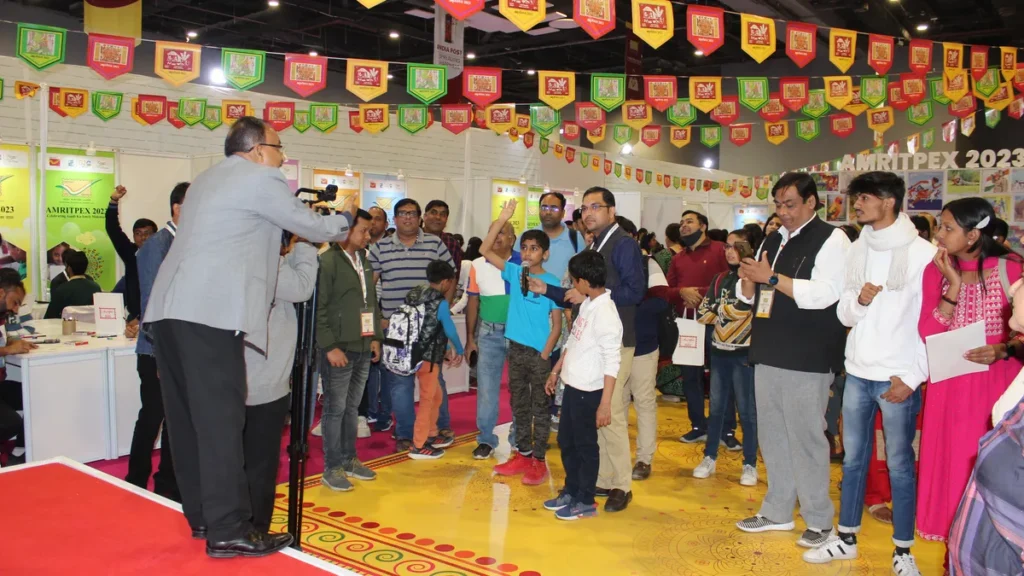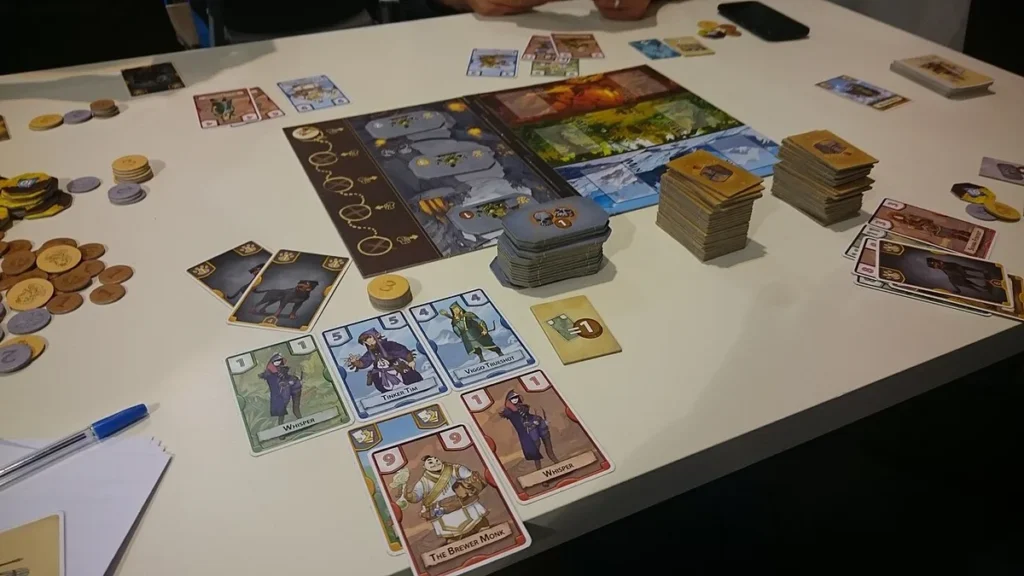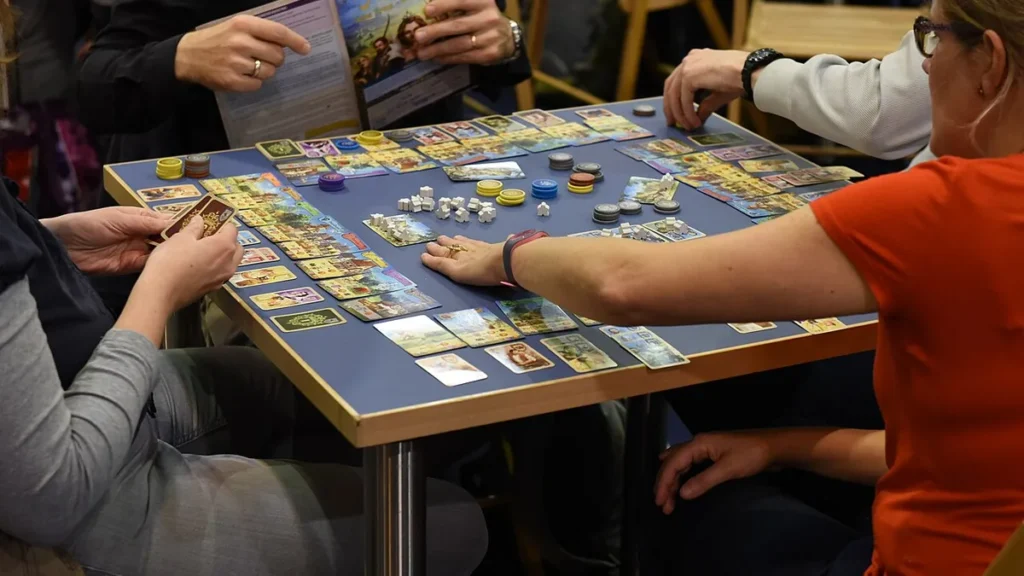
Running board games for 392 players sounds impossible until you stop picturing one table. Nobody seats 392 people around a single board, hands out 392 player pieces, and expects one game of anything to finish before midnight. The number is not a table size. It is a crowd size, and crowds are run in parallel. Once you accept that, the whole event becomes a logistics puzzle with a very satisfying answer: many small games, running at the same time, connected by teams, stations, and a tournament that gives everyone a reason to care about the next round.
This guide covers the full 3-to-392 range, because that is how these events actually work. The same kit that serves three friends on a Tuesday night can serve a school hall, a company offsite, or a community festival with 392 players, as long as you plan the scaling instead of improvising it. You will learn the three formats that make huge groups work, how to pick games that survive contact with a crowd, how to lay out the room, how to staff it, and how to keep the day moving on schedule.
Everything here is built around one rule: every player should be playing, not waiting. If half your crowd is standing around watching a game they cannot join, the format is wrong, not the crowd. Fix the format first, then worry about which games to buy.
Key takeaways
- Board games for 392 players work as many small games running in parallel, never as one giant table.
- Use three formats together: stations for casual play, teams for shared scores, and a tournament bracket for a finale everyone can follow.
- Plan one game copy for every 4 to 6 players, and one trained table host for every 2 to 3 tables.
- Pick games with short teach times, simultaneous turns, and no player elimination.
- Run the day in timed rounds of 20 to 30 minutes, with a visible clock and a clear rotation signal.

Why 392 Players Changes Everything
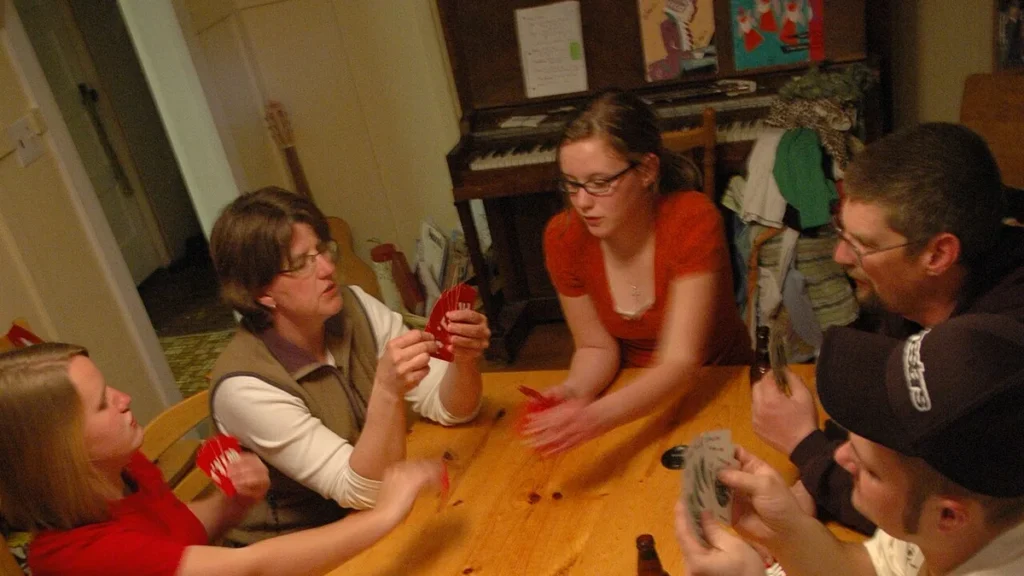
Most board games are designed for 2 to 6 players. That is not a flaw in the games. It is a fact about attention. A game works when everyone at the table can see the board, reach the pieces, hear the rules, and take a turn before they forget what is happening. Stretch that circle past eight people and the game breaks down, no matter how good it is. Someone cannot see the cards. Someone waits ten minutes between turns. Someone stops caring and starts checking their phone.
At 392 players, the job is therefore not to find a single game for 392 people. The job is to build a system in which 392 people are always inside a small, working game. You need enough copies of enough games, enough tables, enough hosts, and a schedule that moves people between games without chaos. The rest is detail, and the detail is what this guide is for.
The Math of the Room
Start with the arithmetic, because it decides your shopping list. If your average game seats 5 players, 392 players need about 78 simultaneous games. If your average game seats 4, you need 98. That sounds like a lot of boxes, and it is, but you do not need 98 different games. You need 10 to 15 game titles, each with 6 to 10 copies. Repeated copies are your friend: the same rules taught at ten tables is far easier to staff than ten different games taught once each.
Space is the other half of the math. A table of 5 players needs roughly 2 metres by 1 metre of table plus chairs and elbow room. Seventy-eight tables need a hall, not a living room. School gyms, community halls, church halls, and office atriums are the usual venues. Walk the room before the day and tape out table positions on the floor. If the taped layout feels tight when empty, it will be unusable when full.
One Game Versus Many Games
There is exactly one exception to the small-tables rule, and it is worth knowing about: games designed for unlimited players, where everyone plays at once with their own sheet or card. Bingo-style games, quiz sheets, and roll-and-write games where each player marks their own pad can genuinely include hundreds of people in a single game. They are useful as openers and closers, because they let the whole room share one moment.
But a whole day of only those games gets flat. People came to play board games, which means sitting with other people, making choices, and reacting to what happens at their table. Use the whole-room games as bookends: a 15-minute warm-up that gets everyone laughing, and a finale that brings the hall together. Put the real board gaming in the middle, in small groups, where it belongs. If you want ideas for the large-group end of the range, look at the best board games built for very large groups, which shows how the same titles behave when the player count climbs.
How to Run Board Games for 392 Players: The Three Formats
No single format carries a 392-player day on its own. Stations are relaxed but can drift. Teams create loyalty but need scoring. Tournaments create excitement but eliminate people. The events that work best use all three, in sequence: stations while people arrive and warm up, teams for the main block, and a short tournament finale for the players who want a competitive ending. Each format covers the weakness of the others.
Format 1: Stations
Stations are the simplest format and the best place to start. Each table is a station with one game, a sign showing the game name, the player count, and how long a round takes. Players wander, sit down, play a round, and move on. There is no schedule beyond the round timer, and nobody is locked into a group they dislike.
Stations work best in the first hour, when arrivals are staggered and people are finding their footing. They also work as the fallback for the whole day if your crowd is casual and mixed-age. The risk is drift: without a reason to move, some tables settle in for two hours while other stations sit empty. Fix that with a visible round clock and a gentle rule that a table clears and re-forms every 30 minutes. A bell, a whistle, or a song played over the speakers works better than an announcement nobody hears.
Format 2: Teams
Teams are what turn 392 strangers into a crowd that cares. Split the room into teams of 8 to 12 people, and each team splits across 2 to 3 tables. Team members play their own small games, but points go to the team total. Suddenly a quiet card game at table 14 matters to ten other people, and the hall has a scoreboard worth watching.
Keep the scoring dead simple. One point per game win, plus one point per table for finishing a round, works better than any clever weighted system. Complicated scoring creates disputes, and disputes at 392 players eat your schedule alive. Post the scoreboard where everyone can see it, update it every round, and announce the top five teams after each block. People will check it the way sports fans check a league table.
Format 3: Tournament Brackets
A tournament is the finale, not the day. Run it in the last 60 to 90 minutes, with the top players or top teams from the earlier rounds. The bracket should be short, visible, and fast: single games, not best-of-three, with a clear path to a final that the whole room can watch. A final played on a raised table or a stage, with the game projected or narrated by a host, gives 392 people a shared ending.
| Format | Best for | Players involved | Staff needed | Watch out for |
|---|---|---|---|---|
| Stations | Arrival, warm-up, casual play | Everyone, freely | 1 host per 2 to 3 tables | Tables settling in too long |
| Teams | Main block, mixed groups | Everyone, in teams of 8 to 12 | 1 host per 2 to 3 tables plus 1 scorekeeper | Scoring disputes |
| Tournament | Finale, competitive players | Top 8 to 16 players or teams | 1 host plus 1 referee | Eliminated players with nothing to do |
| Whole-room game | Opener and closer | All 392 at once | 1 host with a microphone | Energy dropping after 20 minutes |
Picking the Right Games for the Range
Game selection is where most huge game days are won or lost, and the test is simple: can a stranger learn it in three minutes, finish it in 30 minutes, and play it without being eliminated halfway through? If the answer to any of those is no, the game belongs at home with your regular group, not at a 392-player event. Long, heavy strategy games are wonderful, but they need a fixed group, a quiet room, and two hours. You have none of those.
Look for games with simultaneous turns, where everyone acts at the same time instead of waiting for a turn to come around. Look for games where the rules fit on one page. Look for games where a new player can win, or at least come close, on their first try. And look for games with almost no setup time, because setup multiplied by 78 tables is a staffing disaster. If a game takes ten minutes to set up, your hosts will spend the whole day setting up.
Games That Work at 3 Players
The small end of the range matters more than people expect. Not every table fills to five. Late in the day, tables run at three or four players, and a game that needs exactly five is suddenly useless. Choose games that play well at 3, 4, 5, and 6, so a table never has to stop because one player left for lunch. Check the player count on the box and then check it again in practice, because many games claim 3 to 6 players but are only good at 4 or 5.
Games That Work at 30, 100, and 392 Players
Party games are the workhorses at this scale, and party games that scale to hundreds of players show why: short rounds, simple scoring, and room for laughter make them the easiest games to teach to a stranger. Pair them with a few quiet strategy games for the players who want depth, and you have a menu that covers the room. Avoid games that need a referee at the table, games with hidden information that is easy to spoil by accident, and games where one slow player can stall the whole table.
The Room, the Tables, and the Clock
Layout is a game in itself, and it is worth an hour of planning for every hour of play. Group tables into clusters of 6 to 8, with a clear walkway between clusters. Put the registration desk near the entrance and the scoreboard where the whole hall can see it. Put the quiet games away from the speakers and the noisy party games near the edges, where their laughter will not drown out a rules explanation two tables away.
Label everything. Table numbers, station signs, team colours, toilet directions, water stations, and the schedule should all be visible from anywhere in the room. A player who cannot find their next table is a player who is not playing. Print the schedule on the back of every name badge, and put a large copy on the wall at each cluster.
Plan for the edges of the day, not just the middle. Arrival is slow and spread out, so stations should be running before the official start time, with hosts ready to seat early arrivals immediately.
Layout That Keeps People Moving
Movement is the hidden problem of a big game day. With 392 people rotating every 30 minutes, walkways clog, tables get bumped, and pieces end up on the floor. Keep walkways at least 1.5 metres wide, and never put a table in a walkway. Put spare pieces, replacement cards, and lost-property boxes at the end of each cluster, so a dropped token is a ten-second fix, not a search party.
Timing That Holds the Day Together
A visible clock is the single most useful piece of equipment you will bring. Rounds of 20 to 30 minutes, with a five-minute changeover, keep the day moving without rushing anyone. Announce the time remaining at the halfway mark and again at five minutes, and use the same sound for every changeover so people learn it in the first hour.
Roles: Who Runs What
Brief the crew the night before, in person, with the actual games on the table. A host who has played a game twice can teach it. A host who has only read the rules cannot. Give each host their cluster assignment, their crib sheets, and a radio or a phone group for the day. Agree in advance who decides a rules dispute, because the answer cannot be a committee meeting in the middle of the hall.
Checklist: Your 392-Player Game Day
Use this checklist in the week before the event, and run through it again on the morning of the day. Every item here has caused a real event to stumble when it was skipped.
- Count your copies: one game copy for every 4 to 6 players, with 10 to 15 titles repeated across the room.
- Tape out the room: table positions, walkways, registration, scoreboard, and quiet and noisy zones marked on the floor.
- Brief every host: each host has played their cluster games twice and carries a one-page rules crib for each one.
- Test the clock and the changeover signal: every player can hear it from every table in the hall.
- Print the scoreboard, the schedule, and the team lists, and put a copy on the wall at every cluster.
- Pack the fix kit: spare pieces, replacement cards, extra dice, pens, tape, cable ties, and a lost-property box per cluster.
Common Mistakes to Avoid
The first mistake is buying games for the event instead of borrowing them. A 392-player day needs volume, and volume bought new is a budget that could have paid for the venue, the food, and the prizes. Borrow first, buy the gaps, and keep receipts for anything you do buy so the next event starts with a library instead of an empty shelf.
The second mistake is forgetting the people who are not playing. At any moment, someone is eating, someone is on the phone, and someone has finished a round early and is waiting for the next one. Give those people somewhere to be: a puzzle table, a whole-room quiz running on the side, or a simple drop-in game they can join and leave. Trivia games that work for nearly 400 players are a good model here, because they show how a side activity can absorb a crowd without needing tables or hosts. Idle players drift away. Occupied players stay.
Frequently Asked Questions
Can you really play board games with 392 players?
Yes, but not around one table. Board games for 392 players work as dozens of small games running at the same time, connected by teams, stations, and a tournament finale. Whole-room games cover the shared moments, and the real board gaming happens in groups of 3 to 6.
How many copies of each game do I need?
Plan one copy for every 4 to 6 players. For 392 players, that is roughly 65 to 98 copies in total, spread across 10 to 15 titles with 6 to 10 copies each. Borrow or rent most of them, label every box with its owner and station, and keep a check-in sheet.
How long should each round last?
Twenty to 30 minutes per round, with a five-minute changeover, works for most groups. Shorter rounds feel rushed, and longer rounds leave fast tables waiting. Use a visible clock and the same changeover sound every time.
What if some players have never played a board game?
That is normal at a big event, and the format handles it. Choose games a stranger can learn in three minutes, seat beginners with a host nearby, and use team scoring so a new player contributes from the first round. Teach the goal and one turn, then start playing.
How many staff do I need for 392 players?
One event lead, one scorekeeper, one floater, and one trained table host for every 2 to 3 tables. For about 78 tables, that is roughly 26 to 39 hosts. Recruit early, brief them with the real games the night before, and rotate them off the floor for breaks.
What is the best way to end a 392-player game day?
End with a short public final that the whole room can watch, then close while the energy is high. A single-game final between the top players or teams, played on a visible table with a host narrating, gives everyone a shared ending. Hand out the prizes, thank the hosts and lenders by name, and finish on time.
Bottom Line
Board games for 392 players are not a bigger version of game night. They are a different kind of event, and they work when you treat them that way. Small tables, repeated games, three formats in sequence, a visible clock, and a crew that knows its jobs will carry 392 people through a day where everyone is playing, not waiting. Start with the math, borrow the games, brief the hosts, and let the tables do the rest. The crowd will take care of the fun.