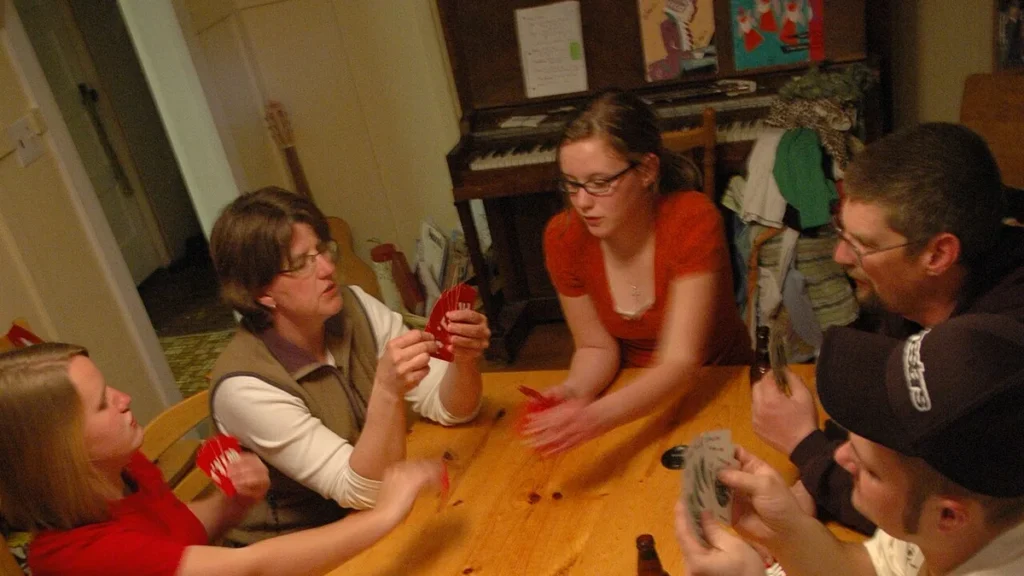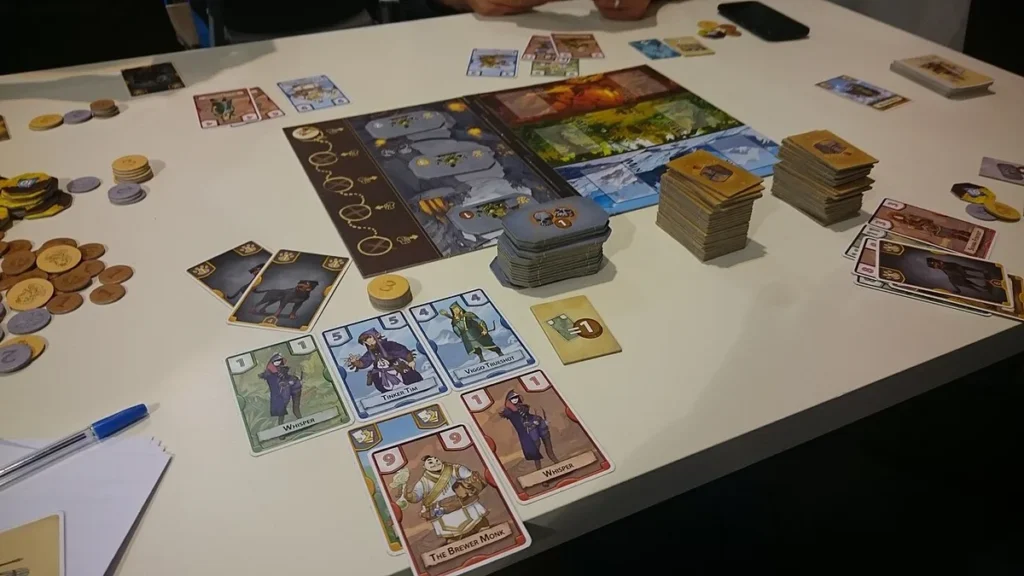
Running board games for 394 players sounds impossible until you stop picturing one giant table and start picturing a hall full of small tables. Nobody plays a single board game with 394 people sitting around it. Instead, hundreds of players split into teams, rotate through stations, and meet again for a shared final round. That shift in thinking is the whole secret, and once you make it, an event this size becomes a logistics job you can plan, staff, and actually enjoy.
Board games for 394 players work best when you treat the number as a range, not a fixed headcount. The same plan that serves 394 people also serves 300, 150, or a cosy group of three friends at one table. You build the event from repeatable units — a table of four to six players, a station that runs one game, a team that moves together — and then you multiply those units until they add up to your crowd. If ten people drop out on the day, you simply close two tables.
This guide walks through the whole job: choosing games that scale, setting up stations, teams, and tournaments, laying out the room, writing a schedule that keeps 394 people moving without queues or dead time, and handling the small problems that always appear at big events. Whether you are organising a school games day, a company social, or a community fundraiser, the method below will get every player into a game within minutes of arriving.
Key takeaways
- Think in units, not in one giant game: tables of four to six players are the building block for any crowd from 3 to 394.
- Stations, teams, and tournaments are the three formats that scale; most big events use all three in one day.
- Pick short, simple games with fast setup and clear rules, and avoid long games that trap players at one table.
- Plan one table per five players, one host per station, and a visible central scoreboard that everyone can follow.
- Run a shared opening and a shared final round so 394 separate players still feel like one event.

Why 394 Players Changes the Game
A board game night for six friends needs a table, a game, and some snacks. A board game event for 394 players needs all of that multiplied by sixty, plus a plan for arrivals, noise, scoring, and the moment when one table finishes early and forty people suddenly have nothing to do. The games themselves do not change much. The organisation around them changes completely, and that is where most big events succeed or fail.
The first mistake organisers make is choosing games before choosing a format. They fall in love with a long strategy game, buy three copies, and then discover that each copy seats four people and takes three hours. Twelve players are happy, and 382 people are standing around. The fix is to decide the format first and let the format choose the games. When every station runs the same short game at the same time, with the same rules and the same time limit, you can run a real competition across the whole hall.
The 3-to-394 Range: How Scaling Actually Works
The range from 3 to 394 players looks huge, but the maths behind it is simple. A standard board game table seats four to six players. Divide your headcount by five and you get the number of tables you need: one table for a tiny group, twenty tables for a hundred players, and roughly seventy-nine tables for 394. Every other number in your plan — copies of games, hosts, chairs, score sheets — follows from that one division.
That is why this guide treats 394 as the top of a range rather than a single fixed number. If you are planning for 394 and only 320 arrive, you close thirteen tables and the event still works. Build the system once, and it stretches or shrinks to fit whoever walks through the door.
Three to twelve players: one or two tables
With three to twelve players, you need no special format at all. One or two tables, one or two games, and a host who explains the rules is enough. This is the size where long, rich games shine, because everyone can learn together and nobody waits long for a turn. Use small sessions as your rehearsal: run the exact games you plan to use at the big event, time them with a stopwatch, and shortlist only the games that teach in under five minutes.
Thirteen to one hundred players: stations begin
Somewhere past a dozen players, a single game stops working and stations take over. Split the room into groups of five, give each group a table, and run the same short game at every table at the same time. A host at the front explains the rules once, loudly, with a demonstration table, and then a bell starts every table together. You also need a plan for the fastest table, because one group will always finish in ten minutes while another needs twenty-five. Give early finishers a quick filler game so they stay happy instead of wandering off.
One hundred to 394 players: the full hall
Past a hundred players, the event becomes a small convention, and the details matter more than the games. You need a hall with roughly seventy-nine tables, which means checking the floor plan before you book anything: seventy-nine tables need space for chairs, walkways, a stage area, and a separate zone for arrivals, food, and toilets. Measure the room in person, because a hall that looks big empty can feel cramped once tables, chairs, and 394 bodies fill it. Communication becomes your biggest job, so you need a microphone and speakers, large printed signs for each station, and a central scoreboard everyone can see.
Choosing Board Games That Scale
Not every good board game is a good big-event game. The games that scale share four traits: they teach in under five minutes, they finish in under thirty minutes, they work with the same rules for three players as for six, and they produce a clear score. If a game fails any of those tests, it can still appear at your event — but only as a side attraction, never as a main station. Party games, word games, dexterity games, and light card games are the natural fit, because they handle mixed ages and mixed experience, and they survive noise.
What scales well
Look for games where everyone plays at the same time, or where turns take seconds rather than minutes. Simultaneous-play games are gold at big events because nobody waits: every player writes, draws, shouts, or places pieces at once, and the round ends when the timer rings. Also favour games with almost no setup. A game that needs ten minutes of sorting tokens before the first turn will lose you an hour across seventy-nine tables. Buy multiple copies of a few proven games rather than one copy of many different ones.
Three Formats That Carry 394 Players
Every successful large board game event uses one or more of three formats: stations, teams, and tournaments. Stations are the simplest: identical tables running the same game at the same time. Teams add identity: groups of players who stay together all day and collect points across different games. Tournaments add drama: winners advance, tables get tougher, and the day builds to a final. Most 394-player events use all three, with stations in the morning, team scoring through the middle of the day, and a tournament final to close.
Stations: the workhorse format
A station is a table, a game, a host, and a time limit. Players arrive, sit down, learn the game in a few minutes, play for twenty to thirty minutes, record their scores, and move to the next station when the bell rings. Stations work because they are predictable: hosts learn one game deeply instead of ten games badly, and players know exactly how long each round lasts. If you are running your first big event, build it almost entirely from stations, and add team scoring on top as a simple layer. The approach used for board games for 392 players follows the same station logic with two fewer tables.
Teams: giving 394 strangers a side to cheer for
Divide your 394 players into teams of five or six, and each team stays together all day, moving from station to station as a unit. Teams solve the biggest social problem of a huge event: anonymity. A player who arrives alone is no longer one face in a crowd of 394; they are one of six people with a team name, a colour, and a shared score. Keep team scoring simple enough to update on a whiteboard — one point per station win, or the table score added to the team total — and announce the leading teams after each round.
Tournaments: the final that everyone watches
A tournament takes the winners from the stations and puts them into a smaller, harder competition. The simplest version is a ladder: the top two players from each table advance to a semi-final table, and the winners of those tables meet in a grand final on a stage where everyone can watch. With 394 starters, you need about four rounds to reach a single champion, and each round takes about half an hour. Run the final as a show, with the finalists on a raised table and a commentator explaining the game for the audience, so the whole day gets an ending worth staying for.
Comparing the Formats
| Format | Players it handles | Staff needed | Time per round | Best for |
|---|---|---|---|---|
| Stations | Any number, in groups of 4 to 6 | 1 host per station | 20 to 30 minutes | Variety and smooth flow |
| Teams | Any number, in teams of 5 to 6 | 1 scorekeeper per 10 teams | Full day | Belonging and friendly rivalry |
| Tournament | Up to 394, narrowing each round | 1 referee per final table | 30 minutes per round | Drama and a clear winner |
| Free play | Any number | Floaters only | No fixed time | Relaxed gaps between rounds |
The Room, the Tables and the Kit
Room layout decides whether your event feels spacious or stressful, and it is worth sketching on paper before you move a single table. Aim for clear lanes between table rows that are wide enough for a wheelchair or two people carrying a game box to pass each other. Put your loudest stations — party games and shouting games — at one end of the hall, and your quietest games at the other. Keep food, drink, and toilets outside the main playing area if you can, so the flow of people getting snacks does not cross the flow of people moving between stations.
How much kit do you actually need?
Work from the table count and everything else follows. Seventy-nine tables need about 394 chairs, plus spares for hosts and floaters. Each station needs its copies of its game, and you should budget one spare copy per game for the moment when pieces go missing or a box gets damaged. Number your tables and put the same number on the score sheets, the game boxes, and the station signs, so a lost box can be returned to the right table in seconds. Pack a repair kit with spare dice, blank cards, sticky notes, pens, and tape.
A Schedule That Holds 394 People Together
A good schedule for 394 players has long stretches of play broken by short shared moments. The shared moments are what turn seventy-nine separate tables into one event: a welcome where everyone hears the same rules, a midday announcement where the leading teams are revealed, and a final where everyone watches the same game. Without them, you have organised seventy-nine small game nights that happen to share a postcode.
Food and breaks deserve the same planning as the games. A lunch break of forty-five minutes works if food is served in the hall or very close to it; it fails if 394 people must queue at a single café down the road. Arrange simple food that can be eaten at the tables — sandwiches, fruit, and water — and keep the lunch area separate from the playing area so the tables stay clean. If you want a lighter, more social format to run alongside the board game stations, the party-game approach used for party games for 392 players pairs well with the same hall, the same teams, and the same schedule.
Your 394-Player Checklist
Run through this list the week before your event, and again on the morning of the day. It covers the six things that cause the most trouble at big board game events, and each one takes only a few minutes to check. Print it, hand it to your lead host, and tick items off as they are done.
- Tables and chairs counted: seventy-nine tables and roughly 394 chairs in place, with walkways wide enough for everyone to move between rounds.
- Games checked and complete: every copy counted, every box checked for missing pieces, and one spare copy of each main game packed and labelled.
- Hosts briefed: every station host can teach their game in under five minutes, knows the time limit, and knows where the repair kit lives.
- Sound and signs tested: microphone and speakers tested in the full hall, station signs hung, hall map at the entrance, and the scoreboard visible from every table.
- Teams and wristbands ready: team lists printed, coloured wristbands sorted by team, and captains named for every team before the doors open.
- Schedule printed and shared: round times, break times, and the final printed for hosts and posted at the entrance, with a bell or signal agreed for round changes.
Frequently Asked Questions
Can one board game really work for 394 players?
No single board game seats 394 people at one table, and that is the wrong way to think about it. Board games for 394 players means running the same game, or a set of games, across many tables at the same time. With tables of five, you need about seventy-nine tables, and the event works because every table plays the same round on the same schedule. The game scales; the table does not need to.
How many copies of each game do I need?
Count the tables running that game and buy or borrow one copy per table, plus one spare. If twelve tables run the same party game, you need thirteen copies. This is why big events use a small number of games in large quantities: six games with thirteen copies each is far easier to manage than seventy-eight different games, and it lets one host explain the rules to the whole hall at once.
What if fewer than 394 people turn up?
Nothing breaks. The plan is built from tables of five, so if 320 people arrive, you simply close thirteen tables and run the same schedule with fewer stations. Tell your hosts the real headcount at the welcome, rebalance the teams so no team is short, and carry on. The same logic works in reverse for a smaller trial event: three tables and fifteen players use the same stations, scoring, and final.
How do you keep 394 players from getting bored between rounds?
Keep rounds short, keep the gaps shorter, and always give early finishers something to do. A free-play zone with quick games absorbs the fastest tables, and a visible scoreboard gives everyone something to check between rounds. Announce what happens next before each break, and start the next round on time even if a few tables are still finishing.
Do I need experienced hosts, or can volunteers run the stations?
Volunteers can run stations very well, as long as each volunteer learns exactly one game. Give every host a one-page rules summary, a practice game the day before if possible, and a floater they can call when a rules question is too hard. The hardest job is not teaching games — it is keeping time, managing the score sheets, and staying cheerful when a table argues about a rule.
What is the best way to score an event this size?
Keep scoring so simple that a tired player can understand it at a glance. One point per station win, or the table points added to a team total, both work well, and both can be tracked on a whiteboard without software. Avoid complicated tie-breakers and bonus points, because every extra rule is another thing seventy-nine tables can get wrong. For a different flavour of large-group play that uses the same scoring ideas, the quiz-style format in trivia games for 393 players shows how one scoreboard can carry a whole hall.
Bottom Line
Board games for 394 players are not about finding a mythical game that seats hundreds of people. They are about building a simple, repeatable system — tables of five, stations that run on a bell, teams that stay together, and a final that everyone watches — and then multiplying it until it fits your crowd. Choose short games that teach in minutes, lay out a hall people can navigate by colour and signs, keep the scoring simple enough for a whiteboard, and protect the shared moments that make 394 separate players feel like one event. Do that, and your biggest problem will be finding a hall big enough for everyone who wants to come back next year.