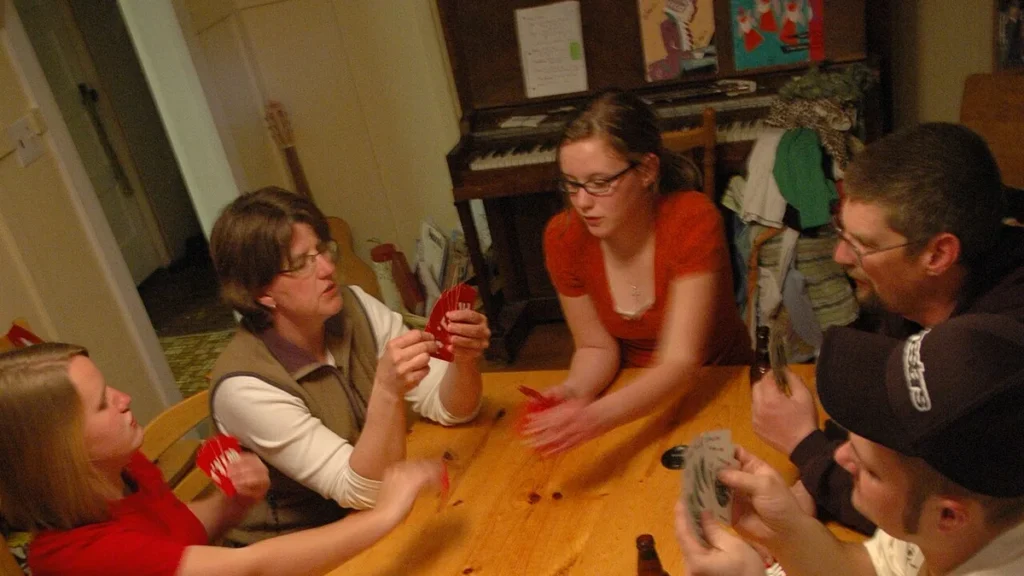
Planning party games for 394 players sounds impossible until you change the way you think about the number. Nobody expects 394 people to crowd around one table or play one round of the same game at the same time, and nobody should try. The best party games for 394 players work because they treat 394 as the top of a range that starts at three, not as a single crowd that must move as one body. When a game is built for three players and then stretched with teams, stations, and tournaments, the same game that charms a living room can fill a school hall, a company picnic, or a community festival.
The trick is scale, not size. A game that works for 394 players is really a game that works for ten teams of about forty, or twenty stations of about twenty, or a tournament bracket that narrows 394 hopefuls down to one champion over an afternoon. The players still laugh, compete, and cheer in the same ways they would in a small group. The only difference is the structure around them: clear captains, visible scoreboards, timed rotations, and a host who keeps every group moving at the same pace.
This guide covers the games that scale best, the three methods that make any game work for a crowd this large, and a planning checklist that keeps the day from sliding into chaos. Every game below has been chosen because it survives contact with hundreds of players. Some need a field, some need a hall, and some need nothing more than paper and a loud voice, but all of them share the same quality: they stay fun when the crowd gets huge.
Key takeaways
- Think of 394 as a range from 3 to 394 players, and scale every game with teams, stations, or tournaments rather than one giant group.
- Split the crowd into teams of 10 to 40 players, each with a named captain, a colour, and a home base they return to between rounds.
- Use timed station rotations so every player is playing something at all times instead of standing in a queue watching others.
- Pick games with simple rules that can be explained in under a minute and scored without an argument.
- Run a visible scoreboard and a short final tournament so the whole day builds toward one shared finish.

Why 394 Players Changes Everything
Most party games are designed for a dozen people sitting in a circle. Add a hundred more and the circle breaks. Add 394 and the whole idea of a circle disappears. The first thing that changes is attention. In a small group, everyone watches the same moment. In a crowd of 394, nobody can see the same moment, so the game has to create many moments at once. That is why the best large-group games run in parallel: several games happening side by side, each with its own small audience, all feeding into one shared score.
The second thing that changes is waiting. Waiting is the enemy of a big party. If 394 players take turns one at a time, most of them will spend the afternoon standing around, and standing around is not a party. A good game for this many players keeps at least nine out of ten people active at any moment. Relay formats, simultaneous rounds, and team challenges all do this well, because the action never stops for the whole group while one person performs.
How to Scale Any Party Game to 394 Players
Before choosing games, choose your scaling method. Almost any party game can work for 394 players once you pick one of these three structures, and many of the best days use all three: stations in the morning, team games after lunch, and a tournament to finish. The method matters more than the game itself, because a brilliant game with no structure will still collapse under the weight of 394 players.
Split Into Teams
Teams are the simplest way to make a huge crowd manageable. Divide 394 players into ten teams of about forty, or fourteen teams of about twenty-eight, and give each team a name, a colour, and a captain. Suddenly the host is not managing 394 individuals but ten captains, and each captain manages their own group. Team identities also create instant rivalry and cheering, which is the fuel of any big party. Matching coloured wristbands or sashes cost very little and make the teams visible across a field.
Run Stations in Rotation
Stations turn one overwhelming crowd into a set of small, friendly games. Set up eight to ten stations around a hall or field, put a different game at each one, and rotate the teams through on a timer. A team might spend fifteen minutes at the trivia station, fifteen at the balloon relay, and fifteen at the scavenger hunt, collecting points at every stop. While one team plays, the others are playing too, so nobody waits.
Rotation needs a clear signal and a simple map. A whistle, a bell, or a song played over speakers tells every team to move at once, and a printed map shows each captain where their team goes next. Keep the rotation the same direction for every team so groups never collide in doorways or on paths. If you have played party games for 392 players in this same format, you will know the rhythm already: short rounds, loud signals, and a scorecard each captain carries from station to station.
Finish With a Tournament
A tournament gives a long day a shape. After stations or team rounds, take the top four or eight teams into a knockout bracket and let the whole crowd watch the finals together. The semi-finals and final should be the most visual games you have: a tug-of-war, a dance-off, or a giant trivia showdown with the questions read aloud. The crowd becomes the audience, and the audience becomes part of the game, cheering, chanting team names, and counting down the final seconds.
The Best Party Games for 394 Players
Silent Disco Dance-Off
A silent disco is the perfect large-group dance game because it solves the noise problem completely. Every player wears headphones, the music plays through the headphones instead of speakers, and the crowd dances together in near silence to anyone watching from outside. For 394 players, hire enough headphones for the whole crowd or run the dance-off in waves of fifty, with each wave dancing for one song while the next wave watches and judges.
Giant Trivia Tournament
Trivia is the easiest game in the world to scale, because a question asked once can be answered by 394 people at the same time. Give every team an answer sheet and a pencil, read each question aloud twice, and collect the sheets at the end of every round. Ten rounds of ten questions, with a mix of general knowledge, music, sport, and riddles, will fill a happy hour without a single player standing idle.
The key is variety in the questions and speed in the scoring. Use picture rounds, music rounds, and true-or-false rounds alongside straight questions so different teams shine in different rounds. If you want a ready-made model for the format, the structure of trivia games for 393 players shows how a huge trivia night can run on teams, rounds, and a visible leaderboard. Keep the answers short, mark quickly between rounds, and read the leaderboard aloud after every third round to keep the tension rising.
Scavenger Hunt Relay
A scavenger hunt turns a whole venue into a game board. Hide or list forty items around the site, from a red leaf to a photograph of the team beside a statue, and send teams out with the same list and a time limit. Teams race to find, photograph, or collect as many items as they can, then return to base for scoring. With 394 players, stagger the start times by two minutes per team so the hunt does not begin with a stampede.
Charades Championship
Charades becomes a championship when it runs as a tournament. Each team picks its best actor, the actor draws a title from a hat, and the team has sixty seconds to guess it while the crowd watches. Run four acting stations at once during the early rounds so many teams play simultaneously, then bring the best actors to a single stage for the semi-finals and final, where the whole crowd can watch and shout guesses.
Balloon Pop Relay
A balloon pop relay is loud, fast, and impossible to watch without laughing. Teams line up at one end of a field, and the first player in each team runs to a chair, sits on a balloon until it pops, runs back, and tags the next player. The first team to pop all of its balloons wins. With teams of forty, run the relay in heats of four teams at a time so the race stays visible and the cheering stays focused.
Tug-of-War Tournament
Tug-of-war is the oldest large-group game in the world, and it still works because it is honest: two teams, one rope, and everyone pulling together. For 394 players, run a tournament with teams of twenty pulling at a time, rotating fresh pullers in between rounds so nobody is exhausted after one pull. Mark the centre of the rope with a ribbon and the ground with two lines, and the first team to pull the ribbon over their line wins the round.
Party Games for 394 Players Compared
| Game | Best format | Space needed | Energy level | Setup time |
|---|---|---|---|---|
| Silent Disco Dance-Off | Teams and waves | Hall or open ground | High | 30 minutes |
| Giant Trivia Tournament | Teams, all at once | Hall with seating | Low | 15 minutes |
| Scavenger Hunt Relay | Stations and teams | Whole venue | Medium | 45 minutes |
| Charades Championship | Tournament | Stage and hall | Medium | 10 minutes |
| Balloon Pop Relay | Heats of four teams | Field or lawn | High | 20 minutes |
| Tug-of-War Tournament | Knockout bracket | Flat field | High | 15 minutes |
Planning Checklist for 394 Players
- Count heads early. Confirm the final number three days before the party, then build teams, print cards, and buy supplies for that number plus ten extra, because a few players always arrive unannounced.
- Book the space for the crowd, not the game. A field that fits 394 people standing still is too small; allow room for teams, stations, queues, shade, and a clear path for anyone who needs to leave a game quickly.
- Recruit captains and brief them. Give every team captain a printed schedule, a scorecard, and a whistle, and gather the captains for ten minutes before the players arrive so they know the rotation and the rules.
- Prepare a visible scoreboard. A large board, a screen, or a chalk wall where every team can see the scores keeps the competition honest and the excitement high all day.
- Plan water, shade, and rest. Put water stations at both ends of the field, mark shaded rest areas, and schedule a twenty-minute break halfway through so nobody plays through the hottest part of the day tired and thirsty.
- Rehearse the signals. Agree on one sound for rotate, one for stop, and one for gather, test the speaker system across the whole venue, and make sure every captain knows what each signal means before the first game begins.
Mistakes to Avoid
A common mistake is underestimating the time everything takes. Moving 394 people between stations takes ten minutes, not two. Scoring forty answer sheets takes longer than scoring four. Build slack into the schedule, cut one game rather than rushing five, and keep a simple backup game ready in case a station runs out of supplies. A relaxed host with a finished schedule beats a stressed host with an ambitious one every time.
Another mistake is forgetting the players who are not competing. At any moment in a tournament, most of the crowd is watching, and watchers need something to do. Give them a chant, a vote, or a side game, and keep the finals short enough that the audience stays loud. The guide to party games for 390 players makes the same point from the other direction: the best large parties are designed for the watchers as carefully as for the players, because the watchers are the atmosphere.
Frequently Asked Questions
Can you really play party games with 394 players?
Yes, as long as you treat 394 as the top of a range from 3 to 394 and scale with teams, stations, or tournaments. No game in this guide asks all 394 players to do the same thing at the same moment. Each game splits the crowd into teams or heats, so every player is active in a small group while the whole party shares one scoreboard and one finish.
How many teams should 394 players be split into?
Ten teams of about forty works well for field games, while fourteen teams of about twenty-eight suits hall games and stations better. The right number depends on your space: fewer, larger teams suit open fields, and more, smaller teams suit rooms with limited floor space. Either way, give each team a captain, a colour, and a home base.
What is the best game to start a 394-player party?
Human bingo is the best opener, because it gets strangers talking within minutes and needs no equipment beyond printed cards. Follow it with a high-energy team game such as the balloon pop relay to lift the noise level, then settle into stations or trivia while the crowd is warm and ready to play.
How long should a party for 394 players last?
Three to four hours is the sweet spot, including a twenty-minute break in the middle. Shorter than that and the teams barely learn the rotation; longer than that and energy fades, especially outdoors. Plan for about forty-five minutes of stations, forty-five minutes of team games, and forty-five minutes for the tournament final and prizes.
What equipment do you need for 394 players?
The essentials are team colours or wristbands, printed scorecards, a whistle or bell, a speaker system, water stations, and the specific props for your chosen games, such as balloons, a rope, trivia sheets, and bingo cards. Buy spares of everything cheap and breakable, and assign one volunteer to guard the supplies table so nothing runs out unnoticed.
What if it rains on the day?
Move the stations indoors and swap the field games for hall games. Trivia, charades, human bingo, and the silent disco all work indoors, and Twister needs only a dry floor. Keep a printed indoor schedule ready before the day so the switch takes minutes instead of an hour, and tell the captains about the backup plan at the morning briefing.
Bottom Line
The best party games for 394 players are not the biggest games you can find. They are the simplest games, given the strongest structure: teams with captains, stations with timers, and a tournament that brings everyone together for one loud finish. When the structure is right, 394 players stop being a problem to manage and become the best part of the party, because the cheering of hundreds of people is something no small group can copy.
Start with the checklist, pick three or four games from this guide, and build the day around them. Keep the rules short, the rounds quick, and the scoreboard visible, and the crowd will do the rest. A party for 394 players is a rare chance to watch a whole community play together, and the games above are built to make the most of it.