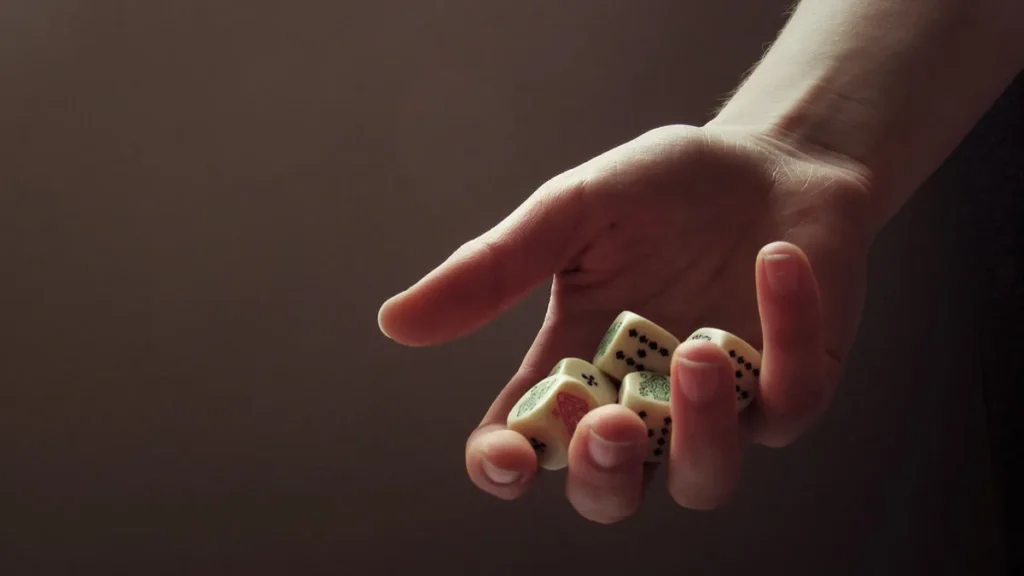
Finding dice games for 392 players sounds impossible at first. A single table cannot hold nearly four hundred people, and one set of dice cannot keep that many players busy. Yet dice games are some of the easiest party games to scale, because the rules are simple, the equipment is cheap, and every round takes only a minute or two. With the right format, a huge crowd can play the same games that work so well for a family of four.
The secret is to stop thinking of 392 as one giant group and start thinking of it as 56 teams of seven. Each team plays at its own table, station, or corner of the hall, and the teams compare scores, swap opponents, and climb a shared leaderboard. Nobody waits long for a turn, nobody needs to learn a complicated rulebook, and the whole room stays noisy in the best possible way.
This guide explains exactly how to run dice games for 392 players, from the team structure and the station rotation to the eight games that work best at this scale. You will find a comparison table, a setup checklist, and answers to the questions every host asks before a giant game night. Everything here is built for real rooms, real volunteers, and real dice.
Key takeaways
- Split 392 players into 56 teams of seven, then run the night across 14 stations with four teams at each one.
- Choose dice games with rounds under five minutes, simple scoring, and no long waits between turns.
- Yahtzee-style team play, Farkle, Bunco, and Liar’s Dice are the strongest choices for very large groups.
- Give every station a host, a printed score sheet, and its own set of dice so play never stalls.
- Keep a single visible leaderboard and finish with a short championship round between the top teams.

Why Dice Games Work for 392 Players
Dice games scale better than almost any other kind of party game, and they pair well with board games for 390 players when you want a mixed game night. The rules fit on a single card, the equipment costs a few dollars per table, and a new player can join mid-game without a long explanation. A board game with a thick rulebook slows down as the group grows, but a dice game gets louder and more fun instead.
Dice also level the playing field. A seven-year-old and a grandparent have the same chance on a lucky roll, which matters when your 392 players include families, co-workers, and friends of every age, and the same spirit runs through party games for 390 players. Skill still matters in games like Farkle and Liar’s Dice, where players choose when to stop rolling or when to challenge a bid, but luck keeps every team in the hunt until the last round.
How the 3-to-392 Format Works
The format in this guide works for as few as three players and as many as 392, because it is built on teams rather than individuals. Three friends can play every game at one table, and the same approach behind our guide to dice games for 391 players scales up smoothly to a school hall, a company event, or a community festival with 56 teams and the same rules. Only the number of stations changes.
For the full 392-player version, form 56 teams of seven players each. Seven is the sweet spot: large enough that every team has a mix of cautious and bold rollers, small enough that everyone gets regular turns. Teams pick a name, a captain, and a colour, which makes the leaderboard easy to follow from across the room.
Fourteen Stations, Four Teams Each
Set up 14 stations around the room, with four teams at each station. Each station runs one dice game, and teams rotate to a new station every twenty minutes. Over the course of the night, every team visits several stations and plays several different games, which keeps the event fresh.
Each station needs a host, a table, five dice, a dice tray or a shallow box lid to keep rolls contained, and a stack of printed score sheets. The host explains the game in under a minute, runs the rounds, and records the scores. Hosts are the backbone of the night, so recruit your most organised friends and give them a short briefing before the doors open.
The Tournament Ladder
After the station rounds, the top eight teams on the leaderboard meet in a championship round. This is usually a single game of Bunco or team Yahtzee played on a stage or in the centre of the room, with everyone else watching and cheering. The final takes about fifteen minutes and gives the night a clear ending.
The 8 Best Dice Games for 392 Players
Every game below was chosen for the same reasons: it plays in under twenty minutes, it works with teams of seven, and it needs nothing more than dice, a score sheet, and a pencil. Each game lists the dice needed, the ideal team setup, and one hosting tip that keeps the station running smoothly.
1. Team Yahtzee
Team Yahtzee adapts the classic five-dice game for group play. Each team shares one scorecard, and players take turns rolling for the team. On a player’s turn, they roll three times, keeping the dice they like and re-rolling the rest, then the team chooses together which box to fill on the shared card. The discussion is half the fun.
Teams play six rounds, one for each scoring category they must fill, and the host calls time at twenty minutes. The highest total wins the station. Team Yahtzee suits mixed-age groups because the rules are familiar and the decisions are shared, so no single player feels the pressure of a bad roll.
Hosting tip: print large scorecards with big boxes, and let the team captain hold the pencil. It stops arguments about who wrote what and keeps the card readable for the host.
2. Farkle
Farkle is a push-your-luck game played with six dice. Players roll, set aside scoring dice, and decide whether to bank their points or roll again for more. Rolling with no scoring dice is a Farkle, and the team loses all the points from that turn. The tension of that choice is what makes the game so loud.
At a 392-player event, play team Farkle to 5,000 points with a twenty-minute time limit. Each player takes one turn per round, and the team total is the sum of every player’s banked points. The first team to reach the target, or the highest total when time is called, wins the station.
Hosting tip: post a scoring chart at every table. Ones score 100, fives score 50, three of a kind scores 100 times the face value, and a straight scores 1,500. New players check the chart instead of asking the host.
3. Liar’s Dice
Liar’s Dice is a bluffing game where each player shakes five dice in a cup and peeks at them in secret. Players take turns bidding on how many dice of a certain value are showing across the whole table, and anyone can challenge a bid they think is a lie. A wrong challenge costs the challenger a die, and the last player with dice left wins.
For large groups, play team Liar’s Dice with one cup per team and a shared bid around the station. Four teams bid in turn, and the team that loses a challenge gives up one of its five dice. The game ends when one team holds the most dice at the time limit, which usually takes about fifteen minutes.
Hosting tip: use opaque cups with lids, and insist that nobody lifts a cup except the team holding it. Peeking ruins the bluff, and the whole game depends on hidden information.
4. Bunco
Bunco is the classic large-group dice game, and it was practically invented for nights like this. Players roll three dice and score points for rolling the number of the current round. Six rounds make a full game, with teams moving tables between rounds in the traditional version, which fits the station rotation perfectly.
Each team rolls in turn, and the host rings a bell to end each round. A Bunco, three dice showing the round number, scores 21 points and wins a small prize on the spot. The team with the most points after six rounds wins the station, and the loudest table usually wins the prize for spirit.
Hosting tip: give every station a bell or a whistle. The sound carries across a noisy hall far better than a shouted announcement, and it keeps all fourteen stations in sync.
5. Ten Thousand
Ten Thousand, also called 10,000 or Zilch, is a close cousin of Farkle with a longer scoring ladder. Players roll six dice, bank scoring combinations, and push their luck until they choose to stop or lose the turn. The first team to 10,000 points wins, which gives the game a satisfying race structure.
For a 392-player night, lower the target to 5,000 points so the game fits inside a twenty-minute station slot. Teams take turns in order, and each player rolls once per round. The running total stays on the score sheet where everyone can see it, which builds suspense as teams approach the target.
Hosting tip: appoint one player per team as the scorekeeper and give them a calculator. The maths is simple, but a dedicated scorekeeper keeps the game moving and prevents disputes.
6. Left Center Right
Left Center Right, or LCR, is the simplest game on this list and the best icebreaker for a huge crowd. Each player starts with three tokens. On a turn, they roll three dice marked L, C, R, and dots. An L passes a token left, an R passes one right, a C sends one to the centre pot, and a dot means the player keeps the token.
Play LCR as a team game by giving each team a shared pile of 21 tokens and letting players roll in turn. When a team runs out of tokens, it is out, and the last team with tokens wins the station. A full game takes ten minutes, so it works well as a warm-up station near the entrance.
Hosting tip: use poker chips or dried beans as tokens. They are cheap, easy to count, and they make a satisfying sound when they hit the table.
7. Dice Bingo
Dice Bingo turns a familiar game into a dice event. Each team gets a bingo card with numbers from 2 to 12, and the host rolls two large dice at the front of the station. Teams mark the number rolled, and the first team to complete a row, a column, or a diagonal shouts bingo and wins the round.
Play three rounds per station visit, with a fresh card each round. The game needs no skill at all, which makes it perfect for the youngest players and for guests who arrived late and missed the briefing. The host controls the pace, so a round never drags.
Hosting tip: use oversized foam dice for the host rolls. They are easy to read from the back of a crowd, and they add a visual moment every time they tumble across the table.
8. Team Pig
Team Pig is a simple race to 100 points with a single die. Players roll in turn and add the result to the team total, but rolling a one wipes out the points from that turn. Teams must decide when to stop rolling and bank their points, which creates the same push-your-luck tension as Farkle with even simpler rules.
Play Pig as a relay: each team member rolls until the team chooses to bank, then the next player takes over. The first team to 100 points wins the station. A game usually takes about twelve minutes, so it fits easily into the rotation and works as a cool-down station late in the night.
Hosting tip: use one large die per team so the whole table can see the result. A single die also removes any argument about which dice counted.
Dice Games Compared
The table below compares all eight games on the details that matter to a host: how many dice each station needs, how long a game takes, and how much skill it involves. Use it to build a balanced rotation. A good night mixes fast luck games like LCR with thinking games like Farkle, so every kind of player finds a station they enjoy.
| Game | Dice per station | Time | Skill level | Best for |
|---|---|---|---|---|
| Team Yahtzee | 5 | 20 minutes | Medium | Mixed-age teams |
| Farkle | 6 | 20 minutes | Medium | Bold risk-takers |
| Liar’s Dice | 20 | 15 minutes | High | Confident bluffers |
| Bunco | 12 | 20 minutes | Low | The main event |
| Ten Thousand | 6 | 20 minutes | Medium | Long races |
| Left Center Right | 3 | 10 minutes | Low | Warm-ups |
| Dice Bingo | 2 | 15 minutes | Low | Young players |
| Team Pig | 1 | 12 minutes | Low | Cool-down rounds |
Equipment and Setup for 392 Players
Dice and Trays
Order at least 300 standard sixteen-millimetre dice, plus a spare bag of 100. Use one colour per station so a stray die can be returned to the right table at a glance. Every station also needs a dice tray, a felt-lined box, or a shallow baking tray to keep rolls on the table and off the floor.
For Liar’s Dice, add five opaque cups per station. For Dice Bingo, add two oversized foam dice per station. For Bunco, add a bell. None of this is expensive, and it all packs into two or three boxes for storage after the night.
Score Sheets and Hosts
Print score sheets in bulk: one pad per station per game, plus spares. Each sheet should show the team name, the station, the round scores, and the final total in large print. Hosts collect the finished sheets after each rotation and hand them to the leaderboard keeper.
Brief your fourteen hosts together for fifteen minutes before the event. Walk them through the five-minute rule, the scoring charts, and the rotation bell. A host who knows the plan can run a station alone, which frees you to walk the room, fix problems, and keep the leaderboard moving.
Checklist: Running Your 392-Player Dice Night
Use this checklist in the week before the event, and tick each item off as you finish it. A host who prepares the room, the teams, and the leaderboard in advance can spend the night enjoying the games instead of solving problems.
- Confirm the teams: collect 392 names, split them into 56 teams of seven, and send every captain the team list and the start time.
- Label the stations: number fourteen stations, put a game card on each table, and place the dice, tray, and score sheets before the doors open.
- Brief the hosts: give all fourteen hosts a fifteen-minute briefing on the rules, the scoring charts, and the five-minute rule.
- Test the leaderboard: set up the whiteboard or projector, enter a few test scores, and check that the whole room can read it.
- Pack the spares: keep spare dice, pencils, score sheets, and batteries for the bell in one labelled box at the welcome table.
- Plan the finale: reserve the centre of the room for the championship round, pick a compere, and prepare the prizes before the night begins.
Frequently Asked Questions
Can dice games really work for 392 players?
Yes, because the players are split into 56 teams of seven and spread across fourteen stations. No single game ever holds more than four teams at once, so every table feels like a normal game night while the whole room plays together.
How many dice do I need for 392 players?
Plan for about 300 dice, plus a spare bag of 100. Most stations need only five or six dice, and only Liar’s Dice needs twenty. Buying in bulk keeps the cost low, and colour-coding dice by station makes lost dice easy to return.
How long does a 392-player dice night last?
Allow about three hours. That covers a short welcome, four twenty-minute station rotations with breaks, and a fifteen-minute championship round. Shorter nights work too: run two rotations instead of four and finish in under two hours.
What if some teams have fewer than seven players?
Teams of five or six work fine, and the games in this guide do not depend on an exact headcount. The team total is what matters, so smaller teams simply take slightly longer turns. Avoid teams below four players, because the shared decisions lose their spark.
Which game should I start with?
Start with Left Center Right or Dice Bingo. Both take ten to fifteen minutes, need almost no explanation, and get the whole room laughing before the thinking games begin. Save Farkle and Liar’s Dice for later rotations, when teams are warmed up.
Do I need prizes for a dice night?
Prizes help, but they do not need to be expensive. Small trophies, medals, or gift cards for the top three teams work well, plus fun awards for best team name and loudest table. The leaderboard and the finale matter more than the value of the prizes.
Bottom Line
Dice games for 392 players work because the format does the heavy lifting: 56 teams of seven, fourteen stations, short rounds, and a visible leaderboard turn an impossible crowd into a room full of small, lively games. Pick the eight games in this guide, brief your hosts, and let the dice do the rest. Your players will remember the night for the rolls, the bluffs, and the teams they cheered for, not the size of the crowd.