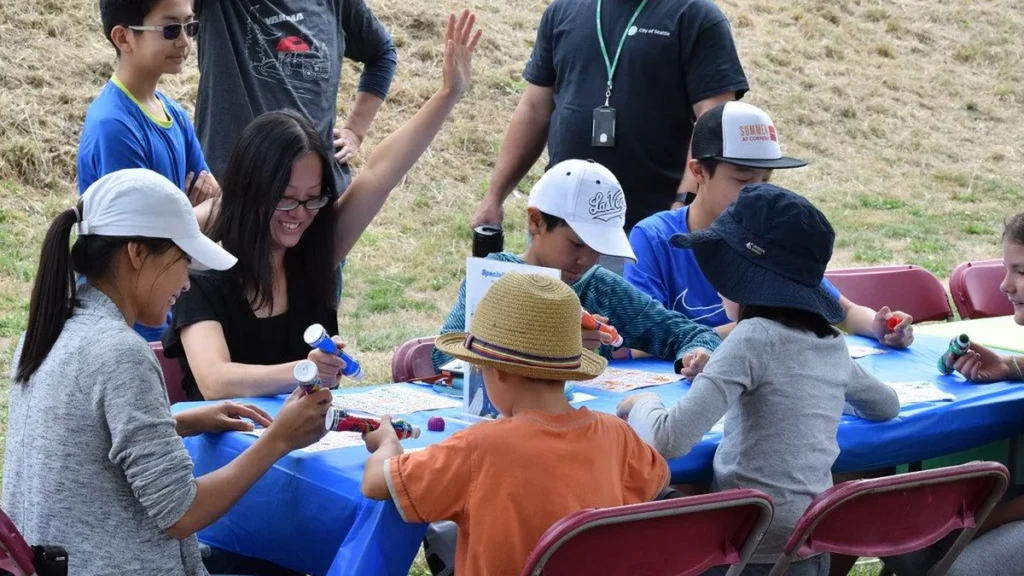

Bingo is one of the rare games where a five-year-old and a grandparent can sit at the same table and both have a real chance of winning. Nobody needs to read fast, nobody needs to be good at numbers, and nobody is knocked out in the first minute while everyone else keeps playing. The caller pulls a number, the players hunt for it on their cards, and the whole table holds its breath together. That shared suspense is why bingo has survived birthday parties, rainy afternoons, classrooms, and family holidays for generations, and why it still works when newer games fall flat with mixed ages.
What You Need Before the First Number Is Called
A game of bingo for children needs four things, and none of them has to be bought specially. First, a bingo card for every player. A standard card is a square grid, five rows by five columns, with the letters B, I, N, G, O printed across the top. Second, a way to choose numbers at random: numbered balls in a bag, a set of small tiles in a bowl, or folded slips of paper in a hat all work perfectly. Third, markers for covering the squares. Bingo dabbers are the classic choice, but buttons, coins, dried beans, bottle caps, small stones, or stickers all do the job. Finally, a caller, which is the person who draws the numbers and reads them out loud. If you would rather buy a ready-made set than make one, the best bingo games for kids guide compares animal, word, travel, and classroom sets by age and theme.
How a Bingo Card Works
The card looks complicated for about thirty seconds, and then it clicks. Each of the five columns belongs to one letter, and each letter only ever holds a certain band of numbers. The B column holds numbers from 1 to 15. The I column holds 16 to 30. The N column holds 31 to 45. The G column holds 46 to 60. The O column holds 61 to 75. So when the caller says a number, the letter tells the player exactly which column to look in, and the player only has to scan five squares instead of twenty-five.
The middle square of the card is special. It sits under the letter N, in the third row, and it is printed as a star or the word FREE. That square counts as already marked for everyone before the game starts, which means every row, column, and diagonal that passes through the middle only needs four called numbers instead of five. Tell the children about the free space first, because it is the one rule that confuses new players. A child who thinks the middle square needs a number will sit waiting for a call that never comes. Every card in the set has the same grid but a different arrangement of numbers, so two players never hold the same card, and a called number helps some players and not others.
Setting Up the Game
Hand out one card per player and let each child pick their own. The choice matters more than it looks: a child who chose their card is already invested in it before the first number is drawn. If a child is playing for the first time, sit beside them for the first round and share the job of scanning the card. One adult per two or three beginners is about right, and after a single game most children will be scanning on their own.
Explain the winning pattern before the first draw, and show it on a spare card so everyone can see it. For the first game, the simplest pattern is a straight line: any full row, any full column, or either diagonal. Hold the spare card up, point along the row, and say that five marked squares in a line wins the round. Children remember a pattern they have seen much better than one they have only heard described. Agree on the shout before you start. The traditional call is simply the word bingo, said loudly, but a classroom might agree on hands in the air instead. Whatever you pick, make it clear that the shout is the claim, and that the caller checks the card before anyone celebrates. That one agreement prevents almost every argument the game produces.
How a Round of Bingo Works, Step by Step
Once everyone has a card and a pile of markers, the round follows the same five steps every time. First, the caller reaches into the bag, draws one tile or ball, and reads it out in the same way every time: the letter first, then the number, slowly and clearly. Saying the letter first matters, because it sends every player to the right column before the number even registers. A good call sounds like “B, seven” or “G, fifty-two”, never just “seven”, which leaves children guessing which column to search.
Second, every player checks the column for that number. If the number is on their card, they cover that square with a marker. If it is not there, they do nothing and wait for the next call. Third, the caller puts the used tile in the bowl and draws the next one. The pause between calls is where the game lives, so give it a few seconds. Younger players need time to find the column, find the number, and place a marker without feeling rushed. A caller who races through the bag will leave half the table behind, and a game that leaves half the table behind stops being fun very quickly.
Fourth, a player who has covered a full winning line shouts the agreed word. Fifth, the caller checks the winning card against the tiles that have already been drawn. Read the marked squares out loud, one by one, and match each one to a tile in the bowl. If every marked square matches a drawn number, the win stands and the round ends. If a square does not match, the card is wrong, the markers stay where they are, and the game carries on. Checking in the open, where everyone can see it, is what makes the result feel fair, even to the child who just lost. Then clear the cards and start again. Most children would rather play four short rounds than one long one, and short rounds mean more children get a turn at winning. Swap the cards between rounds so nobody plays the same grid twice, and let a different child be the caller each time. Being the caller is often the most popular job in the whole game, and it is also the best practice: the caller has to read every number, say it clearly, and keep track of what has already been drawn.
How to Call Numbers So Children Can Follow
Calling is a skill, and a few small habits make an enormous difference. Call slowly, at about one number every five seconds, and repeat each call once before moving on. Say the letter and the number together, then say the number on its own. “I, twenty-two. Twenty-two.” That repetition catches the child who was looking at the wrong column the first time around.
Hold the tile up while you call it, so children who learn by looking can match the shape of the digits instead of relying on hearing alone. This helps younger players enormously, and it helps any child who is still learning the difference between numbers that sound alike, such as fifteen and fifty, or thirteen and thirty. If two numbers sound similar, slow down even more on those calls and point to the digits on the tile as you say them.

Winning Patterns: More Than a Straight Line
A straight line is the best pattern for a first game, but bingo stays interesting because the winning shape can change every round. Four corners is a gentle second pattern: the player needs only the four corner squares of the card, which keeps the round short and gives everyone an early chance. The letter X uses both diagonals at once, which is harder and takes longer, and it is a good choice for older children who found a straight line too easy.
Fun Variations That Keep Bingo Fresh
Once the group knows the basic game, small changes keep it from going stale. Picture bingo is the most useful variation for younger children: swap the numbers for animals, colours, shapes, or letters, and the game becomes a matching exercise that pre-readers can play on their own. Sight word bingo turns the same grid into reading practice, with the caller reading a word aloud and the players hunting for it on their cards. A child who spots the same word ten times in one game will remember it far better than one who copies it from a worksheet. For more ideas on fitting games to a celebration, the guide to party games for kids explains what makes a game work when ten excited children are waiting for it to start.
Bingo for Different Ages
Children of five to eight are ready for number bingo with the full five-by-five card, but they still need a patient caller and a visible record of called numbers. This is the age where the letter bands start to make sense, so take a moment to show them how the B column only ever holds small numbers and the O column only ever holds big ones. That single observation turns a confusing grid into a map, and children who understand the map play faster and enjoy it more. Keep the rounds to about five minutes, change the pattern between rounds, and let children take turns as the caller as soon as they can read the numbers confidently. Children of nine to twelve can handle the full game and all of its variations. They enjoy the harder patterns, the faster calling, and the friendly competition of a small prize per round. They also make excellent callers, and a child who calls a round well learns to speak clearly, keep a steady pace, and manage a room, which are useful skills well beyond the game table.
Keeping Bingo Kind: Winning, Losing, and Arguments
Bingo creates arguments, and the most common one is a child who shouts too early. It can be handled with a little planning. For early shouts, keep the rule that the caller checks the card before anyone cheers. A wrong claim is not a punishment, it is just a mistake, and the game carries on. Children who are not punished for a wrong call will keep playing boldly instead of sitting quietly in case they get it wrong.
Tips for Classrooms and Birthday Parties
In a classroom, bingo works best in groups of ten to fifteen, with the teacher calling and a helper checking cards. Larger classes can split into two games running side by side, which keeps the calling pace fast enough for everyone. Use the game to teach without announcing it: number bingo practises two-digit numbers, sight word bingo practises reading, and themed bingo practises vocabulary. A ten-minute game at the end of a lesson is often the most productive ten minutes of the day, because the children are practising without realising they are practising. The same table setup works at a birthday party, and the birthday party games for kids guide lists twenty-two games with player numbers and ages for planning the whole afternoon.
Quick Answers to Common Questions
How long does a game of bingo for kids take? A single round usually lasts five to ten minutes, depending on the age of the players and the winning pattern. Four corners is the fastest pattern, a full house is the slowest, and a straight line sits in the middle. Plan for three or four rounds in a half-hour session, with a short break to swap cards and choose a new caller between each one.
Is bingo gambling? Not the way children play it here. There is no money, no betting, and no stake of any kind. The prizes are stickers and small treats, the numbers are drawn from a bag, and the only thing at risk is a little pride. Keep it that way, and bingo stays what it has always been for children: a matching game with a thrilling shout at the end.
That is the whole game, and that is also why it lasts. A child who plays bingo practises listening, scanning, waiting, and losing well, all while believing they are only playing. So gather the cards, pick a caller, and draw the first number. Somewhere at the table, a small hand is about to shoot up.