The cake is cut, the candles are out, and ten children are standing in the middle of the living room looking at you. Pick the right party game and the next twenty minutes run themselves. Pick the wrong one and you spend them explaining rules to children who stopped listening after the first sentence.
The phrase sounds obvious until you try to use it. Is a board game a party game? Is a treasure hunt? A game that works for grown-ups can fall flat with eight-year-olds, and a game that works for eight-year-olds can bore a five-year-old to tears.
A plain answer for busy parents
A party game for kids is a short group game built for a celebration, where every child plays at the same time, the rules fit in a sentence or two, and the result stays in doubt until near the end. That is the whole idea. Everything else is decoration.
It says nothing about a box, a board, or a screen. A party game for kids can need nothing more than chairs and music, or a blindfold and a wall, or a ball and a garden. It says nothing about a prize, because the game itself has to carry the fun. And it says nothing about age, because the same shape works from nursery age to the end of primary school, as long as the details match the children in front of you.
The five tests every kids party game should pass
1. Can you explain it in two sentences? Imagine ten children bouncing in front of you and try it out loud. If the explanation needs a demonstration or a second attempt, the game is too complicated for a party. The best ones sound almost too simple: walk round the chairs while the music plays, sit down when it stops.
2. Is everybody playing at once? A party game for kids should keep the whole group busy for most of the round. At a party, watching is waiting, and waiting is the sound of a game losing the room.
3. Does a round last minutes, not half an hour? A single round should usually run between five and fifteen minutes. Short rounds let you play again, swap the game, or move on to cake without a negotiation.
4. Can the youngest child still win a round? This is the test most grown-up games fail. If winning needs reading, spelling, general knowledge, or fast mental arithmetic, the older children will win every time and the younger ones will quietly give up. A good kids party game mixes luck with a little skill.
5. Does losing sting a little, or a lot? Children feel losing more keenly than adults like to admit, and a party is the worst place to discover that. The kindest games let a child who is out keep a job: judging, dealing the cards, or choosing the next song.
What a party game for kids is not
The fastest way to sharpen the definition is to look at the near neighbours. A long board game is not a party game for kids, even if the box says it is for parties. A classroom quiz can feel like one, but a quiz that only rewards what children already know will crown the same child every round, which breaks test four. Free play is wonderful and every party needs some of it, but it has no shared goal, no rounds, and no ending, so it is not a game at all. A video game, however sociable, puts the children’s eyes on a screen instead of on each other, which misses the point of a party.
None of this criticises those activities. A board game night at home and a kickabout in the park are fine ways to spend time. The general idea of a party game covers grown-ups too, and grown-ups tolerate waiting, reading, and losing in ways children do not.
Types that suit younger children: ages three to five
Children this age play with their whole bodies before they play with their minds. They love moving, copying, hiding, and being surprised, and they have almost no interest in rules that need remembering. Keep every game physical, visual, and short, with no reading and no counting beyond ten.
Musical chairs works if you soften it: keep enough chairs for everyone in the early rounds, or let the child who misses a seat become the music helper. Freeze dance is even simpler, because nobody is ever out and the whole group dances together. A treasure hunt with picture clues, rather than written ones, lets pre-readers join in without an adult reading over their shoulder.
Types that suit the middle years: ages six to eight
Between six and eight, children can follow two or three rules at once, read simple cards, and cope with losing a round without the day falling apart. This is the golden age for party games, because almost everything works, and the children are old enough to enjoy a little suspense.
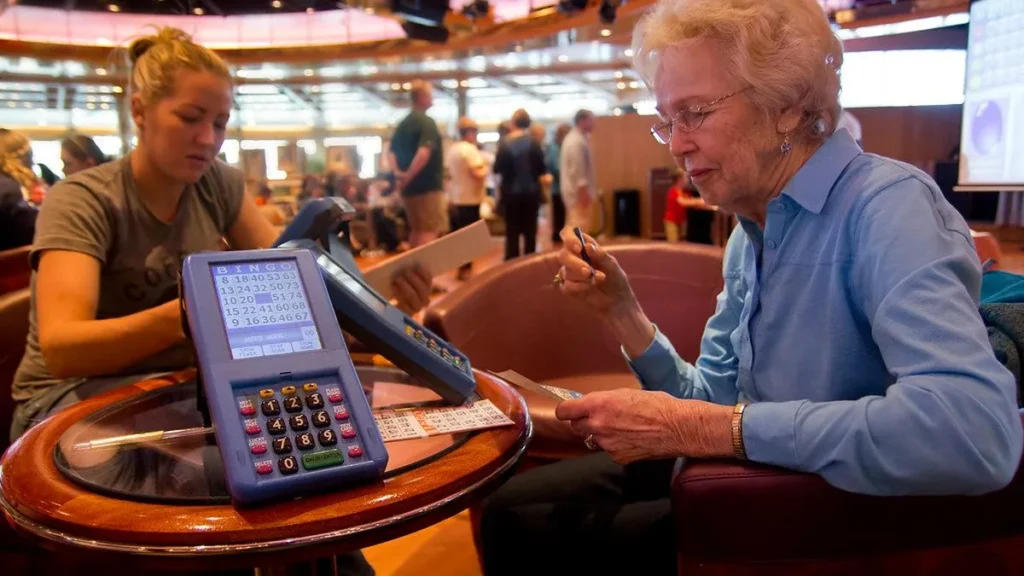
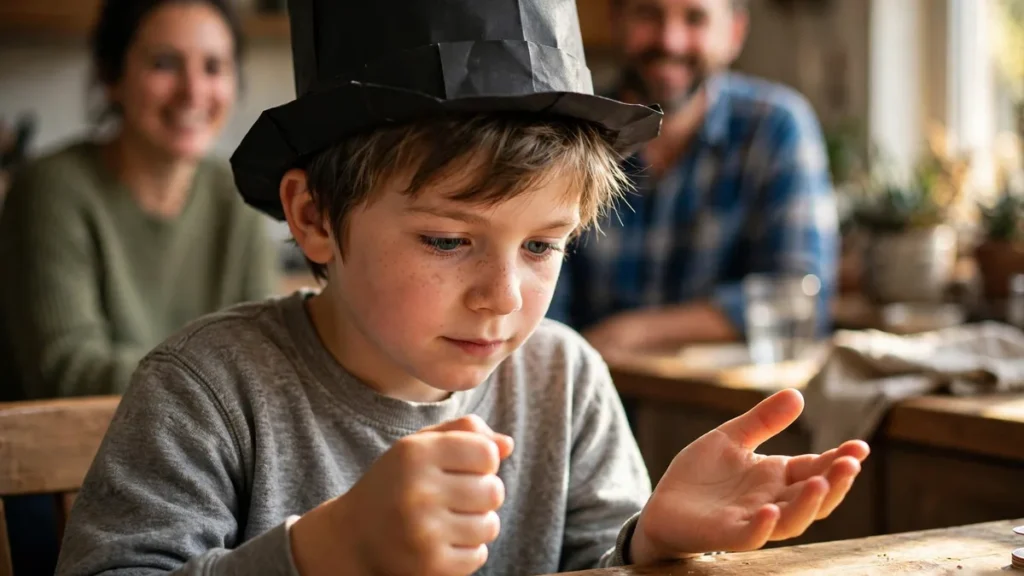
Guessing games come into their own now. A child wearing a paper crown with a character name on it, asking yes-or-no questions while the group shouts answers, will hold a room of seven-year-olds far longer than any screen. Charades for kids works when the prompts are animals, jobs, and everyday actions rather than films nobody has seen. Bingo with pictures or simple words gives every child a card and a chance, and it scales neatly from six children to twenty.
Types that suit older children: ages nine to twelve
Older children want a real contest. They can handle strategy, bluffing, and quick thinking, and they will spot a game that talks down to them within thirty seconds. Give them something with a decision in it.
Trivia for kids works now, provided the questions are about their world: animals, sport, music, films, food, and silly facts, rather than school subjects. Drawing games work too, because a terrible drawing is funnier than a good one and the whole team shouts at once. Minute-to-win-it style challenges, stacking cups or bouncing balls into tubs, turn a living room into a television studio for ten minutes at a time.
Do not be fooled into thinking older children have outgrown the simple games. Musical chairs with music they chose themselves, and a prize for the silliest dancer rather than the fastest sitter, can still fill a room of eleven-year-olds with noise.
Types by setting: matching the game to the room
Age is only half the choice. The same group of children needs a different game in a small flat, a big garden, and a school hall.
In a living room, choose games that stay in one place. Bingo, charades, pass the parcel, guessing games, and drawing games all work with children sitting in a circle or around a table.
In a garden, choose games that use the space. Duck duck goose, relay races, a treasure hunt with clues hidden behind bushes, and musical chairs with garden chairs all belong outside.
In a classroom or a hall, choose games that work for a large group with one adult in charge. Freeze dance, Simon Says, a whole-class quiz with team answers, and a scavenger hunt with stations around the room all scale well.

How to pick the right one: six questions, in order
Choosing feels hard because parents try to answer everything at once.
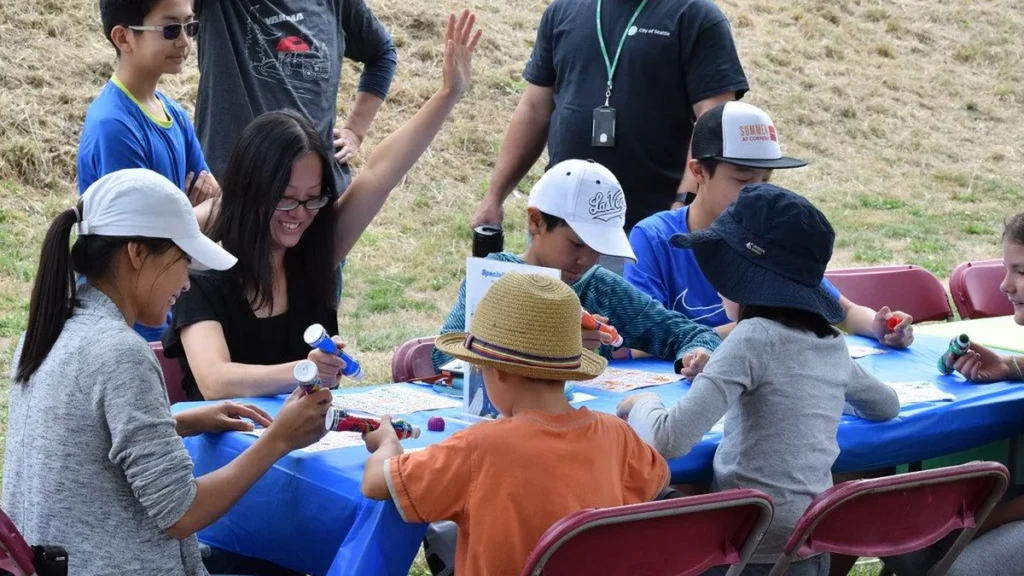
How many children are coming? Four to eight children suit games where everyone plays at once. More than twelve, and you need teams, stations, or a game with no turns at all, like freeze dance.
What is the age spread? A party with a four-year-old and an eleven-year-old is really two parties sharing a cake. Pick a game with luck in it, or run two games side by side for ten minutes each.
Where will you play? A game that needs running does not belong in a room full of furniture, and a quiet guessing game does not belong in a windy garden.
How much time do you have? A game that fills fifteen minutes is perfect between lunch and cake, and a game that fills forty minutes is a trap. Plan two short games rather than one long one.
How loud can it get? A game that ends in shouting is fine in a garden and a problem in a flat with neighbours below. If you need a quiet game, choose drawing, guessing, or bingo.
What does the birthday child like? This question comes last on purpose, because it is the tiebreaker, not the starting point. A child who loves animals will light up at an animal guessing game.
What makes a kids party game actually work
Two games can pass all five tests and still feel different in the room. The difference is usually one of three ingredients. The first is a fast start: children should be playing within a minute of hearing the rules, so lay out the chairs or the cards before they arrive. The second is a moment of surprise: a card nobody expected, a song stopping at a strange moment, a clue that turns the hunt upside down. The third is a comeback: the child who is losing at the halfway point should still be able to win, so add luck, a bonus round, or a final round worth double points.
When a game goes wrong, and how to rescue it
Even a good choice can wobble, and the rescue is usually simpler than the problem looks. If the game drags, shorten it on the spot: play to three points instead of five, or declare the next round the last. If one child keeps winning, make the winner the helper, or add a luck element like a dice roll. If the children do not understand the rules, stop explaining and play one practice round with no scoring. If a child is upset at being out, give them a real job at once: let them control the music, hold the timer, or choose the next prompt. Some games cannot be rescued and should be dropped without ceremony. If the children are arguing about the rules more than playing, or if half the group has wandered off, smile, thank the players, and move on.
A starter shelf: twelve games worth knowing
If you want names rather than theory, start here. Each passes the five tests for the age noted, and each needs little beyond what most homes already have. Musical chairs, ages three and up. Freeze dance, ages three and up. Duck duck goose, ages four and up. Pass the parcel, ages three to eight. Simon Says, ages four to eight, anywhere. Pin the tail on the donkey, ages four to eight. Animal charades, ages six and up. Picture bingo, ages five and up. Treasure hunt, ages five and up. Drawing guessing games, ages seven and up. Relay races, ages six and up, outdoors. A kids quiz, ages nine and up.
That list is a starting point, not a shopping list. A ready-made collection of birthday party games for kids gives you far more options for a birthday in particular, with games grouped for the day itself. Pick three from the shelf, try one at a small gathering first, and keep the one that works.
Frequently asked questions
How many party games should a birthday have? Two or three is enough. One main game, one backup, and a quiet game for the last stretch before home time will cover an afternoon.
Can a party game work with mixed ages? Yes, if luck does some of the work. Choose a game where a younger child can win by chance, pair younger children with older ones in teams, or let the youngest child start first.
What is the difference between a party game and a game night? A party game is one game, played at a celebration, usually for fifteen minutes or less. A game night is the whole evening: several games, snacks, and a plan for the night. Knowing how to plan a game night for kids helps once the party is over and you want a regular evening of games at home.
The bottom line
A party game for kids is a short group game built for a celebration, where everyone plays at once, the rules fit in a sentence or two, and the youngest child in the room can still win a round. The children will not remember the rules. They will remember the moment the music stopped and everybody dived for a chair, and the round they won when nobody expected them to. That is what the game is for.