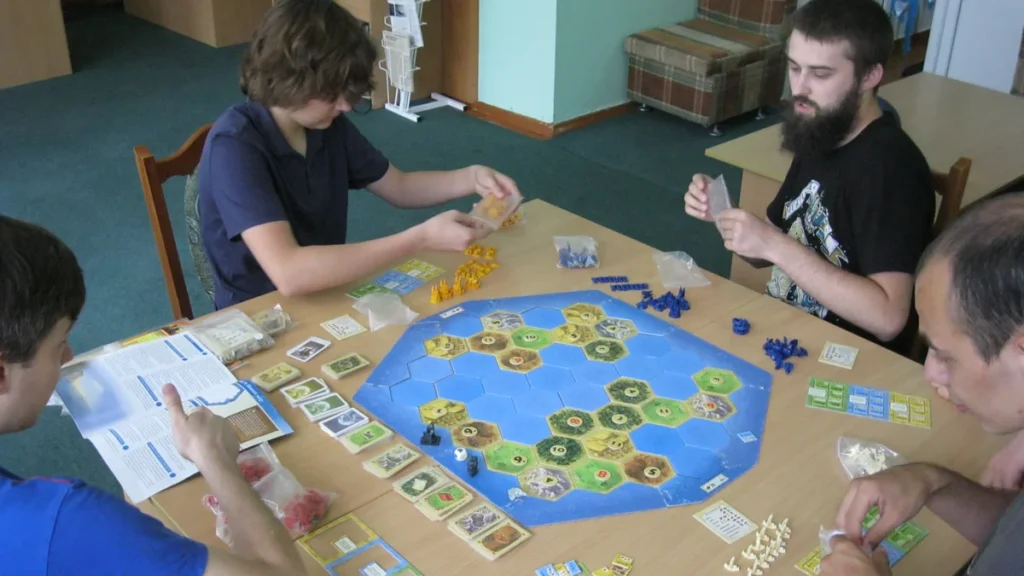
Four hundred and seventy-one players in one room is a trivia night on a grand scale. The hall hums before the first question is read, answer sheets travel down long rows of tables, and the scoreboard becomes the one thing every eye in the room keeps checking. It sounds like chaos, and it can be, unless the night is built around the size of the crowd instead of in spite of it.
The secret is structure. With 471 players you cannot run a buzzer round, you cannot hear every team shout an answer, and you cannot mark papers one by one while the crowd waits. What works is a steady rhythm: nine rounds, one question at a time on a big screen, teams writing their answers down, and runners collecting sheets while the host keeps the energy up.
This guide gives you a complete nine-round trivia game built for exactly 471 players. Each round celebrates a different craft, from embroiderers to perfumers, with three sample questions and answers you can use as they are or swap for your own. The players are grouped into teams of about seven, which means around sixty-seven teams, and every round works whether your players are sitting at long tables in a hall or spread across a school gym. If you have run a big night before, the 469-player edition will feel familiar, and if this is your first crowd this size, start here and follow the plan round by round.
Key takeaways
- Nine themed rounds, each with three sample questions, give 471 players a full evening of play without a single dead moment.
- Teams of about seven keep scoring simple: around sixty-seven teams, one answer sheet each, and a scoreboard everyone can read.
- Mix easy openers with one genuinely hard question per round so every team scores and no team runs away with the night.
- Read every question twice, project the questions as well as reading them aloud, and collect answer sheets after each round.
- Keep the final round light and fast so the night ends on laughter, not on a tie-break nobody understands.

How to Run a Trivia Night for 471 Players
Start by seating around sixty-seven teams of seven. Seven is large enough that nobody feels put on the spot, and small enough that a team can agree on an answer without a committee meeting. Give each team a number, a stack of numbered answer sheets, and plenty of pens, and put the team numbers on the tables before the doors open so nobody has to hunt for a seat.
Run each round the same way so the crowd settles into the rhythm. The host reads the question twice, the question stays on the big screen while teams talk, and after about a minute the host moves on. Runners collect the sheets at the end of each round while the scorers mark them against the answer key, and the host reads out the scores before the next round begins. Plan on about ten minutes per round, with a short break after round three and a longer break after round six. The 467-player edition ran on the same rhythm, and it works just as well here.
Keep one tiebreaker question sealed in an envelope with the host, and agree in advance which alternative answers the scorers will accept. Spelling should not cost a team a point if the answer is clearly right, and the host’s decision on the night is final. Announce the winners while the energy is still in the room, hand out the prizes, and let the applause do the rest.
The Nine Rounds at a Glance
Every round below is built around people famous for a craft, and every round follows the same pattern: a short introduction, three questions, and one harder question to separate the leaders. Use the table to plan the night, then read the full rounds for the questions and answers.
| Round | Theme | What it tests | Star name to know |
|---|---|---|---|
| 1 | Famous Embroiderers | Needlework, thread and the hands behind it | Mary, Queen of Scots |
| 2 | Famous Architects | Buildings, domes and the minds behind them | Christopher Wren |
| 3 | Famous Apothecaries | Herbs, remedies and the shops that sold them | John Keats |
| 4 | Famous Alchemists | Potions, gold and the search for secrets | Nicolas Flamel |
| 5 | Famous Mathematicians | Numbers, proofs and the minds behind them | Pythagoras |
| 6 | Famous Papermakers | Paper, presses and the craft of making sheets | Cai Lun |
| 7 | Famous Chefs | Kitchens, recipes and the cooks behind them | Auguste Escoffier |
| 8 | Famous Philosophers | Ideas, questions and the thinkers behind them | Socrates |
| 9 | Famous Playwrights | Stages, scripts and the writers behind them | William Shakespeare |
Round 1: Famous Embroiderers
Embroidery is needlework raised to an art, and its most famous names stitched their way into history. This round opens the night with questions that most teams can answer, plus one harder question about the Arts and Crafts movement. Start here and let the room warm up.
Question 1: Which queen, held captive in England for many years, passed the time with embroidery, and whose needlework panels can still be seen at Oxburgh Hall? Answer: Mary, Queen of Scots.
Question 2: Which Elizabethan noblewoman, famous for her embroidery and for building Hardwick Hall, was one of the richest women of her age? Answer: Bess of Hardwick.
Question 3: Which embroiderer, daughter of William Morris, led the embroidery department at Morris and Co. and helped revive the craft in the 1800s? Answer: May Morris.
Host tip: hold up any cushion with stitched flowers on it, so teams can picture what an embroiderer actually does.
Round 2: Famous Architects
Architecture is the art of turning stone, glass and steel into places people love, and its most famous names designed the buildings we travel to see. This round is full of satisfying aha moments, because the answers are names that many teams will recognise from skylines and school trips once they hear the question.
Question 1: Which English architect designed St Paul’s Cathedral in London, rebuilding it after the Great Fire of 1666? Answer: Christopher Wren.
Question 2: Which French engineer designed the iron tower in Paris that was finished in 1889 for the World’s Fair? Answer: Gustave Eiffel.
Question 3: Which American architect designed Fallingwater, the house built over a waterfall in Pennsylvania in the 1930s? Answer: Frank Lloyd Wright.
Host tip: name a famous building in your own town before this round, because a local answer always wakes the room up.
Round 3: Famous Apothecaries
Long before modern pharmacies, the apothecary mixed herbs and remedies behind a wooden counter, and some apothecaries became famous for very different reasons. This round mixes poetry, plants and London history, and it gives history lovers a chance to shine early in the night.
Question 1: Which famous poet trained as an apothecary and surgeon, and was licensed to practise in 1816 before he turned to writing full time? Answer: John Keats.
Question 2: Which seventeenth-century apothecary and herbalist wrote The Complete Herbal, published in 1653? Answer: Nicholas Culpeper.
Question 3: Which London society of apothecaries founded the Chelsea Physic Garden in 1673 to grow plants for medicine? Answer: The Worshipful Society of Apothecaries.
Host tip: accept Keats and Culpeper even if the spelling wobbles, since both names are hard to spell under pressure.
Round 4: Famous Alchemists
Alchemy was the old science of turning base metals into gold and searching for the secret of long life, and its most famous names are half scientist and half legend. This round is a crowd pleaser, because almost everyone has heard of at least one of these names, and the answers come quickly once teams start talking.
Question 1: Which French alchemist of the 1300s is said in legend to have found the philosopher’s stone and made gold? Answer: Nicolas Flamel.
Question 2: Which Swiss physician and alchemist, born Theophrastus von Hohenheim, is remembered as the father of toxicology? Answer: Paracelsus.
Question 3: Which English scholar and adviser to Queen Elizabeth I was famous for his alchemy, astrology and his great library of books? Answer: John Dee.
Host tip: ask the room to shout out their favourite wizard story before this round, and the whole room will be smiling before the first question.
Round 5: Famous Mathematicians
Mathematics is a craft of patience and proof, and its greatest names gave us the rules that still run our world. This round rewards teams who remember names from school, and it suits every age in the room, because the questions start easy and only the last one is truly hard.
Question 1: Which ancient Greek mathematician is remembered for the theorem that the square of the hypotenuse equals the sum of the squares of the other two sides? Answer: Pythagoras.
Question 2: Which ancient Greek mathematician wrote the Elements, the geometry textbook used for more than two thousand years? Answer: Euclid.
Question 3: Which ancient Greek mathematician is said to have run through the streets shouting Eureka after discovering the principle of buoyancy in his bath? Answer: Archimedes.
Host tip: draw a right-angled triangle on the big screen, because seeing the shape helps teams remember the theorem.
Round 6: Famous Papermakers
Paper is so ordinary that we forget somebody had to invent it, and the people who made it changed how the whole world shares ideas. This round is the quietest one of the night, full of careful craftsmanship and old workshops, and it suits teams who love books, libraries and history.
Question 1: Which Chinese official of the Han dynasty is credited with inventing paper in about the year 105? Answer: Cai Lun.
Question 2: Which English papermaker of the 1700s gave his name to Whatman paper, the fine wove paper loved by artists? Answer: James Whatman.
Question 3: Which French inventor patented the first continuous paper-making machine in 1799? Answer: Nicholas-Louis Robert.
Host tip: hold up a sheet of paper and ask the room to guess its age, because nobody ever thinks about where paper comes from.
Round 7: Famous Chefs
Great chefs turn simple ingredients into dishes the whole world remembers, and the people who invented them changed how we eat, cook and celebrate. This round mixes famous restaurants with a little bit of television, so it keeps the room guessing right through to the last question.
Question 1: Which French chef, known as the king of chefs, wrote Le Guide Culinaire and created the peach Melba dessert? Answer: Auguste Escoffier.
Question 2: Which American cook wrote Mastering the Art of French Cooking and brought French recipes into homes through her television shows? Answer: Julia Child.
Question 3: Which British chef earned three Michelin stars at his restaurant in Chelsea and became famous for his television shows about kitchens under pressure? Answer: Gordon Ramsay.
Host tip: ask teams to name their favourite dish before this round, because everyone has an answer and the room will buzz.
Round 8: Famous Philosophers
Philosophers are the great question askers of history, and the most famous of them still shape how we think about truth, goodness and the mind. This round is calm and thoughtful, which is exactly what the room needs near the end of the night, and it rewards careful teams who know their history.
Question 1: Which Greek philosopher, teacher of Plato, was put on trial in Athens and sentenced to drink hemlock in 399 BC? Answer: Socrates.
Question 2: Which Greek philosopher wrote The Republic, the famous dialogue about justice and the ideal city? Answer: Plato.
Question 3: Which French philosopher is remembered for the words I think, therefore I am, written in his Discourse on the Method? Answer: René Descartes.
Host tip: read the third question slowly and clearly, because the Latin version of the famous line trips up even confident teams.
Round 9: Famous Playwrights
Playwrights write the words that actors speak and audiences remember for centuries, and its most famous makers created plays that are still performed on stages all over the world. This final round is the most dramatic of the night, and it gives teams a chance to show off knowledge of theatre, history and famous lines.
Question 1: Which English playwright wrote Hamlet, Macbeth and Romeo and Juliet, and is often called the Bard? Answer: William Shakespeare.
Question 2: Which Norwegian playwright wrote A Doll’s House, the play about Nora that shocked audiences when it opened in 1879? Answer: Henrik Ibsen.
Question 3: Which Irish playwright wrote Waiting for Godot, the play in which two men wait by a tree for someone who never arrives? Answer: Samuel Beckett.
Host tip: warn teams that question two is about the playwright, not the play, so nobody writes A Doll’s House by mistake.
Checklist for the Night
Print this checklist and hand it to the host and the head scorer before the doors open. If every item is ticked, the night will run smoothly even with 471 players in the room, and the 468-player edition checklist works just as well if you need a spare copy.
- Book a hall with a microphone, a big screen and enough tables for around sixty-seven teams of seven.
- Print numbered answer sheets in a different colour for each of the nine rounds, plus spare pens.
- Brief four or five scorers on the answer keys and agree on which alternative answers to accept.
- Test the microphone and the projector before the first team arrives, and keep a spare bulb or cable nearby.
- Seal one tiebreaker question in an envelope and keep it with the host until the final scores are in.
- Plan the breaks: a short break after round three, a longer break after round six, and prizes ready before the final round ends.
Frequently Asked Questions
How many teams will 471 players make?
Teams of seven give you around sixty-seven teams, which is the simplest way to run the night. If a few teams have six or eight players, that is fine, and the scoring stays fair as long as every team hands in one answer sheet per round.
How long does a trivia night for 471 players take?
Plan on about two and a half hours, including the breaks. Nine rounds at roughly ten minutes each take about ninety minutes, and marking, breaks and the prize giving fill the rest of the evening.
What is the best team size for a huge trivia night?
Seven players per team works best for a crowd this size. Smaller teams feel the pressure, larger teams struggle to agree, and seven gives every team enough brains without turning each question into a debate.
How do you stop cheating in a room of 471 players?
Collect the answer sheets at the end of each round, keep phones face down on the tables, and have runners and scorers watching the room. Most teams play fair when the rules are clear, and a friendly reminder from the host at the start is usually enough.
Can one host manage 471 players alone?
One host can run the questions, but a big night needs helpers. Ask for four or five scorers, two runners to collect sheets, and one person on the scoreboard, and the host can focus on keeping the energy up.
What makes a good final round for a huge group?
A good final round is short, fair and fun, with questions that every team can attempt. The perfumers round here does that well, and a quick tiebreaker question in a sealed envelope settles any tie without an argument.
The Bottom Line
Nine rounds, sixty-seven teams and one good host are all it takes to turn 471 players into a great trivia night. Keep the questions clear, the rounds moving and the scoring fair, and the size of the crowd becomes the best part of the evening instead of the hardest part.
Print the answer sheets, brief your scorers, and trust the plan. The room will do the rest.