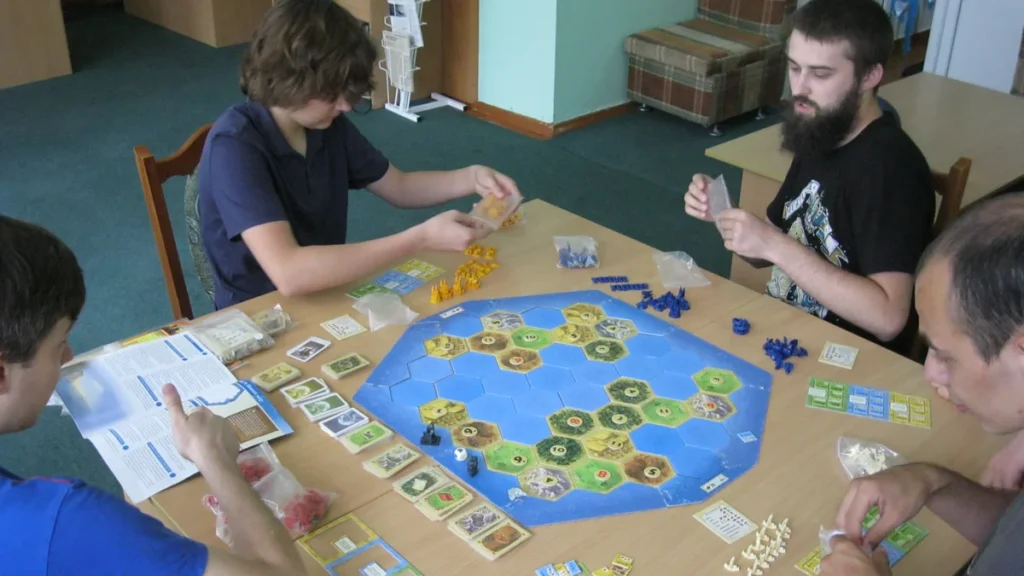
Four hundred and seventy four players sounds like a crowd that no table game could ever hold, yet dice games are built for exactly this kind of scale. A handful of dice, a clear score sheet and a little floor space are all it takes to turn a huge hall into dozens of small, noisy, friendly contests. Nobody waits long for a turn, nobody needs to learn a thick rule book, and every table finishes its round at roughly the same moment.
The trick is to stop thinking of one giant game and start thinking of many small ones running side by side. Split the room into tables of four to six players, give every table the same nine sports themed games, and let each table work through the list at its own pace. A floor captain keeps the rounds moving, a central scoreboard keeps the friendly rivalry alive, and the dice do the rest of the work.
This guide gives you nine fresh sports themed dice games, a simple setup plan, a checklist and answers to the questions every organiser asks first. Each game takes only a few minutes, uses ordinary six sided dice, and works just as well for keen sports fans as it does for people who have never watched a match in their lives.
Key takeaways
- Split 474 players into tables of four to six, and run the same nine games at every table.
- Each game uses ordinary six sided dice, takes only a few minutes, and needs no sports knowledge.
- Keep rounds short and timed so every table moves on together and nobody waits around.
- Use one central scoreboard so tables can compare results and cheer each other on.
- Appoint a floor captain for each zone to settle ties, hand out dice and keep the energy up.
How Dice Games Work for 474 Players
The secret to a huge dice night is simple: the dice never need to travel. Instead of one game with 474 people crowded around a single table, you run about ninety small games at the same time, one per table. Every table rolls its own dice, keeps its own score and finishes its own round, so the whole room stays busy from the first roll to the last.
Start by counting your tables, not your players. Ninety tables of five players, plus a few spare seats, will hold the whole group with room to spare. Give each table two dice, a pencil and a printed score sheet listing all nine games in order. When the floor captain calls time, every table starts the same game, and when time is called again, every table moves on to the next one.
Scoring stays light on purpose. Most games award one point for a win and a bonus point for a standout roll, such as a double six or a perfect round. Tables add their points as they go, and the floor captains collect the sheets at the end of each round. If you want a ready made running order for the evening, the step-by-step plan for running dice games for 473 players shows how a similar sized night was organised from doors open to final scores.
The 9 Dice Games at a Glance
Here is the whole set in one place. Use this table to brief your floor captains, to print a quick reference card for each table, or to check that every table has the kit it needs before the first roll.
| Game | Players per table | You need | Round length |
|---|---|---|---|
| Dice Football Match | 4 to 6 | Two dice, score sheet | 8 minutes |
| Dice Basketball Shot | 4 to 6 | One die, score sheet | 6 minutes |
| Dice Tennis Rally | 4 to 6 | Two dice, score sheet | 8 minutes |
| Dice Swimming Race | 4 to 6 | Two dice, score sheet | 7 minutes |
| Dice Cycling Sprint | 4 to 6 | Two dice, score sheet | 7 minutes |
| Dice Running Track | 4 to 6 | One die, score sheet | 6 minutes |
| Dice Volleyball Serve | 4 to 6 | Two dice, score sheet | 7 minutes |
| Dice Gymnastics Flip | 4 to 6 | Two dice, score sheet | 8 minutes |
| Dice Hockey Goal | 4 to 6 | Two dice, score sheet | 8 minutes |
The 9 Dice Games
Each game below is written so that any player can pick it up in under a minute. Read the short how to play note aloud, roll a practice round together, and then play for real. The sports theme is only a flavour: the dice decide everything, so a lucky beginner can beat a seasoned fan on any table.
1. Dice Football Match
Each player is a team, and the match lasts five rounds. On your turn, roll two dice and add them together. A total of seven or more counts as a shot on goal, and a total of ten or more scores a goal. Doubles count as a penalty: roll one extra die, and a four or more scores from the spot.
After five rounds, the player with the most goals wins the match and takes one table point. If two players finish level on goals, they play a one roll shootout: highest single die wins. Keep the score sheet simple, one line per player, and move on while the cheering is still loud.
2. Dice Basketball Shot
This is a shooting contest, pure and simple. Each player takes ten shots, rolling one die per shot. A roll of four or more scores two points, and a roll of six scores three points, just like a shot from behind the arc. A roll of one is an air ball and scores nothing.
After ten shots, add up the points. The highest total wins the table point, and any player who scores thirty points or more earns a bonus point for a perfect shooting night. The game is quick, the maths is easy, and the groans when a six turns into a one are half the fun.
3. Dice Tennis Rally
Players pair up for a short rally, and the rest of the table watches and keeps score. Each player rolls two dice, and the higher total wins the point. The first player to four points wins the game, but they must win by two clear points, so a rally can stretch to six or seven points.
A double on either roll is an ace: it wins the point at once and cannot be beaten. Rotate the pairs so everyone plays two rallies, then add up the games won. The player with the most games takes the table point, and the best rally of the night earns a cheer from the whole table.
4. Dice Swimming Race
Imagine a pool fifty metres long, with each player swimming a lane of their own. On your turn, roll two dice and move forward by the total shown. A roll of two is a false start: stay where you are and lose the turn. A double is a perfect turn at the wall, so move forward six extra metres.
The first player to reach fifty metres wins the race and takes one table point. Play two heats so everyone gets a second swim, and give a bonus point to any player who wins both heats. The race is easy to follow on the score sheet, and the finish is often decided by a single roll.
5. Dice Cycling Sprint
Each player rides a five lap circuit, and every lap is one roll of two dice. Add the total to your distance for that lap. A roll of eleven or twelve is a downhill burst, so add four extra points to that lap. A roll of three or less is a steep climb, so subtract two points from that lap.
After five laps, the highest total distance wins the sprint and takes the table point. A double six on the final lap earns a bonus point for the fastest finish, even if that rider does not win overall. Keep a running total after each lap so the lead changes hands in front of everyone.
6. Dice Running Track
This is the fastest game in the set. Each player runs four laps of a track, rolling one die per lap. The number shown is your time in seconds for that lap, so lower is better. A roll of one is a flying start and counts as half a second, while a roll of six is a stumble and counts as seven seconds.
Add the four lap times together. The lowest total wins the race and takes the table point, and any player whose total is twelve seconds or less earns a bonus point for a record run. The whole game takes about six minutes, which makes it a good breather between the longer games.
7. Dice Volleyball Serve
Players take turns to serve, and the table defends. Roll two dice: a total of six or more clears the net, and a total of ten or more is an ace that nobody can return. A total of five or less is a fault, and the serve passes to the next player.
Each player serves five times. Every successful serve scores one point, and every ace scores two. The highest total after five serves wins the table point, and a player who lands three aces earns a bonus point. The game rewards steady serving over wild power, which keeps every player in with a chance.
8. Dice Gymnastics Flip
Each player performs three routines, and each routine is judged by the dice. Roll two dice for each routine: the total is your score out of twelve, and a double adds two style points. A total of three or less is a wobble, so subtract one point from that routine.
Add the three routine scores together. The highest total wins the table point, and a player who scores thirty or more earns a bonus point for a flawless display. Let the table applaud each routine as it happens, because the scoring is simple enough for everyone to follow along.
9. Dice Hockey Goal
The final game is a shooting drill on ice. Each player takes eight shots, rolling two dice per shot. An even total is a shot on target, and a total of ten or more is a goal. An odd total below ten is a save, and the shot is lost.
After eight shots, count the goals. The most goals wins the table point, and a player who scores five goals or more earns a bonus point for a hat trick and more. End the game with a one roll shootout between the top two players if the table is tied, so the night finishes on a cheer.
How to Set Up the Night
Good setup is what turns a good idea into a smooth evening. Arrive early, lay out the tables in clear zones of ten, and put a numbered card on each table so players can find their seats without a queue forming at the door. Place two dice, a pencil and a score sheet on every table before anyone arrives.
Brief your floor captains first, while the room is still empty. Walk them through the nine games, show them how the score sheets work, and agree on the signals for starting and stopping a round. A raised hand, a short whistle blast or a bell all work well, as long as every captain uses the same signal at the same moment.
Plan the running order before the night, and print it on the back of every score sheet. Start with Dice Running Track, the fastest game, so the room warms up quickly, then alternate a long game with a short one. The guide to what makes dice games for 472 players work explains the same table and zone layout in more detail, and it is worth a read if this is your first huge group night.
Your Game Night Checklist
Work through this list the day before the night, and again on the morning itself. Tick each item off as you pack it, and you will not be hunting for spare dice while 474 players are waiting to play.
- Count out two dice, a pencil and a printed score sheet for every table, plus spares.
- Print the nine game rules on one sheet and place a copy on every table.
- Number the tables and divide the room into zones of ten tables each.
- Choose a floor captain for each zone and brief them before the players arrive.
- Set up one central scoreboard where every table can see the running totals.
- Test your start and stop signal from the far corner of the room before doors open.
Tips That Keep 474 Players Moving
Keep the pace brisk and the rules visible. If a table is stuck on a rule, the floor captain should make a quick call and move on, rather than letting a debate eat into the round. A small ruling now is better than a perfect ruling five minutes later, when the rest of the room has already finished.
Rotate the dice between players after every game, and swap seats at least once during the night. Fresh neighbours keep the conversation lively, and a new seat often changes a table luck entirely. If a table finishes early, give them a practice round of the next game instead of letting them sit idle.
Celebrate the small moments as well as the big winners. Announce the best single roll of each round, the closest finish and the loudest table, and watch the room light up. The complete guide to dice games for 470 players has more ideas for keeping a huge room engaged, including simple ways to run a final play off between the top tables.
Frequently Asked Questions
Can 474 players really play dice games at the same time?
Yes, because the players are not in one game. They are in about ninety small games at separate tables, all running the same nine games in the same order. Each table needs only its own dice and score sheet, so the whole room can play at once without crowding or waiting.
How many dice do we need for 474 players?
Plan on two dice per table, which means about 180 dice for ninety tables, plus at least twenty spares for dice that roll under tables or go missing. Buy dice in bulk packs, and keep the spares in a labelled box with the floor captains so a lost die is replaced in seconds.
What if a table has only three or four players?
The games still work well with three or four players, because every game is played in turns and scored on its own. Simply play the same rounds with fewer turns, and let the table finish a little earlier. The floor captain can use the spare minutes for a practice round of the next game.
How long does the whole night take?
Allow about ninety minutes for the nine games, including short breaks between rounds, plus thirty minutes for seating, briefing and final scores. A two hour evening, from doors open to the last cheer, is a comfortable pace for most groups and leaves room for a short break in the middle.
Do players need to know about sports already?
No, the sports theme is only a flavour. Every result comes from the dice, and every rule is explained in one short paragraph. Players who love sport will enjoy the theme, and players who know nothing about sport will still win games on lucky rolls alone.
Are the sports dice games played for money?
No, these games are played for points, applause and the fun of the night. Tables compete for the top spot on the central scoreboard, and the winning table can take home a small prize, a certificate or simply the bragging rights. Keep the stakes friendly so every player can relax and enjoy the games.
The Bottom Line
Nine sports themed dice games, ninety small tables and one clear plan are all it takes to give 474 players a night to remember. Keep the rounds short, keep the scoring simple, and let the dice decide the winners. The room will do the rest.