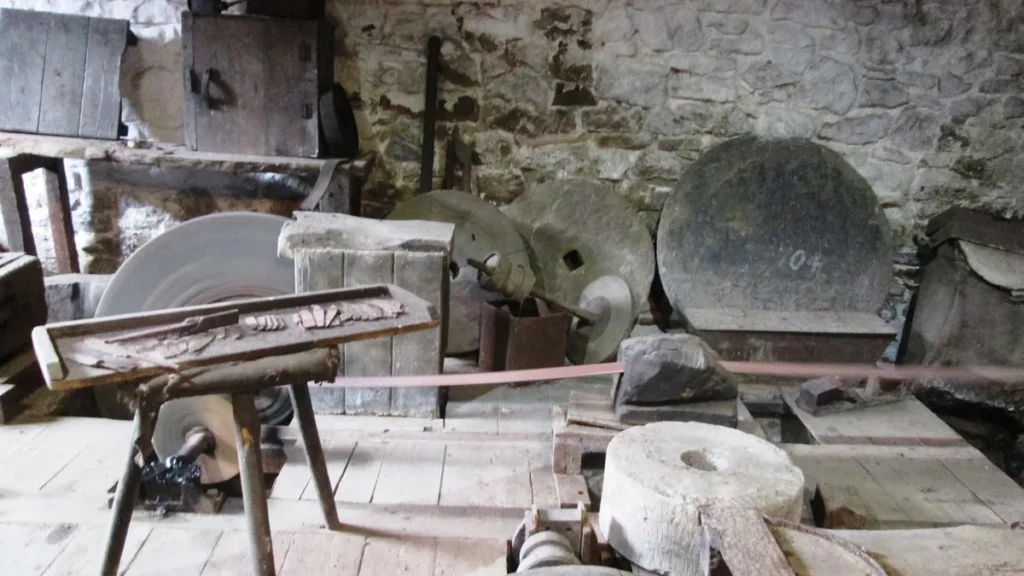
Five hundred and sixty-five players, one old village cutler’s workshop, and nine small contests built around the tools of the trade: that is the whole of this plan, and it works because every contest is short, visible, and easy to judge. Nobody needs to know how a pocket knife is made before they arrive. Each game hands players a tray of real workshop fittings, a plain task, and a clock, and the best teams are the ones that stay calm, share the work, and check each other’s counting before they call out a result.
The cutler’s workshop suits a crowd this large because the work itself comes in small pieces. A bolster is no bigger than a thumb, a fuller is a shallow channel you can trace with one finger, and a strop is a piece of leather that rewards a steady hand rather than a strong arm. When the tasks are this small, dozens of teams can play side by side, and a single judge can settle every dispute by looking at the tray in front of them.
This guide lays out the day from the first welcome to the final tally. You will find the nine games in a table for a quick overview, then each game explained in full, then a plan for fitting 565 players into one day, a short checklist, and answers to the questions organisers ask most. Follow it in order, or dip into the game that catches your eye first.
Key takeaways
- Nine short games, each built around one cutler’s fitting, keep 565 players busy without long waits.
- Teams of five work best: small enough to agree quickly, large enough to share every task.
- Every game is judged by eye and by count, so no special tools or prior skill are needed.
- Short rounds of ten minutes, with a five-minute changeover, keep the whole day moving.
- Keep one spare tray of fittings for every game, so a dropped piece never stops play.

The Nine Games at a Glance
The table below is the whole day in miniature. Each row gives the name of one game, the task players must finish, and how the points are shared out. Use the detailed sections further down for the full rules of each game.
| Game | Task | Scoring |
|---|---|---|
| Bolster Count Race | Sort bolsters by shape and tally each pile | One point per correct pile |
| Fuller Measure Race | Gauge the channel on each sample piece | One point per true reading |
| Strop Honing Race | Draw the strop evenly and polish the sample | Points for the smoothest finish |
| Sheath Fit Race | Match each sheath to its own pocket knife | One point per true match |
| Temper Check Race | Order samples by their temper colour | Points for the true order |
| Hone Stone Count Race | Grade the hone stones and tally the grades | One point per correct grade |
| Ricasso Count Race | Count the plain ricasso sections in the tray | One point per correct total |
| Jimping Count Race | Count the fine ridges along each sample | One point per correct total |
| Lanyard Count Race | Thread lanyards and tally the finished cords | One point per finished cord |
The Games in Detail
Each game below uses one tray of fittings, one worktop, and one judge’s card. The trays are set out before the players arrive, the fittings are counted twice by two different volunteers, and every team plays the same tray in the same order. That sameness is what makes the day fair.
1. Bolster Count Race
The bolster is the small metal cap that sits where the handgrip meets the sharp part of a pocket knife, and in this game teams must sort a mixed tray of bolsters into piles by shape, then tally each pile. The shapes are plain to tell apart once you look closely: some are rounded, some are square-shouldered, and some are slim and tapered. The trick is not speed alone but agreement, because two players counting the same pile in different ways will reach different totals, and only the total the whole team agrees on is written down.
Give each team a tray of forty bolsters and ten minutes on the clock. One player tips the tray out gently, one player sorts, one player counts aloud, one player writes, and the fifth player checks the piles a second time. A pile is correct only if the count and the shape both match the judge’s card. A team that rushes and miscounts scores nothing for that pile, so a careful count beats a quick guess every time.
2. Fuller Measure Race
A fuller is the long shallow channel that runs along the flat of a pocket knife, and it gives this game its quiet, careful mood. Each team receives six sample pieces, a simple gauge, and a card showing the true depth of each channel. Players must gauge each channel, write down the reading, and lay the pieces out from the shallowest channel to the deepest. The channels are close in depth, so a careless reading will put two pieces in the wrong order.
The judge allows ten minutes and one re-measure per piece, so teams must decide together whether a reading is worth doing again. Talk through the day with other workshop plans if you like: our guide to the best puzzle games for 563 players runs a similar set of measuring games in an old village sawmill, and the same habit of measuring twice and writing once carries over neatly. Here, one point is given for each true reading, with a bonus point for a team that places all six pieces in the true order on the first attempt.
3. Strop Honing Race
The strop is a piece of leather fixed to a wooden paddle, and cutlers use it to give a sharp part its final polish. In this game each team is given a strop, a little honing paste, and three dull sample pieces. Players take turns drawing each piece along the strop in smooth, even strokes, counting the strokes aloud so the team keeps an even rhythm. The aim is to keep the angle steady, because a wobbling stroke leaves a patchy finish that the judge can spot at once.
After ten minutes the judge looks at each sample under a plain lamp and grades the finish from one to five. The team with the highest total across its three samples wins the round. Remind teams to wipe the strop clean between turns and to keep their fingers well away from the sharp side of each sample while they work.
4. Sheath Fit Race
Every pocket knife in the cutler’s workshop has a sheath made to its own shape, and in this game the sheaths have been mixed up. Each team receives twelve sheaths and twelve pocket knives, all laid out in two rows on the worktop. Players must slide each pocket knife into the sheath that was made for it, judging by the curve of the handgrip, the set of the metal parts, and the way the sheath closes. A loose sheath lets the pocket knife rattle, and a tight one will not close at all.
Teams have ten minutes, and the judge checks each pairing by lifting the sheath and giving it a gentle shake. One point is given for each true match, and the round goes to the team with the most true matches. This game rewards a good eye for small differences, and it is often the game where a quiet player suddenly shines.
5. Temper Check Race
When a sample is heated and cooled in the right way, its surface takes on a soft colour that tells the cutler how hard the metal has become. This game turns that colour change into a puzzle: each team receives eight small sample pieces, each showing a different temper colour, from pale straw through warm brown and purple to deep blue. Players must lay the samples out from the palest colour to the darkest before the clock runs out.
Teams do best when they lay the samples side by side on a plain white card and compare them two at a time, rather than trying to judge each one alone. One point is given for each sample in its true place, with a bonus point for a team that orders all eight correctly. The same patient comparing wins in other workshop days too: our guide to the best puzzle games for 562 players sets its sorting games among the dried fruit and nuts of an old village grocer’s shop. Ten minutes is plenty if the team works in pairs and talks through each comparison aloud.
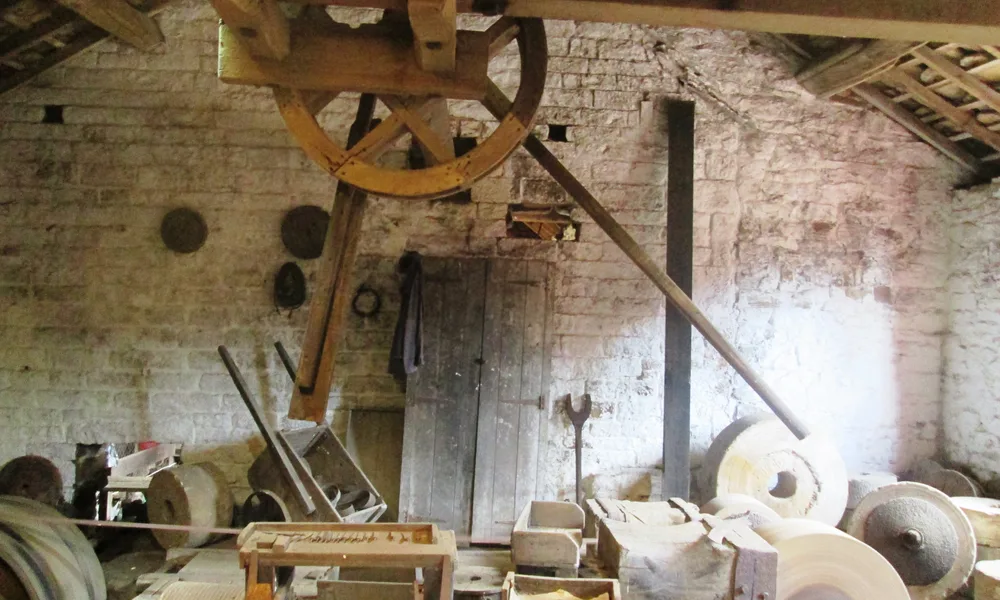
6. Hone Stone Count Race
The hone stone is the flat slab of fine stone that puts a keen finish on a sharp part, and cutlers keep several grades of it, from coarse to very fine. In this game each team receives a tray of twenty hone stones in mixed grades, and must sort them into piles by grade, then tally each pile. The grades are told apart by feel and by colour: the coarse stones feel rough under a fingertip and look pale, while the fine stones feel smooth and look darker. Players should rub each stone gently with a dry fingertip rather than pressing hard.
Ten minutes is enough if the team divides the tray into two halves and works on both at once, with one player calling out each grade and another writing the tally. One point is given for each correct grade tally, and the judge settles any dispute by testing the stone against a sample piece.
7. Ricasso Count Race
The ricasso is the short plain stretch of metal just above the handgrip, left unsharpened so the cutler can etch a small name or picture there. In this game each team receives a tray of thirty sample pieces, some with a plain ricasso and some with an etched one, and must count how many plain ones there are. The etched marks are tiny, so players look at each piece in turn under a plain lamp and set the plain ones to one side as they go.
The counting itself is simple, which is exactly why teams go wrong: after twenty pieces the eye starts to skip. The best teams count in pairs, with one player passing pieces and the other counting aloud, then swap roles and count again to confirm. One point is given for each correct total, and the round goes to the team whose two counts agree. Ten minutes on the clock, one tray per team, and no talking to the next worktop about what you have found.
8. Jimping Count Race
Jimping is the row of fine cuts filed into the metal where a thumb rests, giving the hand a surer hold on the pocket knife. In this game each team receives six sample pieces, each with a different number of fine cuts, and must count the cuts on each piece and write the six totals down. The cuts are small and even, so the best tool is a steady hand and a good light: hold the piece flat, count from one end to the other, and note each group of ten with a pencil dot on the judge’s card.
Players who try to count in their heads usually lose their place halfway along, so counting aloud in small groups is the way to win. This game has a quieter cousin in the schoolroom, where careful counting also decides the day: our guide to the best puzzle games for 561 players runs its counting games among the copybooks and inkwells of an old village schoolroom, and the same slow, aloud counting wins there too. Here, one point is given for each correct total, with a bonus point for a team that gets all six right first time.
9. Lanyard Count Race
The lanyard is the short cord that threads through the end of a pocket knife’s handgrip, so the knife can hang from a belt or a hook. In this game each team receives a pile of cords and twelve pocket knives waiting for their lanyards. Players must thread a cord through each handgrip, fasten it neatly, and tally the finished cords as they go. The fastening must hold when the judge gives the cord a firm tug, and a cord that comes undone scores nothing.
This is the fastest game of the nine, and teams that divide the work finish well inside ten minutes: two players thread, one player fastens, one player tugs each finished cord to test it, and the fifth player keeps the tally. One point is given for each finished cord that holds. It is a cheerful way to end the games, with every team leaving the worktop with a neat row of finished pocket knives in front of them.
How 565 Players Fit Into One Day
Five hundred and sixty-five players make one hundred and thirteen teams of five, and the day works by running the nine games in waves rather than all at once. Set out nine worktops in one long room, one game per worktop, with room for three teams at each worktop, and send the first wave of teams to their starting worktops. Every game runs for ten minutes with a five-minute changeover, so a full wave takes about an hour and a quarter, and four waves carry every team through every game with time to spare for lunch and the final tally.
Give each team a coloured card showing its order of play, and fix a large copy of the same order on the wall where everyone can see it. Judges stay at their worktops while teams move, which keeps the scoring fair: the same judge watches every team at the same game, and the same tray is used all day, topped up from the spare trays between waves. Keep a quiet corner with water and chairs for waiting teams, and keep the final tally on a large open board.
Checklist: Running the Day
- Count every tray of fittings twice the evening before, and pack one spare tray per game.
- Print a coloured order-of-play card for each of the 113 teams, plus a large wall copy.
- Place one judge at each worktop for the whole day, with a plain lamp and a fresh score card.
- Keep drinking water and chairs in a quiet corner for teams between waves.
- Test every gauge, strop, and lamp before the first team arrives.
- Write the scores on a large open board as they come in, and read the final tally aloud.
Frequently Asked Questions
How do 565 players fit into teams?
Players form teams of five, which makes 113 teams in all. Friends and family can stay together, and anyone arriving alone is placed with a team that needs a fifth player. Teams of five work best because every player has a clear job in each game.
How long does the whole day take?
Plan for five to six hours from the first welcome to the final tally. The nine games take about five hours across four waves, with a lunch break in the middle and a short welcome at the start.
Do players need to know anything about cutlery before the day?
No. Every game is explained in two minutes at the worktop, and the judge shows the team exactly what to do before the clock starts. The games test counting, sorting, and a steady hand rather than any prior knowledge.
What happens if a team has never tried a cutler’s task before?
That is the normal case, and the day is built for it. Each game begins with a short demonstration, the first minute of play is untimed while the team settles in, and the judge answers questions freely until the clock starts.
Can children and older players join in?
Yes, with one rule: the sharp parts stay with the judge until a game needs them, and children hold only the blunt sample pieces. Mixed-age teams often do best, because children spot small differences quickly while older players keep the tally steady. The strop game suits older players who like a slow, careful task.
What do the winners take home?
The winning team takes home a small keepsake from the workshop, such as a polished sample piece in a cloth pouch, and the honour of having their team name written on the workshop’s honours board. The day ends with all 113 teams together for the final tally and applause for the judges and volunteers.
The Bottom Line
Running puzzle games for 565 players sounds like a large task, but the cutler’s workshop makes it simple: nine small games, each built around one fitting, each judged by eye and by count, and each short enough that nobody waits long for a turn. Teams of five, trays counted twice, a spare tray for every game, and a large open scoreboard are the whole secret. Get those right and the day runs itself.
Start with the table at the top of this guide, pick your teams’ order of play, and set the trays out the evening before. By the time the final tally is read aloud, your 565 players will have sorted, gauged, polished, matched, and counted their way through a whole workshop of small wonders.


