
An old village sawmill makes a fine home for a day of puzzle games. The yard is wide and open, the timber sheds give shade when the sun climbs, and the long rows of logs give every team a clear place to work. With 563 players, the day needs a plan that keeps everyone busy at once, and the sawmill yard gives us exactly that: room to spread out, simple materials close at hand, and nine short races that any team can learn in a minute.
This plan runs nine races in heats, with 51 teams of 11 players and two hosts who keep the day moving. Each race uses something the yard already holds: logs, planks, bark, offcuts, and the tools of the yard. Nobody needs to know timber work to take part. Every race asks for eyes, hands, and a little care, and every race ends with a clear result that the score keepers can write down at once.
The nine races below follow one another in a fixed order, from the log rows at the front of the yard to the cutting frame inside the mill. Teams move together, rest together, and meet at the end for the final tally. Read the whole plan once before the day, prepare the score sheets, and walk the yard the evening before so each race area is ready.
Key takeaways
- Nine short races carry 563 players through one sawmill yard in a single day.
- Teams of 11 players work in heats, so nobody waits long for a turn.
- Every race uses yard materials: logs, planks, bark, offcuts, and resin.
- Two hosts run the day, and a small team of score keepers records every result.
- The whole day fits into about five hours, with a midday rest in the middle.

At a Glance
| Race | What Players Do | Time |
|---|---|---|
| Log Girth Measure Race | Measure the girth of three logs with a tape | 20 minutes |
| Plank Thickness Check Race | Find planks of one thickness in a mixed lot | 15 minutes |
| Timber Load Weigh Race | Weigh a cart load of timber and guess the total first | 20 minutes |
| Bark Strip Sort Race | Sort bark strips by length into three groups | 15 minutes |
| Beam End Match Race | Match beam ends by their growth bands | 15 minutes |
| Log Split Count Race | Count the splits along a log end | 15 minutes |
| Resin Drip Count Race | Count resin drips on a chosen length of trunk | 15 minutes |
| Offcut Weight Count Race | Count offcuts until the scales reach an agreed weight | 20 minutes |
| Saw Kerf Check Race | Check saw cuts for a clean, even kerf | 15 minutes |
How 563 Players Fit Into One Day
Five hundred and sixty-three players sounds like a crowd, and it is. The plan works because the crowd is broken into 51 teams of 11 players, with two hosts left over to run the day. Eleven is a good size for this yard: big enough to share the work, small enough that every player gets a turn at every race. Each team picks a name from the yard, a colour for its tally sheet, and a captain who speaks for the team when a result is in doubt.
Races run in heats of six teams. While six teams race, the other teams watch, rest, or walk to the next race area. A heat takes about fifteen minutes, and a short pause between heats lets the hosts lay out fresh material and the score keepers catch up. Nine races in heats mean no single race area ever holds more than 66 players at once, which is about what the yard can hold in comfort.
The old village schoolroom in our puzzle games for 561 players runs the same rotation, with teams moving from one short task to the next. Borrow that rhythm here: move on time, even if a team asks for one more minute, because the whole day depends on the heats starting when the hosts say so.
Lunch is not part of the plan, but a midday rest is. After the fifth race, teams gather under the sheds for an hour, eat what they brought, and drink plenty of water. The hosts use the hour to check the remaining race areas, refill the bark lots, and add up the morning totals. When the rest ends, the last four races run in the same steady rhythm as the first five.
The Nine Races
Each race below gives the aim, the method, and the way points are earned. Read each one aloud to the teams before it starts, so nobody begins in doubt. The host at each race area has the final word on every result, and the score keepers write the points down where every captain can see them.
1. Log Girth Measure Race
Three logs lie in a row, each with a pale band painted round its middle. Teams take it in turns to wrap a measuring tape round each log at the band and read the girth aloud. One player holds the tape, one reads the number, and one writes it on the tally sheet. The team whose three readings come nearest to the true girth earns the most points.
Keep the tape level and snug, and read it at eye level so the number is honest. A tape that sags or twists can add a large error, and the hosts will not accept a reading taken from a slack tape. The nearest team earns six points, then four, three, two, one, and none for the rest of the heat.
2. Plank Thickness Check Race
A mixed lot of planks lies on the ground, all of them cut to the same length but in four different thicknesses. The host names one thickness, holds up one plank of that thickness, and teams hunt through the lot for every plank that matches it. Planks that do not match must stay where they lie, and a team that lifts a wrong plank loses a point for each one.
Feel the edge with a thumb as well as looking: two thicknesses can look alike in bright sun, and the thumb often tells the truth sooner than the eye. The team that finds the most true planks in the time allowed earns six points, with the other teams earning four, three, two, one, and none in order.
3. Timber Load Weigh Race
A small cart stands loaded with timber, and every team must guess its total weight before it is weighed. Teams walk round the cart, lift a corner together to feel the load, and write a single guess on the tally sheet. Nobody may add or remove a single piece while guessing, and the hosts watch the cart the whole time.
Once every guess is in, the hosts roll the cart onto the scales and read the true weight aloud. The nearest guess earns six points, the next nearest earns four, and the rest earn three, two, one, and none in order. Teams that guess by feel usually do better than teams that guess by sight alone, because timber of the same size can weigh very differently when it is wet or dry.
4. Bark Strip Sort Race
Long strips of bark lie in a jumble, cut in three lengths: long, middle, and short. Teams sort them into three groups, one for each length, and lay each group in a neat row. The host checks the groups with a measuring tape, and every strip in the wrong group costs the team a point.
Work from the ends, not the middles: hold two strips side by side and the difference shows at once. The button-maker’s workshop in our puzzle games for 560 players sorts small parts the same way, with each team working through a short list of checks. Here the parts are bigger and the yard is louder, but the habit is the same: compare, then place, then check again.
5. Beam End Match Race
Twelve beam ends lie cut side up on a long table, six of them cut from one end of a beam and six from the other. Teams must match them up again by reading the growth bands on each cut side. Bands that curve the same way, darken in the same places, and widen at the same side belong together, and the team that finds the most true matches earns the most points.
Do not rush the first look. Lay the ends out in two rows, turn each one slowly, and let the bands do the talking. A match found in haste is often wrong, and a wrong match costs two points. The team with the most true matches earns six points, then four, three, two, one, and none.
6. Log Split Count Race
A log end dries in the sun and cracks as it dries, and those cracks are the splits this race counts. The host marks one log end with a pale painted loop and teams count every split that touches the loop. Count twice, once from each side, and agree on a single number before the tally sheet is written.
Thin splits count just as much as wide ones, and a split that forks counts as one split, not two. The nearest count to the host’s own careful count earns six points, with the rest earning four, three, two, one, and none. Teams that count aloud together almost always do better than teams that count in silence.
7. Resin Drip Count Race
On the side of a pine trunk the host chooses a length of about an arm’s length with two pale bands. Along that length, drops of resin have hardened into small amber drops of sap. Teams count every drop between the two bands, taking care not to miss the small ones hiding in the bark folds.
Count slowly and point at each drop as it is counted, so the count can be checked. The nearest count to the host’s own number earns six points, with the rest earning four, three, two, one, and none. This is the quietest race of the day, and teams that slow down for it usually find more drops than teams that hurry.
8. Offcut Weight Count Race
Offcuts in many sizes wait beside the scales, all of them cut from the same planks. Teams take it in turns to lay offcuts on the scales, one at a time, until the scales read an agreed weight. The team that reaches the weight with the fewest offcuts earns six points, and every offcut over the weight costs a point.
Big offcuts first is the usual plan, then small ones to close the gap. But a big offcut can overshoot the weight in one move, so the last few pieces call for a steady hand and a good eye. The hosts read the scales aloud, and nobody may touch the scales once the count has begun.
9. Saw Kerf Check Race
The kerf is the narrow cut the saw leaves behind as it moves through wood, and a good kerf runs even from one end of the cut to the other. Teams measure the kerf at three places along a cut plank with a measuring tape, and the team whose three readings sit closest together earns the most points.
Measure at the start, the middle, and the far end of the cut, and write each reading down before moving on. A kerf that wanders wide and narrow again tells of a saw that was pushed too hard or held at a tilt, and the hosts can read that story in the numbers. The steadiest team earns six points, then four, three, two, one, and none.
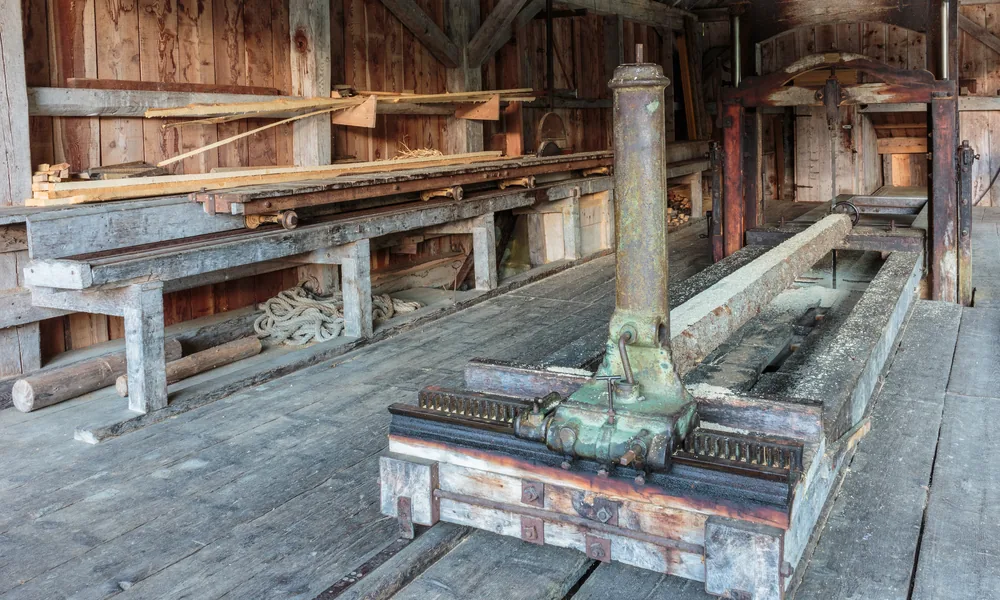
Keeping Score
Every race pays the same points: six for the best team in a heat, then four, three, two, one, and none. With nine races, the best a team can earn is 54 points, and most teams finish the day between 20 and 35. The score keepers add the points after each race and post the running totals where every captain can see them, so nobody is left guessing where they stand.
The old village locksmith’s workshop in our puzzle games for 559 players keeps score with a simple points sheet, and the same sheet works here. One sheet per team, one line per race, and a total at the bottom of the page. If two teams end the day level on points, the hosts look back at the ninth race: the team that earned more in the Saw Kerf Check Race takes the higher place.
Hosts settle every dispute on the spot, and their word is final. A captain may ask for a recount, and the hosts will count again with the captain watching, but no result changes once the next heat has begun. That rule keeps the day moving and keeps the day calm.
Safety and Fair Play
The yard is a working place, so the safety rules are simple and strict. Stout shoes and long sleeves for everyone, no running near the cutting frame, and no touching a saw while it is in use. The hosts walk each race area before the first heat and move anything sharp or loose out of reach.
Teams wait behind a row of cones until the host calls them forward, and they step back behind the cones when their turn ends. Nobody helps another team, nobody moves a plank or a log after time is called, and nobody argues with a host’s decision. Teams that keep to these rules have a better day, and so does everyone around them.
Checklist for the Day
- Walk the yard the evening before and lay out each race area.
- Prepare score sheets, measuring tapes, and scales.
- Put cones and simple signs at the nine race areas.
- Brief the two hosts and the score keepers before the first team arrives.
- Lay out drinking water and shade for the midday rest.
- Count the teams in at the end and read the final totals aloud.
Frequently Asked Questions
Can 563 players really share one sawmill yard?
Yes, because only 66 players race at once. The rest watch, rest, or walk to the next race area, and the heats keep the yard from ever feeling full. The plan was built for this number, so trust the heats and do not let teams crowd into a race area early.
What if we have fewer than 563 players?
Run the same nine races with fewer teams. Teams of 11 still work well down to about 200 players, and below that you can shrink the teams to seven or eight and keep the heats at six teams. The points stay the same, and the day runs a little shorter.
Do players need to know anything about timber work before the day?
No. Every race is explained aloud before it starts, and the hosts show each skill once before the teams try it. Knowing timber work helps a little with guessing weights, but careful counting and steady hands matter far more.
What supplies do we need?
Logs, planks, bark strips, offcuts, a cart, scales, measuring tapes, cones, and score sheets. Everything on that list is already in most sawmill yards, and the hosts can gather it the evening before. Bring drinking water and shade for the midday rest as well.
How long does the whole day take?
About five hours, with a midday rest of one hour in the middle. The nine races take about two and a half hours of racing time, and the rest is walking between race areas, waiting for heats, and adding up the scores.
Can children join in?
Yes, with an adult on each team that has children in it. The races ask for care rather than strength, and children are often the best counters on the team. Keep children away from the cutting frame and the cart, and let the hosts know which teams have younger players.
The Bottom Line
A sawmill yard gives 563 players room to move, simple materials to work with, and nine races that anyone can learn in a minute. Keep the heats on time, keep the scores where every captain can see them, and let the yard do the rest. When the last race ends and the totals are read aloud, every team will have played a full part in the day, and the best team will have earned its place at the top of the sheet.


