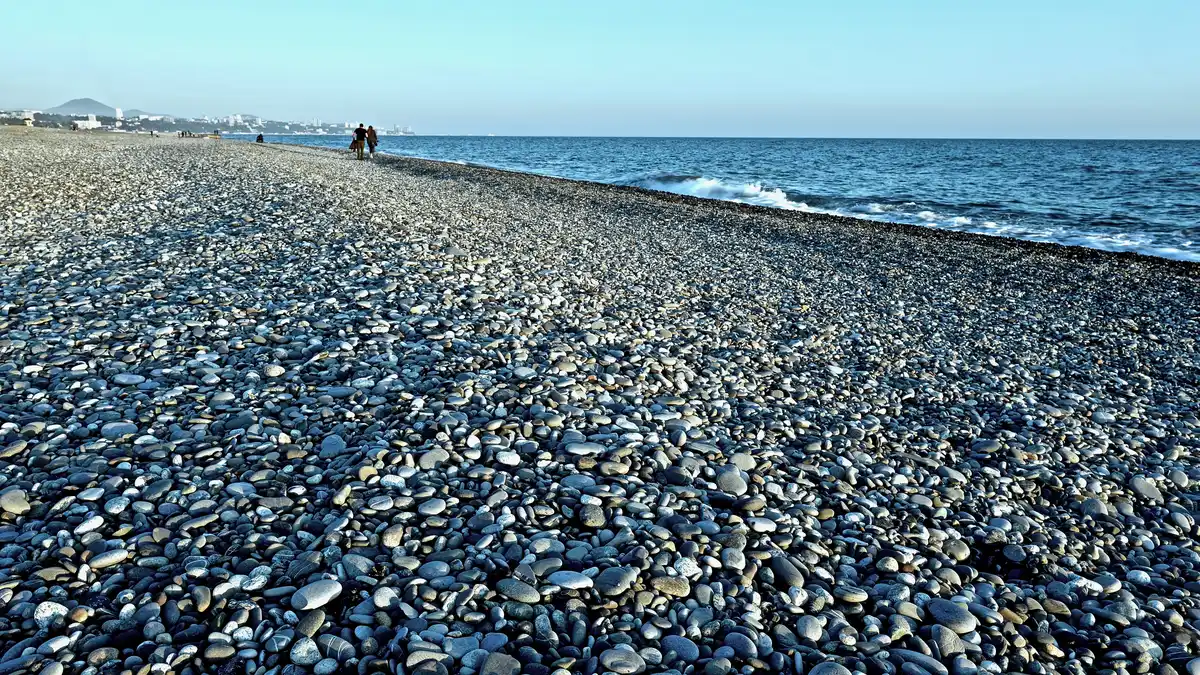
The best party games for 550 players work on a shingle beach at early light, where the ground itself gives you the material. Smooth pebbles, pale driftwood, empty shells and long strips of seaweed lie along the water edge in plenty, and nine short rounds make that loose material into a full morning of play for a huge crowd. No hall is needed, no bought material is needed, and every team works with the same plain beach material.
This guide lays out nine rounds that suit 550 players in teams of ten. Each round takes about ten minutes, each team stays in one numbered zone along the shore, and the caller moves from zone to zone with a score sheet and a loud voice. The rounds test looking, lifting, arranging and remembering, and they stay gentle for mixed ages.
Bring warm layers, water bottles and extra score sheets, and arrive before the crowd so the zones can be laid out in good light. What follows in this guide explains each round in plain steps, then gives a short summary, a fair scoring plan, a checklist and answers to the usual questions.
Key takeaways
- Nine short rounds make a morning for 550 players in teams of ten, all played on a shingle beach.
- Every round uses pebbles, driftwood, shells or seaweed found on the beach, so no bought material is needed.
- Teams stay in numbered zones along the shore, and one caller moves between zones with the score sheets.
- Each round takes about ten minutes, with plain scoring that any team can follow.
- Warm layers, water bottles and extra score sheets cover a long beach morning.
How 550 Players Fit Into One Day
Fifty-five teams of ten players each sound like a lot, and on a beach they are easy to place. Lay out fifty-five zones along the shore with rope and short posts, each about ten paces wide, and give each team a number painted on a flat pebble. The caller walks the line of zones in the same direction every round, and the score sheets travel with the caller.
Play runs in nine rounds of about ten minutes, with a short pause between rounds for teams to tidy their zone and drink water. Three rounds run before the mid-morning pause, three run after it, and three run after lunch. If you want another seaside day, the party games for 528 players bring the same large-crowd spirit to an old seaside pier at first light.
The Nine Rounds
Each round below uses only beach material, and each round can be played by ten players at once in a zone. Read the steps aloud, show one quick example, and then let the team begin. The caller gives a loud call to begin and to end each round, and teams stop work at the ending call even if their arrangement is unfinished.
1. Shingle Pebble Count
Each team receives a bucket of mixed pebbles from its own zone and a flat stretch of shingle to work on. The caller names a target number, such as forty, and the team must lay out exactly that many pebbles in a neat row along the water edge of its zone. The row must be straight enough for the helper to follow it with one look.
Counting by tens helps a team of ten move fast. Each player takes ten pebbles and lays them in a short run, and then the team joins the ten short runs into one long row. If the row runs over the target number, the team lifts the extra pebbles away, and if the row runs short, the team adds pebbles from its bucket. Ten points are earned for a row with exactly the target number, six points if the row is within three of the target, and two points for any finished row further away. A row still unfinished at the ending call earns no points.
2. Driftwood Branch Carry
Each team chooses three pale driftwood branches from its zone, each about as long as an arm, and lays them side by side on the shingle. Two players lift the middle branch together, walk it to a marker pebble ten paces away, and lay it down gently, and then the next two players lift the next branch. The branch must stay level while it is moved, and no player may drag it along the ground.
The skill here is balance and timing rather than strength. Short, even steps keep the branch level. If a branch touches the shingle while it is being moved, the team sets it down and lifts it again from the same place. Ten points are earned if all three branches reach the marker without touching the shingle, six points if one branch touches down, and two points if two branches touch down.
3. Shell Pattern Match
Each team collects twelve empty shells from its zone and lays them in a row. The caller shows a simple design made from six shells on a board: three ridged shells, two smooth shells and one spiral shell, arranged in a fixed arrangement. Each team must copy that design exactly with its own shells, using the same arrangement of ridged, smooth and spiral shells in the same places.
Looking closely matters more than moving fast. One player studies the board design and describes it aloud, one player divides the shells into ridged, smooth and spiral piles, and the other players place the shells in the right places. The team may not move the board shells or take a shell from another zone. Ten points are earned for a design that matches the board in every place, six points if only one shell is out of place, and two points if two shells are out of place.
4. Seaweed Strand Count
Each team gathers long strips of seaweed from the water edge of its zone and lays them out on the shingle in separate pieces. The caller names a target length in paces, such as twelve paces, and the team must lay out pieces of seaweed end to end until the combined length matches the target. The pieces must touch end to end without overlapping, and the line must run straight along the zone.
Measuring by paces keeps the round simple. One player walks beside the line and counts paces aloud, one player lays the next piece at the end of the line, and the other players hold the earlier pieces steady so the line does not shift. If the line runs past the target length, the team shortens it by swapping a long piece for a short one. Ten points are earned for a line that matches the target exactly, six points if the line is within one pace, and two points for any finished line further away.
5. Shell Line Order
Each team lays ten empty shells in a row, arranged from the smallest width to the largest width. The arrangement must run in a steady increase from one end of the row to the other, with no shell out of place. The team may lift and swap any two shells as often as it likes until the ending call.
Comparing two shells at a time is the fastest way to get the arrangement right. One player holds two shells side by side and says which is wider, one player moves the wider shell toward the large end of the row, and the other players look over the row from the small end to the large end. A shell that looks large from above can be narrow from the side, so compare shells at the same angle every time. Ten points are earned for a row in perfect increase from smallest to largest, six points if only one shell is out of place, and two points if two shells are out of place.

6. Driftwood Length Order
Each team collects six pale driftwood branches and lays them in a row from the shortest to the longest. The arrangement must run in a steady increase from one end to the other, and the team must not cut or break any branch.
Curved branches make this round tricky, because a curved branch looks longer than it is when it is laid flat. One player holds each branch upright against a marker post so the team can see its true length, one player moves the branches into the row, and the other players look over the row. The party games for 540 players work the same way on the common at daybreak, with short rounds that suit a huge crowd, and the same upright measuring trick helps there too. Ten points are earned for a row in perfect increase from shortest to longest, six points if only one branch is out of place, and two points if two branches are out of place.
7. Shingle Stone Weigh
Each team chooses five pebbles from its zone and must arrange them from the lightest to the heaviest by lifting them only. No scales are used, and the team must not drop a pebble to test its weight. One player lifts two pebbles, one in each palm, and says which feels heavier, and the other players move the pebbles into a row from lightest to heaviest.
A small dense pebble can feel heavier than a large pale one, so lift the same two pebbles more than once, swap them between palms, and agree before moving on. A steady, slow lift gives a clearer feeling than a quick lift, and the team should keep its comparisons quiet. Ten points are earned for a row in perfect increase from lightest to heaviest, six points if only one pebble is out of place, and two points if two pebbles are out of place.
8. Shingle Colour Pick
Each team spreads twenty pebbles on the shingle and must choose the five that best fit five named shades called out by the caller: pale, grey, rusty, dark and sandy. The caller names the shades one at a time, and the team places one pebble beside each named shade on a flat pebble. No pebble may be used for two shades.
Shade is a matter of looking in good light, so move the spread into the brightest part of the zone before the round begins. One player reads the named shade aloud, one player scans the spread for the closest pebble, and the other players agree or suggest a closer pebble before it is placed. A pebble that looks pale in shade can look grey in bright light, so judge every pebble in the same light. Two points are earned for each shade with the closest pebble, and one point where its pebble is the second closest.
9. Shell Size Order
Each team lays eight empty shells in a row from the smallest to the largest, judged by width. The arrangement must run in a steady increase from one end to the other, and the team must not stack shells or hide one shell behind another.
Width is easy to misjudge when shells have different shapes, so measure each shell against the same flat pebble used as a guide. One player holds each shell against the guide pebble and says how far it reaches, one player moves the shells into the row, and the other players look over the row. A spiral shell can look large from the front and small from the side, so judge every shell from the same angle. Ten points are earned for a row in perfect increase from smallest to largest, six points if only one shell is out of place, and two points if two shells are out of place.
The Nine Rounds at a Glance
| Round | Material | Main skill | Time | Top points |
|---|---|---|---|---|
| Shingle Pebble Count | Pebbles from the zone | Steady counting | Ten minutes | 10 |
| Driftwood Branch Carry | Three pale branches | Balance in pairs | Ten minutes | 10 |
| Shell Pattern Match | Twelve empty shells | Close looking | Ten minutes | 10 |
| Seaweed Strand Count | Long seaweed pieces | Pace measuring | Ten minutes | 10 |
| Shell Line Order | Ten empty shells | Width comparison | Ten minutes | 10 |
| Driftwood Length Order | Six pale branches | Length comparison | Ten minutes | 10 |
| Shingle Stone Weigh | Five chosen pebbles | Weight by lifting | Ten minutes | 10 |
| Shingle Colour Pick | Twenty spread pebbles | Shade judgement | Ten minutes | 10 |
| Shell Size Order | Eight empty shells | Width comparison | Ten minutes | 10 |
Setting Up the Shingle
Arrive an hour before the crowd and walk the shore to find a stretch of shingle that is flat, firm underfoot and clear of deep water at the water edge. Lay out the fifty-five zones with rope and short posts, number each zone with a flat pebble, and place a score sheet, a pencil and a small bucket of extra pebbles in each zone. Keep a clear path behind the zones so the caller can walk the line without stepping on any arrangement.
Collect the material for each round from inside its own zone, and return shells, branches and seaweed to the shore at the end of the day. No team should take material from another zone or from outside the numbered stretch. A team that runs short of pebbles can ask its helper for more from the extra bucket, and a team that runs short of shells can swap with a neighbouring zone only with the helper watching.
For a quieter water-side morning, the party games for 542 players gather around an old village duck pond on a quiet morning, and the same zone system keeps a huge crowd moving smoothly there too.
Keeping Score Fair for 550 Players
Use the same ten point scale in every round, and write the points on the score sheet in the zone as soon as each round ends. The helper in each zone should read the points aloud, and the caller should collect the sheets at the mid-morning pause, after lunch and at the end of the day. A team that disputes a score can ask the caller to look at the arrangement again before it is tidied away, and the caller decides the matter at once.
Add the points across all nine rounds to find the winning team, with ninety points as the highest possible total. If two teams finish level, the team with more ten point rounds wins, and if they are still level, the team with fewer unfinished rounds wins. Announce the winning team at the end of the day, and praise the teams with the neatest zones as well as the teams with the highest points.
Shingle Beach Checklist
- Lay out fifty-five zones along the shore with rope, short posts and numbered flat pebbles.
- Place a score sheet, a pencil and a small bucket of extra pebbles in each zone.
- Brief every helper on the same ten point scale before the opening round begins.
- Keep water bottles, warm layers and extra score sheets at the caller station.
- Leave living creatures alone and return shells, branches and seaweed to the shore.
- Collect every score sheet at each pause and add the points before the closing call.
Frequently Asked Questions About Party Games for 550 Players
How long does a full day of party games for 550 players take?
Nine rounds of about ten minutes, with pauses between rounds and a longer pause for lunch, take about four hours. Arrive an hour early to lay out the zones, and allow half an hour at the end for adding the points and announcing the winning team.
Do teams need to bring their own material?
No. Every round uses pebbles, driftwood, shells or seaweed found on the beach inside each zone. Teams should bring warm layers, water bottles and hats, and the caller should bring score sheets, pencils, rope and short posts for laying out the zones.
Can children and older players take part in every round?
Yes. No round needs running or heavy lifting, and every round lets a team divide the work between players. Children can count pebbles and divide shells into piles, while older players can lift branches and judge shades.
What happens if the water level rises during the day?
Lay out the zones above the highest water line on the shingle, and keep the material for each round on the dry side of the zone. If the water reaches a zone, the caller moves that team to a dry zone nearby and the team keeps the points it has already earned.
How do you keep 550 players from crowding one zone?
Each team stays in its own numbered zone, and only the caller and the zone helper move between zones. The caller walks the same line in the same direction every round, and teams wait in their own zone for instructions.
What should we do with the shells and driftwood at the end of the day?
Return shells, branches and seaweed to the shore where they were found, and take score sheets, rope and posts home with you. Leave the beach as tidy as you found it, and look over each zone for litter before the closing call.
The Bottom Line
A shingle beach gives 550 players everything they need for a full morning of play: pebbles to count and weigh, driftwood to carry and arrange, shells to match and arrange by width, and seaweed to measure by paces. Nine short rounds, plain scoring and numbered zones keep a huge crowd moving smoothly. Lay out the zones early, and keep the rules the same in every zone.