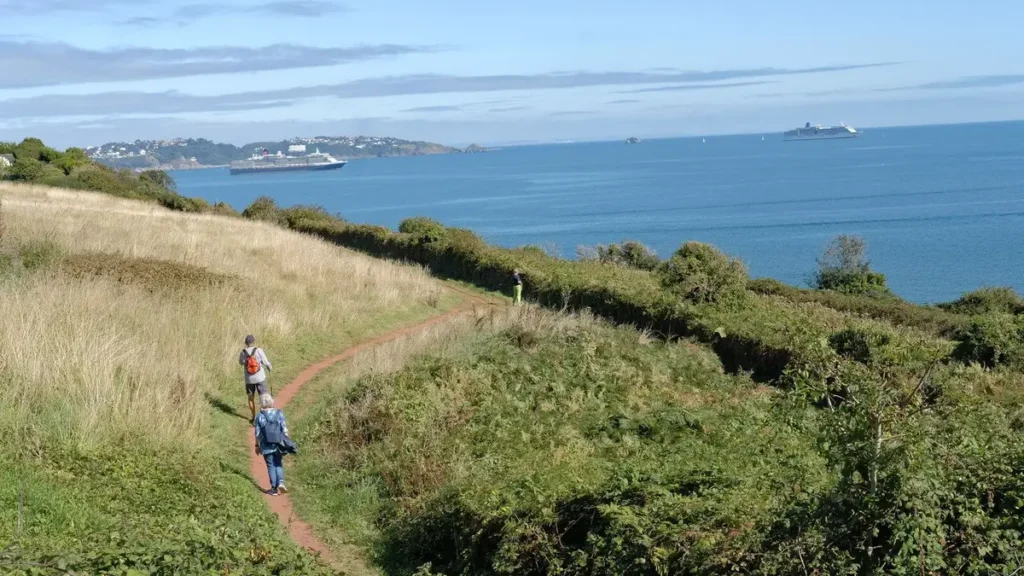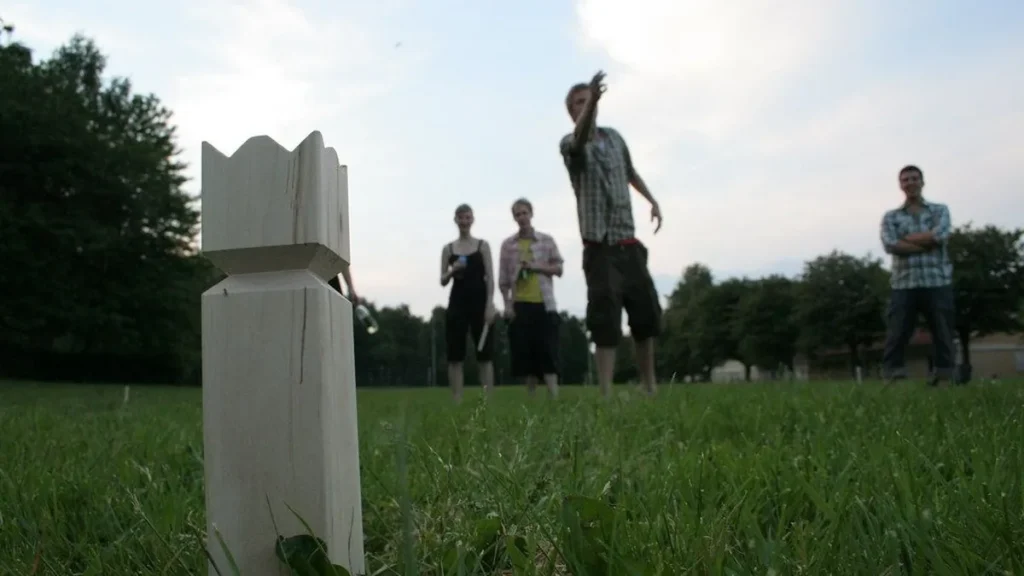
Party games for 540 players sound impossible until you see them work on a wide open common at daybreak. The secret is nine small games, each played by a group of sixty, all running at the same time across the open grass, with groups moving on every twenty minutes. Nobody waits long, and every player gets a turn at every game.
The common gives you what a hall never can: room. At daybreak the grass is fresh, the light is soft, and the whole place belongs to the party. Nine games sit in a loose ring around a central meeting point, each marked with a plain flag and a hand-painted sign. A group of sixty gathers at each game, plays for twenty minutes, and then walks to the next flag while the host calls the change from the middle. Nine rounds later, every group has played every game, and the day ends with all 540 players together for a final count.
This article lays out the nine games, the running order, the kit list, and the answers to the questions hosts ask most. Every game uses the common itself — dew, gorse, bracken, bilberry, juniper, beech, thorn, sundew, and newts — so nothing needs to be bought or carried far. Bring flags, paper, pencils, and a loud voice, and the common does the rest.
Key takeaways
- Nine games run at once, one per group of sixty, so all 540 players play from the opening minute.
- Groups move on every twenty minutes, and nine rounds include every game for every group.
- Every game uses what the common already offers, so kit stays light.
- One host in the middle calls each change, and two helpers at each game keep the count honest.
- Short rounds, plain rules, and a shared final count keep a huge crowd friendly.
Why the Common at Daybreak Works for 540 Players
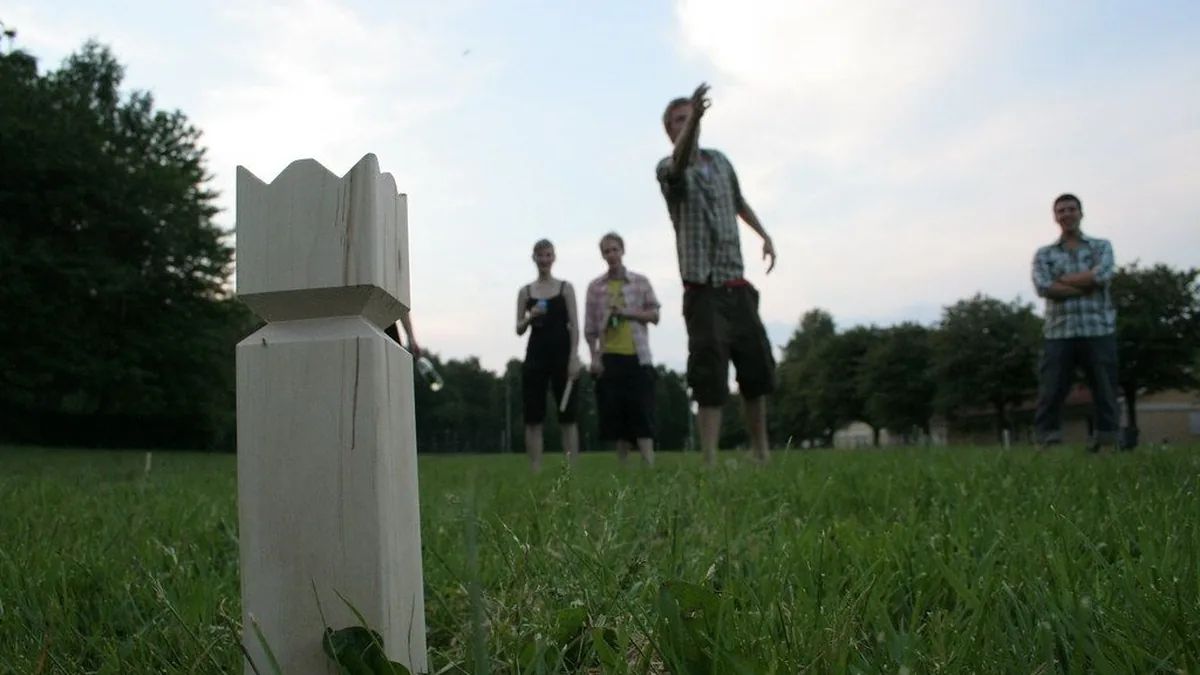
A crowd of 540 needs space more than it needs structure. Indoors, that many people become a queue. On the common at daybreak, they become nine groups of sixty, each with its own patch of grass and its own game. The early hour helps too: it is fresh, the dew is still on the grass, and nobody has yet grown tired or hungry. By the time the sun is high, the games are done and the crowd is together for the final count.
The nine games below need almost no kit and suit the common well. Each one takes a single thing the common offers — dew on the grass, yellow gorse, bracken, bilberries, juniper, beech, thorn, sundew, and the newts in the shallow pools — and turns it into a short contest for a group of sixty. Nothing here needs a board, a screen, or a power point.
Other huge parties have worked the same way. The village bandstand evening in our party games for 538 players ran nine games around one bandstand, with groups moving from game to game in the same twenty-minute rhythm. The common works the same way, only with more room and a fresher feel. If you have run a big party before, this plan will feel familiar. If you have not, the checklist near the end of this article covers every job before daybreak.
The Nine Games at a Glance
| Game | Groups at once | Minutes | Kit |
|---|---|---|---|
| Dew Count Guess | One group of sixty | 20 | Paper, pencils, one flag |
| Gorse Tally | One group of sixty | 20 | Paper, pencils, one flag |
| Bracken Sort | One group of sixty | 20 | Two baskets, one flag |
| Bilberry Match | One group of sixty | 20 | Paper, pencils, one flag |
| Juniper Order | One group of sixty | 20 | Ten juniper bits, one flag |
| Beech Walk | One group of sixty | 20 | Paper, pencils, one flag |
| Thorn Turn | One group of sixty | 20 | One thorn, paper, one flag |
| Sundew Spot | One group of sixty | 20 | Paper, pencils, one flag |
| Newt Count | One group of sixty | 20 | Paper, pencils, one flag |
How 540 Players Fit Into One Day
Nine groups of sixty, nine games, nine rounds of twenty minutes. That is the whole plan. Each group starts at a different game, so no game holds more than sixty players. After twenty minutes the host calls the change from the middle of the ring, and every group walks to the next flag. After nine rounds, each group has played each game once, and three hours have passed. Add a short welcome and a final count, and the day runs from daybreak to mid-morning.
The ring matters. Put the nine flags in a wide ring with a clear path between them, and put the host in the middle where every group can hear the call. Groups always move the same way around the ring, so nobody crosses another group. Two helpers stay at each game for the whole day: one explains the rules to each new group, and one keeps the count. The helpers never move, so the host never explains a game twice.
The old coaching-inn courtyard in our party games for 536 players used the same ring, with groups moving from game to game around a courtyard instead of across open grass. The common is easier, because the ring can be as wide as you like and the path between flags is plain grass. Keep the central meeting point clear of kit so the host can be seen from every flag.
The Nine Games
Each game below takes twenty minutes, suits a group of sixty, and uses one thing the common offers. Read the rules aloud at each flag before the round starts.
1. Dew Count Guess
Dew Count Guess opens the day while the dew is still thick on the grass. The helper picks a patch of grass no wider than a doorway and marks it with two short sticks. Each player looks at the patch for one minute and writes down how many dew drops they think it holds, without touching the grass or calling out a number.
When the minute is done, the helper counts the dew drops aloud while a second helper marks the count on paper. The player whose count lands closest to the true count takes the point; if two counts tie, both take a point. Play it early, before the sun lifts the dew.
2. Gorse Tally
Gorse Tally is a counting game along a stretch of yellow gorse. The helper marks a start post and a finish post about fifty paces apart, with gorse growing thick on both sides of the path. Each player walks the stretch alone, counting every yellow gorse flower they can see, and writes the total on a slip of paper before handing it to the helper. Nobody may point or follow another player, and the helper walks the stretch once beforehand so the true count is known.
When every slip is in, the helper reads the true count aloud and the closest total takes the point for the group. If the gorse is thick, the counts spread wide; if it is thin, they crowd together. Keep the stretch short enough for sixty players in twenty minutes, and warn every group that gorse is prickly: count with eyes only.
3. Bracken Sort
Bracken Sort is a sorting game with two baskets and a pile of cut bracken. Before the day starts, the helpers cut a large pile of bracken and lay it beside the flag. When a group arrives, the helper tips the pile onto the grass and the group has ten minutes to sort it: short pieces in one basket, long pieces in the other. The group works together, passing pieces hand to hand, while the helper watches the baskets.
When the ten minutes are done, the helper counts each basket and checks a handful from each. Every piece in the right basket earns a point; every piece in the wrong one takes one away. It rewards steady hands and clear talk: groups that agree on short and long always score higher than groups that argue.
4. Bilberry Match
Bilberry Match is a matching game played with leaves and paper. Before the day starts, the helpers pick twelve bilberry leaves, each from a different plant, and lay them in a numbered row on a flat board. When a group arrives, every player studies the row, then writes down which leaves they think came from the same plant. The leaves all look alike at one look, so it is harder than it sounds.
The helper knows which leaves share a plant and wrote the answers down before the day began. After five minutes, the helper reads the answers aloud and each player marks their own slip. The player with the most right answers takes the point for the group. If two players tie, both take a point. Keep the board in the shade.
5. Juniper Order
Juniper Order is an ordering game with ten juniper bits. The helper lays ten juniper bits of different sizes in a row on a flat board and covers them with a cloth. When a group arrives, the helper lifts the cloth for thirty seconds, then covers it again. Each player writes the order of the bits from smallest to largest, using the numbers written beside each bit.
Then the helper reads the true order aloud and each player marks their own slip. The most bits in the right place takes the point; a tie means both take a point. It is short and sharp: thirty seconds of looking, one minute of writing, and the round is done. Use the same ten bits for every group.
6. Beech Walk
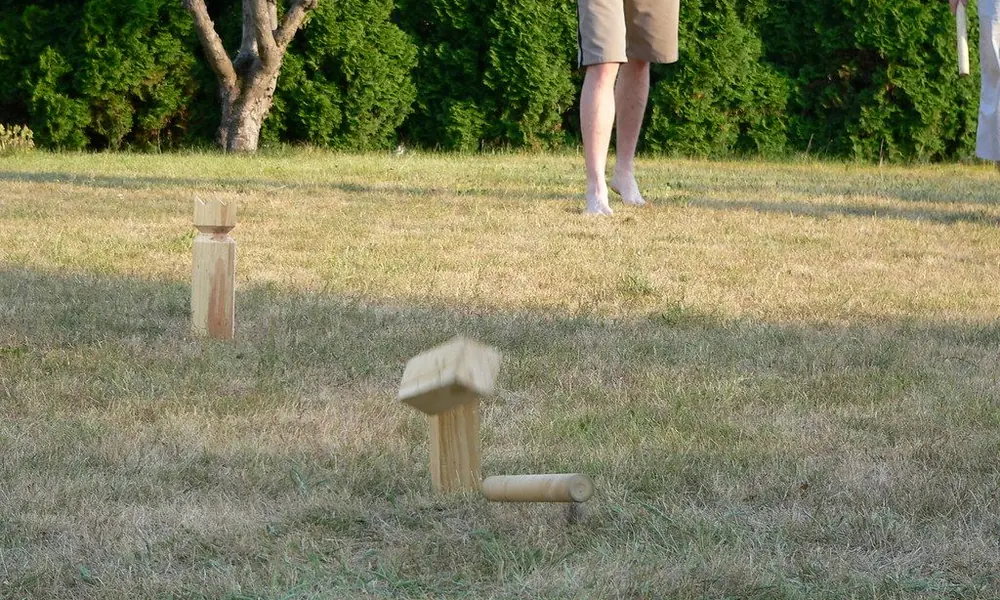
Beech Walk is a slow walk under the beech trees at the edge of the common. The helper marks a route of about two hundred paces from beech to beech with small flags. Each player walks it alone, collecting one fallen beech nut at each tree. Nobody may take a nut from a tree another walker has already passed.
At the far end, the helper counts each walker’s nuts against the number of beech trees on the route. The most nuts takes the point; a tie means both take a point. It is gentle and unhurried, a good rest between the faster games, and the beech shade keeps walkers cool.
7. Thorn Turn
Thorn Turn is a turning game with a single thorn. The helper finds a long thorn from a hawthorn bush and lays it on a flat board. When a group arrives, the helper turns the thorn to point at a player, who must name a thing on the common that starts with the same letter as their own name. The player has ten seconds, counted aloud. A named thing earns the group a point; a miss turns the thorn to the next player.
The thorn moves around the group until every player has had a turn or twenty minutes have passed. It is quick, funny, and fair: the thorn decides who goes next, so nobody can hide at the back. The best answers are plain — a tree, a bird, a pool — said fast and loud.
8. Sundew Spot
Sundew Spot is a spotting game played around the damp hollows of the common. Sundews are tiny plants with sticky red hairs, growing low in the wettest hollows. The helper marks three hollows with small flags and gives each player a slip of paper. Each player has ten minutes to walk the three hollows, count every sundew they can see, and write the total on the slip. Nobody may pick one, touch one, or call out a number.
When the ten minutes are done, the helper reads the true count aloud — counted the evening before — and the closest total takes the point. A tie means both take a point. It rewards a slow eye: players who hurry past the hollows miss half of them. Keep players to the edges so nobody tramples the sundews, and warn every group that the ground is soft. Never let a player pick a sundew: the plants are rare.
9. Newt Count
Newt Count is a counting game at the shallow pools on the common. The helper marks one pool with four small flags and gives each player a slip of paper. Each player has ten minutes to look at the pool, count every newt they see, and write the total on the slip. Newts rise and sink again, so the count is never the same twice, and it is as much about patience as eyesight.
When the ten minutes are done, the helper reads the count from the group’s own slips and takes the middle number — the one in the middle when all the slips are laid in order. A matching total takes the point; two matches mean both take a point. The middle number keeps it fair: one wild answer cannot take it, and one careful watcher often can. Keep players back from the edge so nobody muddies the water.
What to Bring
The kit list is short, and most of it can be carried in two boxes. Bring nine tall flags, one for each game, with a hand-painted sign on each one. Bring paper slips and pencils, one per player per game, plus a tally sheet for each group and a spare pencil box. Bring two baskets for the bracken, a flat board for the bilberry leaves, a flat board and a cloth for the juniper bits, and a paper envelope for the thorn. Bring a water butt and cups for hand washing, and an aid box with plasters and antiseptic.
Cut the bracken and pick the bilberry leaves the evening before, and lay out the juniper bits and the thorn the same night. Count the sundews and the beech trees before the groups arrive, and write the true counts on the helpers’ answer sheets. Arrive an hour before daybreak and walk the ring.
Your Daybreak Checklist
- Walk the ring an hour before daybreak and check all nine flags, the path between them, and the central meeting point.
- Hand every helper an answer sheet with the true counts for their game.
- Cut the bracken, pick the bilberry leaves, lay out the juniper bits, and put the thorn in its paper envelope the evening before.
- Count the sundews in the three hollows and the beech trees on the walk, and write both counts on the helpers’ sheets.
- Put the water butt, cups, and aid box at the central meeting point where every group can reach them.
- Call the opening change from the middle of the ring, and keep calling every change on time so all nine rounds finish by mid-morning.
Frequently Asked Questions
Can 540 players really play nine games in one day?
Yes, because the nine games run at the same time. Each game holds one group of sixty, so all 540 players play from the opening minute, and nine rounds of twenty minutes include every game for every group. The day runs about three hours plus a welcome and a final count.
What if it rains on the day?
Light rain changes nothing: the games are outdoors, and a little rain only freshens the dew. Heavy rain is different, so watch the forecast the evening before and, if heavy rain is coming, move the day to the next dry daybreak.
Do younger players need different rules?
No, the rules are the same for every age. Younger players often take the counting games because they crouch lower and look closer, while older players often take the ordering and matching games because they take their time. The old strawberry field in our party games for 534 players ran the same way, with children and grandparents in the same groups, and the mixed groups scored just as well as the rest.
How do you keep the count honest with 540 players?
Two helpers stay at each game for the whole day, and the true counts are written down before the groups arrive. Counts are written on paper slips, not called out, so nobody can copy the player beside them. The group tally sheet is kept in the open, and the host checks the sheets at the final count.
What if a group finishes a game early?
Let them rest at the flag until the host calls the change. Never send a group to the next game early, or two groups will arrive at one flag at once. The twenty-minute rhythm only works if every group moves together, so a short rest is part of the plan.
Can the games be played with fewer than 540 players?
Yes. With 270 players, run nine groups of thirty; with 180 players, run nine groups of twenty; with 90 players, run nine groups of ten. The games, the flags, and the twenty-minute rounds stay the same, and the only change is the size of each group.
The Bottom Line
Party games for 540 players work when nine small games run at once on a wide open common at daybreak, with groups of sixty moving from flag to flag every twenty minutes. Dew, gorse, bracken, bilberry, juniper, beech, thorn, sundew, and newts give you nine games that need almost no kit, and a ring of flags with a host in the middle keeps 540 players moving together. Arrive an hour before daybreak, walk the ring, and let the common do the rest.