The Best Party Games for 528 Players
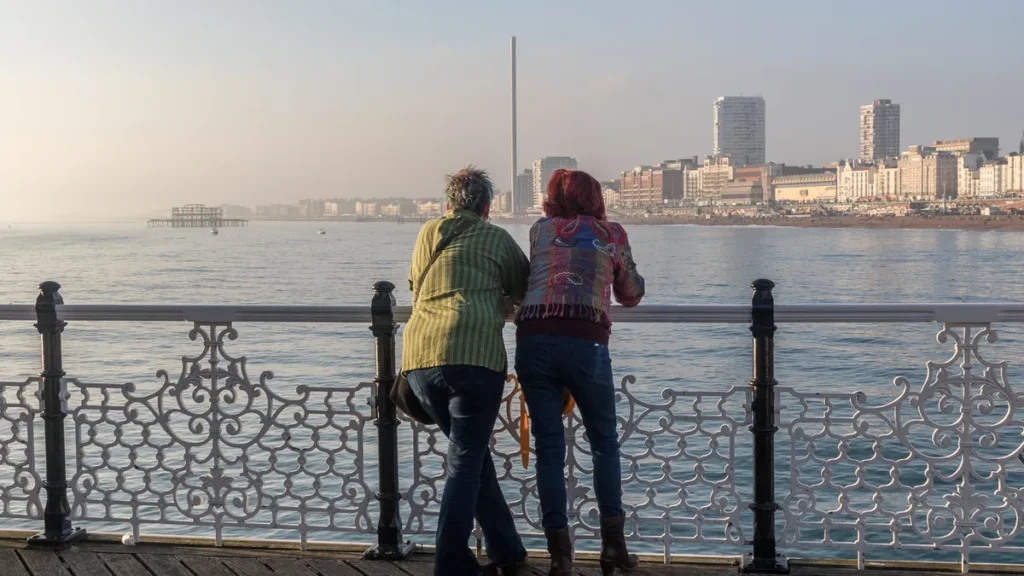
These party games for 528 players make an old seaside pier into a full afternoon of play. The boards run out over the sea, the rides hum behind the kiosks, and the breeze carries music from one end to the other. With 528 people on site, the pier stops feeling like a walkway and starts feeling like a small town at play. That scale is the whole point: every activity below works when dozens of groups play at once.
Five hundred and twenty-eight people sounds like a gathering that cannot be organised, yet the number breaks down neatly. Divide the gathering into 44 groups of 12, each with its own rhythm, its own jokes, and its own tally keeper. Forty-four groups can move around a pier without jamming the walkways, provided each activity has a clear start and a clear finish. The nine activities below were built for exactly that shape: short, loud, easy to explain in under a minute, and fair to groups of every age and ability.
A single striking backdrop can carry a whole afternoon, as the rooftop terrace at sunset party games for 526 players show. A pier offers the same gift in a different form: salt breeze, open daylight, and a long straight deck that naturally divides into activity zones. Read the nine activities below, use the table to plan your timings, and run the checklist before the first group walks onto the boards.
Key takeaways
- Divide 528 people into 44 groups of 12, each with its own tally keeper and a named meeting place.
- Run nine short activities in rotation so no group waits long between turns.
- Use the pier itself as the playing area: the deck, the kiosks, the rides, and the breakwater all become part of the fun.
- Keep every activity explainable in under a minute, with no special skill needed to join in.
- End the afternoon with a shared final count and a simple prize for every group.

The 9 Games at a Glance
| Game | Main skill | Minutes |
|---|---|---|
| Helter Skelter Mat Dash | Quick feet | 20 |
| Waltzer Car Spin Challenge | Keen ears | 25 |
| Penny Pusher Coin Drop | Steady hands | 15 |
| Breakwater Stone Balance | Calm nerves | 20 |
| Groyne Driftwood Order | Sharp eyes | 15 |
| Turnstile Token Tally | Fast thinking | 20 |
| Windbreak Screen Build | Neat fingers | 25 |
| Pier Kiosk Souvenir Sort | Light touch | 15 |
| Seaside Rock Stick Toss | Sure aim | 20 |
The 9 Pier Games
Food stalls sit at the centre of the pier, and the night-bazaar food party games for 524 players prove that food stalls can carry a whole night of play. Here the food theme stays in the background and the pier rides take the lead. Each activity below names its equipment, its shape, and its counting, so a helper can run any of them after a single reading.
1. Helter Skelter Mat Dash
The helter skelter is the tallest thing on the pier, and it makes a perfect opener. One rider from each group climbs to the top with a mat, sits, and slides down the spiral while the rest of the group watches from the base. At the bottom of the slide sits a row of wooden discs in different colours. The rider grabs one disc, hurries back to the group, and hands the mat to the next rider. The group that collects all six colours first takes the top count for this activity.
Send riders up in batches of six. A helper at the top checks that each rider sits properly, and a helper at the bottom hands out the discs and announces the colours. Nervous riders can walk down the stairs instead and still collect a disc. The whole activity takes about twenty minutes when six groups share one helter skelter.
What makes this dash work for 528 people is its simplicity. There is nothing to learn, and the slide does most of the work, so every group has a fair chance. Put the helter skelter first and the pier wakes up at once.
2. Waltzer Car Spin Challenge
The waltzer cars spin round and round under a bright canopy, and this challenge turns that spin into a numbers challenge. Each group fills two cars with riders, and a caller beside the ride names a number between two and twelve. The riders must rearrange themselves across the two cars so that one car holds exactly the named number of riders before the spin ends. Groups that match the number earn a count; groups that miss it earn nothing for that round.
Play five rounds, naming a new number each round, and let the cars spin for about thirty seconds per round. The spin makes simple arithmetic feel urgent, because riders must count heads, say numbers aloud, and move seats while the floor tilts beneath them. Riders who prefer not to spin can act as tally keepers beside the ride, watching the cars and noting the numbers they see.
The challenge suits a pier because the waltzer already draws a gathering, and the numbered rounds give onlookers something to follow. Keep the numbers small at first, then raise them as groups find their rhythm.
3. Penny Pusher Coin Drop
The penny pusher machines line the arcade side, and this activity puts groups head to head at them. Each group receives a pouch of fifty coins and a single machine to share. Members drop coins into the slot one after another, aiming to nudge the prizes on the moving surface toward the ledge. Every prize that falls off the ledge earns the group a count, and the group with the most prizes after fifteen minutes takes the top count.
The knack is patience. Coins dropped too fast pile up and waste the pouch, while coins dropped with care slide the prizes forward a little at a time. Groups soon learn to look at the surface, wait for the right moment, and drop one coin at a time. A helper stands by each machine with a fresh pouch for groups that finish early.
Penny pusher machines suit huge groups because they need no running and no large space. Older and younger members play on equal terms, and the fifteen-minute limit keeps the waiting short.
4. Breakwater Stone Balance
The breakwater runs along the outer edge of the pier, and its flat top makes a natural balancing bench. Each group receives a bucket of flat stones in different sizes and shapes. Members take the stones one at a time and add them to a single growing pile on the breakwater, building upward for three minutes. The pile must still be standing at the end of a slow count of ten, and the group with the tallest standing pile takes the top count.
Balance beats height here. A tall pile built in a hurry falls before the count ends, while a shorter pile built with care stands firm. Groups soon learn to test each stone and find the flattest side before placing it. A helper announces the final count aloud, and any stone that falls after the count has ended does not matter.
This activity suits the pier because it needs almost no equipment and no running at all. It rewards patience and steady hands, a good change of pace after the helter skelter and the waltzer.
5. Groyne Driftwood Order
A groyne is a low wooden barrier that runs from the shore into the sea, and driftwood gathers along its sides after every tide. Each group walks a marked length of the groyne and collects ten pieces of driftwood, choosing pieces of clearly different lengths. Back on the pier, the group must arrange the ten pieces by length, biggest to smallest, without using any measuring tools. The group that finishes first with a correct arrangement takes the top count.
Judging length by eye is harder than it sounds, especially when the pieces are curved or broken at odd angles. A helper with a simple wooden ruler checks the finished arrangement. No tapes, no rulers, and no phones may be used while the group is arranging, so the work depends on eyes and discussion alone.
Driftwood ordering works well for 528 people because the groyne offers a long, open collecting ground where many groups can walk at once. It also gives groups a quiet fifteen minutes after the noise of the arcade.

6. Turnstile Token Tally
The pier entrance has a row of turnstiles, and this activity turns them into a counting challenge. Each group receives a pouch of tokens, one token for each member, and every token carries a number. The tally keeper names numbers in a random order, and the member holding that number must pass through the turnstile and drop the token into a slot in the counting board. The group that moves all its members through in the named order takes the top count.
The challenge lies in listening. With music playing and other groups talking nearby, it is easy to mishear a number and send the wrong member through. A wrong pass costs the group a count. Groups that assign one member to look at the counting board and another to repeat each named number aloud do far better than groups that leave everything to chance.
Turnstile Token Tally fits the pier perfectly because it uses furniture that is already there. Run it early in the afternoon, when groups are still arriving, and it doubles as a friendly welcome onto the pier.
7. Windbreak Screen Build
A pier catches every breeze, so windbreak screens are part of its furniture. Each group receives cloth panels, wooden uprights, and sandbags, and must build a freestanding screen along the promenade that can stand on its own for a full minute. The screen must be at least as tall as the shortest member of the group and wide enough to shelter three people sitting behind it. The first group with a standing screen takes the top count, and groups whose screens fall must rebuild and try again.
Building sounds simple until the breeze tests the work. Panels catch the breeze and pull hard, uprights wobble, and sandbags slide if they sit on a slope. Groups learn to angle the panels and brace the uprights with sandbags on both sides. A helper walks the line of screens with a stopwatch, and the minute of standing time begins only when the group moves back from its screen.
This build suits huge groups because it mixes thinking with doing. Strong members carry the uprights, careful members place the panels, and the finished screens shelter the groups that built them for the rest of the afternoon.
8. Pier Kiosk Souvenir Sort
The pier kiosks sell paper flags, smooth stones, and striped discs, and this activity turns that stock into a sorting challenge. Each group receives a mixed pile of souvenirs and must sort them into piles by type, then by colour within each type. The group that finishes first with every pile correct takes the top count. The activity takes about fifteen minutes and needs nothing more than a table per group.
Sorting sounds easy until the pile grows. Flags tangle together, stones roll off the table, and discs of nearly the same colour confuse even careful sorters. Groups that divide the work finish far faster than groups where everyone grabs at the same pile. A wrong pile costs the group a count, so haste must be balanced with care.
Souvenir sorting works for 528 people because it can run anywhere on the pier and needs no space for running. It also leaves every group with a tidy pile of souvenirs to take home as a memento.
9. Seaside Rock Stick Toss
Sticks of seaside rock are the classic pier sweet, and this activity turns them into throwing pieces. Each group receives twelve rock sticks and marked zones painted on the boards, with the furthest zones earning the most counts. Members toss the sticks underarm, one at a time, aiming to land them inside a zone. A stick that lands outside the zones earns nothing, and a stick that breaks on landing earns nothing either.
The zones reward judgement over strength. The nearest zone is wide and easy, while the furthest zone is narrow and earns five counts, so groups must decide whether to play safe or reach for the big prize. A helper announces the result of each toss, and the tally keeper adds the counts as the sticks land.
Rock stick tossing closes the nine activities on a light note. It needs little space, it can be played by anyone, and the brightly striped sticks arcing through the daylight draw a gathering of onlookers.
Running the Day: Your Checklist
Before the first group walks onto the boards, work through this short checklist. The village fete party games for 522 players show how a parish green and a few trestle tables can hold a gathering for hours, and the same plain planning works on a pier.
- Count the groups. Count the groups at the entrance and hand each tally keeper a pouch, a pencil, and a printed programme.
- Walk the pier. Walk the full length of the pier before the groups arrive, and check that every zone is clear and every helper knows their place.
- Brief the helpers. Give every helper a single page of instructions and a coloured armband, and agree on one hand sign that means stop.
- Stock the kiosks. Make sure the kiosks hold enough coins, tokens, rock sticks, and drinking water for all 528 people.
- Plan for tired feet. Put benches and shelter at both ends of the pier so groups can rest between activities.
- End together. Gather all 44 groups at the far end of the pier for the final count, and hand every group its prize.
Frequently Asked Questions
How do you divide 528 people into groups?
Divide the gathering into 44 groups of 12. Mix ages and abilities within each group so that every group has a blend of quick movers, careful thinkers, and steady hands. Keep close friends together where possible, since a group that already laughs together plays better. Give each group a tally keeper and a coloured armband so helpers can see every group from a distance. Groups of 12 move easily along the pier walkways.
What is the running time of the full programme?
Plan for about four hours from the first activity to the final count. The nine activities take between fifteen and twenty-five minutes each, and groups need about five minutes to move between zones. Add thirty minutes at the start for dividing the gathering, plus twenty minutes at the end for the final count and prizes. A ten o’clock start and a two o’clock finish keep energy high throughout.
Can the games move indoors if the deck closes?
Seven of the nine activities move indoors with little change. Penny pusher needs the arcade machines, and breakwater balancing needs the breakwater itself, so those two stay on the pier or drop out of the programme. The waltzer challenge works in any large room, the souvenir sort needs only tables, and the windbreak build works in a sports centre. Ask the pier office the day before whether the deck will be open, and keep a backup room booked, so a closed pier never cancels the party.
What number of helpers does a 528-person party need?
Plan for about thirty helpers. Each of the nine activity zones needs at least two helpers, one to explain and one to keep the count, which accounts for eighteen people. Add four helpers at the entrance, four helpers to walk the pier, two helpers at the kiosks, and two helpers with a first aid kit at the pier office. Thirty helpers means every group always has a friendly face nearby.
Can children join in?
Yes, all nine activities suit children aged seven and above, and younger children can join with an adult beside them. The helter skelter and the rock stick toss are the most popular with younger players, while older children enjoy the waltzer numbers challenge and the driftwood ordering. Keep the groups mixed by age so that younger members always have older members to help them. No activity needs strength or quickness alone, so children compete on equal terms with adults.
What should every group bring?
Every group should bring bottled water, a cap, and a small pouch for prizes. The pier offers little shade at midday, so water matters more than any other item. A cap keeps the glare out of the eyes, and a pouch keeps the coins, tokens, and rock sticks together. Leave valuables at home, since pockets empty fast on rides, and wear shoes with a good grip for the boards, which can grow slick when the boards are wet.
The Bottom Line
Nine activities, one pier, 528 people, and a single afternoon that every group enjoys from the first slide to the final count. The pier does half the work for you: its rides, its kiosks, and its long straight deck give every activity a natural home. Reserve the pier, brief the helpers, divide the gathering into groups of twelve, and let the games do the rest.