These puzzle games for 528 players turn Christmas decorating into a large-group event: 88 teams of six rotate through nine bases, each base holding one decorating game, and the eight highest points totals meet in a final. Nothing here needs prior knowledge. Every game uses objects that sit on a normal festive table, and every game can be explained in under a minute.
The arithmetic is simple. With 88 teams of six, each base welcomes about ten teams at a time, and each team spends twelve minutes at a base before rotating on. Nine bases at twelve minutes gives 108 minutes of play, with short gaps between rotations for teams to find their next base. A referee stands at each base, watches the work, and writes down the points on the leaderboard.
What makes the format work at this size is restraint. Each game asks for one clear piece of work with one clear result, so a referee can settle it at a glance and teams always know where they stand. The games below use baubles, tinsel, holly, nutcrackers, cloves, garlands, chestnuts, figgy pudding and stockings, and each one fits on a single table.
Key takeaways
- 528 players become 88 teams of six, rotating through nine bases.
- Each base holds one decorating game and lasts twelve minutes.
- A referee at each base writes the points on the leaderboard.
- The eight highest points totals meet in a final of three rounds.
- Every game uses ordinary festive objects and needs no prior knowledge.
The 9 Christmas Decorating Races at a Glance
The nine games below give every team the same mix of close looking, careful arranging and steady work. No game favours strength or haste, so teams of mixed ages and abilities stay level with each other from the opening base to the final.
| Race | What happens | Points |
|---|---|---|
| Bauble Shade Match Race | Teams match baubles by shade | 10 for the most correct matches |
| Tinsel Length Order Race | Teams arrange tinsel lengths from shortest to longest | 10 for getting every length right |
| Holly Sprig Match Race | Teams match holly sprigs by outline | 10 for the most correct matches |
| Nutcracker Jaw Fit Race | Teams fit nuts into nutcracker jaws | 10 for the most whole kernels |
| Clove Stud Match Race | Teams place cloves into citrus | 10 for the most correct matches |
| Garland Swag Match Race | Teams match garland swags by curve | 10 for the most correct matches |
| Chestnut Sort Race | Teams sort chestnuts by width | 10 for the most correct groups |
| Figgy Pudding Slice Race | Teams slice figgy pudding into even portions | 10 for the most even slices |
| Stocking Cuff Match Race | Teams match stocking cuffs by shade and width | 10 for the most correct matches |
How 528 Players Become 88 Teams
Six to a team keeps every player busy without crowding a table. A team of six can spread around a base, talk through the work together, and still reach a decision inside twelve minutes. Larger teams leave people standing idle at the edges, while smaller teams struggle with the fiddlier work in the time allowed.
Give each team a number from 1 to 88. Our puzzle games for 527 players use a botanical-garden theme, and the same rotation logic works here with Christmas decorations. Teams keep the same number for the whole event, which keeps the leaderboard easy to read from a distance.
Rotation runs in a single direction around the venue, so teams never cross each other between bases. When the change comes, teams leave their work where it is, walk to the next base, and start again. Reserve baubles, tinsel lengths and chestnuts wait at a side table, so a base can be reset in under a minute if anything runs short.
The 9 Games
Each game below names the objects, the work, and the way points are earned. The jeweller’s-workshop puzzles in our puzzle games for 526 players show the same idea with fewer players: a single object and a single clear result for each base. Here the objects are festive, and the work stays just as clear.
1. Bauble Shade Match Race
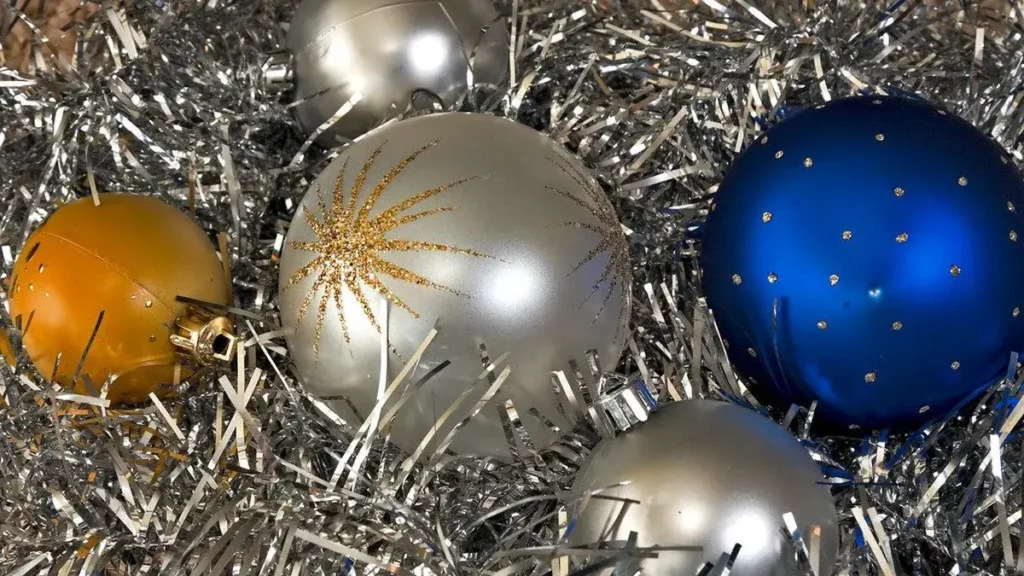
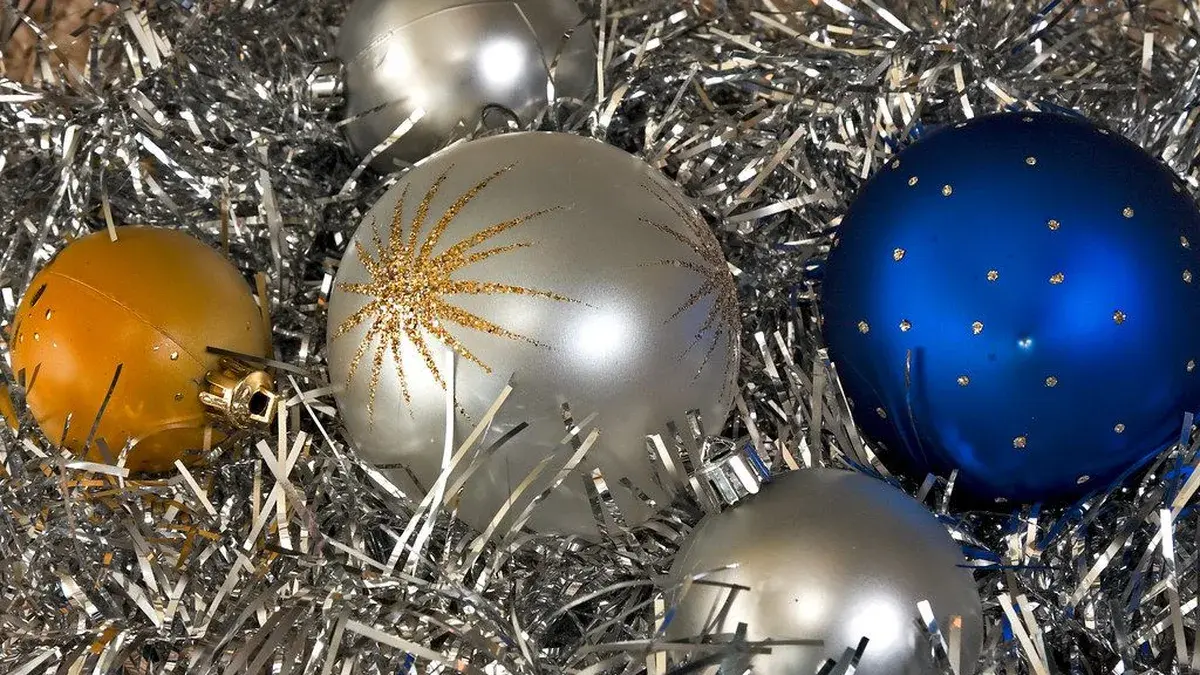
The referee places forty baubles in twenty shades, two of each shade, mixed across the table. Teams study the baubles, then match each bauble with its twin shade. A match counts only when the two shades agree exactly, so teams learn to hold baubles side by side rather than trusting recall.
The team with the most correct matches takes the points when the twelve minutes end. A wrong match loses nothing, but it wastes time that could have gone to another match, so careful teams beat hasty ones. The referee keeps reserve baubles out of sight until a bauble falls off the table.
2. Tinsel Length Order Race
The referee places twelve lengths of tinsel, each a different length, tangled gently together on the table. Teams untangle the lengths, compare them with a ruler, and arrange them from shortest to longest, side by side on the table. The tinsel must lie flat with no overlaps, so the referee can see the arrangement clearly.
The team that gets every length right takes ten points. One length out of place drops the team to six points, and two or more out of place drops it to three. Patience pays: teams that compare twice and arrange once do far better than teams that trust their eyes alone.
3. Holly Sprig Match Race
The referee places twenty-four holly sprigs in twelve matching outlines, mixed across the table. Teams compare the sprigs by the outline of their prickly edges and match each sprig with its twin. Gloves are provided for teams that prefer them, since holly prickles can nip bare skin during a close look.
The team with the most correct matches takes the points when the twelve minutes end. The referee compares each match with the answers, kept turned over until the end, so no team can peek at them while working. Sprigs with similar outlines but different prickle counts are the hard part of this game.
4. Nutcracker Jaw Fit Race
The referee places six nutcrackers of different sizes and a dish of mixed nuts on the table. Teams test each nut against each jaw, find the jaw that holds it cleanly, and work the nut until the shell gives way without breaking the kernel inside. A nut counts only when the shell gives way and the kernel comes out whole.
The team with the most whole kernels in twelve minutes takes ten points. A broken kernel earns nothing, so teams learn to squeeze gently and listen for the shell giving way. The referee keeps reserve nuts at the side table for any team that empties its dish.
5. Clove Stud Match Race
The referee places twelve citrus on the table and a dish of whole cloves. Teams place cloves into the citrus to match the motif the referee gives each team, matching each citrus by the number and placing of the cloves. The citrus smell wonderful as the work continues, which is half the pleasure of this base.
The team with the most correct matches takes ten points when the twelve minutes end. A clove in the wrong place loses the match for that citrus, so teams count the cloves on each citrus twice before they are done. The referee compares the citrus with the answers and writes down the points at once.

6. Garland Swag Match Race
The referee places eight garland swags along a beam, four in each of two curves that look alike at a distance. Teams study the curve of each swag, the way it bends and the spacing of its greenery, then match swags that share the same curve. The swags must not be handled while teams look, so the matching is done by eye alone.
The team with the most correct matches takes the points when the twelve minutes end. The two curves differ only in small details, such as the depth of the bend and the grouping of the greenery, so teams that look closely beat teams that guess. The referee keeps the answers turned over until the end.
7. Chestnut Sort Race
The referee pours a pile of chestnuts onto the table, mixed sizes from small to large. Teams sort the chestnuts into three groups by width, using a wooden template with three holes to test each chestnut. A chestnut belongs in the group matching the smallest hole it drops through, which keeps the sorting honest.
The team with the most correct groups takes ten points when the twelve minutes end. The referee tests a few chestnuts from each group with the template, and a group with more than two wrong chestnuts loses its points. Teams that sort steadily from the start do better than teams that hurry and re-sort.
8. Figgy Pudding Slice Race
The referee places a figgy pudding and a slicer on the table, with a slicing template beside it. Teams slice the pudding into twelve even portions of equal width. The template shows the width of a correct portion, and teams may compare each slice against it as they work.
The most even twelve slices take ten points. The referee compares the widest and narrowest slices, and the team with the smallest gap between them takes the points. A steady hold and a slow, even movement matter more than haste, and the pudding is shared out afterwards.
9. Stocking Cuff Match Race
The referee places twenty stockings on the table, two sharing each cuff motif. Teams compare the cuffs by shade and width, then match each stocking with its twin. The stockings lie side by side on the table so teams can compare cuffs together.
The team with the most correct matches takes the points when the twelve minutes end. Cuffs that look alike at a distance often differ by a whisker, so teams that look closely do best. The referee compares each match with the answers and writes down the points before the next team arrives.
Running the Tournament
After nine bases, every team holds a points total out of ninety. The eight highest totals meet in a final of three rounds, played on a single base in front of the whole gathering. Each final round uses one of the nine games, chosen at random by the referee, so no team can prepare for a single game in advance.
The final rounds follow one after another, with the points from each round counting toward the running total. If you want a louder, faster event, the bowling-alley puzzles in our puzzle games for 525 players use the same tournament plan with a very different venue. Teams that fall behind in the opening round can still recover, which keeps the final lively to the very end.
Announce the winner only after the third round, and give every team a small festive keepsake as they leave. A short closing speech works better than a lengthy one: thank the referees, thank the volunteers, and announce the winning team. The whole event, including the final, fits inside 180 minutes when rotations stay on time.
Checklist
- Count 88 teams of six and write out the rotation plan before the event begins.
- Arrange nine bases with a referee at each and a clear walkway between them.
- Keep reserve baubles within reach at every base in case any are lost.
- Write down the points on the leaderboard after every base.
- Keep the final for the eight highest totals and choose its games at random.
- Give every team a small festive keepsake at the end of the event.
Frequently Asked Questions
How many minutes does the whole event take?
Nine bases at twelve minutes give 108 minutes of play, plus the time teams need to walk between bases and a short gap in the middle. The final adds about thirty minutes. Plan for 180 minutes from the event beginning to the winner being announced.
What happens if a team arrives late?
A late team enters the rotation at the next base and takes no points for the bases it missed. The referee writes the missed bases on the leaderboard so the team can see why its total sits lower. Late teams still play every remaining base and can still reach the final if their other totals are high.
Do teams need to bring anything?
No. Every object a game needs waits at its base, from baubles and tinsel to nutcrackers and chestnuts. Teams only need comfortable shoes for walking between bases and warm clothing, since venues can feel cool with 528 players moving about.
What happens when two teams end with the same points total?
Tied teams play one extra game, the Bauble Shade Match Race, with six minutes instead of twelve. The team with the most correct matches in those six minutes takes the higher place. If the tie still stands after that, both teams enter the final together.
Can children play too?
Yes, children play in teams with adults, and the games suit mixed ages because none of them needs strength or prior knowledge. Holly sprigs can nip skin, so gloves are provided at that base, and nutcrackers need an adult nearby for younger players. Teams with children often do well at matching games.
What happens if a team loses a bauble?
The referee replaces it from the reserve baubles kept out of sight at the side table. A lost bauble costs the team nothing, but the minutes spent looking for it are gone, so teams learn to keep their work in the middle of the table. The referee counts the baubles before the next team arrives.
The Bottom Line
Nine simple decorating games, 88 teams of six, and a clear points system are all it takes to run puzzle games for 528 players without chaos. Keep the work small, the rotations steady, and the leaderboard visible, and the event runs itself. The team that looks closely, works steadily, and trusts its own eyes will usually be the team holding the keepsake at the end.