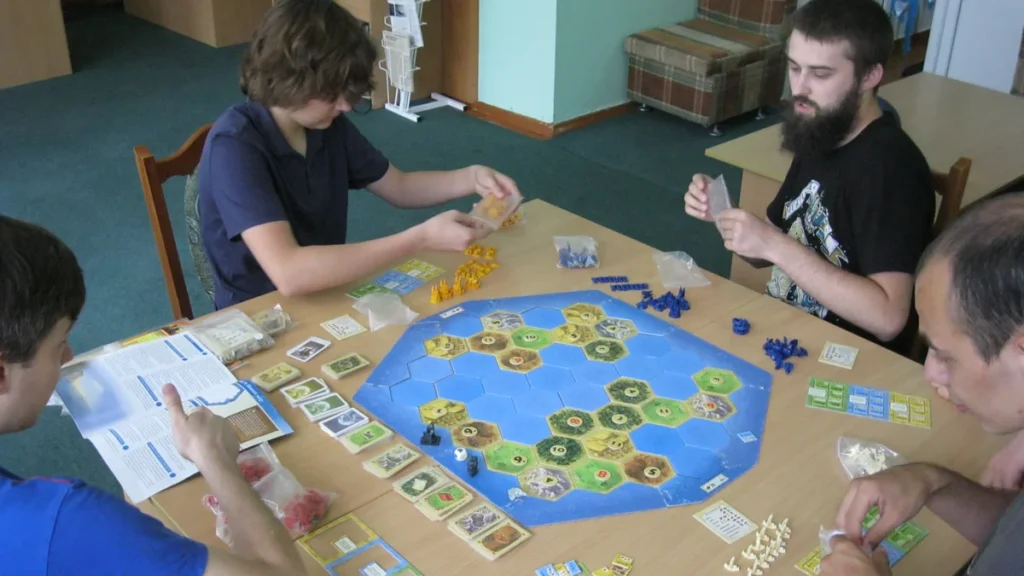
Four hundred and sixty-nine players in one room sounds impossible until the first die hits the tray. Then the whole hall goes quiet for half a second, everyone leans in, and the number comes up. That shared pause is the whole trick. With dice games built for huge groups, nobody waits long for a turn, nobody needs to learn a thick rulebook, and nobody sits out while a small group plays at the front.
The space theme in this guide does a lot of the heavy lifting. Every table becomes a crew, every roll becomes a launch, a landing, or a course correction, and the scoreboard becomes a mission log the whole room can follow. Hosts love it because the theme is easy to explain in one sentence, and players love it because even a bad roll feels like part of the story. If you have run a big dice night before, the rhythm here will feel familiar, and the dice games for 467 players use the same table system, so a crew that played last time can sit down and start straight away.
Below you will find nine games that each work for a full hall of 469 players. Every game splits the room into small tables of six to eight, runs on the same simple dice kit, and finishes in under half an hour. Pick three or four for a short evening, or run all nine across a full day with breaks between missions.
Key takeaways
- Split 469 players into tables of six to eight so every table rolls at the same time and nobody waits.
- Use one shared theme, space, so the scoreboard reads like a mission log the whole hall can follow.
- Give every table the same kit: six dice, one cup, one tray, and one score sheet.
- Call out results table by table and update one big visible scoreboard after each round.
- Keep every game under thirty minutes so energy stays high from the first launch to the last landing.

At a Glance: All Nine Space Dice Games
| Game | Dice per table | Round length | Best for |
|---|---|---|---|
| Dice Rocket Launch | Three | Twenty minutes | Opening the night |
| Dice Moon Landing | Two | Twenty-five minutes | Careful planners |
| Dice Star Map | Four | Twenty minutes | Quick thinkers |
| Dice Asteroid Field | Three | Twenty minutes | Loud, lively tables |
| Dice Planet Hop | Two | Twenty-five minutes | Mixed ages |
| Dice Comet Chase | Three | Fifteen minutes | A fast energy boost |
| Dice Space Station | Four | Thirty minutes | Team builders |
| Dice Alien Signal | Two | Twenty minutes | Quiet guessers |
| Dice Gravity Leap | Three | Twenty minutes | A big finish |
The Nine Games
1. Dice Rocket Launch
Every table is a launch crew, and the goal is simple: get your rocket off the ground before the other crews. Each player rolls three dice on their turn and adds the total to the crew fuel gauge. A roll of ten or more adds fuel, a roll of nine or less burns fuel, and a roll of eighteen is a perfect burn that doubles the round total. The first crew to reach one hundred fuel wins the launch, and the host counts the whole hall down from ten as the winning tables call out.
Setup takes two minutes. Give each table three dice, one cup, one tray, and a score sheet with a fuel gauge drawn from zero to one hundred. One player at each table is the flight director and marks the gauge after every roll. No other equipment is needed, and the rules fit on a single card taped to the table.
This game scales because every table plays the same race at the same time. A hall of 469 players becomes sixty-odd launch crews, and the host only needs to watch the scoreboard, not sixty separate games. The countdown at the end pulls the whole room together, which makes it a strong opener.
2. Dice Moon Landing
Dice Moon Landing rewards steady hands over lucky streaks. Each player rolls two dice and tries to land exactly on a target number the table picks at the start of the round. Landing one below or one above the target still scores a small point, but landing exactly on it scores five. After six rounds, the table with the highest total has landed the smoothest, and the host reads out the top five tables.
Setup is light. Each table needs two dice, one cup, one tray, and a score sheet with six rounds printed on it. The table picks a new target number each round, anywhere from four to ten, and writes it down before anyone rolls. One player keeps score while the rest take turns rolling.
It scales well because the target changes every round, so no table can copy a neighbour and coast. With 469 players, the range of scores is wide, yet every table finishes its six rounds in about the same time. Quiet tables enjoy it as much as loud ones, which makes it a good second game.
3. Dice Star Map
In Dice Star Map, each table draws a sky full of stars and connects them with rolls. The score sheet shows a grid of numbered stars from two to twelve. A player rolls four dice, picks two of them, and crosses off the star matching that total. The first table to cross off a full row, column, or diagonal calls out a constellation and wins the round.
Setup needs four dice per table, one cup, one tray, and a printed star grid for each player. The host hands out the grids face down and counts to three before the first roll. Players may share ideas at their table, so the quietest player often spots the winning line first.
The game scales because the grid gives every player their own puzzle while the table still wins together. Across 469 players, some tables finish in ten minutes and others take twenty, so the host can run two short rounds and add the scores. It is fast, visual, and easy to follow from the back of the hall.
4. Dice Asteroid Field
Dice Asteroid Field is the loudest game on this list. Each table has a field of asteroids numbered one to six, and a roll of three dice clears every asteroid showing one of the rolled numbers. Doubles clear a bonus asteroid, and triples clear the whole field at once. The table that clears its field first shouts a warning to the hall, and the last three tables still flying get a rescue round.
Setup is simple: three dice, one cup, one tray, and a sheet showing six asteroids per table. One player rolls while the rest call out which asteroids are gone. The host keeps a list of finished tables on the scoreboard so the room can see the field shrinking in real time.
It scales because shouting is part of the game, and a hall of 469 players makes the finish genuinely exciting. The rescue round keeps the slowest tables involved instead of leaving them behind. Tables that loved the food-themed dice games for 466 players will recognise the same quick-round rhythm here, just with a noisier, faster finish.
5. Dice Planet Hop
Dice Planet Hop turns the room into a solar system. Each table starts on Earth and hops from planet to planet by rolling two dice. A total of seven moves the crew one planet forward, a total of eleven moves them two, and doubles let the crew pick any planet in reach. The first table to reach Neptune wins, and every table marks its journey on a small route card.
Setup takes three minutes. Each table needs two dice, one cup, one tray, and a route card showing eight planets in order. One player is the navigator and moves a token along the card after each roll. The host calls out the leading planet every five minutes so tables know how far behind or ahead they are.
This game scales because the route is the same for everyone, so the host can track the whole hall with one glance at the scoreboard. It suits mixed ages well, since the rules are just roll, add, and move. With 469 players, the race to Neptune usually has a dozen tables close together at the end, which makes the finish worth watching.

6. Dice Comet Chase
Dice Comet Chase is a fifteen-minute sprint. A comet moves around the hall on the big scoreboard, and each table chases it by rolling three dice. Any roll totalling fifteen or more moves the table one step closer, and a roll of three ones sends the table back a step. The first five tables to catch the comet score, and then the comet jumps to a new spot for the next chase.
Setup is the fastest on this list. Each table needs three dice, one cup, one tray, and a small chase card. The host moves the comet marker after every round of rolls and calls out the distance. No score sheet is needed beyond the chase card, which keeps the table clear and the pace quick.
It scales because the chase resets every few minutes, so a table that falls behind is never out of the game for long. With 469 players, five tables catching the comet at once is common, and the hall loves the shared groan when a triple one sends a leading table backwards. Use it between longer games to lift the energy.
7. Dice Space Station
Dice Space Station is the most cooperative game here. Each table runs a station with four jobs: power, food, air, and repairs. A player rolls four dice and assigns each die to a job. A job needs a total of ten or more across the round to stay green, and any job left short turns red. The table wins the round when all four jobs stay green, and the station with the most green rounds wins.
Setup needs four dice per table, one cup, one tray, and a station sheet with four job boxes. The table talks through every roll before assigning dice, so the game is really a short planning meeting with dice. One player records green and red jobs after each round.
It scales because cooperation keeps every player involved, even the ones who never roll high. Across 469 players, the host can compare green-round totals without watching any single table. It works well as a team-building round in the middle of the day, when the hall needs something calmer than a race.
8. Dice Alien Signal
Dice Alien Signal is a guessing game with a twist. One player at each table is the signal keeper and rolls two dice behind a cup. The rest of the table asks yes-or-no questions and guesses the total. A correct guess scores three points, a guess within one scores one point, and the signal keeper changes after every round so everyone gets a turn hiding the roll.
Setup is minimal: two dice, one cup, one tray, and a score sheet. The signal keeper rolls in secret and answers questions honestly, which is the only rule that needs enforcing. Tables usually invent their own questioning style within a round, from careful counting to wild guesses.
It scales because the game is quiet, so sixty tables can play it at once without the hall becoming a shouting match. With 469 players, the range of guessing styles is half the fun, and the host can collect the top scores without interrupting anyone. It is a good late-evening game when voices are tired.
9. Dice Gravity Leap
Dice Gravity Leap closes the night with a big shared moment. Each table picks a leap number between six and twelve. Players roll three dice in turn, and every roll that matches the leap number exactly scores a leap point. After eight rounds, the table totals its points, and the host reads the leaderboard from the bottom up so the winners are revealed last.
Setup takes two minutes: three dice, one cup, one tray, and a score sheet with eight rounds. The leap number is written large on the table card so everyone can see it. The host runs the eight rounds with a short countdown between them, which keeps all sixty-odd tables in step.
It scales because the shared countdown turns sixty small games into one hall-wide event. A room of 469 players holding its breath on the last roll is a fine way to end the day, and the slow leaderboard reveal gives every table a moment in the spotlight. Keep it for last and it will feel like a finale.
Your 469-Player Setup Checklist
- Count your dice first: about 250 dice cover every table with spares, plus a few extra cups and trays.
- Seat six to eight players per table and print one score sheet per table, not per player.
- Put one big scoreboard where the whole hall can see it and update it after every round.
- Appoint one flight director per table to keep score and call the table result to the host.
- Test the sound before the first game so the back tables can hear the countdowns.
- Plan a five-minute break after every two games so players can stretch and reset their tables.
If you are planning a wider evening around these dice games, the party games for 466 players pair well with them, since they use the same table sizes and the same scoreboard system.
Frequently Asked Questions
Can 469 players really play dice games at the same time?
Yes, because nobody plays as one group of 469. The room splits into tables of six to eight, every table rolls at once, and the host tracks the tables on one scoreboard. Each player rolls every few minutes, so the hall feels like one game even though sixty-odd small games are running side by side.
How many dice do we need for 469 players?
About 250 dice are enough. Most games here use two to four dice per table, and with roughly sixty tables that works out to around two hundred dice in play, plus spares for the ones that roll under chairs. Buy one bulk set of standard dice and a matching set of cups and trays.
What if a table has only three or four players?
The games still work. Smaller tables finish rounds a little faster, so the host can let them play an extra round or give them a small head start on the next game. If several tables are short, merge two of them into one full table before the next game starts.
How long does the whole night take?
Three or four games take about ninety minutes with breaks, and all nine take around four hours. Most hosts pick four games for an evening and save the rest for a full-day event. The table on this page shows the length of each game so you can plan your own running order.
Do players need to know about space already?
No. The theme is only a coat of paint on simple dice rules. Planets, rockets, and comets give the scoreboard a story, but every game comes down to rolling dice, adding totals, and marking a sheet. A player who has never followed a space mission will do just as well as one who has.
Are the space dice games played for money?
No, they are played for points and small prizes. Most hosts hand out ribbons, stickers, or a small trophy for the winning table. Keep the prizes light and the focus on the shared finish, and the games stay friendly for every age in the room.
The Bottom Line
Nine space games, sixty-odd tables, and one hall full of players who all roll at once: that is the whole plan. Start with Dice Rocket Launch to wake the room up, use Dice Comet Chase when the energy dips, and close with Dice Gravity Leap so the night ends on a shared countdown. Keep the kit simple, keep the scoreboard visible, and let the theme do the talking. With 469 players, the best nights are the ones where every table feels like its own crew and the whole hall still finishes together.