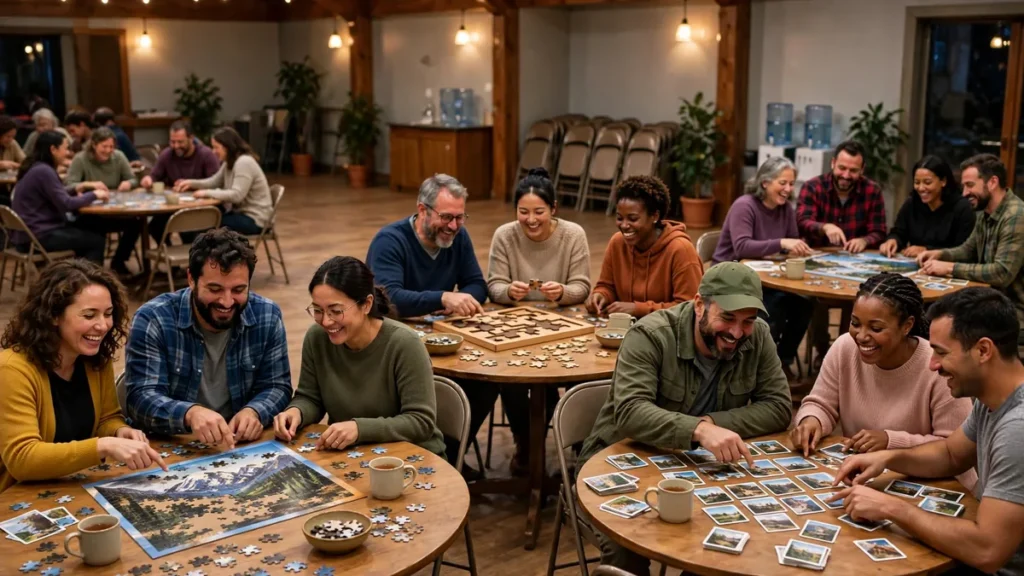
Finding the best card games for 133 players starts with an honest fact: no single card game seats 133 people around one table. The search for card games for 133 players is really a search for a format, a way to let a very large group play cards together without chaos, long waits, or half the room sitting out. When the format is right, a crowd of 133 becomes an advantage: more tables, more energy, more rivalries, and a tournament atmosphere that a small game night can never match.
The trick is to stop thinking of one game and start thinking of one event. With 133 players you run many tables at once, rotate players between rounds, and crown one overall winner at the end of the night. Teams, ladders, relays, and whole-room games all work, and the best events mix two or three of these formats so nobody is ever stuck waiting for a turn that takes twenty minutes to arrive.
This guide covers the ten card games that scale best to a crowd of 133, the exact formats that make each one work, the equipment you need, and the rules that keep a giant game night moving. Every game below has been chosen because it is fast to teach, quick to play, and fair when dozens of tables are running at the same time.
Key takeaways
- No single card game seats 133 players. The winning approach is multiple tables plus a tournament, team, or relay format.
- Spoons, Presidents, and War make the best large-group anchors because rounds are short and winners are easy to compare across tables.
- Plan on 15 to 20 tables, at least one deck per table, and a host with a microphone to keep every table in sync.
- Keep every round under 15 minutes so players rotate often and nobody waits long between games.
- Score by table points, not by single-game wins, so a strong player at a tough table is never punished unfairly.

How Card Games Work With 133 Players
A group of 133 players needs structure before it needs a deck of cards. The simplest structure is the multi-table tournament: split the room into tables of four to eight players, run the same game at every table, and advance the winners. Twenty tables of six or seven players cover the whole room, and a tournament of three or four rounds fits comfortably into two hours.
Team play is the second format that works well. Divide the room into teams of six to ten, seat each team at its own table, and let teams earn points together. Team play suits quieter games such as Rummy and Go Fish, because teammates can talk, coach new players, and share the pressure of a bad hand. It also keeps friends together, which matters at weddings, reunions, and company events where people came as a group.
The third format is the ladder, which suits games like Presidents. Winners move up one table and losers move down one table after every round, so the strongest players gradually gather at the top table while everyone else keeps playing competitive games at their own level. Ladders are fair, self-balancing, and easy to explain. For a mixed evening, pair one of these formats with whole-room games that the entire hall plays at once, and borrow ideas from the best party games for 131 players, which use many of the same large-group formats.
The 10 Best Card Games for 133 Players
Each game below includes the table size, the format that scales it to 133 players, and one practical tip from real large-group play. Start with one anchor game for the first hour, then switch to a second game so the evening stays fresh.
1. Spoons
Spoons is the loudest and fastest game on this list, and that is exactly why it works for 133 players. Each table seats four to six players with one fewer spoon than players in the middle. Everyone passes cards around the table, and the moment someone collects four of a kind, they grab a spoon, and so does everyone else. The player left without a spoon is out of the round.
For 133 players, run heats of six at about twenty tables, with table winners advancing to semi-final tables and then one grand final. A full Spoons tournament takes under an hour, and every spoon grab gives the whole room a shared burst of noise and laughter.
2. Presidents
Presidents, also called Scum or Asshole in some groups, is a climbing game where the first player to shed every card becomes the President and the last player left holding cards becomes the Scum. The ranking carries into the next round, so the President starts with an advantage and the Scum starts with a disadvantage. That built-in story makes players want one more round.
Presidents scales beautifully through a ladder format. Seat six or seven players per table, play three rounds, then move the top two players up a table and the bottom two down. After four rotations the strongest players meet at the top table for a final. The game needs only one deck per table, takes about ten minutes a round, and works for mixed ages because the rules take two minutes to teach.
3. Cheat
Cheat, also known as I Doubt It, is a bluffing game where players discard cards face down and announce what they claim to be playing. Anyone can challenge a claim, and a caught liar picks up the whole pile. The game rewards a straight face and a good memory, and it produces the kind of accusations and laughter that fill a hall.
For a crowd of 133, play Cheat in teams of two at tables of eight. Teammates sit opposite each other and can quietly signal each other, which adds a layer of strategy without slowing the game. Run three timed rounds of twelve minutes, award points for every successful bluff, and total the points across tables to find the winning team. Keep a host nearby, because challenged claims are the moments where arguments start.
4. Rummy
Rummy is the calm anchor of a large game night. Players draw and discard to build sets and runs, and the first player to lay down a complete hand scores. It is quiet, thoughtful, and familiar to almost every generation, which makes it the best choice when your 133 players include grandparents, teenagers, and people who have never played a party game.
Run Rummy as a relay across tables of four. Each table plays a fifteen-minute round, the two highest scorers advance to a new table, and points carry forward through the night. Because Rummy is turn-based and quiet, it balances louder games like Spoons perfectly. Schedule it in the middle of the evening, when the room needs a breather, and provide printed scoring sheets so nobody has to do mental arithmetic under pressure.
5. War
War is the simplest card game ever made, and that simplicity is its superpower at scale. Two players flip cards, the higher card wins both, and ties trigger a war. There are no decisions to make, no rules to argue about, and no skill gap between a ten-year-old and a seventy-year-old. Every match takes about five minutes.
For 133 players, War becomes a bracket tournament. Pair players up, run matches at every table simultaneously, and advance winners to the next round while losers join a consolation bracket so nobody is eliminated in the first five minutes. With 133 players you need seven rounds to crown a champion, and the whole bracket fits inside an hour. War is also the best fallback game: if a table finishes early, a quick War match fills the gap perfectly.
6. Slap Jack
Slap Jack is a reflex game where players flip cards onto a central pile and slap it the moment a Jack appears. The fastest hand wins the pile, and the player who collects every card wins the game. It is noisy, physical, and instantly exciting, which makes it ideal for the second half of the evening when energy starts to dip.
Seat five or six players per table and run heats of eight minutes, with the winner of each heat advancing. Because slapping is involved, set a clear rule before the first round: open palms only, no grabbing, and any disputed slap goes to a replay of the pile. The best card games for 131 players use the same heat format, and it works just as well with one extra player in the room. Slap Jack is best saved for players who enjoy fast, physical games.
7. Uno
Uno is the most widely known matching card game in the world, and familiarity is gold when you have 133 players to teach. Players match cards by colour or number, play action cards to skip or reverse the turn, and shout Uno when they hold one card. Almost everyone already knows the rules, so the host spends zero time explaining and all the time running the event.
Play Uno as a team relay. Each team of six shares one hand, discusses every play out loud, and sends a different member to the table for each round. The relay format turns a simple matching game into a team sport, and it lets shy players contribute without the pressure of playing alone. Use two decks per table to keep the draw pile deep, and cap rounds at twelve minutes with the lowest hand total winning the round.
8. Spit
Spit, also called Speed, is a two-player race where both players flip cards as fast as they can onto shared piles. There are no turns, no waiting, and no polite pauses. The first player to empty their hand wins, and a single match rarely lasts more than three minutes.
For a crowd of 133, Spit is the perfect side event. Set up a dedicated Spit station with six tables, run a continuous ladder where winners stay and challengers rotate in, and let players join between rounds of the main game. The station keeps early finishers busy, gives competitive players a place to burn energy, and produces a crowd of spectators within minutes. Keep the station near the host so the cheering does not drown out the main tables.
9. Go Fish
Go Fish is the friendliest game on this list. Players ask each other for cards to complete sets of four, and the player with the most sets at the end wins. It is gentle, social, and easy enough for the youngest players in the room, which makes it the best choice for family gatherings where 133 players span four generations.
Run Go Fish in teams of three at tables of six, with teammates pooling their sets. Timed rounds of fifteen minutes keep the game moving, and the team format means a child who forgets the rules always has a teammate to help. Provide a simple printed reminder of the asking rules at every table, because the most common delay in Go Fish is a player forgetting whose turn it is.
10. Snap
Snap is a whole-room game, and that makes it the perfect finale for 133 players. Everyone plays at once: cards are flipped, and the moment two matching cards appear, players shout Snap and slap the pile. In a hall of 133 people, the shout rolls across the room like a wave, and the final rounds become a genuine spectacle.
Run Snap as the closing event after the table tournaments finish. Gather the room into one large circle or keep players at their tables with a shared central call, and play elimination rounds until one player remains. Snap needs no scoring sheets, no brackets, and no referees, which is exactly what a tired host wants at the end of a long night. Finish with Snap, hand out the prizes, and the room will leave buzzing.
Card Games for 133 Players Compared
| Game | Players per table | Round length | Best format for 133 | Skill or luck | Energy level |
|---|---|---|---|---|---|
| Spoons | 4 to 6 | 10 minutes | Tournament heats | Mostly luck | Very high |
| Presidents | 6 to 7 | 10 minutes | Ladder | Mixed | Medium |
| Cheat | 8 in teams | 12 minutes | Team points | Mostly skill | High |
| Rummy | 4 | 15 minutes | Points relay | Mostly skill | Low |
| War | 2 | 5 minutes | Bracket | Pure luck | Medium |
| Slap Jack | 5 to 6 | 8 minutes | Tournament heats | Reflexes | Very high |
| Uno | 6 in teams | 12 minutes | Team relay | Mixed | Medium |
| Spit | 2 | 3 minutes | Side station ladder | Reflexes | High |
| Go Fish | 6 in teams | 15 minutes | Team points | Mostly luck | Low |
| Snap | Whole room | 15 minutes | Whole-room finale | Reflexes | Very high |
Equipment and Setup Checklist
- Decks of cards: Bring at least 25 standard decks, one per table plus spares, and two extra decks per table for Uno and Presidents. Check every deck is complete before the night begins.
- Tables and chairs: Arrange 18 to 20 tables seating six to eight players each, with clear walkways between them so the host and referees can move freely.
- Score sheets and pens: Print a simple sheet for every table with player names, round numbers, and a points column, and assign one scorekeeper per table.
- Timer and microphone: A visible countdown timer and a microphone are essential. The host calls the start and end of every round so all twenty tables stay in sync.
- Spoons, tokens, and prizes: Buy 120 plastic spoons for Spoons, plus small tokens for table winners and three prizes for the overall champions.
- Printed rules and name badges: Put a one-page rules card on every table and give every player a name badge with their team and starting table number.
Rules That Keep 133 Players Happy
Big game nights fail on logistics, not on game choice. Four rules prevent almost every problem. First, keep every round short. A round that runs past fifteen minutes creates a queue of bored players at finished tables, and bored players leave early. Use a timer, announce the final minute, and end the round on time even if a game is unfinished.
Score by Points, Not by Single Wins
A player who finishes second at a table of experts has played better than a player who wins at a table of beginners. Award points for finishing position at every table, add them across rounds, and rank the whole room on total points. Points also let a player who misses one round stay in contention, which matters when 133 people need bathroom breaks and snack runs.
Rotate Tables Every Round
Players who sit with the same group all night get bored, and strong players who never meet each other make the final feel random. Rotate at least half the players to a new table after every round. Rotation also spreads new players evenly, so no table is stuck with four beginners and no table is stacked with four experts.
One Host, One Clock
Every table needs the same start time, the same end time, and the same rules. One host with a microphone runs the clock, explains rule changes, and announces results. Referees handle disputes at individual tables, but only the host changes a rule. This structure is the same one that works for board games designed for big gatherings, where a single schedule keeps dozens of tables moving together.
Frequently Asked Questions
Can one card game really seat 133 players?
No. No single card game seats 133 players at one table, and any guide that claims otherwise is misleading you. The honest answer is to run the game at many tables at once, using a tournament, ladder, team, or relay format, and to crown one overall winner at the end of the night.
How many tables do you need for 133 players?
Plan on 18 to 20 tables seating six to eight players each. That covers all 133 players with a few spare seats for late arrivals, and it leaves room for a dedicated side station for fast games like Spit.
How many decks of cards should you bring?
Bring at least 25 standard decks, one per table plus spares. Add two extra decks per table for games that use more than one deck, such as Presidents and Uno, and keep five sealed decks in reserve for replacements.
How long does a card game night for 133 players take?
Plan for two to three hours. That allows four to five rounds of ten to fifteen minutes each, a break in the middle, and a whole-room finale such as Snap. A single-game tournament such as War can finish in about one hour.
What is the best card game for a mixed-age group of 133?
Rummy and Go Fish are the safest choices for mixed ages, because both are calm, familiar, and easy to learn. Pair one of them with a high-energy game such as Spoons so younger players get excitement and older players get a game they already know.
Do you need prizes for 133 players?
You do not need a prize for everyone. Three prizes work well: one for the overall champion, one for the winning team, and one fun prize such as best bluff in Cheat or fastest hands in Slap Jack. Small prizes keep the competition friendly instead of serious.
The Bottom Line
The best card games for 133 players are not about finding one magical game that seats a crowd. They are about choosing fast, simple games, running them at many tables at once, and tying the tables together with a tournament, ladder, or team format. Start with Spoons or Presidents, keep rounds under fifteen minutes, score by points, and finish the night with a whole-room game of Snap. Do that, and 133 players stop being a problem to solve and become the best part of the evening.