Have you ever looked at a picture and felt like it was trying to tell you a secret? That is exactly what a rebus puzzle does. It is not just a drawing; it is a hidden message waiting to be decoded. If you have been looking for a way to sharpen your mind while having a blast, you have come to the right place.
At riddlepuzzle.com, we believe that learning should feel like a game. Today, we are diving deep into the world of rebus puzzles with answers, from simple picture word puzzles to the kind of visual word riddles that make even adults scratch their heads.
Whether you are a student looking for a brain break or a teacher wanting to challenge your class, let’s see if you can crack the code.
What Exactly is a Rebus Puzzle?
The word “rebus” actually comes from a Latin phrase meaning “by things.” Basically, instead of using just words to say something, a rebus uses “things”—like pictures, symbols, or even the specific way letters are arranged on the page.
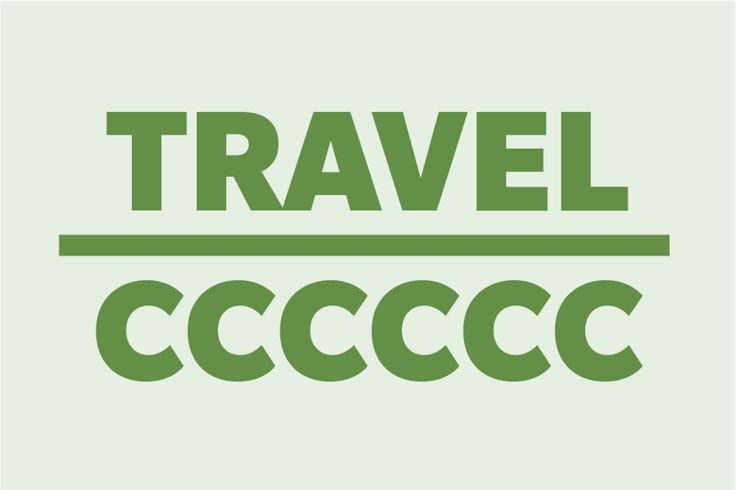
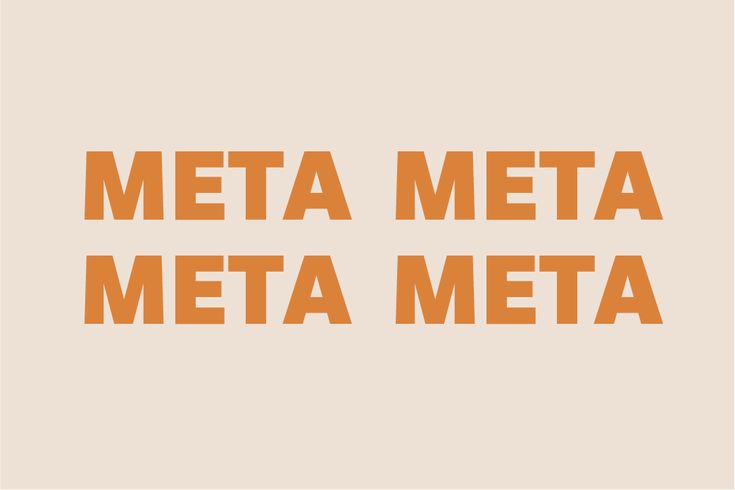
Think of it like this: If I write the word “HEAD” directly above the word “HEELS,” what does that look like? It is “Head over Heels!” That is the magic of rebus brain teasers. They force you to look at the world a little differently.
Why Your Brain Loves These Puzzles
- Lateral Thinking: You cannot just read these puzzles left-to-right. You have to look up, down, and inside out.
- Vocabulary Boost: They often use idioms and common phrases, which is great for students learning the nuances of the English language.
- Pattern Recognition: Your brain is naturally wired to find patterns. These puzzles turn that instinct into a fun challenge.
The Ultimate List of Rebus Puzzles With Answers
Let’s get into the good stuff. We have organized these by difficulty so you can warm up your brain before hitting the expert levels.
Level 1: The Warm-Up (Beginner)
| The Puzzle | The Clue | The Answer |
| EGG EGG | Written in green ink | Green Eggs and Ham |
| ISSUE ISSUE… (9 times) | A common footwear | Tennis Shoes (Ten-iss-ues) |
| PENNIES (written backwards) | Financial term | Pinching Pennies |
| BIRD (written in a small box) | Nature phrase | A bird in a cage |
Level 2: Thinking Outside the Box (Intermediate)
1. The “Million” Challenge
Imagine the word “bird” written four times in a square.
- The Answer: The birds and the bees.
2. Timing is Everything
Look at the words “TIME” and “ABDE…” (the alphabet missing the letter C).
- The Answer: Long time, no see (C).
3. Highs and Lows
If you see the word “WEATHER” written underneath a horizontal line and the word “BIT” written above it.
- The Answer: A bit under the weather.
5 Pro Tips for Solving Visual Word Riddles
If you find yourself stuck on a tricky rebus puzzle with answers, do not panic. Even the best code-breakers had to start somewhere. Use these five strategies to get unstuck:
- Check the Position: Is a word inside another word? Is it on top? Below? For example, the word “STAND” written under “I” means “I understand.”
- Count the Objects: If you see three pictures of a “door,” the answer might involve the number three.
- Look at the Color: If the word “CHEEK” is written in bright red, the answer is likely “Red in the face” or “Blushed.”
- Say it Out Loud: Sometimes your eyes cannot see the answer, but your ears can hear it. “W + (the number 8)” sounds exactly like “Wait.”
- Identify the Symbols: Arrows are huge in picture word puzzles. If an arrow points to a specific part of a word, that is where the secret lies.
Why Students Should Play With Rebus Brain Teasers
In the 2026 classroom, we are seeing a massive shift toward “Gamified Learning.” Teachers are finding that students who engage with visual word riddles often perform better in subjects like creative writing and logic-based math.
- Patience: Solving a hard puzzle teaches you that it is okay to be confused for a minute.
- Focus: You have to look at the tiny details. Did that letter have an underline? Is that font slightly larger?
- Confidence: There is no feeling quite like the “Aha!” moment when you finally solve a puzzle that looked like gibberish five minutes ago.
Deep Dive: 50 More Rebus Puzzles to Test Your Logic
To reach that expert status, you need volume. Here are dozens of additional rebus brain teasers to work through. Cover the right side of your screen to test yourself!
The “Body and Motion” Collection
- KNEE (written over LIGHT): Neon Light (Knee on light).
- MCE MCE MCE: Three Blind Mice (Mice with no “i’s”).
- HE’S / HIMSELF: He is beside himself.
- FEET FEET FEET FEET FEET FEET: Six feet under.
- TOWN: Quiet town (written in very small letters).
- MIND / MATTER: Mind over matter.
- DEATH / TAXES: Certain as death and taxes.
- CHEEK: Turn the other cheek (written facing the opposite way).
- WOLF (at a door icon): Wolf at the door.
- EYE / STORM: Eye of the storm.
The “Business and Money” Collection
- JOB: Inside job (written inside a circle).
- COST (with an arrow pointing to a leg): Costs an arm and a leg.
- $ (written inside a cloud): Every cloud has a silver lining.
- DEAL: Big deal (written in giant font).
- LUCK (written in a corner): Corner the market on luck.
- BUCK: Fast buck (written in italics/slanted).
- LINE: Cross the line (a line drawn through the word).
- WAGES: Living wages (written in a vibrant, growing font).
- BOTTOM: Rock bottom (written in a jagged, stony font).
- OFFICE: Back office (written at the very end of the page).
The Educational Value of Picture Word Puzzles
Many people think of rebus puzzles with answers as just a way to kill time, but there is real science behind why they are used in schools. When a student looks at a visual word riddle, they are engaging both the left and right hemispheres of the brain. The left side handles the literal letters, while the right side handles the spatial arrangement and imagery.
Improving Literacy Skills
For younger students, picture word puzzles help bridge the gap between seeing an object and understanding its symbolic meaning in language. It helps them understand that words can have multiple meanings depending on context.
Developing Grit
Psychologists often talk about “Grit”—the ability to keep going even when something is hard. Rebus brain teasers are low-stakes ways to build that grit. If a student fails to solve a puzzle, they can check the answer, understand the logic, and apply it to the next one.
Visual Word Riddles: A History of Secret Communication
The rebus is not just a modern internet trend. In fact, it has been used for centuries.
From Royalty to Revolution
During times of war or political unrest, rebels would often use rebus-style messages to communicate. Because a casual observer might just see a drawing of a bird or a crown, the secret message remained hidden in plain sight. This makes the rebus brain teasers we play today the descendants of actual spy tools!
The Victorian “Love Letter”
In the 1800s, it was popular to send “rebus valentines.” These were elaborate cards where words were replaced by tiny, beautiful illustrations. “I love you” might be shown as an “Eye,” a “Heart,” and a “Sheep” (for “Ewe”).
How to Create the Perfect Rebus Puzzle
Once you have mastered the rebus puzzles with answers on our site, you might want to try making your own. This is a great exercise for students to test their friends.
- Select a Common Phrase: Start with something everyone knows, like “Easy as pie” or “Back to square one.”
- Break it Down: Look at the individual sounds or words. “Square one” could literally be the number “1” inside a box.
- Play with Placement: Use words like “under,” “over,” “behind,” and “between.”
- Use Homophones: Words that sound the same but have different meanings are your best friends. “Sea” for “See,” “Deer” for “Dear,” and so on.
- Test it Out: Show it to someone else. If they can’t get it in 30 seconds, give them a tiny hint about the category.
30 Expert Level Rebus Puzzles for the True Genius
Ready for the final round? These are the toughest visual word riddles in our 2026 collection.
- R / E / A / D / I / N / G: Reading between the lines.
- HISTORY HISTORY HISTORY: History repeats itself.
- CHANCE: Small chance (written in 4pt font).
- WEAR / LONG: Long underwear.
- STORY: The beginning of the story (arrow pointing to the “S”).
- ROADS: Cross roads (two words forming an X).
- WALK: Walk on air (written at the top of the box).
- DICE DICE: Paradise (Pair of dice).
- LE / VEL: Split level.
- K J Q A: Missing Jack (no Jack in the card sequence).
- GIVE GIVE GIVE GIVE / GET GET GET GET: Forgive and forget (Four-give and four-get).
- DEATH / TAXES: Certain as death and taxes.
- CYCLE CYCLE CYCLE: Tricycle.
- THUM: Finger (missing a letter).
- MAN / BOARD: Man overboard.
- STAND / I: I understand.
- T 2 2 2 2: Tea for two.
- GRASS: Green grass (written in green).
- Bridges: Burning bridges (written in red/orange with smoke icons).
- Search / Search: Search high and low (one at top, one at bottom).
- PROGRAM: Space program (wide spaces between letters).
- NOON: High noon (written at the top of the frame).
- ECNALG: A backward glance.
- PILL: A bitter pill to swallow (written in a jagged, unpleasant font).
- HEAD / WATER: Head above water.
- VA DERS: Space Invaders.
- BELT: Below the belt (written at the bottom edge).
- GROUND: Cover ground (a line drawn over the word).
- SYMPHO: Unfinished symphony.
- T_ _ _ _ _ _ E: The end of the tunnel.
Conclusion: Keep Your Brain Sharp
At the end of the day, rebus puzzles with answers are just a fun way to keep your mental muscles from getting lazy. Whether you got all of these right or you are still scratching your head over a few, the important thing is that you tried.
The world of picture word puzzles is endless. From the classic visual word riddles we grew up with to the new rebus brain teasers being created every day, there is always a new code to crack.
Want more? Make sure to bookmark riddlepuzzle.com for your daily dose of brain-bending fun. We add new puzzles every single week to keep you on your toes.
Frequently Asked Questions (FAQ)
1. Where can I find more rebus puzzles for kids?
Most educational sites and puzzle blogs like ours offer specific categories for kids. Look for puzzles that use simple nouns and very common phrases to start. These help build confidence before moving to harder riddles.
2. Are rebus puzzles and dingbats the same thing?
Yes! In many parts of the world, especially the UK, these are called “Dingbats” or “Frame Games.” They all follow the same rule: use visuals, font styles, and placement to represent a hidden phrase.
3. How do I make my own rebus puzzle?
Start with a common idiom, like “Piece of cake.” How could you draw that? Maybe draw a “1” inside a “Piece”? Or a “Cake” made out of the letters “P-I-E-C-E”? The more creative you get with font and size, the better.
4. What is the hardest rebus puzzle ever?
Difficulty is subjective, but puzzles that rely on very obscure cultural references or complex math symbols tend to be the toughest to crack. A classic “hard” one is “HIJKLMNO”, which represents the word “Water” (H to O, or H2O).
5. Can playing these help with standardized tests?
Indirectly, yes! They improve your ability to recognize patterns and think critically. Many modern exams focus on “thinking outside the box,” which is exactly what a rebus teaches you to do.