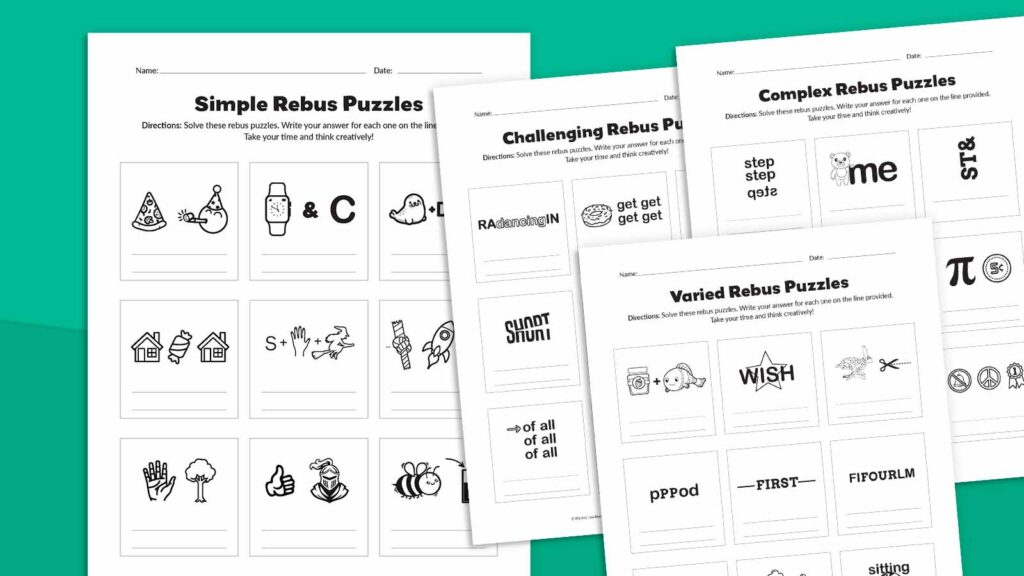
Printable rebus puzzles are a fun and effective educational tool that help children develop essential literacy and cognitive skills through play. By combining images, letters, and symbols to form words or phrases, these puzzles strengthen phonemic awareness, vocabulary, visual processing, and critical thinking. Suitable for a wide range of ages, rebus worksheets can be easily adapted for classrooms or home use, serving as warm-up activities, independent tasks, or group challenges. Their flexibility, low preparation, and engaging format make them especially valuable for teachers and parents. Ultimately, rebus puzzles support active learning by encouraging children to construct meaning themselves, making them a powerful addition to any learning environment.
Kids learn best when they are having fun. That is not just a feel-good statement. It is backed by decades of research in child development and education. And very few classroom activities combine fun and learning as naturally as printable rebus puzzles.
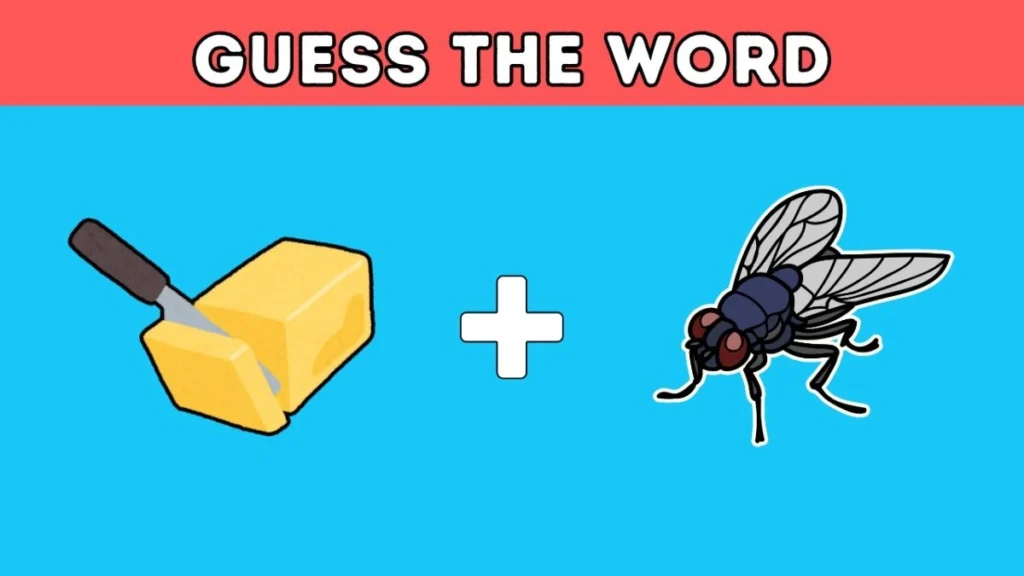
So what exactly is a rebus puzzle? It is a word puzzle where pictures, symbols, and letters are combined to represent words or phrases. A child looks at an image of an eye, then the letter “C”, then an image of a can, and figures out the phrase “I see can.” It sounds simple, but the thinking process behind solving one is genuinely rich.
This post covers everything parents and teachers need to know about printable rebus puzzles for children, including why they work, how to use them, and where the best free rebus worksheets pdf options fit into a learning plan.
Why Rebus Puzzles Are Perfect for Kids
Rebus puzzles have been around for centuries. Kings and nobles used them in medieval Europe as clever word games. Today they have found a very natural home in elementary classrooms and homeschool environments because they develop multiple skills at once.
When a child works through a rebus puzzle, they are practicing phonemic awareness, which is the ability to hear and manipulate the sounds in words. They are also working on visual processing, vocabulary, reading comprehension, and logical reasoning. All of that happens while they think they are just playing a game.
For teachers managing a diverse classroom, kids puzzles printable formats are particularly valuable because they require no prep beyond printing, they are self-paced, and they keep children engaged without needing adult supervision at every step.
The Learning Benefits Behind Rebus Worksheets
Phonics and Sound Recognition
One of the most direct benefits of working through rebus worksheets is phonics reinforcement. Children have to break words down into their sound components to match them with images. A picture of a bee plus the letter “T” makes “beat.” The child has to hear both sounds separately and then blend them.
This is especially useful for early readers who are still building phonemic awareness. It gives them a playful framework to practice a skill that can otherwise feel like a chore.
Vocabulary Building
Rebus puzzles naturally expose children to new vocabulary. When a worksheet includes an image they have to identify before they can solve the puzzle, they are learning the word for that image in context. This contextual learning is far more effective than drilling vocabulary lists in isolation.
A child who has never encountered the word “anvil” before will remember it if they needed it to solve a puzzle they were excited about finishing.
Critical Thinking and Problem Solving
Good classroom puzzles do more than test what a child already knows. They push children to think through problems they have not encountered before. Rebus puzzles do this by presenting information in a non-linear format. The answer is not spelled out. The child has to construct it themselves, piece by piece.
This process of constructing meaning rather than receiving it is one of the core habits of strong readers and thinkers.
Types of Printable Rebus Puzzles for Different Age Groups
Not all printable rebus puzzles are designed the same way, and matching the difficulty level to the child’s age and reading stage makes a big difference in whether the activity is engaging or frustrating.
For Ages 4 to 6
At this stage, puzzles should rely almost entirely on simple, easily recognizable images combined with basic letter sounds. The vocabulary should be limited to words children already know by ear. A puzzle using images of a cat, a ball, and a sun works because every child at this age can name those objects confidently.
The goal here is not challenge. It is familiarity with the format and the enjoyment of solving something, which builds the motivation to keep going.
For Ages 7 to 9
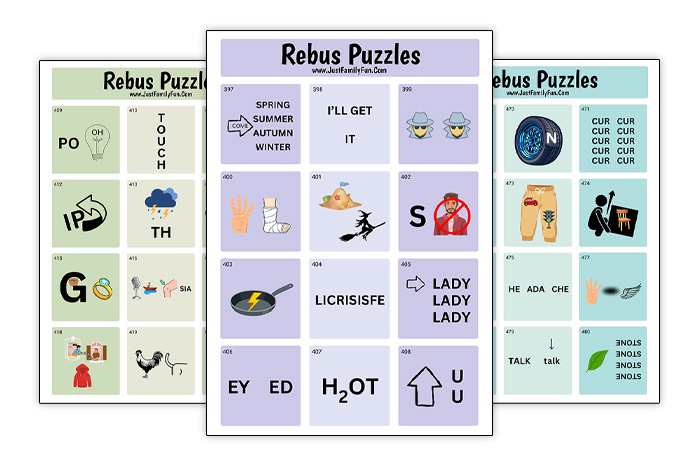
This is where rebus puzzles get genuinely interesting. Children at this age have enough vocabulary and phonics knowledge to handle multi-syllable words and simple phrases. Worksheets at this level can introduce compound words, homophones, and short idioms.
A puzzle that leads to the answer “sunshine” or “butterfly” gives children a satisfying sense of accomplishment while genuinely testing their skills. Free rebus worksheets pdf downloads for this age group are among the most widely available because this is the sweet spot for the format.
For Ages 10 and Up
Older children can handle rebus puzzles that involve longer phrases, common idioms, or well-known sayings. A puzzle that spells out “a penny for your thoughts” or “bite the bullet” introduces figurative language in a context that makes the meaning memorable.
At this level, classroom puzzles based on subject-specific vocabulary can also be effective. Science, history, and geography terms work well in rebus format for upper elementary and middle school students.
How Teachers Can Use Rebus Worksheets in the Classroom
Printable rebus puzzles are flexible enough to fit into a classroom schedule in several different ways.
As a Morning Warm-Up Activity
Placing a rebus puzzle on each desk before students arrive gives children something productive to engage with from the moment they sit down. It settles the classroom, focuses attention, and eases the transition into the school day without requiring teacher instruction.
As a Literacy Center Rotation
In classrooms that use literacy centers or stations, kids puzzles printable formats fit naturally into independent reading or word work rotations. Children can work through a small set of puzzles independently while the teacher works with another group.
As an Early Finisher Activity
Printable rebus puzzles are an ideal early finisher activity because they are self-contained, self-checking when answers are provided on a separate sheet, and can be made progressively harder to keep fast workers challenged.
As a Group Challenge
Projecting a rebus puzzle onto the classroom board and letting students work through it together as a class is a great way to start a lesson on phonics, vocabulary, or figurative language. The group discussion about how each part of the puzzle works reinforces the learning more deeply than silent individual work.
How Parents Can Use Rebus Puzzles at Home
For homeschooling families, printable rebus puzzles are an easy addition to any literacy curriculum. They take minutes to download, cost nothing to print, and can fill a 15-minute slot in a way that feels like a break even though it is still learning time.
For parents who are not homeschooling but want to support their child’s reading at home, rebus worksheets are a low-pressure way to do that. Unlike flashcards or phonics drills, puzzles feel like a game. A child who resists sitting down to “do reading work” will often happily tackle a puzzle sheet with no complaints.
Doing a puzzle together as a family activity also works well. Younger children can point out the images while older siblings or parents help decode the sounds. This kind of collaborative engagement around language is genuinely valuable.
What to Look for in a Quality Rebus Worksheet PDF
Not all free printable rebus puzzles are created equal. When you are choosing worksheets, a few quality markers are worth checking before you print a stack.
The images should be clear and unambiguous. If a child has to guess whether a picture is a “pail” or a “bucket,” the puzzle loses its value because the intended phonetic component is unclear. Good rebus worksheets use simple, widely recognized illustrations.
The font should be clean and easy to read. For younger children especially, the written letters and symbols on the worksheet should be in a clear, child-friendly font rather than decorative or stylized type.
The difficulty should be appropriate to the age range indicated. Some websites label rebus worksheets as suitable for all ages when in reality the vocabulary and complexity are pitched at a narrow range. If possible, preview the worksheet before printing a class set.
Answer keys are worth looking for. Self-checking tools help in independent work settings and save the teacher time.
Popular Themes for Kids Printable Rebus Puzzles
One of the reasons rebus worksheets remain popular in classrooms year after year is that they adapt easily to seasonal and thematic content. A few of the most widely used themes include:
Animals are a natural fit because children know animal names well from a young age, and animal images are easy to draw clearly. Holiday-themed rebus puzzles are popular at Halloween, Christmas, and Easter because they tie reading practice to celebrations children are already excited about. Nature and science themes work well for reinforcing subject-specific vocabulary in a cross-curricular way. Fairy tale and storybook themes connect reading practice to literature that children are already familiar with, which lowers the barrier to entry.
Themed worksheets also make it easy to build a unit around rebus puzzles. A teacher covering an animal unit in science might use animal-themed rebus worksheets during literacy time to reinforce vocabulary from both subjects simultaneously.
Classroom Puzzles and the Broader Case for Puzzle-Based Learning
Rebus puzzles are one piece of a broader toolkit. The reason classroom puzzles of all kinds remain a staple of good teaching is that they shift the child’s role from passive receiver to active solver. That shift changes the learning experience fundamentally.
When children are given information and told to memorize it, retention is low. When children have to work something out for themselves, retention is much higher. Puzzle-based activities exploit this principle in the most accessible way possible.
For teachers and parents who want to build a collection of kids puzzles printable resources, starting with rebus puzzles is a smart choice because they are immediately accessible to a wide age range, require no special materials, and cover genuine curriculum objectives while looking nothing like traditional schoolwork.
Tips for Making Your Own Rebus Puzzles
If you want to go further than downloaded worksheets, making your own printable rebus puzzles is easier than it sounds. All you need is a set of simple clip art images, a word processing program, and about 20 minutes.
Start by choosing the word or phrase you want the puzzle to represent. Then break it down into its sound components and find an image for each one. Test it yourself first to make sure the answer is clear and unambiguous. Then put it in a simple grid format with blank answer lines at the bottom.
Personalizing puzzles with a child’s name, a topic they love, or a theme from their current book can dramatically increase engagement. A child who gets a rebus puzzle that spells out their favorite character’s name is going to be far more motivated than one working through a generic worksheet.
Conclusion
Printable rebus puzzles are one of the simplest and most effective tools available to anyone who cares about building reading skills in children. They are free, flexible, fun, and genuinely educational in ways that go well beyond the surface level of a word game.
Whether you are a teacher looking for fresh classroom puzzles to rotate into your literacy program, a parent searching for engaging kids puzzles printable options to use at home, or a homeschooler building a curriculum from scratch, rebus worksheets deserve a regular spot in your toolkit.
The best part is that children do not know they are working. They think they are solving a puzzle. And they are right. For more free puzzle resources, activity ideas, and printable worksheets for children, visit riddlepuzzle.com.
Frequently Asked Questions
What are printable rebus puzzles?
Printable rebus puzzles are word puzzles that use images, symbols, and letters combined together to represent words or phrases. Children decode each visual element to figure out the hidden word or saying. They are available as free PDF downloads for home and classroom use.
What age group are rebus worksheets designed for?
Rebus worksheets are available for a wide age range. Simpler versions with basic picture-letter combinations work well for children aged 4 to 6. More complex versions involving phrases and idioms are suitable for ages 10 and up. Most free rebus worksheets pdf downloads are aimed at the 7 to 9 age range.
How do rebus puzzles help children learn?
Rebus puzzles build phonemic awareness, vocabulary, visual processing, and critical thinking simultaneously. Because they are presented as a game rather than a drill, children tend to engage with them more willingly and retain what they learn more effectively.
Can rebus puzzles be used in the classroom?
Yes. Rebus worksheets work well as morning warm-up activities, literacy center rotations, early finisher tasks, or whole-class discussion starters. They require no prep beyond printing and are self-paced, which makes them easy to incorporate into any classroom schedule.
Where can I find free printable rebus puzzles for kids?
Free rebus worksheets pdf downloads are available on a number of educational resource websites. Look for worksheets with clear images, clean fonts, appropriate difficulty levels, and included answer keys. Themed options for holidays, animals, and science topics are widely available and easy to match to your current curriculum.