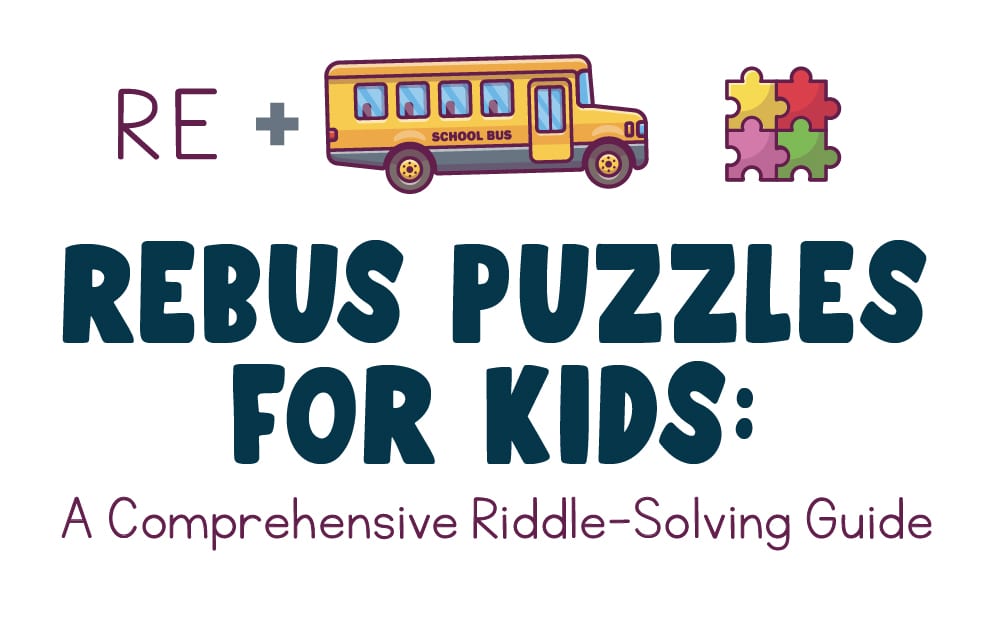
Rebus puzzles for kids are a fun and educational way to build language and thinking skills by combining pictures, letters, and symbols to form words or phrases. They help children improve phonics, vocabulary, and problem-solving while keeping learning playful and engaging. From simple puzzles for younger kids to slightly more challenging ones for older children, rebus puzzles can be used at home, in classrooms, or during travel as a screen-free activity. Easy to create and enjoyable to solve, they offer a creative way for kids to learn, laugh, and develop confidence through interactive play.
If you are looking for rebus puzzles for kids that are genuinely fun and easy to solve, you have landed in the right place. Rebus puzzles use pictures, symbols, and letters to represent words or phrases — and children absolutely love them. They are not just entertaining. They build vocabulary, sharpen critical thinking, and make learning feel like a game. Whether you need them for a classroom, a road trip, or a rainy afternoon at home, this collection of rebus puzzles for children comes with answers so nobody gets stuck for too long.
What Is a Rebus Puzzle? (Simple Explanation for Kids and Parents)
A rebus puzzle is a word puzzle that uses images, letters, numbers, and symbols to spell out a word or a phrase. Instead of reading a sentence, you decode it — which makes it feel more like a game than schoolwork.
For example, a picture of an eye + the letter “T” = IT. Simple, right? That is exactly what makes rebus puzzles so perfect for young learners. They work across different age groups, from kindergarteners just learning to read all the way to older kids who enjoy a trickier challenge.
Teachers use them to build phonics skills. Parents use them to keep kids engaged on long journeys. And kids just think they are fun, which is really the whole point.
Why Rebus Puzzles Are Great for Children
Before jumping into the puzzles themselves, it is worth knowing why these are genuinely good for young brains — not just a way to pass time.
| Benefit | How It Helps Kids |
|---|---|
| Builds phonics awareness | Kids connect sounds to symbols and letters |
| Improves vocabulary | New words are introduced in a playful way |
| Develops problem-solving skills | Children learn to think in creative ways |
| Boosts confidence | Solving a puzzle gives a real sense of achievement |
| Encourages reading | Kids who struggle with text engage more easily |
Rebus puzzles sit perfectly alongside easy riddles for kids and funny riddles for kindergarteners — they tickle the brain without causing frustration.
Easy Rebus Puzzles for Kids With Answers
These easy rebus puzzles are designed for younger children, especially those in early primary school or kindergarten. Each puzzle is described clearly so you can read it aloud or draw it out on paper.
Puzzle 1
🌊 + VE = ? Answer: WAVE (Picture of a wave + the letters VE)
Puzzle 2
👁️ + SCREAM = ? Answer: ICE CREAM (Eye + SCREAM = I SCREAM = ICE CREAM)
Puzzle 3
🐝 + 4 = ? Answer: BEFORE (Bee + Four = Be + Four = Before)
Puzzle 4
⭐ + FISH = ? Answer: STARFISH (Star + Fish = Starfish)
Puzzle 5
🌈 + BOW = ? Answer: RAINBOW (Rain + Bow = Rainbow)
Puzzle 6
🍎 + R = ? Answer: APR (APRIL) (Apple minus PLE + R = April — great for calendar learning)
Puzzle 7
👁️ + ❤️ + U = ? Answer: I LOVE YOU (Eye + Heart + You = I Love You)
This last one is a classic. Kids giggle every single time they figure it out.
Rebus Puzzles for Slightly Older Kids (Ages 7–10)
Once children get comfortable with the basics, they are ready for puzzles that involve a bit more wordplay. These are still fun and accessible but require a little more thinking.
Puzzle 8
🌙 + LIGHT = ? Answer: MOONLIGHT (Moon + Light = Moonlight)
Puzzle 9
🦋 + CUP = ? Answer: BUTTERCUP (Butter + Cup = Buttercup)
Puzzle 10
🔑 + BOARD = ? Answer: KEYBOARD (Key + Board = Keyboard)
Puzzle 11
🐜 + EAT + ER = ? Answer: ANTEATER (Ant + Eat + Er = Anteater)
Puzzle 12
🌻 + FLOWER = ? Answer: SUNFLOWER (Sun + Flower = Sunflower)
Puzzle 13
🍞 + FAST = ? Answer: BREAKFAST (Break + Fast = Breakfast — great for teaching the origin of the word too!)
Puzzle 14
🚗 + PET = ? Answer: CARPET (Car + Pet = Carpet)
Funny Rebus Puzzles for Kindergarteners
These funny riddles for kindergarteners in rebus form are kept super simple and use humor to keep tiny ones giggling while they learn. Read these aloud together and let children guess before revealing the answer.
Puzzle 15
🐸 + _____ = something that makes you laugh Answer: FUN (Frog + UN = FUN) (Frog minus ROG + UN = Fun)
Puzzle 16
🍌 + ANA = ? Answer: BANANA (Ban + Ana = Banana)
Puzzle 17
🧦 + ET = ? Answer: SOCKET (Sock + Et = Socket)
Puzzle 18
🐧 + WIN = ? Answer: PENGUIN (Pen + Guin = Penguin — show picture of a penguin and the letters WIN)
Puzzle 19
🌮 + CO = ? Answer: TACO (Ta + Co = Taco — kids who love tacos solve this one instantly)
Puzzle 20
👃 + Y = ? Answer: NOSY (Nose + Y = Nosy — great for a little laugh)
How to Use Rebus Puzzles in the Classroom or at Home
Whether you are a teacher, a parent, or a tutor, rebus puzzles are incredibly flexible tools. Here are practical ways to bring them into a child’s day:
In the Classroom: Write a rebus puzzle on the board first thing in the morning as a warm-up activity. Give children five minutes to solve it before class begins. It settles the room, focuses young minds, and starts the day with a win.
At Home: Print a set of puzzles and turn it into a weekly puzzle challenge. Keep a simple scoreboard on the fridge. Children who love childrens jigsaw puzzles online and screen-based games often respond brilliantly to having a physical puzzle challenge that rewards them with a silly answer.
On Long Journeys: Read the puzzles aloud in the car. No paper needed. The child listens, thinks, and shouts the answer — instant entertainment that requires zero screen time.
As a Learning Tool: Pair rebus puzzles with phonics lessons. When children are learning specific letter sounds or blends, create custom rebus puzzles that feature those exact sounds. This turns a grammar lesson into a game.
Tips for Creating Your Own Rebus Puzzles With Kids
One of the best things about rebus puzzles is that children can make them too. Creating puzzles is actually harder than solving them, and that extra cognitive effort is incredibly valuable.
Here is a simple process for making them together:
- Pick a word or phrase (start with something the child loves, like their pet’s name or a favourite food)
- Break the word into smaller sound chunks
- Find a picture or emoji for each chunk
- Write it out and swap with a friend to solve
This activity works brilliantly as a paired exercise in classrooms, or as a creative project at home on a weekend afternoon. Kids who make puzzles for their parents are especially proud when the grown-up gets stumped.
Easy Riddles for Kids to Pair With Rebus Puzzles
Sometimes it is fun to mix formats. Here are a few easy riddles for kids that complement the rebus puzzle format and keep the brain-teasing session going:
| Riddle | Answer |
|---|---|
| I have hands but cannot clap. What am I? | A clock |
| I am full of holes but still hold water. What am I? | A sponge |
| The more you take, the more you leave behind. What am I? | Footsteps |
| I have a tail and a head but no body. What am I? | A coin |
| What gets wetter the more it dries? | A towel |
These short riddles pair naturally with rebus puzzles for a complete puzzle session that keeps children engaged for 20 to 30 minutes without any screen time at all.
Conclusion
Rebus puzzles for kids are one of those rare activities that manage to be genuinely educational and genuinely fun at the same time. They build reading skills, encourage creative thinking, and give children the satisfying feeling of cracking a code, all without feeling like schoolwork.
From easy rebus puzzles for kindergarteners to slightly trickier versions for older children, there is a level for every age and every ability. Mix them with easy riddles for kids, use them in the classroom, print them for long car journeys, or make them together as a creative activity.
The best part? The answers are always a little bit silly. And a child who is laughing is a child who is learning.
For more puzzles, riddles, and brain teasers designed specifically for young minds, visit riddlepuzzle.com, your go-to destination for keeping kids curious and entertained.
Frequently Asked Questions
Q1: What are rebus puzzles for kids?
Rebus puzzles for kids are picture-based word puzzles that use images, letters, numbers, and symbols to represent words or phrases. Children decode the images to find the hidden word or sentence, making them a fun and educational activity for young learners.
Q2: What age are rebus puzzles suitable for?
Rebus puzzles work well for children as young as four or five, especially when read aloud by an adult. Easy rebus puzzles with simple picture-plus-letter combinations are ideal for kindergarteners, while more complex versions suit children aged seven to ten and beyond.
Q3: How do rebus puzzles help children learn?
Rebus puzzles build phonics awareness, vocabulary, and problem-solving skills. They encourage children to break words into sounds and connect those sounds to visual symbols, a core skill in early reading development.
Q4: Can I make rebus puzzles at home?
Absolutely. All you need is paper, simple drawings or printed emojis, and a word or phrase to encode. Making puzzles is actually more challenging than solving them, so it is a brilliant creative activity for older children to try.
Q5: Where can I find more rebus puzzles and riddles for kids?
You can find a wide collection of rebus puzzles for children, funny riddles for kindergarteners, and easy riddles for kids at riddlepuzzle.com, updated regularly with new content for different age groups and skill levels.