Five hundred and six players is not a party that fits in a living room. It is a small village turning up at once. Most party formats break down at that size because they ask everyone to do the same thing at the same time, in the same space, and the queue becomes the event. The format in this guide does the opposite: it splits the crowd into stations, keeps every group busy, and lets the day feel like a festival.
The secret is scale through structure. Nine stations run at the same time, each built for a steady flow of players, and teams rotate on a fixed schedule so nobody stands around wondering what happens next. Every game below works with simple kit, clear rules that fit on one card, and scoring that a single captain can run without a spreadsheet. You need space, a timetable, and games that stay fun the fifth time as well as the first.
This guide gives you nine fresh games designed for huge groups, a station plan that keeps 506 players moving, and a checklist that covers the practical details people forget. If your guest list is a touch smaller, our guide to party games for 504 players runs the same station format with a different set of nine games. What follows is built for 506.
Key Takeaways
- Split 506 players into 22 teams and run nine stations at the same time, so every team is always playing, never queuing.
- Give each station one captain, one timer, and one rules card, and rotate teams every 25 minutes on a single whistle.
- Pick games with simple kit and visible scoring, so captains can judge a round in seconds and keep the flow moving.
- Mix noisy, high-energy games with quiet, hands-on crafts, so players can rest between high-energy rounds.
- Score teams across all nine stations and name one overall winner, so every game matters right to the end.

The Nine Games at a Glance
| Game | Players per station | Round time | Main kit |
|---|---|---|---|
| Mega Giant Maraca Shake Rally | 46 | 25 minutes | Maracas, speaker, beat cards |
| Mega Giant Kaleidoscope Spin Rally | 46 | 25 minutes | Kaleidoscopes, colour cards, turntable |
| Mega Human Typewriter Tap Rally | 46 | 25 minutes | Giant key mats, phrase cards, timer |
| Mega Giant Tie-Dye Shirt Rally | 46 | 25 minutes | White shirts, dyes, gloves, trays |
| Giant Wind Chime Build Rally | 46 | 25 minutes | Tubes, cord, frames, mallets |
| Mega Giant Loom Weave Relay | 46 | 25 minutes | Table looms, wool, shuttles |
| Giant Candle Dipping Rally | 46 | 25 minutes | Wax vats, wicks, dipping racks |
| Mega Giant Suncatcher Craft Rally | 46 | 25 minutes | Glass gems, frames, wire, hooks |
| Mega Giant Paper Quilling Rally | 46 | 25 minutes | Paper strips, quilling tools, glue |
The Nine Games
1. Mega Giant Maraca Shake Rally
Two teams of 23 stand opposite each other across a marked area, maracas in hand, while a captain reads beat patterns from a set of cards. The first pattern is a simple four-beat shake, low and steady, and every player has to match it together. Later cards add pauses, double shakes, and a fast finish, and the team that holds its timing through the whole card takes the points.
Run this station with two teams playing at once and a third team judging from the side benches. The judging team marks timing and togetherness on a simple card, then swaps in for the next round. A speaker at the front keeps the beat honest, and the captain claps the tempo before each card. No player needs any prior skill, only a willingness to listen and shake on the count.
Score one point per pattern completed cleanly, with a bonus point when the whole team finishes a fast card without drifting off the beat.
2. Mega Giant Kaleidoscope Spin Rally
Each team gathers around a row of large kaleidoscopes mounted on a slow turntable, with a deck of colour cards turned down at the centre. The captain flips a card showing three colours, and the team has to find a view through a kaleidoscope that holds all three at once, then shout it out and stop the turntable. The first team to call three correct views in a row wins the round.
With 46 players at the station, split the team into viewers, spotters, and callers. Viewers take turns at the scopes, spotters watch the colour cards and shout which colours are still missing, and the caller gives the final word when a view matches.
Score two points for each correct call and lose one point for a wrong call, which keeps teams honest instead of shouting wild answers. The game rewards patience and sharp eyes more than speed,
3. Mega Human Typewriter Tap Rally
Giant key mats are laid out on the ground in two long rows, each key the size of a serving dish, covering the full alphabet plus a space bar. The captain reads out a short phrase, and the team has to tap it out by running to the right keys in the right order, one player per letter, while the next player waits at the start line.
For a station of 46, divide the team into two lines of 23 and run the same phrase as a head-to-head race. The captain holds up phrase cards so the whole team can see the phrase, and a judge at the far end checks each tap against the card. Mistakes cost five seconds, added at the end,
Score the fastest clean run of the round, with three phrases per team in each 25-minute slot. The fastest runners are not always the quickest with letters, and the team has to think as a group while moving as individuals.
4. Mega Giant Tie-Dye Shirt Rally
Each team gets a table stacked with plain white shirts, dye bottles in six colours, elastic ties, gloves, and trays for the drips. The captain shows a pattern card, spiral, stripes, or bullseye, and the team has to twist, tie, and dye a full set of shirts to match it before the timer ends. The shirts are then pegged on a line at the back of the station, where everyone can see the colours soak in.
At this scale, the station works best as a production line. Two players twist, two tie, four dye, and the rest rinse, peg, and check the pattern cards, Use pre-soaked shirts so the dye takes quickly, and label the dye bottles with big colour names.
Score on three things: how close the shirts match the pattern card, how even the colour is, and how tidy the station stays. Teams lose points for dye on the grass, which keeps the tables clean. Every player takes a shirt home at the end of the day, so this is the one station where the prize is something you can wear on Monday.
5. Giant Wind Chime Build Rally
Teams build a working wind chime from a kit of metal tubes, cord, a wooden bar, and a striker, following a diagram card that shows the finished outline. The tubes have to hang at the right lengths to sound a pleasant chord, so the team measures, knots, and adjusts together before the captain gives the signal to hang the chime and let it sound.
With 46 players, split the build into four crews: measurers, knotters, hangers, and testers. The measurers cut cord to the lengths on the diagram, the knotters fix the tubes to the bar, the hangers set the striker and the wind-catcher, and the testers tap each tube and name any tube that sits flat. The captain keeps the diagram visible on a stand at the front, If your guest list runs a little smaller, the same build works at the scale in our guide to party games for 502 players.
Score the chime on three counts: the bar holds firm when lifted, the tubes hang level, and the chord is sweet when the breeze moves it. Give a bonus point to any team whose chime comes through clearly on the first lift, with no retying needed.
6. Mega Giant Loom Weave Relay
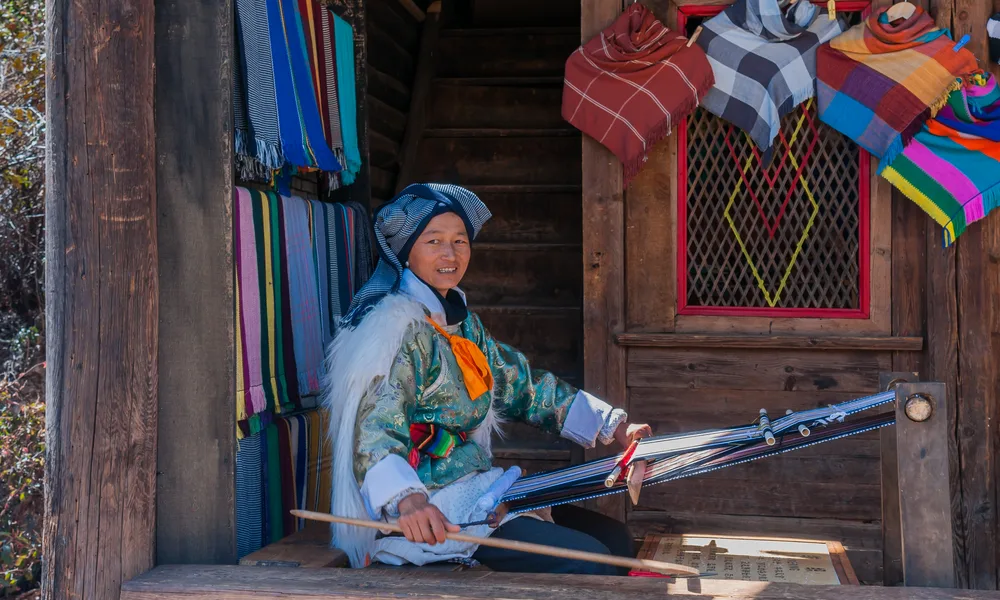
Two table looms stand side by side at this station, each strung and loaded with bright wool in team colours. Players take turns as weavers, passing the shuttle through the threads, beating the row tight, and handing the shuttle to the next player in line. The aim is to finish a full length of cloth in the team pattern, a stripe design shown on a card at the end of the loom,
For 46 players, the line moves fast, so the captain runs a strict handover: the weaver names the colour, passes the shuttle, and steps to the back of the line while the next player steps in. Two helpers keep the wool skeins untangled and the tension even, and a judge at the end of the loom counts the rows against the pattern card.
Score one point per correct stripe row, and take a point away for a row in the wrong colour, which keeps the line focused instead of rushing. The finished lengths are cut from the looms at the end of the day and kept as team keepsakes.
7. Giant Candle Dipping Rally
Long wax vats stand in a row at this station, with dipping racks that hold a full set of wicks at once. Teams dip their racks together, lift, let the wax set for a count of ten, and dip again, building the candles layer by layer. The captain sets the pace, dip, lift, wait, and the team has to move as one, because a rack dipped out of time comes out lopsided.
Safety comes first here, so the station has a fenced dipping area, heat-proof gloves for every player, and a captain who controls the pace. Two teams of 23 work at once, each with its own vat and rack, while a helper checks the wax depth and tops up the vat between rounds. Players swap between dipping, holding the rack steady, and trimming the finished candles,
Score on even thickness, straight candles, and clean racks, with a bonus for the tallest matching pair. Each team takes its candles home, wrapped and labelled, and the best pair from each round goes on display at the main table.
8. Mega Giant Suncatcher Craft Rally
Teams build suncatchers from rims, coloured glass gems, wire, and hooks, following a design card that shows a finished pattern in team colours. The gems have to sit tight in the wire, the rim has to hang level, and the whole piece has to meet the daylight when the captain holds it up to the sky. The work is fiddly and bright.
Split the 46 players into cutters, setters, wirers, and inspectors. Cutters bend the wire to the design card, setters place the gems in order, wirers fix everything to the rim, and inspectors hold each finished piece up to the window and look for gaps. Keep spare gems in labelled trays, because the smallest pieces are the ones that slide off the table.
Score on a tight fit, a level hang, and a bright, even pattern, with a bonus point when a piece meets the daylight without a single loose gem. The finished suncatchers hang in the windows of the main room after the event,
9. Mega Giant Paper Quilling Rally
Paper quilling turns thin strips of coloured paper into coils, scrolls, and shapes, and this station asks teams to build a full picture from them. The design card shows a heart, a spiral, or a diamond, and the team winds strips on quilling tools, pinches them into petals and curls, and glues them onto a sheet in the right places. The work is small and precise.
With 46 players at the table, run the station as a line. Winders make the coils, shapers pinch them into petals and leaves, placers glue them onto the sheet, and a judge compares the sheet to the design card after every row. The captain keeps the glue pots full and the strip trays topped up, and the team swaps jobs every ten minutes so nobody spends the whole round on one step.
Score on a full sheet, neat coils, and a close match to the design card, with a bonus for the tidiest table at the end of the round. The finished sheets go on display beside the suncatchers.
How the Station Plan Works
Twenty-two teams of 23 players cover all 506 places, and nine stations run at the same time. That means nine teams are playing, nine are judging or resting, and four are moving between stations. Every team visits every station once, which takes nine rounds of 25 minutes, plus a short break, so the full circuit fits into a single afternoon.
Each station needs one captain, one timer, and one rules card, and the captain is the only person who calls the score. Captains agree on the scoring cards before the first whistle, so a point means the same thing at every station. A single master whistle starts and ends each round, and team captains carry a printed rotation card. Drinks, shade, and a first-aid point sit in the middle.
Your 506-Player Checklist
- Confirm the venue holds nine stations of 46 players plus walkways and shade, and tour the full circuit before the day starts.
- Print 22 team rotation cards, nine rules cards, and nine scoring cards, and give every station captain a whistle and a timer.
- Pack spare kit for every game, including extra maracas, dye bottles, wool, wax, gems, and paper strips, because 506 players use kit fast.
- Set up the craft stations out of the wind and the noisy stations away from the quiet ones, with clear paths between them.
- Brief all 22 team captains together before the first whistle, so scoring means the same thing at every station.
- Plan the closing ceremony early, with the finished shirts, chimes, cloth, candles, suncatchers, and quilling sheets on display.
Frequently Asked Questions
Can 506 players really play the same nine games?
Yes, because nobody plays all at once in one place. The 506 players split into 22 teams of 23, and nine stations run at the same time, so each game hosts 46 players per round. Every team visits every station once, so each player tries all nine games across the afternoon, just at different times.
What is the best team size for 506 players?
Teams of 23 work best, giving 22 teams in total. That number fits the nine stations cleanly, with nine teams playing, nine resting or judging, and four moving between stations at any moment. Keep the teams mixed by age and ability, with a captain who knows the rotation card by heart.
How much space do we need for 506 players?
Allow a full sports ground or a large park, roughly the size of two football pitches, with room for nine stations, walkways, drinks points, and shade. Each station needs space for 46 players plus onlookers, and the paths between stations must stay clear. Indoors, a large room with marked zones can work, if the venue allows it.
How long does a full day of nine games take?
Nine rounds of 25 minutes come to just under four hours of play, plus a 30-minute break in the middle and time for a welcome and a closing ceremony. Plan for a five-hour day from first whistle to final scores, and start early enough that the craft stations finish in daylight.
What equipment should we buy first?
Buy the kit that is hardest to borrow: the table looms, the wax vats, the kaleidoscopes, and the giant key mats. Maracas, dye, wool, gems, and paper strips are cheap and easy to find in bulk, so order those next. The full kit list fits in a single van, and the same kit serves a smaller crowd too, as our guide to party games for 500 players shows.
What if our guest list is smaller than 506 players?
Scale the teams down, not the games. Keep all nine stations and run them with teams of 18 or 20, which still fills every station and keeps the rotation working. The kit, the rules, and the scoring all stay the same, and the day runs a little faster because smaller teams move more quickly between stations.
The Bottom Line
Five hundred and six players sounds impossible until you stop thinking of it as one crowd and start thinking of it as 22 teams moving through nine stations. The games in this guide are built for that setup: simple kit, clear rules, visible scoring, and a mix of loud and quiet. The best huge-group parties are not the ones with the biggest budget, they are the ones where every single player gets to play, and this plan makes sure that happens.