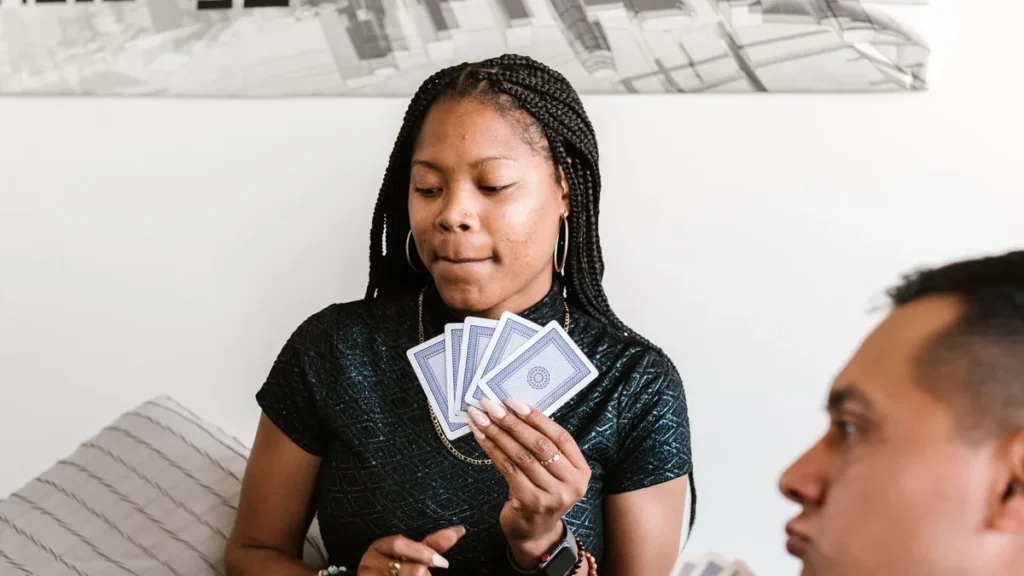
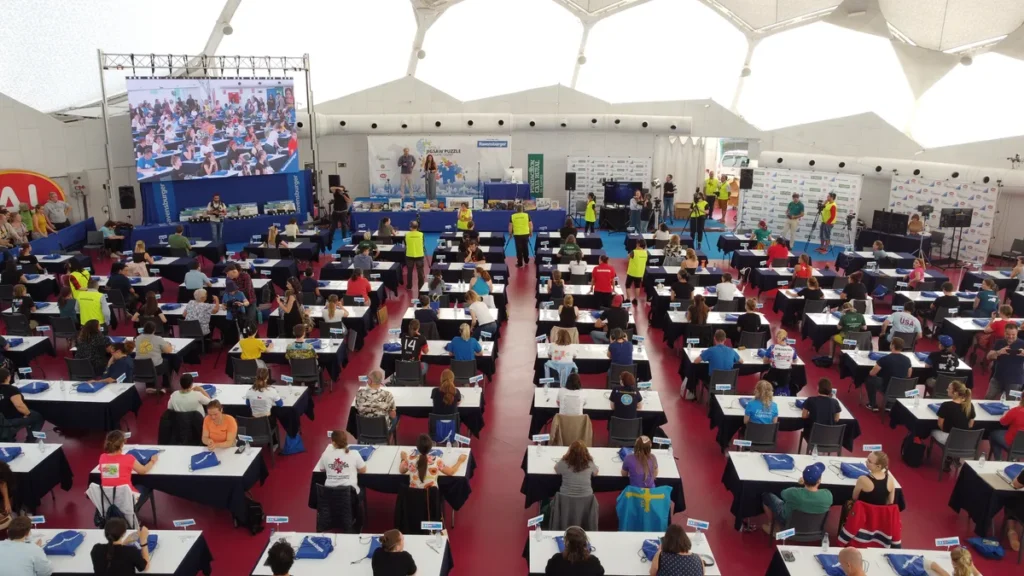
Four hundred and ninety-eight players is not a game night. It is a small town, gathered in one hall, all expecting to play at the same time. One table cannot hold them, and one copy of one game cannot serve them. The only way it works is to think in systems: many tables, many copies, and a short list of games that can run again and again.
The good news is that board games are built for exactly this kind of problem. A game that seats four to six people becomes a building block. Put a hundred of those blocks side by side, give every table the same start time, and 498 people are all playing within ten minutes of the doors opening.
This guide gives you a complete setup plan for 498 players: nine games that suit huge groups, a table plan, a setup routine, a short checklist, and answers to the questions every organiser asks first.
Key Takeaways
- 498 players need about 83 to 125 tables, depending on whether each game seats four, five, or six people.
- Pick games that teach in eight minutes or less, so every table can start on time without a long lesson.
- Run three formats through the night: teams, stations, and a short tournament round.
- Buy or borrow many copies of a few games, rather than one copy of many games.
- Give every table a printed rules sheet and a named table host, so questions never have to travel across the hall.

How 498 Players Play Board Games Together
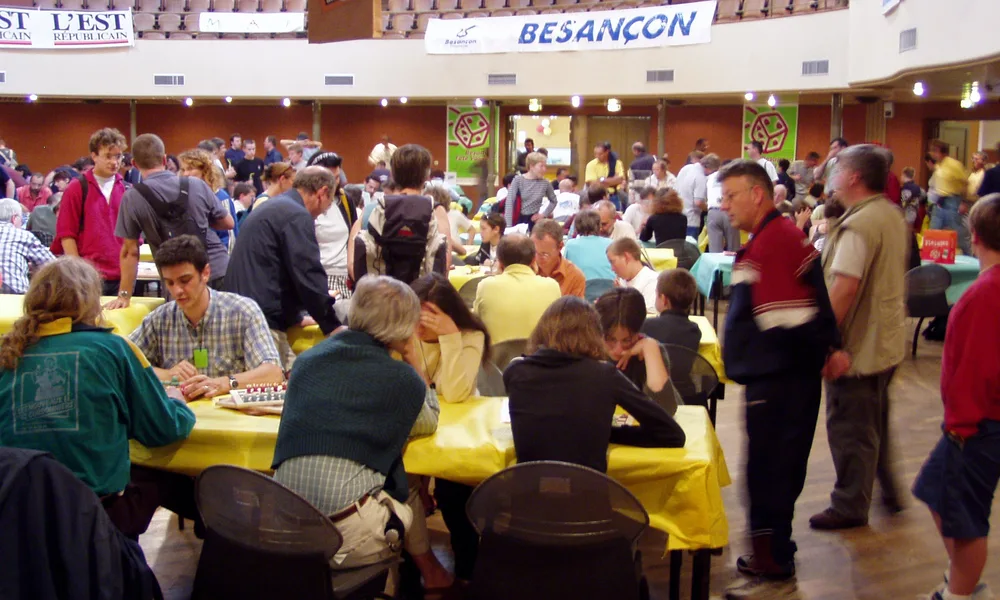
No single board game seats 498 people, and nobody should try to invent one. Split the crowd into tables of four to six, run the same game at many tables at once, and link the tables with a shared scoreboard. A player only needs to know the five people at their own table.
Start every table at the same moment. If tables start whenever they feel ready, half the hall is still learning the rules while the other half is already asking what comes next. Pick a start time, announce it twice, and have the hosts begin teaching five minutes before it. Late arrivals join the next round instead of holding up a table that has already begun. The plan in the 496-player board game guide uses the same three formats, and it works just as well at this size.
The Team Format
The team format is the simplest way to make 498 players feel like one event. Every table plays the same game, and the table’s total score counts as a team score. At the end of the round, the host reads out the top ten scores, and the hall gets a shared result to cheer.
Use the team format for the first round. It is forgiving, because a table that plays badly still contributes a score, and nobody is knocked out. Keep the round to about forty-five minutes, with scoring simple enough for one sheet of paper.
The Station Format
The station format keeps the night moving. Each table is a station with one game set up on it, and the players move while the games stay put. After forty minutes, a bell rings, and each group walks to the next station. Nobody packs a game away, and the next round starts within two minutes.
Stations work best in the middle of the night, once everyone has played one full game. Set up nine stations, one for each game in this guide, and let groups rotate through three or four of them, with a clear sign on each station.
The Tournament Format
The tournament format gives the night a finish worth staying for. After two rounds, take the top two tables from each game and invite them to a short final at the front tables. Everyone else keeps playing, so nobody sits out and watches. The rest of the hall can follow the final on the scoreboard while their own games continue.
Keep the final to thirty minutes, pick a game that is easy to follow from a distance, and announce the finalists by table number, not by name.
The 9 Games at a Glance
The table below gives the quick facts for all nine games. Use it to plan how many copies to buy and which games to teach first.
| Game | Players per table | Teach time | Why it works for 498 players |
|---|---|---|---|
| Bunny Kingdom | 2 to 4 | 5 minutes | Quick drafting and a bright map that new players read at a glance |
| Res Arcana | 2 to 4 | 5 minutes | Eight cards per player, so every table learns the same small hand |
| Roll for the Galaxy | 2 to 5 | 5 minutes | Dice drafting keeps every player busy on every turn |
| Dinosaur Island | 2 to 4 | 8 minutes | A lively theme that gives every table something to talk about |
| Unmatched | 2 to 4 | 3 minutes | Fast duels with clear cards, ideal for the tournament final |
| Dice Throne | 2 to 6 | 5 minutes | Rolling dice and playing cards, easy to teach and hard to stall |
| Smash Up | 2 to 4 | 5 minutes | Silly faction pairs that break the ice at mixed tables |
| Raiders of the North Sea | 2 to 4 | 5 minutes | Worker placement with one clear goal on every turn |
| Cyclades | 2 to 5 | 8 minutes | Auctions and battles that make a strong closing game |
The 9 Best Board Games for 498 Players
Every game below teaches fast, plays well at a small table, and stays fun when a hall full of tables is playing it at once. None of them needs a long rules talk, and none leaves a player waiting ten minutes for a turn.
1. Bunny Kingdom
Bunny Kingdom is a drafting game in which players claim squares on a shared map and build rabbit cities that score for the land around them. Each round, players pick two cards, pass the rest on, and place bunnies on the matching spaces. The scoring is printed on the board, so a host can teach a table in five minutes.
At a hall of 498 players, Bunny Kingdom earns its place because the map is easy to read from across a table, and the drafting keeps every hand moving at the same speed. Buy plenty of copies, because nervous first-timers ask for it by name in the second round.
2. Res Arcana
Res Arcana gives each player a mage, eight cards, and a handful of essence tokens that power their spells. The game is about turning those few cards into points as efficiently as possible, and there is very little to learn before the first turn. A host can teach it in five minutes, and a game takes about half an hour.
For a huge night, Res Arcana is valuable because it is quiet, tidy, and self-contained. Each table needs only a small space, and there is no board to knock over when players rotate. Keep copies at the calm end of the hall, away from the tournament tables.
3. Roll for the Galaxy
Roll for the Galaxy is a dice game in which each player rolls a pool of dice, assigns them secretly to actions, and reveals them all at once. Everyone builds a small space empire by settling worlds and developing technologies, and because all players act at the same time, there is almost no waiting between turns.
In a hall of 498 players, simultaneous play is worth its weight in gold. No table falls behind because one player takes a long turn, and every round ends at roughly the same moment. It seats five at a table, so fewer tables mean fewer hosts to recruit.
4. Dinosaur Island
Dinosaur Island asks players to build their own dinosaur park, hire scientists, clone dinosaurs, and keep the visitors safe — or at least mostly safe. Everyone already understands what a dinosaur park is, so the rules become a short story about buying DNA, building enclosures, and opening the gates. Allow about eight minutes to teach it, but the theme carries players through it.
At a huge event, Dinosaur Island is the crowd-pleaser. Tables laugh at the same jokes, and the park boards give every player something colourful to show off. It works best in the middle of the night, once players are warmed up.
5. Unmatched
Unmatched is a fast fighting game in which each player takes a hero, a small deck of cards, and a miniature, then moves around a small map and attacks their opponent. Every hero plays differently, but the core turn is always the same: move, then play a card to attack or defend. A host can teach it in three minutes, and a game takes about twenty minutes.
For 498 players, Unmatched is the natural choice for the tournament final. It is easy to follow from a distance, and a duel between two finalists makes good viewing. It also works as a filler: a table that finishes early can play a quick duel while it waits for the bell.
6. Dice Throne
Dice Throne turns a duel into a dice game: each player has a hero board, a set of cards, and a handful of dice, and they roll the dice to attack, defend, and trigger special powers. The rules are simple — roll up to three times, keep the dice you like, and read the result off your hero board. A table of new players is rolling dice within five minutes of sitting down.
Dice Throne is the only game in this guide that seats six at a table. Six-player tables cut the total number of tables, and the dice keep the game moving even with a full table. The shared scoreboard idea in the 492-player board game guide works well here, because a table’s total damage and points are easy to add up. Put Dice Throne near the front of the hall, where the sound of rolling dice adds energy to the room.
7. Smash Up
Smash Up is a card game in which each player picks two factions — pirates and ninjas, robots and wizards, or any other unlikely pair — shuffles them together, and fights to control bases. A player only needs to read the cards in front of them, and the combinations create the jokes. A host can explain it in five minutes, and the first base usually falls within ten.
In a hall of 498 players, Smash Up is the icebreaker. Mixed tables of strangers start talking the moment someone plays a pirate ninja, and the game gives shy players an easy way to join in. Keep it at the tables near the entrance, where first-timers sit down.
8. Raiders of the North Sea
Raiders of the North Sea is a worker placement game in which players send Vikings to raid villages, gather supplies, and earn glory. When you place a worker, you pick up the worker that was already there, so every turn does two jobs at once. The goal — raid, return, score — is clear from the first turn. A host can teach it in five minutes, and a game takes about an hour.
For a huge night, Raiders of the North Sea suits the tables that want a proper strategy game without a long lesson. It plays best with four players, and it rewards players who think one turn ahead. It works well as a station in the second half of the night.
9. Cyclades
Cyclades is a game of auctions, fleets, and mythical creatures set in the ancient Greek islands. Each round, players bid for the favour of a god, and the winning god decides what they can do: build, move ships, recruit creatures, or raise an army. Everyone understands bidding, and the gods are printed clearly on the board. Allow eight minutes to teach it, because the first auction deserves a slow walk-through.
Cyclades closes the night well because it is dramatic. Auctions get loud, fleets move across the map, and a table’s fortunes can turn on a single bid. It seats five, which helps the table count. Save it for the later rounds, when the hall is warmed up.
Setting Up 498 Players: The Practical Plan
Start with the tables. With 498 players and four to six players per table, you need between 83 and 125 tables. Plan for 100 tables of five, laid out in rows of ten, with a wide aisle down the middle, so helpers can reach any table in under a minute.
Next, count the copies. Nine games across 100 tables means about eleven copies of each game if you split the hall evenly. In practice, buy more of the quick games and fewer of the slow ones: fourteen copies of Unmatched and Smash Up, eleven of Bunny Kingdom, Res Arcana, and Dice Throne, and eight each of the other four. That gives you roughly a hundred copies in total. The setup advice in the 494-player board game guide uses the same uneven split, and it keeps the popular stations from running dry.
Then recruit the helpers. You need about twelve table hosts, one for every eight or nine tables, plus four floaters who carry spare copies, answer rules questions, and cover breaks. Give every host a printed rules sheet and a bell for the round change, and brief them together thirty minutes before the doors open.
Finally, plan the clock. Open the doors thirty minutes before the first game, so players can find their tables without rushing. Play the team round for forty-five minutes, take a ten-minute break, run two station rounds of forty minutes each, and finish with a thirty-minute tournament final. The whole evening runs about three hours.
Checklist: Your 498-Player Game Night
Work through this list in the week before the night, and again on the morning of the event.
- Book a hall with room for 100 tables, chairs for 498 players, and a wide central aisle.
- Buy or borrow about 100 copies across the nine games, weighted toward the quickest titles.
- Print a rules sheet and a score sheet for every table, plus spares for the tables that lose theirs.
- Recruit twelve table hosts and four floaters, and brief them together before the doors open.
- Set up a visible scoreboard and a bell or whistle for starting and ending each round.
- Pack spare dice, pens, and a small prize for each game’s winning table.
Frequently Asked Questions
Can one board game really seat 498 players?
No, and it does not need to. The crowd splits into tables of four to six players, each table plays its own copy of a game, and the tables are linked by a shared scoreboard.
How many tables do 498 players need?
Between 83 and 125 tables, depending on the game. At five players per table, the usual plan, you need 100 tables. Leave a few spare, because some games play better with four players.
How many helpers do we really need?
About sixteen people: twelve table hosts, one for every eight or nine tables, and four floaters who carry spare copies and answer rules questions.
Which game should we start with?
Start with Smash Up. It is fast, funny, and easy to teach, and it turns nervous arrivals into players within ten minutes. Save the deeper games for the second round, once everyone has played one full game.
What if some tables finish much faster than others?
Give fast tables a short filler: a quick duel of Unmatched, a second game of Smash Up, or a simple scoring challenge while they wait. Never start the next round early for one table, because the hall only works when every table moves together.
How long does a night for 498 players last?
About three hours, including the doors opening thirty minutes before the first game. That covers a forty-five-minute team round, two forty-minute station rounds, a short break, and a thirty-minute tournament final.
The Bottom Line
Running board games for 498 players is a logistics job with a joyful payoff. Split the crowd into tables of five, give every table a game that teaches in eight minutes or less, and keep the rounds moving together with one clock and one scoreboard. Set the hall up the way this plan describes, brief your hosts, and ring the bell on time.