Picture four children crowded around a folded card on a garden step. One of them reads the words out loud while the others lean in. Somebody gasps, somebody points at the shed, and then all four are off running at once. That rush of solving, running, and finding again is the whole game: a trail of small puzzles where each answer sends the children on to the next one, until the last answer leads them to a prize.
Parents and teachers meet this game at birthday parties, on rainy afternoons, and in classrooms at the end of term. It looks simple from the outside, and the best ones are simple. But a puzzle hunt is not quite the same as the other hunting games children play, and knowing what makes it different helps you pick the right game.
The Short Answer
A puzzle hunt is a game where children solve a series of puzzles in order, and every solution tells them where to go next. The first clue might be a riddle whose answer is a place in the house. Hidden there is a second puzzle, perhaps a jumbled-up word, and unscrambling it names the next hiding spot. The chain goes on like that until the final answer reveals the prize: a box of treats, a small gift, or a secret message the children read out together.
Three things make it a puzzle hunt rather than something else. First, the puzzles are different from one another, so a child who struggles with words might shine at spotting details in a picture, and a quiet child might be the one who cracks the code. Second, the puzzles come in a set order, and you cannot skip ahead, because each answer is the key to the next step. Third, the ending ties everything together: the last step is a finish worth reaching, not just another clue. Most hunts for children last between half an hour and an hour, and most use five or six puzzles: long enough to feel like an adventure, short enough to hold attention.
How It Differs From a Scavenger Hunt
The confusion is understandable, because the two games share a lot: hiding places, running about, and a prize at the end. But the heart of each game is different, and children notice the difference straight away. A scavenger hunt is mainly about finding. Players are given a list of objects, or a set of places to visit, and the game is a search: look under things, spot what is on the list, tick it off, and come back. Thinking matters, but the finding is the point.
A puzzle hunt is mainly about solving. The children are not given a list of things to find. They are given a puzzle, and they cannot even begin searching until they have solved it, because the solution is what tells them where to look. Every step has two parts, a puzzle and then a search, and the puzzle part is what makes the game feel like a mystery.
There are other differences that matter when you are choosing. In a scavenger hunt, teams can work through the list in any order, and a team that is stuck on one item can move on to another. In a puzzle hunt, the order is fixed, because each answer opens the next door, so a stuck team needs a hint rather than a new task. A scavenger hunt is easier to run for a large group, because everybody can start at once with the same list, while a puzzle hunt suits a smaller group better. If you want a clear picture of the other game, our guide to what a scavenger hunt is explains the searching game in full.

The Kinds of Clues Children Love Most
The puzzles are the game, so the choice of clue kinds matters more than anything else. A good hunt mixes several of them, so every child gets a turn to be the one who cracks it.
Riddle clues. A short riddle whose answer is a place or an object: something that is always running but never moves, or something with a face that never smiles. Young children love these when the answer is a familiar thing, like a clock or the fridge. Keep them to two or three lines, and make sure the answer is a real place the children can run to.
Picture clues. A close-up photograph of part of an object, or a drawing of a detail, and the children have to work out what it is and where it is. A photo of a door handle or a single flower in the garden sends children racing around looking for the match. Picture clues are perfect for children who cannot read well yet, because they need sharp eyes, not spelling.
Word puzzles. Jumbled letters that spell a place name when they are put in the right order, a word with its vowels missing, or a sentence where the first letter of each word spells a hiding place. Children who love reading and spelling light up at these. Keep the words short, and never hide the answer in a word a child has never seen before.
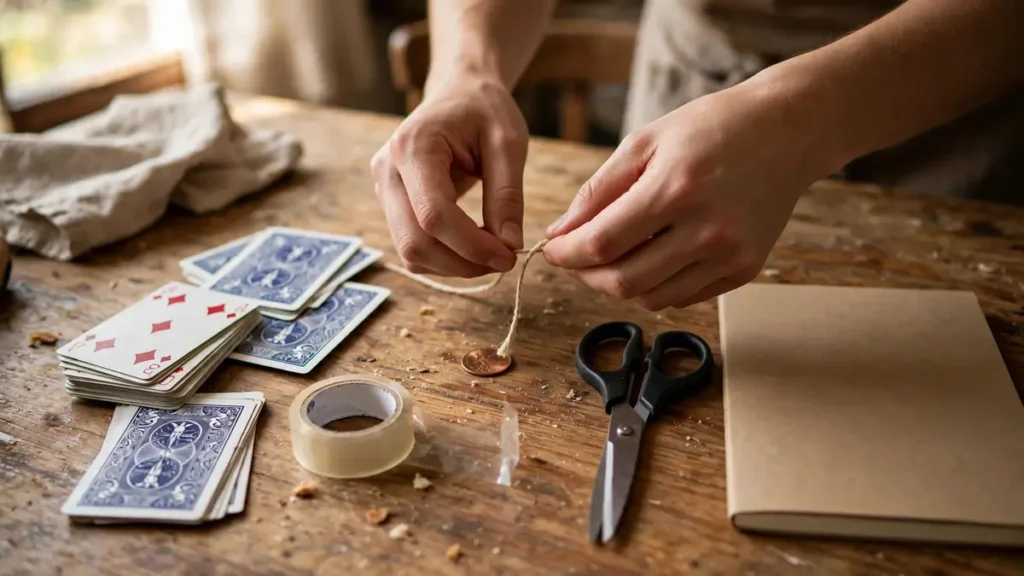
Secret codes. A message written in a simple code, with the key handed over along with the message. A backwards message, a code where each letter is shifted by one place, or a row of numbers where one stands for the first letter of the alphabet. Codes feel like spy work, and children love the drama of decoding a secret message.
Counting and spotting clues. Count the windows on one side of the house and the answer is the number of the next clue, or spot the one thing in a row of pictures that does not belong. These suit children who like careful looking, and they slow a fast team down without frustrating them.
Map and trail clues. A simple hand-drawn map with a marked spot, a trail of arrows, or a set of footsteps leading from one place to another. Children love maps because they feel like real explorers. Keep the map simple, with big landmarks a child can recognise, like the big tree or the red door.
Rhyming clues. Two or four lines of rhyme that point at a place: a verse about the thing that keeps food cold, or the spot where shoes are kept by the door. Rhymes are forgiving: even if a child misses the meaning, the rhythm carries them along, and children chant them as they run.
The golden rule is variety. If every clue is a riddle, the best riddle-solver does all the work. If every clue is a code, the hunt turns into homework. Mix three or four kinds across five or six stops, and every child will have a moment when the answer comes to them first.
What Changes as Children Grow
A hunt for a five-year-old and a hunt for an eleven-year-old are different games, even when they use the same garden. The shape stays the same, but the puzzles and the grown-up’s job both shift with age.
For ages four to six, everything should be big, visual, and physical: picture clues, colour clues, and very short rhymes. Hide things at eye level, where a small child can reach them without climbing, and let a grown-up walk with the team and read any words out loud. Two or three stops are plenty.
Children between seven and nine are ready for genuine puzzles. Word scrambles, simple codes, and short riddles all work now, and teams of three or four can hunt on their own within a safe area, with a grown-up watching from a distance. This is the age where the chain really clicks: children this age love the feeling of earning the next clue.
For ages ten to twelve, the hunt can stretch. Puzzles can have two steps, such as a code that gives a riddle, or a word puzzle whose answer has to be combined with another clue. Older children also enjoy being the hunt-makers for younger children. Teams can cover a bigger area, like a whole park or a school building, and a light theme, such as spies or explorers, adds a lot of pleasure.
Where a Puzzle Hunt Fits Best
At home, a puzzle hunt turns a rainy afternoon into an adventure without any special equipment: a few envelopes, a pen, and hiding places you already have. At a birthday party, it fills an hour between food and cake, because it gets children moving together instead of splitting into small groups. If you are planning a party around a hunt, our guide to hosting a scavenger hunt for kids has party timing and team tips that carry over to a puzzle hunt.
In school, a puzzle hunt is a gentle way to practise reading, spelling, and working as a team, without it feeling like a lesson. Outdoors, a garden or a park gives the hunt room to breathe, with hiding places under a bench or behind a tree. Outdoors needs a clear boundary that children can see, like a fence or a row of trees, and a grown-up at each edge.
A First Hunt in Outline
If you have never run one, here is the whole job in miniature. Start with the finish: decide what the prize is and where it will be hidden. A box of small treats, a new book, or a simple homemade certificate all work, and the prize is best when it can be shared, so nobody feels left out at the end.
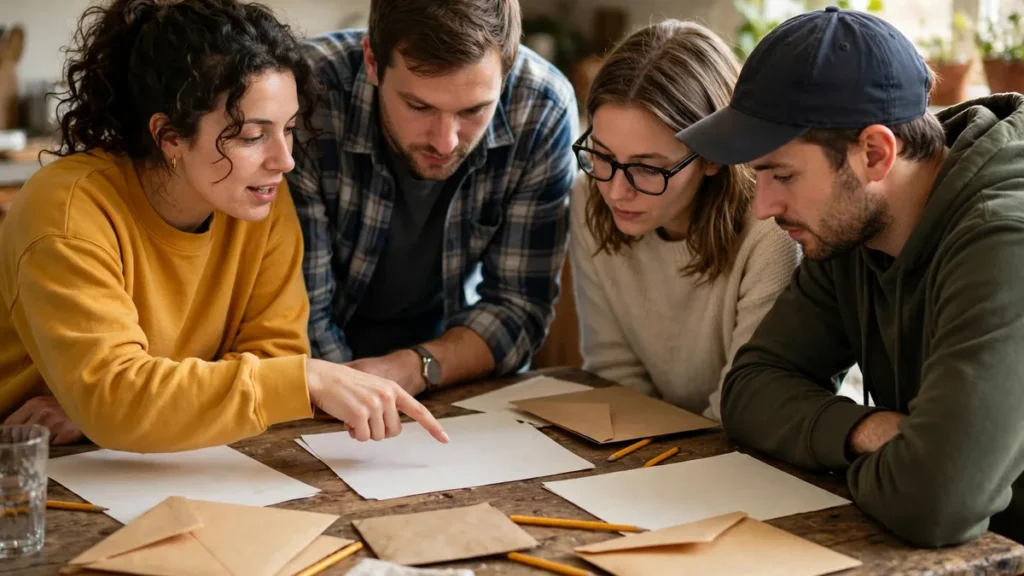
Then work out five or six stops, each with a different kind of puzzle, and write the clues on cards, one per envelope, numbered in order so you can check none is missing. Hide them in the order the children will find them, and walk the route yourself, solving every clue as you go.
On the day, gather the team, read the first clue together, and explain two rules: ask for a hint whenever you are stuck, and stay together as a team. Then let them go and follow at a little distance. When they reach the prize, ask them which clue they liked best: the answer will tell you what to use next time. If you want to build a longer hunt, with a final puzzle that ties all the answers together, our guide to making a puzzle hunt walks through the full maker’s process.
Mistakes That Spoil the Fun
Most hunts that fall flat fail for the same few reasons, and all of them are easy to avoid. The first is a first clue that is too hard. If the team cannot solve the opening puzzle, they never get moving. Make the first clue the easiest one in the hunt, so the team gets a quick win and learns how your clues work. The second is too many stops. A hunt with twelve clues sounds generous, but children tire, and the last few get rushed or skipped. Five or six good stops beat a dozen tired ones. The third is clues with two possible answers. If a riddle could point at two places in the house, half the team will go to the wrong one. Check every clue against its surroundings and make sure only one spot fits. The fourth is hiding places that are too clever: a clue tucked inside a drawer nobody opens will not be found, however good the puzzle was. And the fifth is forgetting hints: tell every team before you start that asking for a hint is allowed.
Questions Parents and Teachers Ask
How long should a puzzle hunt for kids last? About half an hour for younger children and up to an hour for older ones. A hunt that ends while children are still excited leaves them asking for another one.
What if a clue goes missing? Keep a duplicate set of clue cards in an envelope by the entrance. One card always ends up soggy, wind-blown, or chewed by the dog, and the duplicate keeps the game going.
A puzzle hunt for kids is, at its heart, a simple promise: solve a little, move a little, and find a little, until the last answer brings the prize. It needs no special equipment and no great skill from the adult running it, just a handful of good clues, a few kind hiding places, and a team of children ready to think together. Set one up this weekend, keep the first clue easy, and watch what happens when the answer clicks and the whole team runs off at once.