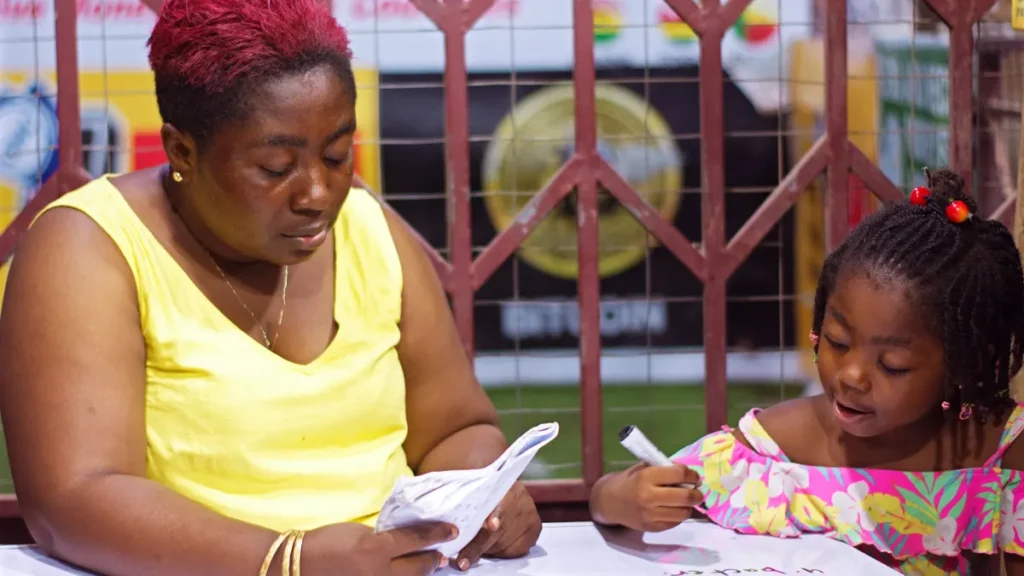
A puzzle you make yourself lands differently from one torn out of a book. The words belong to the child in front of you — the dog’s name, the spelling list from Tuesday, the dinosaur phase that refuses to end. When a solver spots a word they picked themselves, the grin is bigger, and the puzzle takes about ten minutes to build once you know the shape of it.
This guide shows you how to build five kinds that suit children: word searches, crosswords, anagrams, word ladders, and hidden-word puzzles. No software needed, and no drawing skill either. You need squared paper, a pen, a handful of words, and a clear picture of the solver.
The trick is not the grid. The trick is matching the puzzle to the child: the right number of words, the right length, the right amount of help. Get the match right and a seven-year-old finishes feeling clever; get it wrong and the same child gives up halfway down the page. Below is the match, the five builds, and the finishing touches — answer keys, printing, and sharing — that turn one sheet into a little puzzle pack.
Key takeaways
- Build around one child: their age, their reading, their favourite things.
- Five kinds cover most days: word search, crossword, anagram, word ladder, hidden word.
- Keep it short: a child’s puzzle should finish in about ten to fifteen minutes.
- Solve it yourself first, then let someone fresh try it before the child sees it.
- Print the answers on a separate page.

Start With the Child, Not the Grid
Settle the solver first, before you draw anything. Jot the child’s name and age at the top of a scrap page, then add two more notes: what they can read without help, and how long they will happily sit. What delights an eleven-year-old will overwhelm a six-year-old, and what suits a six-year-old will bore an older child in under a minute.
Themes do the heavy lifting. Ask what has the child buzzing this week — dinosaurs, dogs, space rockets, baking — and let that answer pick the words. A solver who chose the theme brings their own energy to the hunt.
Keep the list short and familiar. Ten words is plenty, and every word should be one the solver has seen before and can say out loud without stumbling. If every word needs sounding out letter by letter before the hunt starts, the puzzle has already turned into homework. Drop any pair that differs by a single letter, and drop a short word that hides inside a longer one on the same list, because the solver can never be sure which one they found.
Pick the Right Puzzle for the Age
Go by reading, not by birthday. A confident seven-year-old reader can tackle a larger puzzle than a nine-year-old who still sounds words out, so treat the ages below as a rough guide and adjust to the child you know.
| Age | Good first puzzle | Words | Minutes |
|---|---|---|---|
| 4–5 | Picture anagrams and hidden words | 3–4 | 5 |
| 6–7 | Word search and word ladder | 5–6 | 10 |
| 8–9 | Crossword and anagrams | 8–10 | 15 |
| 10–12 | Mixed pack of three kinds | 12–15 | 15 |
For the youngest solvers, finishing matters more than struggling. Give a four-year-old three short words on a roomy grid, stay beside them, tap the starting letter, and let them follow it with a chunky crayon.
Older children want the opposite: a puzzle that makes them think. From about ten, mix the kinds on three pages and let the solver choose the order. Choice is part of the game at that age.
Five Kinds You Can Build Tonight
These five cover nearly every puzzle a child will ask for. Each starts with the same short word list and hides the words in a different way — build the easiest first.
1. Word search: letters hiding in a square
A word search is the gentlest starting point, and the kind most children meet first. Draw a square on squared paper — seven across suits a young solver, twelve suits an older one — and lay the longest word along the top row or down the left edge. Fit the remaining words in beside it, reading across or down, and let words share a letter where they meet. Fill the empty squares with whatever letters you fancy, then scan every row and column to check no extra word from your list has appeared by accident. Hand the solver the list beside the square, in alphabetical order, with a small box beside each word for ticking off.
If word searches become your child’s favourite, our full guide to making a word search for kids goes deeper on grid sizes and checks.
2. Crossword: answers that lock together
A crossword feels like a bigger win, because every answer leans on another one. Choose six to ten short answers and put the longest across the middle of the square. Add the next answer so it crosses the first where a letter matches, and carry on until nothing stands alone. Colour the unused squares black. Then write a clue for every answer. The kindest clues for children are one plain fact plus the length in brackets, such as “It buzzes and makes honey (3)” for BEE. For a solver who cannot read yet, a small sketch beside the number does the same job.
The full crossword walkthrough for kids shows a finished farmyard grid you can copy for your first try.
3. Anagram: shuffle the letters
An anagram needs no grid at all, which makes it the quickest puzzle to build. Write the answer, then reorder its letters by hand: CARE becomes RACE, STOP becomes POTS, EAT becomes TEA. Check the jumble has not turned into some other real word by mistake, because a solver who offers that word has still solved it fairly. For younger solvers, keep the words to four or five letters and give a small hint alongside, like “Something you drink (3): AET”. For older children, scramble longer words, or a full phrase with just the theme to guide them. Anagrams fit on a card, a lunchbox note, or a party bag tag.
4. Word ladder: stepping from word to word
A ladder starts with one word and ends with another, changing a single letter at each step, and every step must be a real word. CAT becomes DOG in three moves: CAT, COT, DOT, DOG. To build your own, pick a first word and a last word of matching length, then find the chain between them first, before anyone else sees the page. Put the first word at the top of the page and the last word at the bottom, with empty lines between them for the solver to complete. For children, three or four steps is plenty, using words they already know, and check the chain yourself, because a rung with no answer breaks the ladder.
5. Hidden-word puzzle: words tucked inside plain sight
Hidden-word puzzles ask the solver to spot words hiding inside ordinary sentences, or to read the first letter of each line. Write a short verse about the birthday child, with the first letters of the lines spelling their name or the word PARTY. Or hide answers inside sentences: “I ordered a sandwich” holds RED, and “The cat sat on the mat” holds CATS if you look across the join. These puzzles suit children who love secrets, and they cost nothing to make — a pencil and four lines is a finished puzzle. Keep the hidden words short and the sentences natural, so the solver feels clever rather than tricked.
Build a Puzzle Pack, Not a Single Sheet
One puzzle is a page; three puzzles is a gift. Once you have a kind the child likes, build a little set: one easy win, one stretch, one silly finish. Put the easy one first, because a quick win early keeps a solver going when the middle puzzle gets tricky. Give the pack a cover page with the child’s name on it and a contents line naming each puzzle inside. Three pages is enough; a thick pack feels like homework.

Order the pages so the difficulty rises gently, and keep the whole pack near fifteen minutes of solving. If one puzzle runs long, trim it rather than adding a fourth page. A solver who finishes a pack asks for another one.
Answer Keys That Actually Help
Every puzzle needs answers, and the key belongs on its own page at the back — never on the same sheet as the puzzle. For a word search, draw the finished grid with the words circled; for a crossword, write the answers beside their numbers; for anagrams and ladders, list the answers in order. For hidden words, underline the hiding place inside each sentence so the solver can see exactly where the word sat.
For a party or a classroom, print the key on a separate sheet the adult keeps, handed out only when the solving is done. A solver who checks their own work feels trusted, and the separate page keeps peeking accidents away.
Print It, Share It, Keep It
Print one puzzle per page in large type, on paper thick enough that a crayon does not show through. Leave wide margins and the backs blank, so circling stays tidy and pencil does not press through.
A pack travels well: party bag, car journey, rainy afternoon at grandma’s, classroom tray. For a class, print one pack per child with each child’s name on the cover — a puzzle with your name on it is a different thing from a worksheet. Keep a copy of every pack in a folder — a good word list deserves a second outing.
Test-Solve Before You Hand It Over
Solve your own puzzle once before anyone else sees it, and time yourself. Then hand it to someone fresh — a partner, an older sibling, a neighbour — and watch where they slow down. A pause tells you where the puzzle is unclear, and one fix there is worth an hour of extra words. Err on the easy side: a puzzle a child finishes proudly beats one they abandon halfway.
Mistakes That Spoil a Good Puzzle
- Lookalike words on the same list: CAT and CAP, BEAR and PEAR. Keep one, drop the other.
- A little word tucked inside a big one: SUN inside SUNNY, ANT inside PANTS. One of them leaves the list.
- Directions that change too soon: backwards and diagonal words belong in puzzles for solvers of ten and up.
- Clues that need grown-up knowledge: a clue about a film the child has never seen is a dead end, however clever it feels.
- Squares too small to write in: if a capital letter does not fit in a square, the grid is too tight.
A Puzzle Made for One Child
Start small: one child, one theme, one kind of puzzle, built tonight. When that one works, add a second kind, then a third, until you have a pack with the child’s name on the cover. The puzzles that get remembered are not the hardest ones. They are the ones where the solver found their own words, in their own puzzle, and finished it themselves.
And when the solver outgrows these, the grown-up version of this guide, how to make a word puzzle, covers the trickier kinds, like cryptograms, for the next step up.
Frequently Asked Questions
What age can a child start word puzzles?
From about four, with picture clues and three-letter words. A four-year-old can hunt for CAT in a five-by-five square while you sit alongside; a six-year-old can manage a small word search alone.
How many words should a puzzle for kids have?
Five or six for a six-year-old, eight to ten for an eight-year-old, and twelve to fifteen for a solver of ten or more. Fewer words, well chosen, beat a long list every time.
Should I give hints?
Yes, especially at first. A hint beside a hard clue, a starting letter marked on the grid, or a word bank at the top of the page all keep a young solver going. Ease the help away as the child grows confident.
Can I reuse a puzzle for a second child?
You can reuse the grid, but change the words. A puzzle built around one child’s name and favourites feels personal; the same grid with a new theme feels fresh.


