
There is a chair in the corner of the community hall that nobody else sits in on a Thursday. It is not the best chair. It is near the radiator, a little too close to the door, and the cushion has gone flat on one side. But it belongs to a woman called Rose, and Rose has sat in it every Thursday for three years, through the week her husband died, and she came back the Thursday after the funeral. She did not come back for the questions. She came back because the chair was hers, because the people at her table would notice if it stayed empty, and because Thursday without that room in it had started to feel like a week with a page torn out.
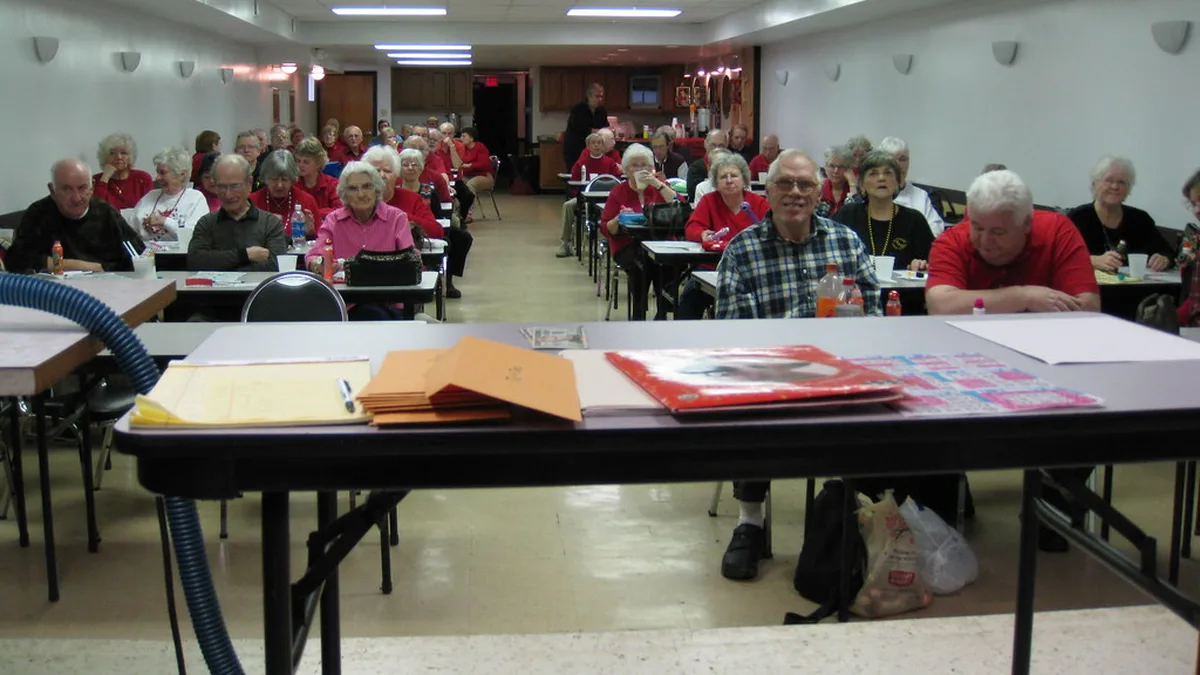
Ask the regulars at a seniors’ trivia night why they keep coming and almost nobody starts with the quiz. They talk about the table. They talk about the table, the tea before the first round, the song from 1962 nobody can place until someone hums the chorus. The questions are the excuse. The evening is the reason. A trivia night gives older people four things that are surprisingly hard to find anywhere else after sixty: a place where a lifetime of knowing things still counts, a way of remembering that feels like pleasure instead of a test, a fixed point in the week, and a room where the generations meet as equals.
Key takeaways
- Seniors love trivia nights for belonging first and questions second — the table, the regulars and the routine matter more than the score.
- A quiz is one of the few places where decades of lived knowledge are an advantage rather than something the world has moved past.
- Remembering inside a game feels like pleasure, not a test, because a wrong answer costs nothing and a right one is shared.
- A fixed weekly night gives the week a shape, and the table gives people a reason to be noticed when they are absent.
- Trivia is one of the rare rooms where grandchildren and grandparents meet as equals, each knowing things the other does not.
A Lifetime Finally Counts for Something
There is a particular kind of invisibility that arrives with old age, and it is rarely cruel. It is quieter than that. The world starts treating your knowledge as history rather than information, something to be fond of rather than used. Then Thursday comes, and a question lands about the year a particular train line closed, or the singer whose records your mother played on a Sunday, or the price of a loaf in 1974, and you are suddenly the only person in the room who knows. Not the cleverest person. The only one. And the table turns to you.
That moment is worth more than it looks like from the outside. A quiz night is one of the few rooms left where sixty years of accumulated, unsorted, gloriously ordinary knowledge is not a curiosity but a currency. Nobody else at the table lived through the same decades in the same streets. The questions reach into exactly that store, and every correct answer is a small, public confirmation that a life of paying attention added up to something.
It matters that the knowledge is ordinary. A trivia night does not ask anyone to be a professor. It asks who sang the theme tune, what colour the buses were, which team won the cup in the year your son was born. These are the facts a person picks up without trying, simply by living a long time in one place, and that is the point. The game rewards the very thing old age is supposed to have taken away: relevance. The younger players at a mixed table often discover this with some surprise, watching a woman of eighty-four supply the answer about a film they have never heard of, and the surprise itself is a compliment. She is not being humoured. She is being needed. The trivia games for seniors that work best understand this instinctively: they are built around the eras their players actually lived through, and they treat a lifetime of memory as the main event rather than a consolation prize.
Memory Stops Feeling Like a Test
Here is the strange thing about remembering after seventy. In ordinary life, forgetting has become a source of low, constant anxiety. Every lapse invites the same unspoken question, from yourself as much as anyone else: is this the start of something worse? Memory stops being a pleasure and becomes something you are quietly graded on.
A trivia night takes that fear and turns it inside out. Forgetting is not a failure there; it is the whole game. Everybody forgets, loudly, in public, several times an evening, and the forgetting is funny rather than frightening. A forgotten name is chased together, found together, and remembered together next week. The two of them will remember it together next week, and that shared remembering is worth more than either of them getting it right alone. The stakes are gone.
What surprises newcomers is how much actually comes back in that atmosphere. A question acts like a key turning in a lock that has not been tried for years. One small fact pulls a whole chain of others behind it, and suddenly a player is telling a story the table has never heard, about a holiday in 1958 or a first job that paid two pounds a week. The question was only the trigger. The memory was the point, and the telling of it is the pleasure.
The Week Gets Something to Lean On
Retirement is often described as freedom, and in some ways it is. But freedom, stretched across seven empty days a week, can turn into something else: a long, flat stretch of time with nothing in it that has to happen. The working week had a shape — Monday, the commute, Friday, the weekend — and when that shape goes, the days start to bleed into one another.
A trivia night is a peg in the wall of the week, and people hang a surprising amount on it. The day itself gains a small ceremony: the walk, the arrival, the same table, the same faces, the same opening joke from the host. They give a retired life a reason to get dressed properly and a place to be at a particular hour.
That regularity does something else, something quieter and more important: it makes absence visible. If Rose is not in her chair on Thursday, people notice, and by Friday someone has rung her. If a man who always brings the biscuits does not turn up for two weeks, a neighbour knocks on his door. It is simply what happens when the same people meet in the same place at the same time, week after week: the group becomes a net, and the net catches people before they fall very far.
The Grandchildren Finally Ask Questions
There is a scene I have watched more than once at family quiz nights, and it never gets old. A grandchild of about fourteen, who has spent the whole visit answering questions with one-word grunts and looking at a phone, suddenly looks up, because the question is about a band from the seventies. And the person who knows the answer is sitting right next to them: a grandparent they have always thought of as someone who tells them to sit up straight and asks about school.
This is a rarer gift than it sounds. The generations mostly meet now on the younger generation’s terms: the grandchild explains the phone, the grandparent nods and tries to follow. At a trivia table the current reverses, and for an hour the older person is the expert and the younger one is the student. It changes the temperature between them. A grandchild who has watched a grandparent answer five questions in a row goes home thinking of them as someone who knows things.
The exchange runs both ways, and that is what makes it honest. The grandchild knows the answers about the modern world — the apps, the singers, the slang — and the grandparent is genuinely glad to learn them, because the grandchild is teaching without condescension and the grandparent is learning without shame. A good mixed-age table is not a contest between eras. It is a trade. Your decade for mine, your memory for my news, and both of us a little wider by the end of the evening than we were at the start.
The Table Matters More Than the Score
If you want to know what a trivia night is really for, watch what happens when the scores are read out. The winning team gets its small round of applause, its paper certificate or its box of biscuits, and then — this is the telling part — nobody leaves. The host stays to stack the chairs, and people stay to help, because the evening is not over when the quiz ends.
This is the part that why trivia nights bring people together gets right for players of every age, and it is doubly true after sixty. Loneliness in later life is not usually dramatic. It does not arrive as a crisis. A weekly table pushes back against that thinning in the most ordinary way possible, by putting the same faces in the same room and letting conversation do what conversation has always done.
The table also does something a family cannot always do. A family loves you, but a family has its own claims on you: the worries, the expectations, the old roles you have been playing since you were forty. A quiz table knows you only as a teammate. It does not need you to be anything except present, interested, and willing to argue about the answer. You are not a burden there. You are a player, and the team is weaker without you.
It Is Not Really About Keeping Sharp
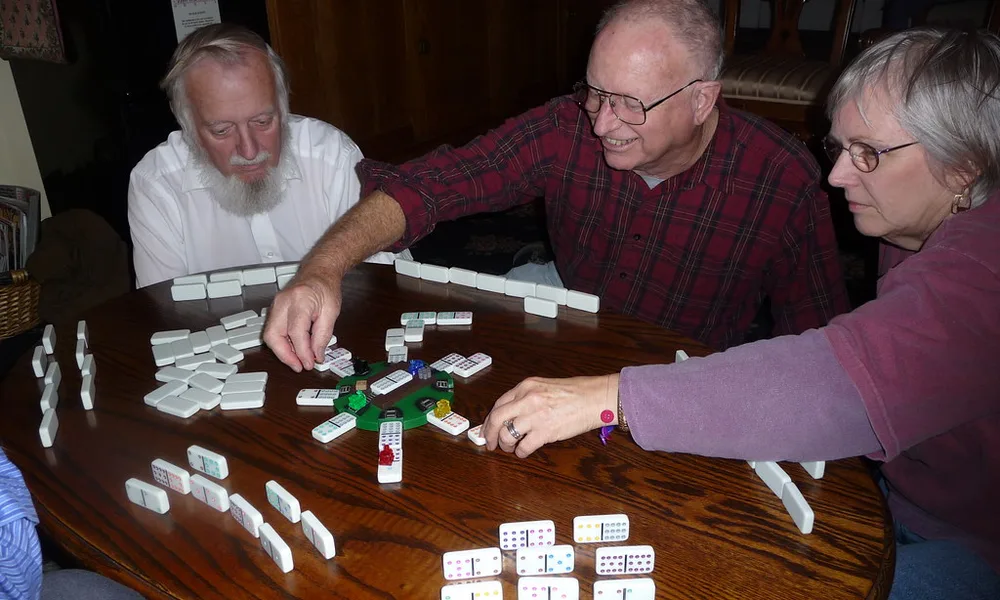
We should be honest about the brain-training argument, because it is repeated so often that it has started to sound like the whole story, and it is not. Yes, remembering things is good for the mind. But if sharpness were the point, people would do crosswords alone at the kitchen table, which is cheaper, quieter and available at any hour. They get dressed, they travel, they sit in a draughty hall, because the sharpness is not the prize. The prize is being in a room where sharpness is noticed, applauded, and shared with other people who understand what it cost to remember that name.
Treating the night as medicine also does the players a quiet disservice. Nobody must go to a quiz. That is precisely the point: the night is chosen, week after week, by people who have every right to stay home, and the choosing is the compliment.
There is a better way to say it. A trivia night is not a treatment for old age. It is a refusal of one of old age’s cruellest suggestions: that your best evenings are behind you, that your knowledge is out of date, that the interesting part of your life is something other people will read about later. The room disagrees, out loud, every Thursday.
The people who come are not coming for a quiz. They are coming for the table, for the week to have a shape, for the chance to be the person who knows, and for the laughter that follows being gloriously wrong together. Planning a trivia night for seniors is mostly the work of protecting those things — the same table, the same faces, the same Thursday — and then getting out of the way.
Frequently Asked Questions
Why do seniors enjoy trivia nights so much?
Because a quiz night offers belonging first and questions second: a regular occasion where a lifetime of knowledge is genuinely useful, remembering feels like fun rather than a test, and the same faces become friends.
Is trivia night good for older people?
Yes: it gets people out of the house, talking, laughing and thinking together. The mental exercise is real, but most regulars would say the company and the routine are what keep them coming back.
Can grandchildren join a seniors’ trivia night?
They can, and mixed-age tables are often the warmest nights of all. Grandchildren bring knowledge of the modern world, grandparents bring the decades before it, and the trade between them gives both generations a reason to listen to each other.


