Short riddles with answers are a fun and effective way to sharpen logical thinking, creativity, and problem-solving skills in just a few seconds. From clever one-liners to classic brain teasers, these quick puzzles challenge assumptions, improve lateral thinking, and deliver satisfying “aha” moments for kids and adults alike. Perfect for classrooms, game nights, social media, or daily mental workouts.
Short riddles with answers are one of the most satisfying ways to give your brain a quick jolt, whether you are looking for a sharp icebreaker, a classroom warm-up, or just a moment of clever fun between tasks. They tease your logic, play with your assumptions, and reward you with that unmistakable “aha” moment the second the answer clicks.
This collection brings together the best one liner riddles, quick brain teasers, and simple short riddles for every level, from easy warm-ups to clever head-scratchers. Every riddle comes with its answer, so scroll slowly if you want to solve them yourself first.
Why Short Riddles Are Good for Your Brain
Before diving in, here is why these tiny puzzles pack a real punch.
Short riddles force your brain to reject its first instinct and think sideways. Most riddles deliberately word themselves to lead you toward the wrong answer, which means solving one successfully requires you to override your default thinking pattern. That is a genuine cognitive workout compressed into a single sentence.
Riddles improve lateral thinking, pattern recognition, and creative problem-solving. They also enhance concentration, memory, and critical thinking skills while keeping the learning process enjoyable and engaging. For kids, they build vocabulary and logical reasoning. For adults, they break mental routine and sharpen focus.
The best part? You do not need an hour. A single good riddle can reset your thinking in under a minute.
Section 1: Easy Short Riddles With Answers (Perfect Warm-Ups)
These simple short riddles are the ideal starting point. They feel obvious once you know the answer, which makes them especially satisfying to share with someone who has not heard them.
Riddle 1: What has to be broken before you can use it? Answer: An egg.
Riddle 2: I am tall when I am young and short when I am old. What am I? Answer: A candle.
Riddle 3: What month of the year has 28 days? Answer: All of them.
Riddle 4: What is full of holes but still holds water? Answer: A sponge.
Riddle 5: It belongs to you, but your friends use it more than you do. What is it? Answer: Your name.
Riddle 6: What has hands and a face but cannot hold anything or smile? Answer: A clock.
Riddle 7: What goes up but never comes down? Answer: Age.
Riddle 8: I have cities but no houses, rivers but no water, and forests but no trees. What am I? Answer: A map.
Section 2: One Liner Riddles That Hit Differently
These one liner riddles are lean, punchy, and designed to make you stop and think. They work brilliantly as conversation starters, social media posts, or quick-fire rounds at any gathering.
Riddle 9: The more you take from me, the bigger I get. What am I? Answer: A hole.
Riddle 10: I speak without a mouth and hear without ears. What am I? Answer: An echo.
Riddle 11: I am always in front of you but can never be seen. What am I? Answer: The future.
Riddle 12: I am always running but never move. What am I? Answer: Time.
Riddle 13: The more of me you share, the less you have. What am I? Answer: A secret.
Riddle 14: I am light as a feather, yet the strongest person cannot hold me for more than a few minutes. What am I? Answer: Breath.
Riddle 15: I can travel around the world while staying in a corner. What am I? Answer: A stamp.
Riddle 16: I have no beginning, end, or middle. What am I? Answer: A circle.
Section 3: Quick Brain Teasers With a Twist
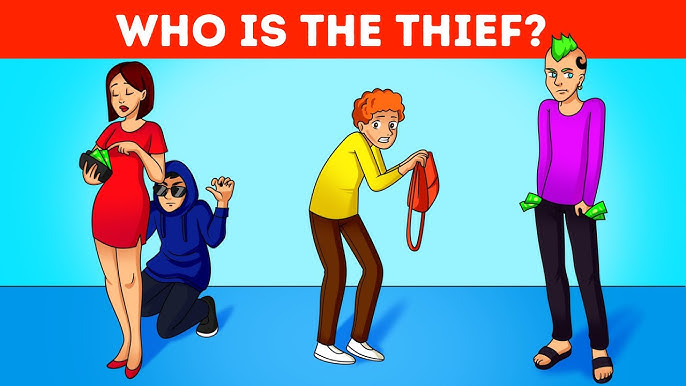
These quick brain teasers are slightly trickier. They use wordplay, misdirection, and clever framing to lead your brain one way while the answer hides in plain sight. These are the ones people argue about.
Riddle 17: There’s a one-story house where everything is yellow. The walls, the furniture, the beds, the couches. What color are the stairs? Answer: There are no stairs. It is a one-story house.
Riddle 18: A girl fell off a 20-foot ladder. She was not hurt. How? Answer: She fell off the bottom step.
Riddle 19: Two people were playing chess. They both won. How is this possible? Answer: They were playing two different games against different opponents.
Riddle 20: Mississippi has four S’s and four I’s. Can you spell that without using S or I? Answer: T-H-A-T.
Riddle 21: The person who makes me sells me. The person who buys me never uses me. The person who uses me never knows they are using me. What am I? Answer: A coffin.
Riddle 22: There is only one word in the dictionary that is spelled wrong. What is it? Answer: The word “wrong.” It is the only word spelled W-R-O-N-G.
Riddle 23: I get smaller every time I take a bath. What am I? Answer: A bar of soap.
Riddle 24: What begins with T, ends with T, and is filled with T? Answer: A teapot.
Section 4: Classic Riddles Everyone Should Know
No collection of short riddles with answers is complete without the timeless classics. These have stood the test of centuries because they are perfectly constructed. Even if you have heard them before, they are worth revisiting.
Riddle 25: I am always hungry and must always be fed. The finger I touch will soon turn red. What am I? Answer: Fire.
Riddle 26: I am taken from a mine, locked in a wooden case, and used by almost everyone. What am I? Answer: A pencil.
Riddle 27: What has a head, a tail, but no body and no legs? Answer: A coin.
Riddle 28: I have no mouth but I can still talk. I often repeat but I never argue. What am I? Answer: An echo.
Riddle 29: What has keys but no locks, space but no room, and you can enter but cannot go inside? Answer: A keyboard.
Riddle 30: I am not a teacher, but I have helped millions learn to write. What am I? Answer: A pencil.
Tips for Using Riddles as a Brain Boost
Getting the most out of these quick brain teasers is simple, but a few habits make the experience sharper.
Pause before scrolling. Give yourself at least 15 to 20 seconds on each riddle before checking the answer. That pause is where the real cognitive work happens.
Share them out loud. Reading a riddle to someone else forces you to think about timing, phrasing, and delivery. It also multiplies the fun.
Use them as daily warm-ups. Three riddles in the morning is a lightweight mental habit that genuinely improves lateral thinking over time. It takes under two minutes and sets a problem-solving mindset for the rest of the day.
Revisit the ones that stumped you. The riddles that fool you once rarely fool you again, but they reveal something interesting about how your default thinking patterns work.
Riddle Difficulty Guide at a Glance
| Difficulty | Best For | Example Riddle |
|---|---|---|
| Easy | Kids, warm-ups, icebreakers | What has to be broken before you can use it? |
| Medium | Families, classrooms, game nights | The more you take, the bigger I get. |
| Tricky | Adults, team challenges, social media | Two people played chess. Both won. How? |
| Classic | All ages, any occasion | I am always hungry and must be fed. |
Conclusion
Short riddles with answers are one of the fastest and most enjoyable ways to give your brain a genuine workout. Whether you are using them as one liner riddles for a quick laugh, quick brain teasers for a team warm-up, or simple short riddles to entertain kids on a car journey, the format is endlessly flexible and universally satisfying.
The 38 riddles in this collection cover every level and every occasion. Some will come to you immediately. Others will make you stare at the screen for a good thirty seconds. Both reactions mean your brain is working exactly the way it should.
Want more riddles, puzzle collections, and brain teaser challenges? Visit riddlepuzzle.com for fresh puzzles updated regularly, organized by difficulty, age group, and type so you can always find exactly the challenge you are looking for.
Frequently Asked Questions (FAQs)
Q1: What are short riddles with answers?
Short riddles are brief, cleverly worded questions or statements designed to make you think sideways. They typically consist of one to three sentences and have a single, satisfying answer that often surprises you.
Q2: Are short riddles good for kids?
Yes. Short riddles are excellent for children because they build vocabulary, improve logical thinking, and make learning playful. They work well for ages 5 and up, with difficulty adjustable to suit any age group.
Q3: How do riddles help the brain?
Riddles improve lateral thinking, pattern recognition, creative problem-solving, concentration, and memory. Solving them regularly helps train the brain to approach problems from multiple angles rather than defaulting to the obvious answer.
Q4: Where can I use short riddles?
Short riddles work well in classrooms as warm-ups, at family game nights, on road trips, as social media content, at team building events, and as daily mental habits for adults who want a quick cognitive boost.
Q5: What is the difference between a riddle and a brain teaser?
Riddles typically use wordplay, metaphor, or poetic language to describe something indirectly. Brain teasers are broader and often include logic puzzles, math problems, or scenario-based challenges. Short riddles are a subset of brain teasers.