Logic puzzles turn boredom into a rewarding mental challenge by testing reasoning, deduction, and creative thinking. From grid puzzles and nonograms to lateral thinking mysteries and Einstein’s Riddle, these brain exercises improve focus, memory, and problem-solving skills while keeping you entertained. Whether you prefer structured logic or creative twists, solving puzzles is a fun, accessible way to sharpen your mind anytime.
You’re stuck waiting, killing time, or just need a mental escape. What if instead of scrolling mindlessly, you challenged your brain with something that actually feels rewarding? Logic puzzles are exactly that. They’re quick to pick up, satisfying to crack, and quietly powerful for your mind. This post walks you through the best types of logic puzzles to try when boredom strikes, why they work, and how to get started even if you’ve never tried one before.
What Are Logic Puzzles?
A logic puzzle is any problem that requires reasoning, deduction, or structured thinking to reach a solution. Unlike trivia, they don’t test memory. Unlike math problems, they don’t always need numbers. They test how well you think.
Logical thinking puzzles challenge you to work through clues, eliminate wrong answers, and arrive at the only possible correct conclusion. That process is genuinely satisfying, especially when the answer clicks.
Why Solve Logic Puzzles When You’re Bored?
Boredom is actually a signal from your brain that it wants stimulation. Logic puzzles answer that call perfectly.
Here’s what solving them regularly can do for you:
- Improve your ability to focus and concentrate
- Strengthen working memory and pattern recognition
- Build confidence in decision-making
- Offer a genuine sense of accomplishment
Research from cognitive science consistently suggests that mentally engaging activities help keep the brain sharp. While no single activity is a magic solution, logical thinking puzzles are among the most accessible and effective brain workouts available.
Types of Logic Puzzles Worth Trying
1. Classic Grid Logic Puzzles
These are the puzzles where you’re given a set of clues and a grid. You eliminate possibilities until only one arrangement fits.
Example setup: Three friends named Ali, Sara, and James each prefer a different drink (tea, coffee, juice). Using clues like “Ali doesn’t drink coffee” and “Sara drinks something hot,” you figure out who drinks what.
This type sharpens your deductive reasoning and is great for beginners because the structure guides your thinking.
2. Lateral Thinking Puzzles
Lateral thinking puzzles are different. They present a strange or incomplete scenario, and your job is to ask yes-or-no questions to figure out what really happened.
Classic example: “A man walks into a restaurant and orders albatross soup. He takes one sip, goes home, and kills himself. Why?”
The answer involves a surprising backstory. These puzzles are best done with a group but can also be explored solo with pre-written question-and-answer sets.
They build creative reasoning and force you to think beyond the obvious. That skill translates directly to real-life problem solving.
3. Einstein’s Riddle (Zebra Puzzle)
This is one of the most famous reasoning brain teasers ever created. The puzzle gives you 15 clues about five houses, five nationalities, five drinks, five pets, and five hobbies. Your goal is to use those clues to answer one question: who owns the fish?
It’s said that only 2% of people can solve it without help. Whether or not that’s accurate, it’s genuinely challenging. Start with a grid, work through each clue systematically, and enjoy the process even if it takes a while.
4. River Crossing Puzzles
You’ve probably heard of the classic: a farmer needs to cross a river with a fox, a chicken, and a bag of grain. The boat only fits one item at a time. The fox eats the chicken. The chicken eats the grain. How does the farmer get everything across safely?
These logical thinking puzzles are deceptively simple in setup but require sequential planning and the ability to think a few steps ahead.
They’re excellent for training your mind to break complex problems into steps, which is a skill useful well beyond puzzle-solving.
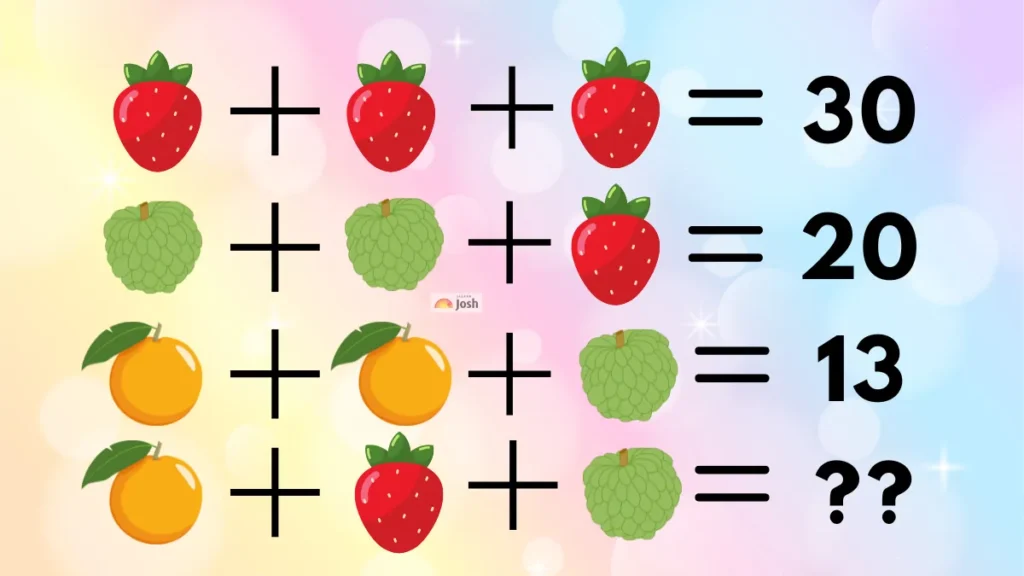
5. Syllogism Puzzles
Syllogisms come from classical logic. You’re given two premises and asked to draw a conclusion.
Example:
- All cats are mammals.
- All mammals breathe air.
- Therefore, all cats breathe air.
Now try it with trickier premises where the conclusion isn’t obvious. These reasoning brain teasers train your brain to distinguish between what is true, what seems true, and what is actually implied by the given information.
6. Nonograms (Picross)
Nonograms are grid-based picture puzzles. Numbers along the rows and columns tell you how many consecutive squares to fill in. Solve the whole grid and a hidden image appears.
They look like art projects but work entirely on logical thinking. Every move must be justified by the given numbers. Guessing is penalized. This makes nonograms a uniquely disciplined form of puzzle solving.
They’re widely available as apps and are great for longer stretches of free time.
7. Murder Mystery Logic Puzzles
A suspect is found at the scene. Several people have alibis. Clues point in different directions. Your job is to identify the guilty party using only the information given.
These blend storytelling with reasoning brain teasers, making them engaging even for people who don’t think of themselves as puzzle lovers. They’re widely available in book form, as apps, and on puzzle websites.
How to Actually Get Better at Logic Puzzles
Most people give up too fast or try to guess instead of reason. Here’s a simple approach that works.
Start with what you know. Don’t try to solve the whole puzzle at once. Identify the one thing you’re certain of and write it down.
Eliminate, don’t guess. The goal in most logic puzzles is to remove impossible answers until only one remains. Guessing skips the reasoning process and teaches you nothing.
Work in small steps. Every clue gives you a tiny piece of information. Stack those pieces methodically.
Accept being stuck. Struggling is part of the process. The brain works in the background. Sometimes stepping away for a few minutes and coming back gives you a fresh angle.
Use paper. Writing out what you know and don’t know helps enormously. Even a simple list or rough grid can organize your thinking.
Lateral Thinking vs. Logical Deduction: What’s the Difference?
People often confuse these two types of reasoning.
Logical deduction works within a closed system. All the information you need is provided. You combine clues using rules to reach a definite answer. Grid puzzles and syllogisms fall here.
Lateral thinking is open-ended. The puzzle gives you an incomplete picture and asks you to imagine possibilities outside the obvious path. It encourages you to question your assumptions.
Both are valuable. Logical deduction trains precision. Lateral thinking trains creativity. The best puzzle solvers develop both skills over time.
Quick Logic Puzzles to Try Right Now
Here are three short puzzles you can attempt immediately. Answers are listed below.
Puzzle 1: I have cities but no houses. I have mountains but no trees. I have water but no fish. What am I?
Puzzle 2: A rooster lays an egg on top of a barn roof. Which way does it roll?
Puzzle 3: The more you take, the more you leave behind. What is it?
Answers:
- A map
- Roosters don’t lay eggs
- Footsteps
These small wins are motivating. They show you that logical thinking puzzles don’t have to be intimidating to be satisfying.
Conclusion
Logic puzzles are one of the most underrated ways to spend your free time. They’re free, accessible, and genuinely good for your brain. Whether you enjoy the structure of grid deduction, the creativity of lateral thinking, or the challenge of a well-crafted reasoning brain teaser, there’s a puzzle style out there that suits you.
The key is to start simple, be patient with yourself, and focus on the process rather than racing to the answer. Every puzzle you work through builds a slightly sharper, more flexible mind.
If you’re looking for a wide collection of puzzles, riddles, and brain challenges to explore at your own pace, visit riddlepuzzle.com for fresh content that keeps your brain engaged and entertained.
Frequently Asked Questions
Q1: What are logic puzzles good for?
Logic puzzles improve critical thinking, pattern recognition, and
focus. They’re a practical and enjoyable way to keep your mind sharp during free time.
Q2: Are logic puzzles the same as brain teasers?
Not exactly. Brain teasers is a broad term that includes wordplay and trick questions. Logic puzzles specifically require structured reasoning and deduction to reach a definite answer.
Q3: What is lateral thinking in puzzles?
Lateral thinking refers to solving problems by approaching them from unexpected or creative angles rather than following a straight logical path. Lateral thinking puzzles often involve surprising backstories or hidden assumptions.
Q4: How long should it take to solve a logic puzzle?
It varies widely. Simple puzzles take a few minutes. Complex ones like Einstein’s Riddle can take 30 minutes or more. There’s no right speed. The value is in the reasoning process, not the time it takes.
Q5: Where can I find good logic puzzles to practice?
You can find logic puzzles in puzzle books, mobile apps, and dedicated websites. riddlepuzzle.com offers a variety of puzzles and riddles suitable for different skill levels.