This post explores challenging IQ test questions and genius-level riddles designed to reveal true thinking skills. It highlights common traps, explains solutions, and breaks down key reasoning types like pattern recognition and logic. With examples and tips, it helps readers improve problem-solving and understand how high-level intelligence is tested and developed.
Have you ever looked at a puzzle and thought, “There must be a trick here” — and you were right? The world of iq test questions is full of traps designed to expose how your brain actually works, not just how smart you think you are. Most people score average on a standard IQ test, but true genius level riddles separate the top 2% from everyone else. In this post, you will find some of the hardest high iq puzzles and intelligence test questions ever designed, along with clear explanations of how to crack them.
Whether you are here to challenge yourself, prepare for a Mensa-style test, or simply satisfy your curiosity, these questions will push your logical thinking, pattern recognition, and abstract reasoning to the limit.
What Makes a Question “Genius Level”?
Not all hard questions are genius level. A question that is confusing because it is poorly worded is just a bad question. A true genius level riddle or high iq puzzle is:
- Logically clean — one correct answer, provable
- Deceptively simple in appearance
- Solved using reasoning, not memorization
- Designed to expose flawed thinking patterns
Based on available data from IQ research institutions, estimated genius-level IQ begins at around 140 and above (roughly the top 0.4% of the population). The questions in this post reflect the type of reasoning tested at that level.
Classic IQ Test Questions That Separate Geniuses from the Rest
1. The Sequence Puzzle
Question: What comes next in this series? 2, 6, 12, 20, 30, ?
Most people try addition or multiplication right away. The real pattern is:
- 1×2 = 2
- 2×3 = 6
- 3×4 = 12
- 4×5 = 20
- 5×6 = 30
- 6×7 = 42
Answer: 42
This is a classic intelligence test question that tests whether you look for relationships between pairs of numbers, not just the gap between them.
2. The Word Logic Puzzle
Question: Some months have 31 days. Some have 30. How many have 28?
If you said “one” (February), you fell into the trap. Every single month has at least 28 days.
Answer: All 12 months.
This genius level riddle tests literal reading comprehension and the ability to resist pre-loaded assumptions. Most brains jump to February because the question seems to be asking about February.
3. The Room Puzzle
Question: A man walks into a room with no doors, no windows, and no openings. He walks out. How?
Answer: The room had no doors, no windows, and no openings when he left — because he walked in through the door and it closed behind him. But more precisely, the correct lateral thinking answer is: he walked in while the room was being built, or the problem has no constraint on how he walks out — the room description only says it has none of those when described.
This type of high iq puzzle tests flexible thinking and whether you accept the framing of a question at face value.
Advanced High IQ Puzzles (Logical and Mathematical)
4. The Coin Puzzle
Question: You have 12 coins. One is slightly heavier or lighter than the rest, but you do not know which. You have a balance scale and exactly 3 weighings. How do you find the odd coin and determine if it is heavier or lighter?
This is one of the most well-known intelligence test questions used by top-tier consulting firms and Mensa. The answer involves splitting the coins into groups of 4 and using process of elimination across three structured weighings. It takes spatial logic, sequential planning, and error anticipation — all markers of high IQ thinking.
5. The Hat Puzzle
Question: Three men are in a room. Each has a hat on his head — either red or blue. Each man can see the other two men’s hats but not his own. They are asked to guess their hat color simultaneously. If at least one guesses correctly, they win. What strategy guarantees they win?
Answer: Each man looks at the other two hats. If both hats he sees are the same color, he guesses the opposite. If they are different colors, he guesses any color. This strategy guarantees at least one correct guess in every possible scenario.
This is a classic genius level riddle based on combinatorial logic.
H2: IQ Test Questions Breakdown Table
| Question Type | Skill Tested | Difficulty Level | Common Mistake |
|---|---|---|---|
| Number sequences | Pattern recognition | Medium-High | Guessing linear patterns |
| Word logic puzzles | Literal comprehension | Medium | Accepting false framing |
| Lateral thinking | Flexible reasoning | High | Over-thinking the setup |
| Coin/balance problems | Sequential logic | Very High | Using trial and error |
| Hat/probability logic | Combinatorial thinking | Genius Level | Thinking individually, not strategically |
How Real IQ Tests Actually Work
Standard iq test questions are grouped into several categories. Understanding the format helps you perform better and see through the tricks faster.
Types of Questions on Real IQ Tests
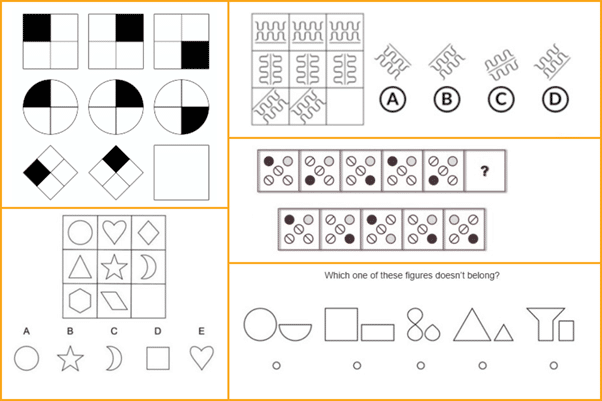
Verbal reasoning: Reading sentences and finding logical conclusions. Spatial reasoning: Rotating shapes mentally or identifying patterns in grids. Numerical reasoning: Finding relationships in number sequences or solving word math problems. Working memory: Repeating sequences backwards or tracking multiple pieces of information. Processing speed: Completing pattern-matching tasks under a time limit.
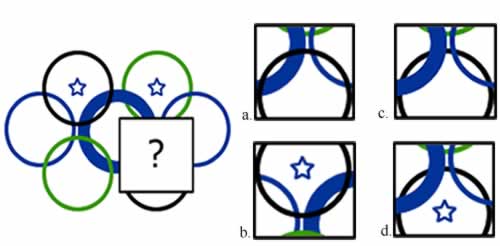
Based on available data from Mensa and certified IQ testing frameworks, most standardized tests weight verbal and spatial reasoning most heavily. High iq puzzles in recruitment assessments (used by Google, McKinsey, and similar organizations) focus almost entirely on pattern recognition and logical deduction.
Tips to Think Like a Genius When Solving IQ Test Questions
You do not have to be born a genius to solve genius level riddles. Here are practical strategies backed by cognitive research:
- Slow down on simple-looking questions. The easier a puzzle appears, the more likely it contains a hidden trick. Genius level thinkers re-read every question at least twice.
- Resist your first instinct. The wrong answer on a high iq puzzle is almost always the intuitive one. Your gut is the enemy here.
- Break the question into parts. Instead of trying to solve the whole thing at once, identify each element separately. What is known? What is assumed? What is actually being asked?
- Work backwards. Many intelligence test questions are easier to solve from the answer back to the setup, especially logic puzzles.
- Test your assumptions. Ask yourself: “Am I adding information that was not given?” Most people fail iq test questions not because they lack intelligence, but because they import outside knowledge where none belongs.
Are You a Genius? Here Is What the Research Says
The term “genius” is loosely used, but in psychometric terms, an IQ score above 145 is estimated to occur in fewer than 1 in 1,000 people. Scores above 160 are estimated to be found in fewer than 1 in 30,000.
However, IQ is only one measure of cognitive ability. High performers on genius level riddles and high iq puzzles often demonstrate strong:
- Working memory capacity
- Cognitive flexibility (switching between thinking styles)
- Inhibitory control (suppressing the wrong answer)
- Abstract reasoning
These skills can be trained. Regular practice with intelligence test questions has been estimated by researchers to improve performance on standardized assessments by a measurable margin over time.
Conclusion
The best iq test questions do one thing really well — they expose how you think, not just what you know. Genius level riddles are not about having a huge vocabulary or knowing advanced math. They are about seeing through assumptions, resisting mental shortcuts, and thinking in a clear, structured way.
Whether you breezed through these or found yourself stumped, the real value is in the practice. Every high iq puzzle you work through trains your brain to think more carefully the next time.
If you enjoyed these intelligence test questions and want more challenges like this, visit riddlepuzzle.com for a growing library of brain teasers, riddles, and logic puzzles designed to push your thinking to its limit.
FAQs About IQ Test Questions
What are IQ test questions?
IQ test questions are standardized puzzles designed to measure cognitive abilities including logic, pattern recognition, verbal reasoning, and spatial awareness. They are used in official IQ assessments, job screenings, and educational placements.
Can you improve your score on high IQ puzzles?
Yes. While your baseline IQ is largely genetic, practice with high iq puzzles and intelligence test questions improves your familiarity with question formats and sharpens your reasoning skills. Regular training is estimated to boost test performance meaningfully.
What score is considered genius level?
Based on available psychometric data, a score of 140 or above is generally considered genius level. The average IQ score is estimated at 100, with most people scoring between 85 and 115.
Are genius level riddles the same as IQ test questions?
Not exactly. Genius level riddles focus more on lateral thinking and creative problem solving. IQ test questions are more standardized and structured. Both measure cognitive flexibility, but in different ways.
How long does it take to solve hard IQ test questions?
On timed assessments, you typically have 1 to 3 minutes per question. The hardest high iq puzzles are designed to be unsolvable within that window for most people — the goal is to see how far your reasoning gets, not necessarily whether you finish.