Imagine you sit down and someone looks you dead in the eye and says: “Everything I tell you is a lie.” If they are telling the truth, then their statement is accurate, which means they are lying. But if they are lying, then they aren’t actually lying, which means they are telling the truth.
Welcome to the world of mind bending paradoxes.
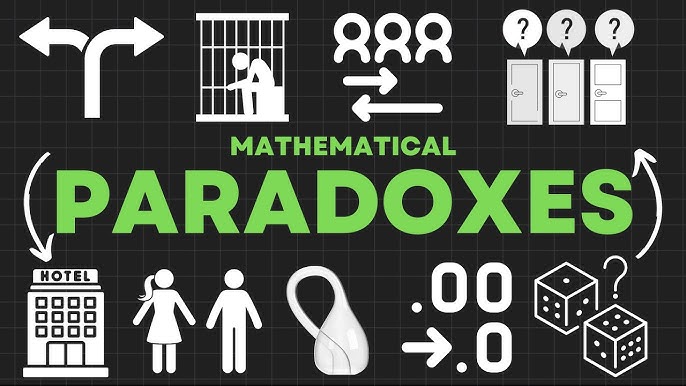
Unlike standard riddles with a hidden punchline, a true paradox occurs when a set of completely reasonable premises leads to a conclusion that is entirely self-contradictory. At riddlepuzzle.com, we love to stretch your cognitive boundaries. Let’s take a deep dive into the most famous logical paradoxes, unpack the mechanics of these paradox riddles, and explore the brain twisting questions that have kept philosophers, mathematicians, and scientists awake at night for thousands of years.
Warning: Reading further may cause temporary logic system failures. Side effects include staring blankly at your screen and questioning the fabric of reality. Proceed with caution!
What Exactly is a Paradox? (The Rules of the Mind Trap)
Before we start breaking your brain, we need to establish the ground rules. People often confuse a paradox with a difficult puzzle or a clever riddle.
A riddle is a question that seems impossible at first glance, but possesses a single, perfectly logical solution once you find the trick. For example: “What has keys but opens no locks?” The answer is a piano. It makes sense, the puzzle resolves, and your brain releases a satisfying hit of closure.
A paradox doesn’t play by those rules.
It is a loop. The moment you prove Option A is correct, that very proof instantly triggers a reaction that makes Option A impossible, forcing Option B to be true—which then immediately circles back to prove Option A. It is a wheel that never stops spinning.
5 Mind-Bending Paradoxes That Totally Defy Logic
1. The Liar’s Loop (The Granddaddy of Logical Paradoxes)
Let’s start with the absolute purest form of linguistic warfare: The Epimenides Paradox, more commonly known as the Liar’s Paradox.
The Setup
Around 600 BCE, a philosopher named Epimenides—who happened to be from the island of Crete—made a seemingly simple declaration:
“All Cretans are always liars.”
The Brain Twist
Think about the mechanics of this statement. Epimenides is a Cretan. Therefore, his statement is a Cretan statement.
-
Scenario A: If his statement is true, then it is a fact that all Cretans are liars. Because Epimenides is a Cretan, he must be lying. But if he is lying, then his statement (“All Cretans are liars”) must be false.
-
Scenario B: If his statement is false, then it means Cretans do not always lie; they sometimes tell the truth. This means his statement could potentially be a lie, but it completely breaks down any absolute foundation of truth.
To make it even cleaner, modern logicians stripped away the ancient history and reduced the puzzle to a single sentence: “This statement is false.”
Why It Confuses You
If the sentence is true, then it is false. If the sentence is false, then it is true. It is a flawless binary loop that cannot stop rewriting itself. It proves that human language is capable of constructing grammatically perfect sentences that completely break the concept of absolute truth.
2. The Grandfather Paradox (The Ultimate Time Travel Riddle)
If you’ve ever watched science fiction films involving a localized tear in the space-time continuum, you are already familiar with this absolute titan of physics-based paradox riddles.
The Setup
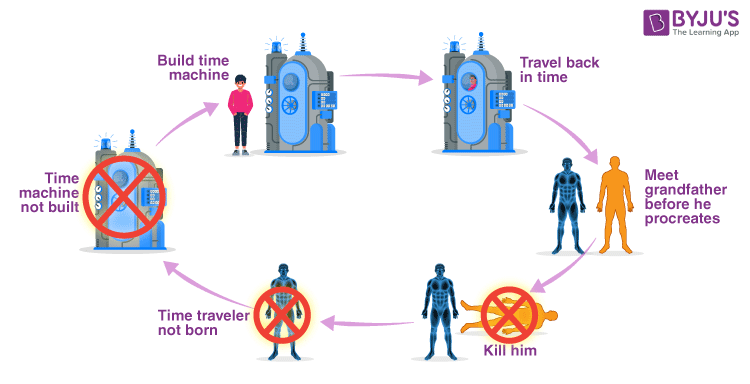
Imagine you are a brilliant scientist who constructs a fully functioning time machine. Driven by a bizarre, dark curiosity, you jump into the machine, set the coordinates for 1950, and travel back to the day your biological grandfather was a young, unmarried man. Through a series of highly unfortunate events, you accidentally prevent your grandfather from ever meeting your grandmother.
The Brain Twist
Let’s follow the breadcrumbs of causality. If your grandparents never meet, they never have children. That means your mother or father is never born. If your parents are never born, then you are never born.
But wait. If you were never born, you do not exist. And if you do not exist, you could never grow up to build a time machine, travel back to 1950, and stop your grandparents from meeting. Therefore, your grandparents do meet, your parents are born, you are born, you do build a time machine, you do go back in time, and you stop them from meeting.
Why It Confuses You
It completely violates the law of cause and effect. It suggests that an action can destroy its own root cause. To solve this, modern physicists like Hugh Everett suggested the Many-Worlds Interpretation—the idea that the moment you changed the past, you didn’t change your history; you split the universe into a brand-new, parallel timeline where you were never born, leaving your original timeline completely untouched.
3. The Ship of Theseus (The Identity Crisis)
This paradox moves away from language and physics and steps directly into the realm of philosophy, psychology, and the fundamental definition of what makes you you.
The Setup
The ancient Greek historian Plutarch described a legendary wooden ship sailed by the hero Theseus. To honor his victories, the citizens of Athens preserved the ship in their harbor for centuries. Naturally, as time passed, the wooden planks began to rot. Every time a plank rotted, the caretakers removed it and replaced it with a brand-new, identical piece of strong, fresh timber.
Over the course of 300 years, this maintenance continued until eventually, not a single original piece of wood from Theseus’s time remained on the ship.
The Brain Twist
Here is the first tier of this philosophical mind-trap: Is the fully restored ship sitting in the harbor still the identical Ship of Theseus?
If you say yes, you are arguing that an object’s identity is defined by its structure, shape, and design, not its material components. If you say no, then at what exact plank did it stop being the real ship? Did it lose its identity at plank number 1? Plank number 50? Or when the final original plank was tossed in the trash?
Now, let’s look at the second, much weirder tier of the puzzle: Imagine the caretakers were secret hoarders. Every time they removed an old, rotting wooden plank, they locked it away in a warehouse. After 300 years, they take all the original, weathered planks, dry them out, treat the rot, and assemble them back together into a ship using the exact same blueprints.
Which one gets to be the true “Ship of Theseus”? The one sitting in the harbor that has been completely replaced over time, or the one assembled in the warehouse using 100% of the original material?
Why It Confuses You
Both ships have a legitimate claim to the crown. The harbor ship has the unbroken historical continuity of being “the ship in the harbor,” while the warehouse ship possesses the actual, physical matter that Theseus stood upon.
This isn’t just about old boats. Every seven to ten years, your body replaces virtually all of its cells. The physical matter that makes up your body right now is completely different from the matter you were born with. Are you still the same person?
4. The Barber of Seville (The Rule Breaker)
In the early 20th century, a brilliant mathematician and philosopher named Bertrand Russell was busy trying to build a flawless foundation for mathematical logic. While working on “set theory,” he stumbled upon a conceptual problem so severe it threatened to collapse the entire field of mathematics. To explain it to everyday people, he created a story about a small town barber.
The Setup
Imagine a quiet, isolated town called Seville. In this town, there is only one barber. The town council passes a strict, unwavering law to keep the town clean and orderly. The law states:
The barber shaves all men, and only those men, who do not shave themselves.
This seems simple enough. If a man in Seville wakes up and decides to shave his own face, the barber is legally forbidden from shaving him. If a man decides he doesn’t want to shave himself, he goes to the barber shop, and the barber shaves him.
The Brain Twist
Here is the ultimate brain twisting question: Does the barber shave himself?
Let’s look at the two possible options:
-
Option A: The barber shaves himself. If the barber shaves himself, he is now a man who shaves himself. But the town law explicitly states the barber only shaves men who do not shave themselves. Therefore, by shaving himself, he is breaking the law.
-
Option B: The barber does not shave himself. If he chooses not to shave himself, he now falls into the category of men who do not shave themselves. According to the law, the barber must shave all men who don’t shave themselves. Therefore, he is legally required to shave himself.
Why It Confuses You
The barber cannot logically exist under the rules of his own universe. Russell used this exact paradox to prove that a mathematical “set” cannot contain itself without creating an infinite contradiction, forcing mathematicians to completely rethink the rules of logic.
5. The Omnipotence Dilemma (The Heavy Rock)
This paradox shifts our focus away from mathematics and physics and applies intense logical scrutiny to the concepts of philosophy and theology.
The Setup
Imagine an entity that possesses absolute omnipotence—meaning they have infinite, limitless power and can do absolutely anything. There are no physical laws bounding them, no structural limits, and no cosmic restrictions.
The Brain Twist
Ask yourself this question: Can an all-powerful being create a rock so incredibly massive and heavy that even they cannot lift it?
Think about the logical trapdoor here:
-
If the being cannot create the rock, then there is a specific action they are unable to perform. This means their creative power has a limit, proving they are not all-powerful.
-
If the being can create the rock, they have successfully manufactured an object. However, because the rock is too heavy for them to lift, there is now an action they cannot perform (lifting the rock). This means their physical power has a limit, also proving they are not all-powerful.
Why It Confuses You
The concept of infinity or absolute power sounds great in theory, but when you apply strict logical parameters to it, the language devours itself. It raises a fascinating question: Does omnipotence mean the power to do absolutely anything, or does it mean the power to do only things that are logically possible?
Conclusion: Ready for More Paradox Riddles?
Wrestling with mind bending paradoxes can feel incredibly frustrating. It leaves you with an uncomfortable itch in the back of your brain because there is no clean, satisfying “Aha!” moment waiting for you at the finish line.
Do you have an explanation that solves one of these loops, or is there a classic mind-bender we missed? Keep your browser tab permanently locked right here to riddlepuzzle.com to test your cognitive limits with our massive library of lateral thinking puzzles, riddles, and brain teasers.
Frequently Asked Questions (FAQ)
What is the difference between a riddle and a paradox?
A riddle is a puzzle designed to confuse you temporarily, but it always has a single, definitive logical answer once you figure out the hidden trick. A paradox is a circular logical trap where the premises appear true, but they lead to a conclusion that completely contradicts itself, meaning there is no clean answer.
Can a paradox ever be solved?
Some paradoxes can be resolved by changing the rules of the system we use to analyze them. For example, the Grandfather Paradox can be answered by the quantum physics theory of parallel timelines.
Why do mathematicians and scientists study paradoxes?
Paradoxes are incredibly valuable because they act like stress tests for our understanding of reality. When a rule or mathematical system creates a paradox, it signals to scientists and logicians that their current formulas have a flaw, forcing them to refine and expand fields like computer science, physics, and advanced mathematics.
What is a real-life example of the Ship of Theseus paradox?
A common real-world example is a musical band that has been performing for decades. Over fifty years, the original singer, guitarist, drummer, and bassist all retire one by one and are replaced by new musicians.