Why Teenagers Are the Hardest Hunters to Please
Teenagers sit in an awkward middle that most party games ignore. Hand them a hunt built for small children and they roll their eyes before the second clue. Hand them one built for grown-ups and they drift off, because it leans on bars, budgets and references they do not share. A hunt for teenagers has to be built for the people actually playing it: quick, funny, a little competitive, and respectful of the fact that they can spot a babyish clue from across a park. Start with our explainer on what a scavenger hunt is if the basic shape of the game is new to you, then build the teenage version on top of it.
The first thing to accept is that teenagers play for different reasons than children do. A seven year old hunts for the joy of finding things. A fifteen year old hunts for the win, the laugh, and the story they get to tell afterwards. So the hunt has to give them cover: a reason to run that is not just an adult telling them to run. A ticking clock does that. A rival team does that. A photo challenge that might end up in the group chat does that. Build the hunt around those pressures and the energy takes care of itself.
Start With the Teenagers, Not the Route
Every good teen hunt begins with a short conversation, not a map. Ask two or three of the players what they actually enjoy, and listen for specifics rather than shrugs. Ask what games they play, what shows they quote, what songs are stuck in their heads, and what places they already hang out in. Those answers are your clue material.
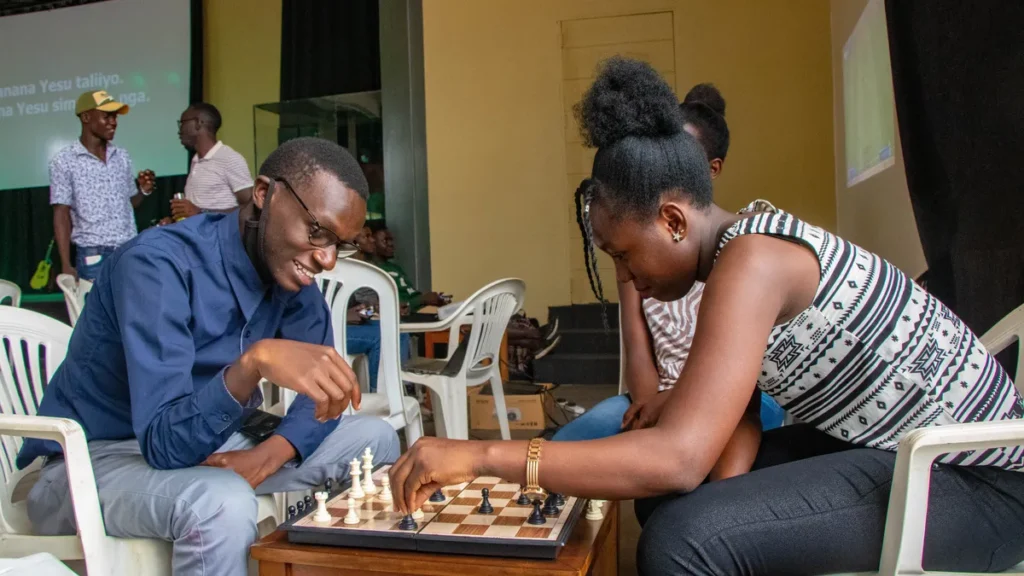
Age matters more than most hosts realise. Thirteen and fourteen year olds still enjoy a clear structure, a visible finish line and a bit of silliness. Sixteen to nineteen year olds want autonomy, harder puzzles and room to show off. A mixed-age group needs a hunt that lets the older players take the lead on the hard clues while the younger ones shine on speed and spotting. Mix clue types in every leg, one riddle, one photo task and one physical find, so every team has a strength to lean on.
Choose a Format That Fits Teenagers
The classic list hunt hands each team a list of items or photos to collect before the clock runs out. It is simple, fast to set up and easy to score, which makes it a strong choice for a first hunt or a big group. The chained clue hunt sends teams from one location to the next, each clue revealing the next stop.
A photo and video hunt is often the best fit for teenagers. Instead of collecting objects, teams collect proof: a selfie of the full team in front of a mural, a ten second video of everyone doing the same dance move, a picture of a teammate reading a street sign backwards. Photo tasks are cheap, they cannot be lost, and they produce memories the group will actually look at afterwards.
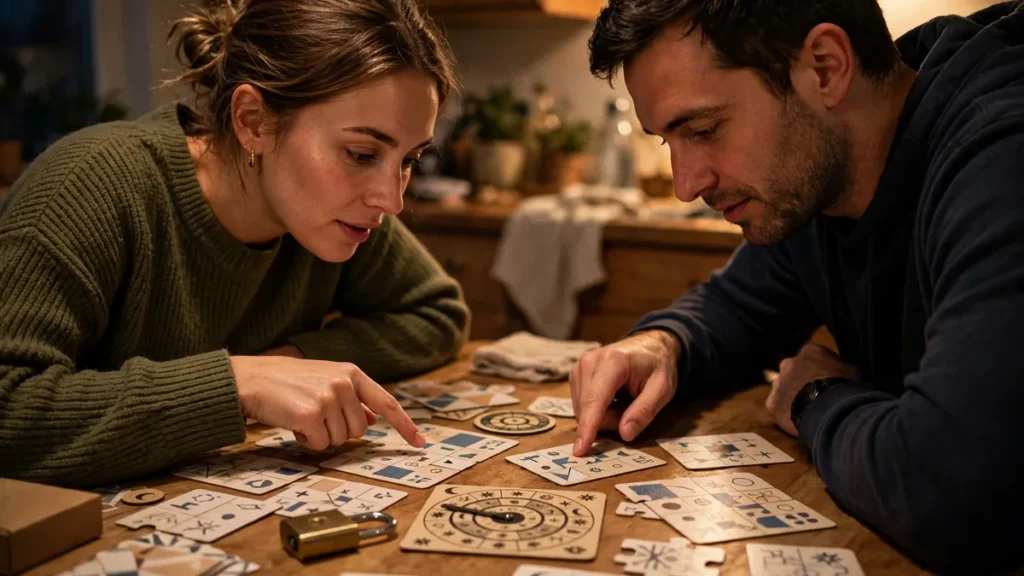
A code hunt adds a layer teenagers tend to love. Clues arrive as ciphers, QR codes, anagrams or a sequence of numbers that only makes sense once the team finds the key. Keep the code simple enough to crack in a few minutes. A cipher that takes half an hour is not a challenge, it is a queue. If you are torn between a list hunt and a chained hunt, our comparison of scavenger hunts and treasure hunts will help you weigh the two styles before you commit.
Writing Clues Teenagers Will Not Roll Their Eyes At
Clue writing is where teen hunts are won or lost. The golden rule is simple: write for the smartest player in the group, not the youngest. Teenagers can smell a dumbed-down clue instantly, and nothing kills enthusiasm faster than a rhyme that talks down to them. Aim for clues that take two to four minutes to solve.
Mix your clue types deliberately. Riddles work when they lean on wordplay rather than baby animals. Trivia clues work when the answer is something the players genuinely know, like the name of the café with the blue door.
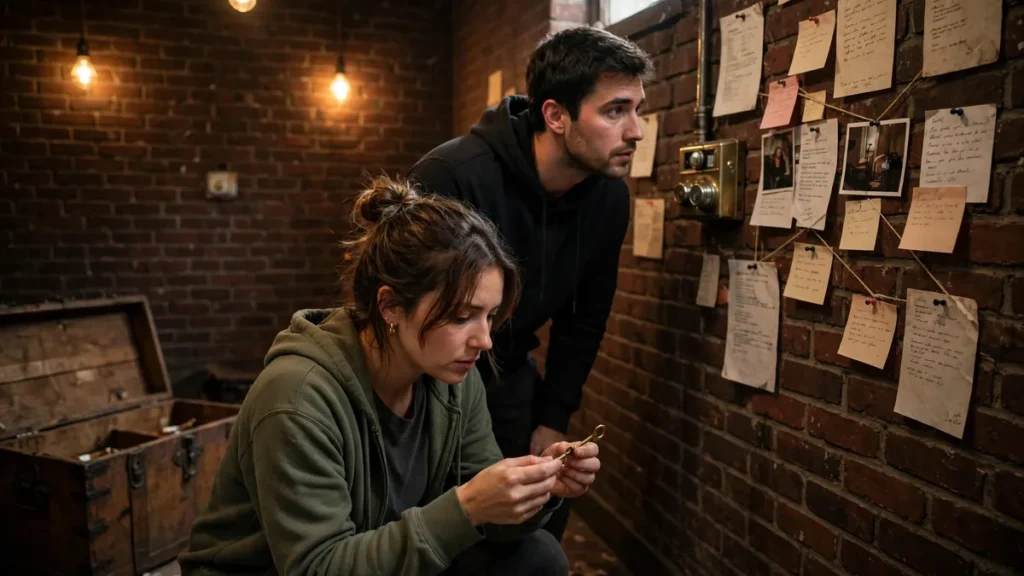
Build a difficulty ladder into the hunt. The first two clues should be easy wins that get the team moving and confident. The middle clues should make them think. The last two should be genuinely hard, the kind that make the winning team feel they earned it. Test every clue on one teenager who is not playing, and time them without helping. A hint system saves more hunts than any other single trick: give each team two hint tokens they can trade for a nudge, and the stuck teams keep moving instead of standing in a car park getting annoyed.
Teams That Actually Work
Three to five players per team is ideal for teenagers. Two is too few when one person is navigating and the other is solving. Six or more means someone always ends up trailing behind, checking their phone while the loudest two do everything. Four is the sweet spot: enough brains for the hard clues, few enough that everyone has a job.
Let friendship groups stay together where you can. Teenagers play better with people they trust, and a team of strangers spends the first twenty minutes being polite instead of hunting. If you must mix groups, mix them in pairs rather than splitting every friendship. Two friends plus two friends makes a team that warms up fast.
Give each team a job list rather than a leader. A navigator reads the map, a clue reader reads the clue out loud, a photographer handles the phone, and a timekeeper watches the clock.

Phones, Photos and the Group Chat
Make the phone rules explicit before anyone sets off. Each team needs at least one charged phone, and ideally a power bank in a backpack. Set a rule that photos and videos are the proof, and that the proof must show the whole team, not just one person. That stops the fastest runner in each team from doing the whole hunt alone while the rest wait at the start.
Photo challenges are where a teen hunt earns its personality. Ask for a photo of the team spelling a word with their bodies, a video of the team singing a chorus in a ridiculous location, or a picture of the team copying a statue.
Use a group chat as the scoreboard. Each team posts its proof to a shared chat as it goes, and the host confirms points in real time. Set one clear rule for the chat: no posting other teams’ locations to help or hinder them, and no photos of strangers without their permission.
Agree the photo rules before the hunt starts. No photos inside private property without permission, no photos of strangers, and no posting anything publicly until the hunt is over and everyone has agreed. Teenagers understand consent when it is framed as respect rather than a lecture.
Picking Places Teenagers Will Actually Go
Location is the skeleton of the hunt, and teenagers have strong opinions about where is worth going. A park works well: it is free, it has landmarks, and it gives teams room to spread out. A neighbourhood route works when the clues use real features, like a mural, a distinctive gate or a corner shop with a funny name.
Shopping centres and high streets can work, but check the rules first. Some malls do not allow organised games, and security staff will stop a team that looks like it is racing through the food court. If you do use a mall, keep the tasks calm: find a shop window, photograph a display, answer a question about a sign. Running is not welcome indoors.
Keep the route compact. A hunt that covers more than about a mile and a half will tire the slower teams and reward the fastest runners instead of the best solvers. Plot the route on foot yourself, at walking pace, and time it. Then add fifteen minutes for solving, arguing and taking photos. A tight route with dense clues beats a sprawling route with long empty stretches.
Prizes Teenagers Actually Want
The prize is not the point of the hunt, but the wrong prize can spoil a good afternoon. Teenagers are past the age of party bags filled with plastic toys, and they can tell when a prize was bought in a hurry. The best prizes are small, useful and a little bit cool: a gift card for a café or a game shop, a decent snack box, a funny trophy that gets passed around, or the power to choose the next group activity.
Food works as a prize more reliably than almost anything else. A winning team that gets to choose the takeaway, or a box of good snacks to share, will celebrate harder than a team handed a generic medal.
Safety Without Hovering
Teenagers need more freedom than children, but they still need a safety net. The trick is to build it into the design so it does not feel like surveillance. Draw a boundary map before the hunt and show it to every team. Mark the edges clearly, name the roads they must not cross, and pick a meeting point everyone can find. A boundary that is drawn on a map feels like part of the game. A boundary shouted by an adult halfway through feels like a telling-off.
Use the buddy rule: nobody goes anywhere alone, ever. Teams stay together, and if a team splits to cover two clues, each half must have at least two people. Give every team a card with the host’s number and the finish address, and tell them that calling for help is never a failure.
Put an adult at every checkpoint and at the finish. Those adults are not referees, they are safety nets: someone who can see a team that is struggling, offer water, and step in if something goes wrong. For a hunt in a public place, one adult per three teams is a sensible minimum.
Scoring That Feels Fair
Scoring is where arguments start, so make the system simple enough to explain in thirty seconds. Points for each clue solved, bonus points for photo challenges, and a time bonus for finishing early. Write the points on the clue sheet so every team can see them. A scoring system that lives only in the host’s head will be disputed, however fair it actually is.
Judge photo challenges as a group. Show the best entries on a phone or a laptop, let the teams laugh, and award points for creativity, effort and humour rather than technical quality. Announce the judging criteria at the start, so the teams know what they are aiming for. Plan for a tie before it happens. A tiebreaker question, a sudden-death photo task or a quick riddle at the finish settles the result in a minute and gives the afternoon a proper climax.
Your Teen Hunt Checklist
Run through this list the night before, and the day itself will feel easy. Confirm the teams, charge the phones, seal the clue sheets in envelopes, walk the route once more, buy the snacks and prizes, and tell every parent the start time, finish time and boundary map. A hunt that is planned on paper is a hunt that runs itself on the day.
On the morning of the hunt, arrive early. Welcome each team as it arrives, hand over the clue sheets, and explain the rules once, clearly, while everyone is listening. Then start the countdown and let them go. Your job from that moment is to watch, to score, and to enjoy the sight of a group of teenagers running, laughing and thinking hard at the same time. For ideas to keep the group playing once the hunt is over, our list of the best board games for teens is a strong place to start.