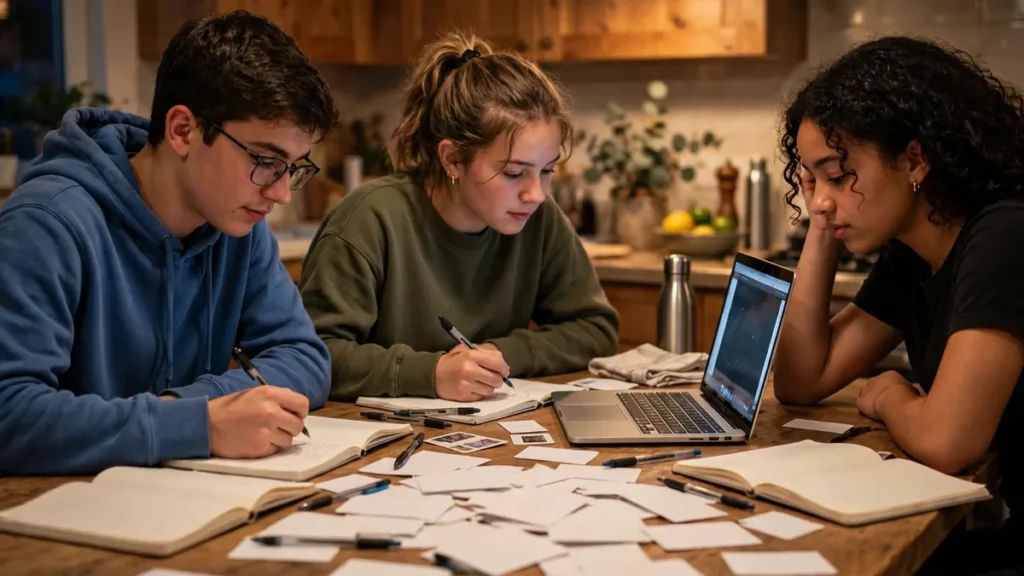
A kids’ puzzle night looks like an evening event, but it is really a fortnight of small decisions: which Saturday, how many children, which puzzles to buy, where the tables go, what the snacks cost, and what happens when a puzzle defeats the room. Get those decisions right and the evening runs itself. Leave them until the day itself and you will spend the night improvising while children wait.
Planning and hosting are two different jobs, and this guide covers only the first: the notebook, the lists, the calendar, and the spare puzzle tucked on a side table. Work through the steps below in order, and you will reach the night with nothing left to decide except which puzzle to open first.
Pick the Date, Then Protect It
Start with the calendar: every other choice hangs off it. A Saturday afternoon suits children under seven, who tire quickly after dark. Children of seven and up cope well with a late-afternoon start, around four or five, finishing before bedtime routines begin. Weekday evenings are a poor choice for younger groups: school, dinner, and homework already fill those hours.
Before you commit, check what else is happening that weekend: a school concert, a sports fixture, or a neighbour’s party will quietly halve your guest list. Ask two or three key families whether the date works before you announce it, then message them the same day you fix it, so your best guests do not book something else.
Set the length now and print it on the invitation: an hour for the youngest children, seventy-five to ninety minutes for mixed groups up to about twelve. A firm finish time helps parents plan collection, and ending on a buzz beats letting the room slowly go flat.
Count Heads and Ages Before You Buy Anything
Two numbers decide the shape of the whole plan: how many children are coming, and how far apart in age. Eight to twelve children suits one adult with a helper. Below six, teams feel thin; above sixteen, you need a second adult, more tables, and double the puzzles, so cap the list at a number you can genuinely look after.
Children close in age — within roughly three years of each other — can mostly share the same puzzles, which makes buying simple. A wide spread, such as five to eleven, still works, but only if you plan for it: separate puzzles for separate tables, and teams blending older and younger children so each group has someone who can read clues aloud and someone who can sort pieces by colour.
Ask each family three things when you invite them, and write the answers in your notebook: each child’s age, any food allergy or dietary need, and anything that might upset a child, such as sudden loud noises or a dark room. Keeping the answers in one place stops small mishaps and means nothing is lost between the invitation and the night.
A Countdown That Spreads the Work Over Two Weeks
Plan backwards from the date, giving each week one main job. Spreading the work out means no frantic shopping trip the night before and no midnight session cutting out puzzle sheets.
A fortnight out, settle the date, the room, and the guest list, and send the invitations with the start time, finish time, and address. Open a single notebook — paper or phone — where every decision lives: guests, puzzles, shopping, and the running order. Ideas go in the notebook the same day, not in your head.
A week out, assemble the puzzle pile and the supplies — the largest task, so break it into two or three short sittings. Buy or borrow the puzzles, look through the tricky ones yourself, print any riddle or word sheets, and put the prizes in a bag by the door. Buy the snacks and drinks that keep, and check you have enough tables, chairs, pencils, and trays.
The day before, lay the room out: a puzzle on each table, spares where only you can reach them, snack trays prepared, drinks chilled, prize bags labelled. Walk through the evening in your mind once, from the first knock to the last goodbye. On the day itself only fresh food, a final tidy, and a quick read-through of anything you will say aloud should remain.
Assembling the Puzzle Pile
Think of the puzzle mix the way a cook thinks of a menu: some variety, nothing too heavy, and something for every appetite. One kind all evening bores half the room; five kinds leave nobody finishing anything. Three or four kinds is right for most groups.
Match the difficulty to the ages you wrote down. Little ones need puzzles they can hold and complete in a few minutes — chunky wooden pieces, floor puzzles with few pieces, matching games, and spot-the-difference sheets. Seven- to nine-year-olds can manage sixty-piece jigsaws, mazes, word searches, and riddles solved in pairs. Ten- to twelve-year-olds enjoy longer jigsaws, crosswords, logic puzzles, and a timed round.
Count before you buy: one puzzle per table per round, plus at least two spares. Spares are what you reach for when a team finishes early or a puzzle turns out harder than expected, and an unused spare has still done its job by letting you relax. Look through every puzzle first: a jigsaw missing a piece, a maze with no way through, or a riddle sheet with a misprint will stall a table at the worst moment, when you have no time to fix it.
Money need not decide the mix. Libraries lend jigsaws in many areas, friends usually have a shelf of outgrown ones, and printable puzzles cost only paper and ink. Our guide to making a word puzzle for kids shows how to build one from scratch. When you do buy, choose a clear picture on the box and pieces small hands can grip.

Teams Decided on Paper, Not on the Night
Teams chosen on the night take ten minutes, spark arguments, and leave someone feeling picked last. Teams sketched in your notebook a few days earlier take five quiet minutes and nobody notices the work. Keep the list private until the evening.
Groups of three or four work best: two is too few for a jigsaw, and five crowds one table. Blend the ages inside each team so every group has a confident reader and a younger child who can sort and match. Keep close friends together where you can, but do not build a team from a single friendship circle — the puzzle gives children who barely know each other something to do together from the first minute.
Give each team a name in advance, or let the children invent one in the first five minutes. Write the names on cards, one per table, so children find their seats without a long explanation. If the numbers do not divide neatly, make one team of five rather than leaving a child alone.
Drawing the Room on a Scrap of Paper
Visit the room a week early and look at it with fresh eyes: where will the tables go, where is the light strongest, and where does the snack table sit so sticky hands do not wander back to the puzzles? A rough sketch on a scrap of paper prevents a surprising amount of chaos.
Each team needs a table with room for a puzzle, a pencil, and elbows. A dining table holds two teams; a kitchen table holds one. Short of tables, the floor suits younger children well, provided each puzzle sits on a tray or board so it can be moved without scattering pieces. Place the youngest teams nearest the door and the snacks, since they will need the most help.
Light matters more than decoration: a puzzle under a dim lamp frustrates, so set tables near windows by day and switch every lamp on by evening. Decoration can stay simple — a few balloons, a paper sign with the team names, and the puzzles themselves. Keep spares, hint cards, and the timer on a side table that only you use.
Food That Stays Away From the Puzzles
Food planning has one rule above all others: keep sticky, crumbly, and greasy food away from the puzzles. Chocolate on a jigsaw, crumbs in a card game, and juice on a riddle sheet ruin supplies fast. Plan the food in two parts — a small snack on arrival and a proper break in the middle — and keep both away from the tables where puzzles are being solved.
For the break, choose food that is easy to eat standing up and easy to clean: popcorn in cups, sliced fruit, crackers, cheese cubes, and small sandwiches cut into fingers. Use cups with lids where you can, and keep paper towels on the snack table. Check your allergy notes before you shop, and label anything containing nuts, dairy, or gluten, so a child can spot what is safe without asking.
Prizes and the Last Ten Minutes
Plan prizes alongside the puzzles, not as a morning-of afterthought. Aim for every child to take something home, with winners getting only slightly nicer versions of the same small things: a mini puzzle, a funny-topped pencil, a sticker sheet, a small notebook, or crayons. One grand prize for a single team turns a friendly evening into a contest nobody enjoys losing.
Plan the ending as carefully as the beginning: a short final round, scores, prizes, and a thank-you. Resist adding one more puzzle because children beg for it — finishing while they still want more is what makes them ask when the next one is.
The Backup Shelf
Every puzzle night has a moment when something stalls: a jigsaw that will not come together, a riddle that defeats the room, or a child who quietly gives up. Whether that becomes a hiccup or a ruined evening depends on what you prepared. Build a backup shelf — a small pile of reserves on your side table, ready to go.
It needs four things: two spare puzzles easier than the main ones — a quick win restores confidence faster than any pep talk. A set of hint cards for the harder puzzles, so a stuck team can ask for a nudge without feeling they have failed. One short game needing no equipment, such as a guessing round, for the gap while you reset a table. And a small task for a child who is struggling — sorting pieces, holding the timer, or laying out the next puzzle — which gives them a useful role while the frustration passes.
Decide in advance how long a team may struggle before you step in — ten minutes is fair for most puzzles. After that, offer a hint or swap the puzzle. For the on-the-night side, our guide to hosting a puzzle night for kids pairs with this plan, and the general puzzle night hosting guide covers what applies at every age.
A Run Sheet for the Evening
Write the running order on one page and keep it on your side table. A run sheet is not a script — you can change it on the night — but it stops you inventing the next step while children wait. Here is a shape for a seventy-five-minute evening with children aged seven to ten.
First five minutes: arrivals and team tables — children find their team card and meet their teammates. Next ten minutes: a warm-up round with no points, such as a five-piece puzzle or three easy riddles, so every team scores early. Next twenty minutes: the first proper round, one jigsaw per team, timer visible. Then a ten-minute snack break away from the tables. Then twenty minutes for the second round — word puzzles and riddles, teams swapping tables if you have stations. Then the final ten minutes: scores, prizes, and goodbyes.
For younger children, shorten each round and lengthen the break; for older ones, stretch the puzzle rounds and add a timed challenge. Build five minutes of slack into the middle for rounds that run long.
The Shopping List and the Budget
Put every purchase on one list and cost it before you shop; a written budget is what keeps a puzzle night cheap. For eight to twelve children, expect three or four puzzles, printable sheets, pencils, a few trays or boards, snacks and drinks, and small prizes. Borrowed puzzles and printed sheets can cut the puzzle cost to almost nothing.
Check what you already own first: most homes hold a jigsaw or two and a drawer of pencils. Ask friends to lend puzzles they no longer use, and check the library. Buy only what fills a genuine gap — a good jigsaw lasts for years. Keep the receipts in the notebook; if the night becomes a regular event, you will want to know what it actually cost.
The best moments of the night — a piece slotting home, a riddle suddenly making sense — are made in advance, in the notebook, on the shopping list, and in the quiet hour when you laid the tables out the day before. Plan well, and the night will look after itself.