Most teen parties follow the same tired script: music, chips, and within half an hour half the room is staring at a phone. A puzzle night breaks that script, but only if you build it for teenagers instead of borrowing a grown-up dinner party and swapping in younger guests. Teens are brilliant puzzle solvers when the puzzles respect them, and ruthless critics when they do not. If the night feels like a school activity with snacks, they will check out before the first round ends.
This guide is for the adult in the room, usually a parent, and for the teenager who talked their parent into hosting. Either way, the same rule applies: the teens decide whether the night works, so plan it with them, not for them. The general shape of an evening like this is covered in our guide to how to host a puzzle night, but the teen version has its own traps and its own idea of fun.
Hand the Night to a Teenager
The single best decision you can make is to give a teenager a real job, not a decorative one. Pick one teen as the host and one as the co-host, and let them own the evening. They choose the playlist, they run the timer, they read the clues out loud, and they decide when a round is dragging and needs to end. Adults handle the invisible work: buying the puzzles, setting up the room, keeping the food coming, and staying out of the way.
This matters because teenagers can smell a supervised activity from the hallway. The moment an adult stands at the front of the room explaining rules like a teacher, the night turns into a lesson. When a teenager explains the rules to their own friends, in their own words, the same rules feel like a game. A slightly chaotic night run by a teenager reads as real.
Agree on the boundaries before anyone arrives, and keep the list short. Three rules are enough: be kind, no phones during rounds, and nobody gets left out of a team. If you hand a teenager fifteen rules, they will remember none of them.
Build the Guest List in the Group Chat
Eight to fourteen guests is the sweet spot. Fewer than eight and the teams feel thin. More than fourteen and the room gets loud, the puzzles get crowded, and somebody ends up sitting on the floor with nothing to do. If the host has a big friend group, invite the core group first and keep a couple of spare places for the friends who always say yes at the last minute.
Send the invitation where teenagers actually read things: the group chat. A paper invitation will be photographed, posted, and then lost. A message in the chat, with the date, the start time, the address, and one line about what the night is, works better than anything formal. Add a hook that makes the night sound different from a normal hangout, like “puzzle night, teams of four, snacks, bring nothing.”
Ask the host to invite across friend groups, not just their closest circle. A puzzle night is one of the few parties where mixing groups works, because the puzzles give strangers something to do together besides standing around. Two friends from school, two from a sports team, and two from an online game can become one team within ten minutes.
Set the start time for a Friday or Saturday evening, around seven, with a ten o’clock finish. Three hours is plenty. End the night firmly, because a puzzle night that drags past ten turns tired, and tired teenagers get silly in the wrong way.
Choose Puzzles That Respect Teenagers
Teenagers do not want baby puzzles, and they do not want puzzles designed for adults who collect crosswords. They want puzzles that feel clever, a little bit sneaky, and possible to solve with the knowledge they already have. Pick three kinds of challenge and do them well.
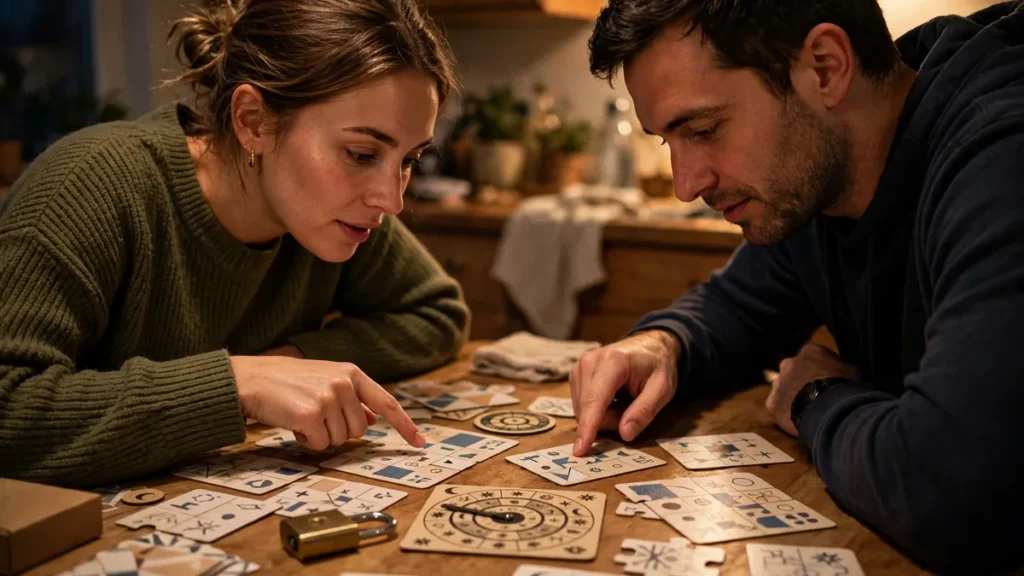
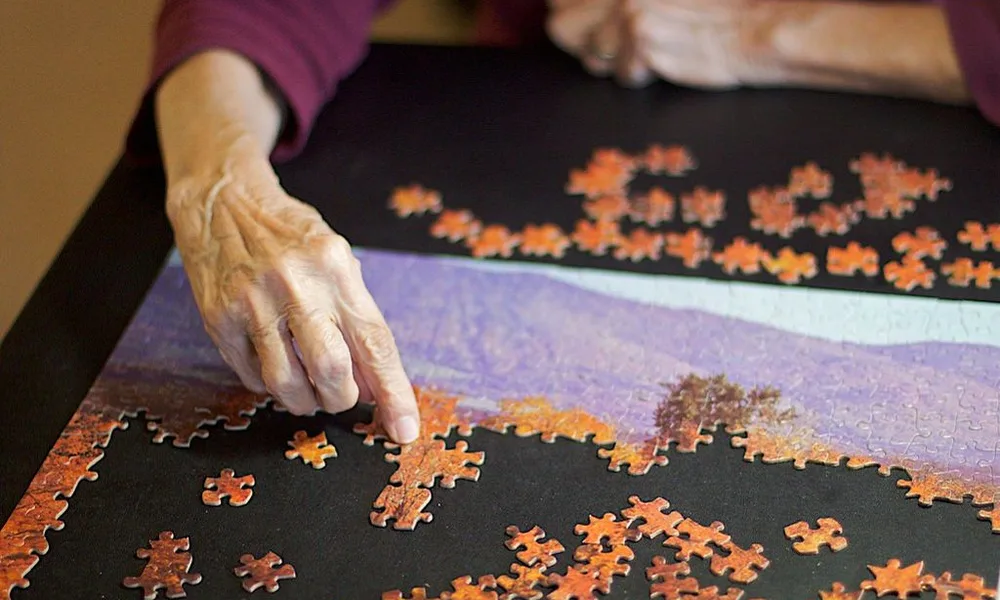
A jigsaw race is the easiest opener. Buy two identical 300-piece puzzles, split the room into two teams, and race the clock. Three hundred pieces is the right size: big enough to need teamwork, small enough to finish inside half an hour. Anything over five hundred pieces will still be unfinished when the night ends. Put the two puzzles on separate tables so the teams cannot see each other’s progress.
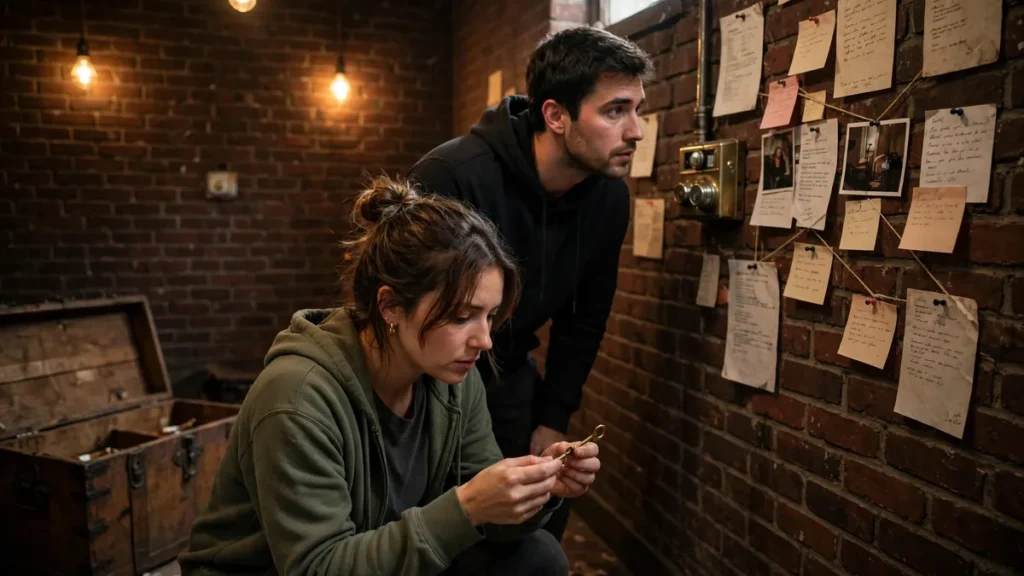
An escape-room style round is the one teenagers will talk about afterwards. You do not need a kit or a locked room. Hide four or five clues around the living room, chain them together, and give the teams a locked box or a sealed envelope as the prize. A combination lock from a hardware shop costs very little and turns an ordinary envelope into a treasure chest. Write the clues yourself so they fit the room: a code hidden in a bookshelf, a riddle taped under a chair.
A word and riddle round works as a breather between the physical rounds. Ten riddles, read aloud, with teams writing their answers on paper. Keep the riddles short and modern: riddles about phones, school, and group chats land better than riddles about farmers and candles. Give half a point for a funny wrong answer that makes the room laugh.
A logic or pattern round gives the quiet teenagers their moment. A grid puzzle, a sequence to complete, or a set of tangled clues about who sits where all reward the guest who thinks quietly while everyone else shouts. Make sure at least one round in the night is won by thinking, not by shouting. The quiet teenager who solves the logic round becomes the hero of the night.
Set the Room Up for Wandering
Teenagers do not sit still for three hours, and your room should not ask them to. Set up two or three puzzle tables instead of one big table, and leave space between them so teams can stand, lean, and move around. A table with room for four chairs and two standing spots is about right.
Lighting matters more than decoration. Bright overhead lights make a living room feel like a classroom. Turn the big light off, switch on lamps, and put a string of fairy lights across the wall if you have them. You do not need a theme or a colour scheme. Teenagers notice effort, not party-shop decorations.
Keep the food table away from the puzzle tables. Greasy fingers and jigsaw pieces are enemies, and one spilled drink can end a round. Put snacks and drinks on a separate table or a kitchen counter, and let people wander over between rounds. If you want more ideas on the broader party side of the evening, our guide to how to plan a puzzle party covers the room layout and food table in more detail.
Mix the Teams on Purpose
Left alone, teenagers will form teams with their best friends and freeze out everyone else. That is natural, and it is also the fastest way to make half the room feel unwanted. Mix the teams yourself, or rather, let the host mix them with a system that feels random and fair.
Draw names from a hat, deal playing cards so matching suits become teams, or hand out coloured wristbands at the door. Any method that looks like luck works, because nobody can blame the host for the draw. Aim for teams of four, with a mix of loud and quiet personalities in every team. A team of four loud friends will shout over each other. A team of four quiet friends will sit in silence.
Give every team a name, and let them pick it themselves in the first five minutes. A team that calls itself something ridiculous has already bonded. Write the names on a whiteboard where everyone can see the scores.
A Three-Hour Plan That Actually Holds
Teenagers arrive late, in drips, not all at once. Plan for it. The first half hour is arrival time. Music is playing, snacks are out, and the first guests can start a small warm-up puzzle at one table while the rest arrive. A half-finished jigsaw on a side table is the perfect welcome: early guests can place a few pieces, and nobody has to stand around waiting.
At half past seven, the host gathers everyone, explains the three rules, and runs the first real round: the jigsaw race. Thirty minutes of racing, with the host calling out the time every ten minutes, builds energy fast. Announce the winner, give the winning team first pick of the snacks, and move on.
Eight o’clock to half past eight is the escape-room round. This is the centrepiece, so give it the most time and the least interruption. Teams work in separate corners of the room, hunting for clues. The host walks around with hints, not answers. A hint every five minutes keeps stuck teams moving without giving the game away.
Nine o’clock to half past nine is the final round, and it should be the loudest one. A relay works well: each team sends one person at a time to solve a small puzzle, tag the next person, and keep going until the chain is finished. Relays are noisy, physical, and funny, and they end the night on a high. Announce the overall winner, hand out the prizes, and let the room cheer.
Phones, Photos, and the One Rule That Matters
You will not win a fight against phones, so do not start one. The rule that works is simple: phones stay face down during rounds, and phones come out between rounds. Say it once, at the start, and then enforce it lightly. The host can call “phones down” at the start of each round and “phones up” at the end. A basket by the door sounds strict and feels like school. A spoken rule, repeated with a smile, feels like a game.
Photos are the trickier question. Teenagers will want photos, and some of them will not want to be in photos. Set one rule before the night: nobody posts a photo of another person without asking them first. The host can take a group photo at the end, with everyone who wants to be in it, and share it in the group chat.
If you want a fuller take on the social side of a teen evening, including music, phones, and keeping the night cool rather than cringe, our guide to how to host a game night for teens covers that ground from the game-night angle, and most of it applies here too.
End the Night So They Ask for Another One
The ending is the part people remember, so do not let it fizzle. Announce the winners clearly, hand out the prizes with a bit of ceremony, and give every guest something small to take home. It does not need to be expensive: a small puzzle, a pack of riddle cards, or a funny certificate the host made on a phone. A take-home prize turns the night into a story they can tell the next day.
Before anyone leaves, ask the group one question: what should we do differently next time? Teenagers will tell you the truth if you ask while the night is still warm. Write down what they say, because the guests are designing the next night with you.
Keep the leftover puzzles. A half-finished jigsaw and a box of riddle cards become the start of the next night’s warm-up table. Keep the scoreboard photo, keep the playlist, and keep the group chat. When the host sends the next invitation, they will have a night that worked and a group that wants to come back.
Frequently Asked Questions
How many teenagers should I invite to a puzzle night? Eight to fourteen is the range that works best. Smaller groups make thin teams, and larger groups crowd the tables and leave somebody with nothing to do. If the host has a big circle, invite the core group and keep two spare places for last-minute yeses.
What if some of the guests have never done a puzzle before? That is fine, and it is part of the point. Mix the teams so every team has a mix of experience, start with the jigsaw race so everyone can contribute from the first minute, and keep one round that rewards thinking over speed.