A puzzle night for adults is one of the easiest evenings to host and one of the easiest to get wrong. The idea is simple: a small group of grown-ups, a table full of puzzles, and a few unhurried hours. Nobody needs a costume, a theme, or a playlist that took a week to build. What the night does need is a host who has thought about the room, the people, and the order of events before the first guest arrives. Get those three things right and the puzzles almost take care of themselves.
Start With the Guest List, Not the Puzzles
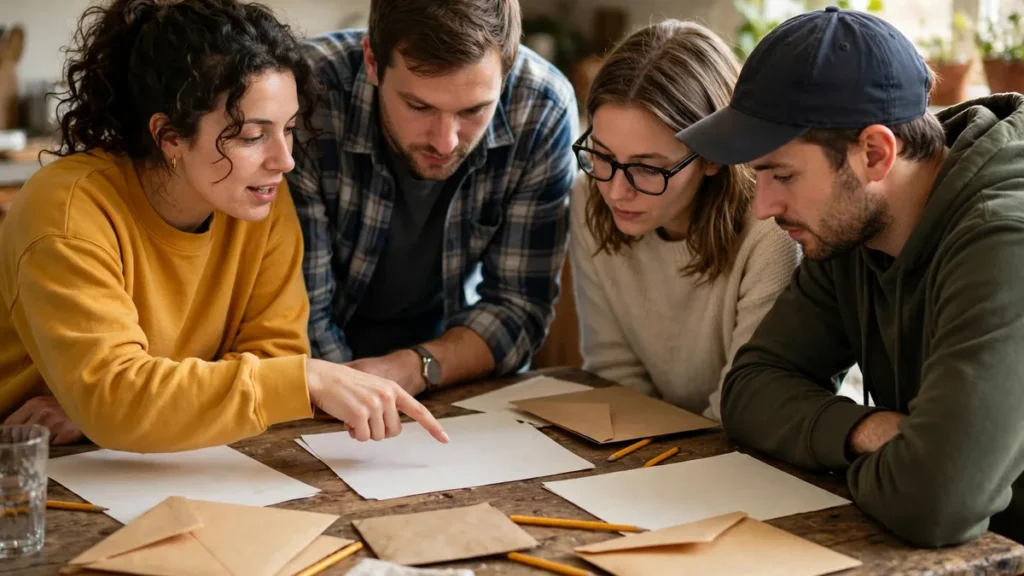
Most hosts start by shopping for puzzles. Start with people instead. A puzzle night works best with six to ten guests. Fewer than six and a big jigsaw feels empty, with long silences while everyone stares at the same corner. More than ten and the table gets crowded, pieces go missing, and the quieter guests drift to the sofa and never come back. Eight is the sweet spot: enough hands for a jigsaw, enough teams for a crossword race, and small enough that everyone can hear each other.
Pick a Puzzle Mix With One Anchor and Four Sides
A good puzzle night has one anchor puzzle and four smaller ones. The anchor is the thing the whole room works on together, usually a jigsaw of five hundred to a thousand pieces. It sits in the middle of the table all night, and people drift to it between other activities. Pick an image with clear sections: a landscape with a sky, a building, and a foreground, or a street scene with distinct shops and signs. Avoid puzzles that are mostly one colour, like a blue sky or a green forest, because they frustrate a mixed-ability group and stall the night.
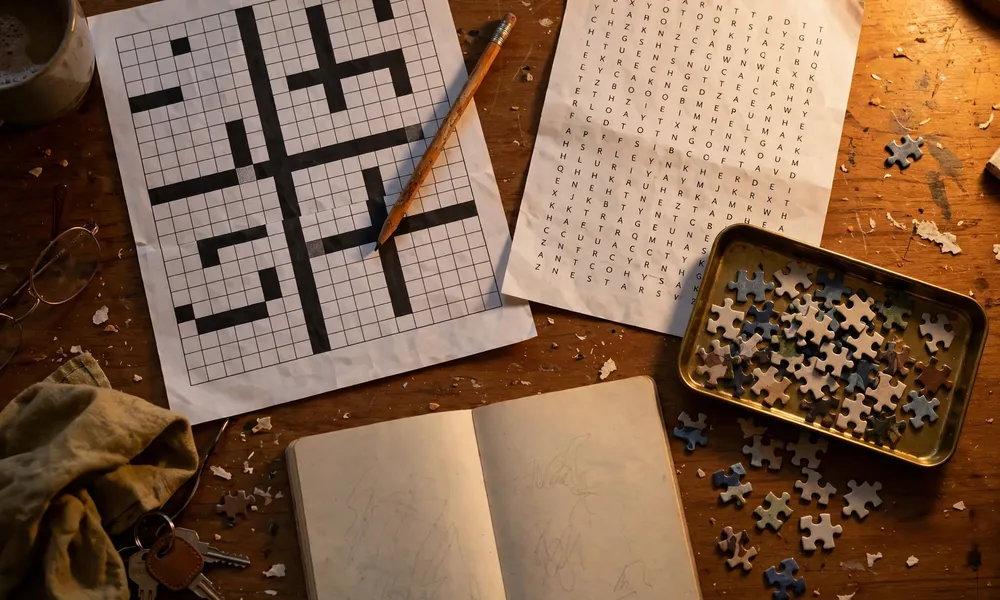
The four smaller puzzles are the sides, and they should cover different kinds of thinking. A crossword suits the word lovers. A word search suits the guest who wants something gentle while chatting. A logic puzzle or a set of short riddles suits the people who like a quick win. A second small jigsaw, or a set of brain teasers printed on cards, gives the table something to pass around. The point of the mix is that nobody spends the whole night stuck on a format they dislike. If the crossword is beating someone, they can slide over to the jigsaw for ten minutes and come back fresh.
One Big Puzzle or Stations: Choose Before the Night
There are two ways to run a puzzle night, and you should choose one before anyone arrives. The first is the single-table format: everyone gathers around one big jigsaw, with the smaller puzzles on a side table for breaks. The second is stations: three or four puzzle spots around the room, and teams rotate every twenty minutes. Both work, but they create very different evenings, so pick the one that matches your guests.
| Format | Best for | Watch out for |
|---|---|---|
| One big table | Close friends, first-timers, a relaxed chatty night | One puzzle can stall and take the whole room down with it |
| Stations | Larger groups, competitive friends, guests who like variety | Needs more space and more setup; rotations can feel rushed |
The Running Order for a Three-Hour Night
| Time | What happens | Host job |
|---|---|---|
| 7:00 – 7:20 | Arrival, drinks, a five-minute riddle warm-up | Greet, hand out drinks, read the first riddle aloud |
| 7:20 – 8:15 | Main jigsaw, edges and sorting, crossword on the side | Sort pieces with the group, keep the table tidy |
| 8:15 – 8:35 | Food break, word search and riddle cards at the table | Bring out food, clear glasses from the puzzle area |
| 8:35 – 9:30 | Team rounds: crossword race and logic puzzles | Split teams, keep score, call time on each round |
| 9:30 – 10:00 | Final jigsaw sprint, then wind down and photos | Count the score, take a photo, name the next date |
The warm-up matters more than it looks. A short riddle read aloud while people are still arriving does three things at once: it tells latecomers they have not missed anything important, it gets the room thinking in puzzle mode, and it gives the shyest guest an easy way to speak first. Pick three riddles with short, satisfying answers, and move on after five minutes whether or not anyone solved them all. The night is not a test. For ideas on running the evening like a relaxed gathering rather than a contest, a general board game night hosting guide covers the same host skills — reading the room, pacing the evening, and knowing when to switch activities — and most of it transfers directly to puzzles.
Teams and Scoring That Keep It Friendly
Teams make a puzzle night livelier, but only if you build them right. Split the group into teams of three or four, and mix abilities on purpose. Never let the two strongest solvers end up on the same team, or the other teams will stop trying by the second round. If you know your guests well, make the teams yourself before the night. If you do not, draw names from a bowl. Random teams feel fair, and they pair up people who might not otherwise talk.
Keep the scoring simple and slightly silly. Five points for finishing a crossword section, three points for each riddle solved, one point per jigsaw section completed, and a bonus point for the best wrong answer of the night. That last one is doing more work than it looks: it rewards the guest who takes a wild guess, and it tells the room that being wrong is part of the fun. Announce scores at the end of each round, not after every single answer, or the night turns into bookkeeping. And keep a small prize for the winners — a box of chocolates, a silly trophy from a charity shop, or the honour of choosing the next night’s anchor puzzle. The prize should be small enough that losing it does not sting.
Food and Drinks That Do Not Fight the Puzzles
Food can make or break a puzzle night, and the rule is simple: nothing greasy, nothing that needs two hands, and nothing that sheds crumbs onto a jigsaw. Puzzle pieces and sticky fingers do not mix. Put out food that guests can eat with one hand while holding a piece in the other: cheese cubes, grapes, crackers, small sandwiches cut into quarters, sausage rolls, vegetable sticks with dip. Avoid crisps, which leave salt and grease on everything, and avoid anything with a sauce that drips.
Put drinks on a separate surface from the puzzles. A knocked-over glass is the fastest way to end a puzzle night, and it will happen at least once if drinks sit next to a half-finished crossword. A side table or a kitchen counter works perfectly. Offer a mix of alcoholic and non-alcoholic drinks, and make the non-alcoholic option genuinely good — a proper jug of something, not a single dusty bottle at the back of the fridge. Keep the alcohol light. A tipsy guest is a funny guest for about twenty minutes and a clumsy one for the rest of the night.
Set the Room and the Mood
Adults solve puzzles better in a room that is bright, warm, and uncluttered. You need more light than you think: a single ceiling light leaves shadows across the table, and guests over forty will struggle to tell similar puzzle pieces apart. Add a table lamp or two, and angle them so the light falls across the puzzle rather than into anyone’s eyes. Clear the table completely before the night. A puzzle night needs the whole surface, and every stray magazine or candle is space a guest cannot use.
Agree the phone rule before the night, and make it easy to follow. The simplest version: phones face down on a side table during puzzle rounds, and anyone may check theirs during the food break. Do not make it a ban, because adults resent being told what to do in someone else’s house, and one urgent message will break the rule anyway. Frame it as a puzzle rule instead: no looking up answers on a phone, because that is the one thing that genuinely spoils a puzzle night. Most guests will happily put their phones away once the puzzles start, because the puzzles are more interesting than the screen.
When a Puzzle Stalls
Every puzzle night hits a stall. The jigsaw reaches a patch of identical blue sky, the crossword has four clues nobody can crack, and the room goes quiet in the wrong way. This is the moment that separates a good host from a nervous one. A nervous host pretends nothing is wrong and lets the silence stretch. A good host notices the stall early and changes something. Your job is not to solve the puzzle for the group. It is to keep the group moving.
Use a hint ladder. First, give the room two more minutes and say nothing. Then offer a small nudge: read the clue aloud again, or point out that the jigsaw edge has a distinctive shape. Then offer a bigger hint, like the first letter of a crossword answer or the colour of the missing piece. If the puzzle still will not move after ten minutes, shelve it openly and cheerfully. Say so plainly: this one is beating us, let us come back to it after the next round. Nobody minds a puzzle being set aside. Everybody minds being trapped by one.
Keeping It Relaxed When Someone Gets Competitive
Sooner or later, someone will care too much about winning. They will grab pieces from another team’s table, argue about a crossword answer, or keep score out loud after every clue. Most of the time they do not mean to spoil anything; they are just wired that way, and the puzzle has woken it up. Handle it lightly and early, before the rest of the room starts resenting them. A joke usually works: remind them the prize is a box of chocolates, not a car. If it does not, give them a job that uses their energy, like timekeeping or reading out the next round’s clues.
Watch the quiet guests, too. A competitive room can silence the person who solves slowly but steadily, and that person is often the one who finishes the jigsaw while everyone else is arguing about a clue. Invite them in directly: ask them what they think of a clue, or hand them a section of the puzzle and ask them to own it. The best puzzle nights are the ones where every guest can point to a piece of the evening that was theirs. If you are hosting for a younger crowd another time, the differences are bigger than they look — a teen puzzle night guide shows how much changes when the guests are teenagers, from phone rules to team sizes, and reading it is a useful reminder that an adult night should feel adult: slower, calmer, and built around conversation as much as competition.
The Last Half Hour and the Follow-Up
End the night on purpose. Do not let it dissolve into people drifting to the door one by one while the puzzle sits half done. At half past nine, call the final round: ten minutes on the jigsaw, everyone together, and then scores. Announce the winners, hand over the small prize, and take a photo of the group around the table with the finished or nearly finished puzzle. That photo is the night’s souvenir, and it is also your best invitation for the next one.
Follow up the next day with a short message to the group. Share the photo, thank everyone for coming, and name the date of the next night while the evening is still fresh in their minds. A puzzle night that ends with a date in the diary becomes a regular thing. One that ends with a vague promise to do it again someday usually does not. If you are still deciding how far ahead to plan the details — guest list, puzzle shopping, the room layout — a planning guide for a teen puzzle night is worth a look for its planning checklist, even though the audience is different; the planning steps themselves, like confirming numbers a week ahead and buying one puzzle easier than you think, work just as well for adults.
A good puzzle night for adults is not a performance. Nobody needs to be the cleverest person in the room, and the host does not need to be an expert. You need a table, a decent mix of puzzles, food that stays out of the way, and the confidence to change the plan when the room tells you to. Do that, and your guests will leave talking about the night they solved something together — and asking when the next one is.