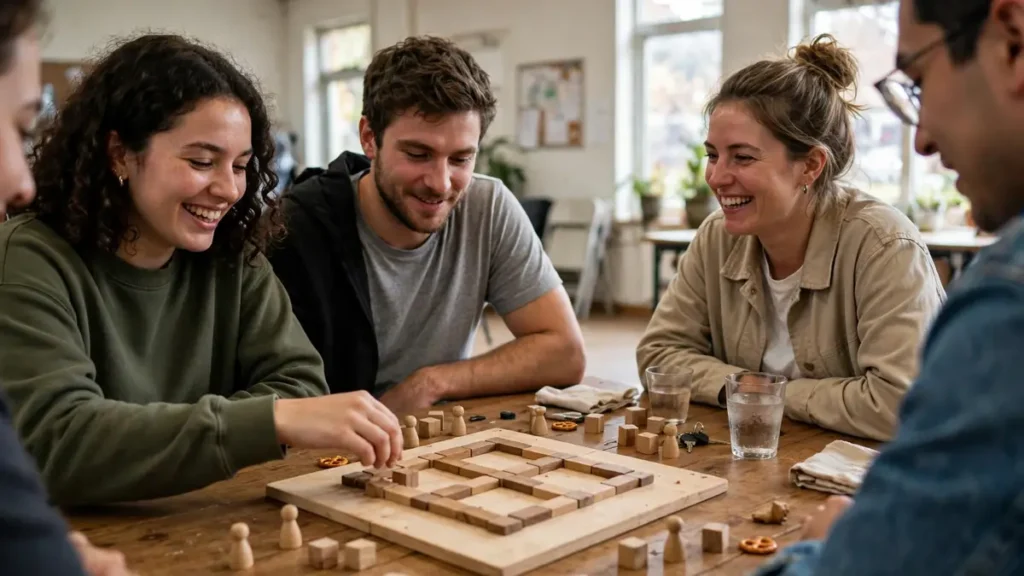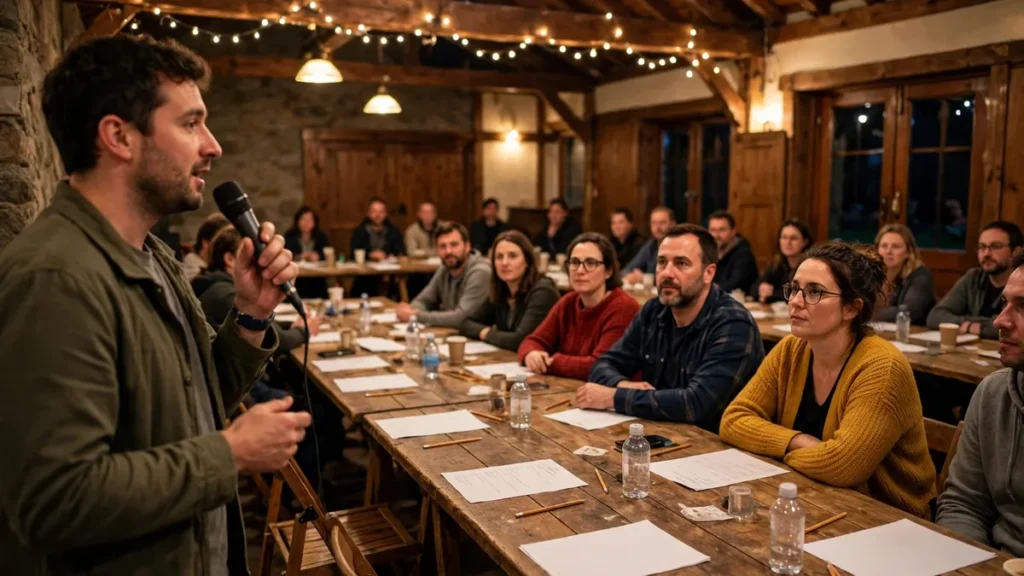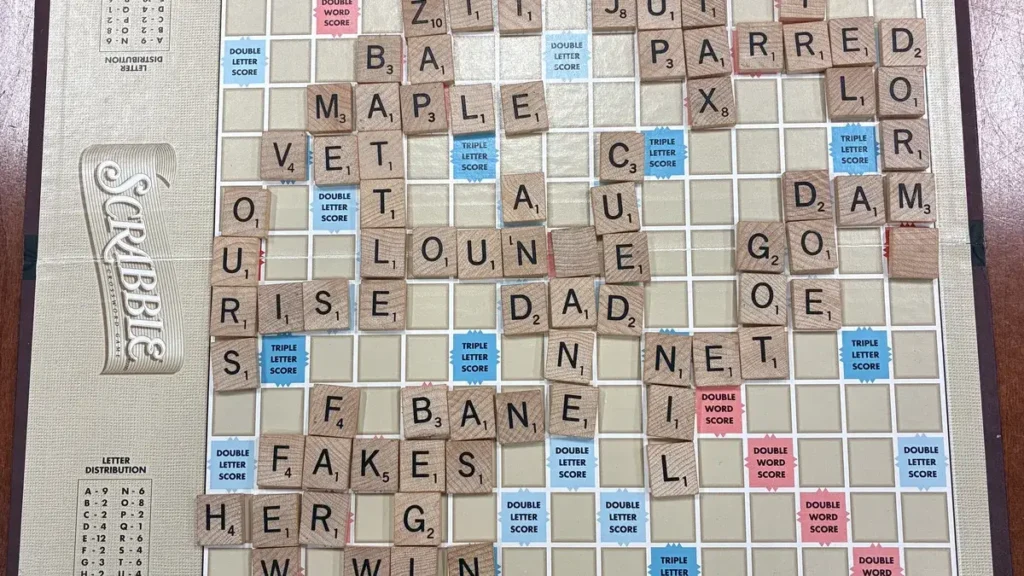
Word games for 551 players work best when every person in a huge hall has something small and clear to do, and when the whole room can hear the result at the same moment. A crowd this large cannot gather around one board, and it cannot wait while one person thinks aloud. It needs short turns, large writing surfaces, and a host who keeps the pace moving. When those pieces are in place, 551 players stop feeling like a crowd and start feeling like one very large team that happens to be split into many small groups.
The nine games below all play with the same idea: words change as people use them. A word can gain a letter at the front, lose a letter at the end, shift its vowel, or take on a new meaning while keeping its old shape. Each game turns one of those changes into a simple task that a group of six or seven people can finish in a few minutes. The host reads a prompt, every group writes an answer, and the hall compares answers together. Nobody needs special knowledge, and nobody needs to wait long for a turn.
These word games for 551 players are built for a school hall, a community centre, or a large conference room with tables in rows. You will need a microphone, a projector or a large printed sheet for each table, pens, and a plain answer sheet for each group. With 551 players, aim for about eighty groups of six or seven. Give each group a number, a captain, and one sheet. Keep every round short, keep the scoring visible, and let the hall cheer the best answers.
Key takeaways
- Split 551 players into about eighty groups of six or seven, each with a captain, a number, and one answer sheet.
- Keep every round short, with one clear prompt, one written answer per group, and scoring that the whole hall can see.
- Each of the nine games below turns one way that words change into a simple group task.
- Use a microphone, a projector, large printed prompts, and plenty of pens so no group is left guessing.
- Rotate the writing job inside each group so every player contributes and no one person carries the whole group.

How 551 Players Fit Into One Day
Start by counting tables, not players. Eighty groups need eighty places to sit, and each place needs room for six or seven chairs, one answer sheet, and a pen for each player. Put the groups in rows that face the host, with a clear aisle down the middle so helpers can collect sheets quickly. Number the tables in large print, from one to eighty, and put the same number on the answer sheet for that table. When a group knows its number, the host can call out results without confusion.
Give every group a captain before the first game begins. The captain reads the prompt aloud to the group, keeps the discussion short, and writes the final answer. After each game, the captain passes the pen to the next person, so the writing job moves around the table. This simple rotation matters more than it looks. It keeps every player involved, it stops one confident voice from answering for everyone, and it gives quieter players a clear moment to lead.
Time the day in short blocks. Allow about ten minutes for each game, with two minutes to explain, five minutes to play, and three minutes to compare answers and award points. Nine games at ten minutes each fill about ninety minutes, with a short break in the middle. Add fifteen minutes at the start for seating and introductions, and ten minutes at the end for the final tally. Scoring should stay simple and visible: one point for a correct answer, and a bonus point when a group finds an answer that no other group found. Write the running totals on a large board or project them on a screen.
For a wider view of how a large word day can be shaped, the collection built around how clauses and word parts fit together offers a useful companion to this one, and the word games for 549 players show a different way to organise the same kind of hall. The two collections share the same spirit: short prompts, group answers, and a host who keeps the pace brisk.
The Nine Games
Each game below follows the same pattern. The host explains the change in one sentence, gives one example, and then reads the prompt. Groups discuss for a short time, write one answer, and hold it up. The host reads out a few of the best answers, awards points, and moves on. The games are ordered so that the hall warms up with familiar words, then tries harder changes, then finishes with a listening game that everyone can join.
1. Homonym Hunt
In Homonym Hunt, each group looks for words that share one shape but carry two different meanings. The host reads a pair of clues, and the group writes the single word that fits both. For example, the clues might be a place where money is kept and the side of a river, and the answer is bank. Another pair might be a flying animal and a wooden stick used in sport, and the answer is bat.
Play five pairs in one round, with about one minute for each pair. Award one point for each correct word, and a bonus point when a group writes a third meaning for the same word. Good choices include fair, ring, light, seal, and spring. Avoid pairs that depend on a rare meaning.
2. Etymon Echo
In Etymon Echo, each group traces a modern word back to the older word it came from. The host gives the modern word and a short hint about its history, and the group writes the older form or the language it came from. For example, the word muscle came from a Latin word for a small mouse, because of the way a muscle moves under the skin. The group writes the Latin word musculus.
Play four words in one round, with about ninety seconds for each word. Award one point for the older word and one point for the language, so a group can earn two points per word. Choose words with stories that surprise people. Good choices include salary, which came from a word for salt, and candidate, which came from a Latin word for white.
3. Interfix Intro
In Interfix Intro, each group studies words that join two parts with a small linking sound in the middle. The host writes a joined word on the screen, and the group writes the two parts and the linking letter. For example, the word speedometer joins speed and meter with an o in the middle. Another example is gasometer, which joins gas and meter with the same linking letter.
Play six words in one round, with about forty seconds for each word. Award one point for the two parts and one point for the linking letter. Use words that players already know, such as speedometer, gasometer, and thermometer. Groups must say the word aloud, split it apart, and agree on where the join sits.
4. Prothesis Play
In Prothesis Play, each group adds a letter or a sound to the front of a word to make a new word. The host gives the shorter word and a hint for the longer word, and the group writes the longer word. For example, the host might give the word state and ask for the word that means a large home or a large public building, and the answer is estate. Another example starts with the word spy and asks for the word that means to watch secretly, and the answer is espy.
Play five pairs in one round, with about one minute for each pair. Award one point for each correct longer word, and a bonus point when a group can explain the added letter in one short sentence. Choose pairs where the added letter is clear and the new word is common, such as state to estate and spy to espy.
A second useful companion for hosts who want more of this kind of play is the collection built around pointing words and word parts, and the word games for 547 players show how a hall can work through those ideas in the same short-round style. Borrow its pacing if your hall needs a gentler start, and keep your own prompts in the same plain style.
5. Synaeresis Sprint
In Synaeresis Sprint, each group turns two vowel sounds into one smooth sound inside a word. The host gives a word where two vowels sit side by side, and the group writes how the word is said in ordinary speech. For example, the word cooperate is often said with the two o sounds run together into one long sound, rather than as two separate beats. Another example is re-elect, where the two e sounds blend into one smooth sound when the word is said quickly.
Play five words in one round, with about one minute for each word. Award one point for each correct blended form, and a bonus point when a group can say the word both ways, slowly and then quickly, so the hall can hear the change. Choose words that players use every day, such as cooperate, re-elect, and pre-empt.
6. Diaeresis Dash
In Diaeresis Dash, each group looks for words where two vowel letters sit side by side but are said as two separate sounds. The host gives a word, and the group writes the two sounds and marks where the break falls. For example, the word naive is said with two separate vowel sounds, and the break falls between the a and the i. Another example is cooperate when it is said carefully, with each o given its own beat.
Play five words in one round, with about one minute for each word. Award one point for marking the break in the right place, and a bonus point when a group writes a second word that follows the same pattern. Good examples include naive, cooperate, and re-enter. A host who says each word slowly will help groups at the back hear the break.

7. Apheresis Act
In Apheresis Act, each group drops the first sound or letter from a word to make a shorter word. The host gives the longer word and a hint for the shorter word, and the group writes the shorter word. For example, the host might give the word alone and ask for the word that means by oneself, and the answer is lone. Another example starts with the word amend and asks for the word that means to repair or correct, and the answer is mend.
Play five pairs in one round, with about one minute for each pair. Award one point for each correct shorter word, and a bonus point when a group writes a second shorter word from the same longer word. Choose pairs where the shorter word is common, such as alone to lone, amend to mend, and asleep to sleep.
The verse-and-metre collection is a good third companion for hosts who want a different flavour after this one, and the word games for 545 players show how rhythm and verse can fill a hall in the same group style. Use it on another day, with fresh prompts, so the two days feel different.
8. Ablaut Act
In Ablaut Act, each group follows a vowel change inside a word family. The host gives a base word and asks for a related word where the vowel has changed. For example, the host might give the word sing and ask for the past form, and the answer is sang. Another example starts with the word swim and asks for the past form, and the answer is swam. The consonants stay in place, and the vowel does the work.
Play six words in one round, with about forty seconds for each word. Award one point for each correct changed form, and a bonus point when a group writes a third form from the same family, such as sung after sing and sang. Choose families that players know well, such as sing, swim, ring, and drink.
9. Schwa Spot
In Schwa Spot, each group listens for the soft, unclear vowel sound that appears in unstressed parts of words. The host says a word aloud, and the group writes which part of the word carries that soft sound. For example, in the word about, the first vowel is soft and unclear, while the second vowel is clear. In the word pencil, the second vowel is soft, and the first vowel is clear.
Play six words in one round, with about forty seconds for each word. Award one point for marking the soft part in the right place, and a bonus point when a group writes a second word with the same soft part in the same place. Choose common words such as about, pencil, lesson, and sofa, and say each word twice so groups at the back can hear it clearly.
At a Glance
The table below gives a quick view of all nine games, with the time each one needs and the main skill it practises. Use it when you plan the running order, and keep a printed copy near the host so the pace never slips.
| Game | Minutes | Main skill | Answers per round |
|---|---|---|---|
| Homonym Hunt | 10 | Two meanings, one shape | Five pairs |
| Etymon Echo | 10 | Older forms and origins | Four words |
| Interfix Intro | 10 | Joining parts with a link | Six words |
| Prothesis Play | 10 | Adding a sound at the front | Five pairs |
| Synaeresis Sprint | 10 | Blending two vowels | Five words |
| Diaeresis Dash | 10 | Keeping two vowels apart | Five words |
| Apheresis Act | 10 | Dropping the first sound | Five pairs |
| Ablaut Act | 10 | Changing the vowel | Six words |
| Schwa Spot | 10 | Hearing the soft vowel | Six words |
Host Checklist
Use this checklist on the morning of the event, and tick each item off before the first group sits down. A calm start makes the whole day run smoothly.
- Count the tables and number them from one to eighty, with large print that helpers can read from across the hall.
- Put one answer sheet, one pen per player, and a spare pen on every table before the doors open.
- Test the microphone and the projector, and print large copies of every prompt for the front of the hall.
- Ask each group to choose a captain, and explain that the pen passes to the next person after each game.
- Prepare a visible scoreboard, with space for eighty totals, and update it after every game.
- Keep spare answer sheets, pens, and prompts near the host, so a lost sheet never stops a group from playing.
Frequently Asked Questions
How do you seat 551 players for word games?
Seat them in about eighty groups of six or seven, in rows that face the host, with a clear aisle down the middle. Number every table in large print, give each group one answer sheet, and ask each group to choose a captain.
How long does a full day of nine games take?
Allow about ten minutes per game, with two minutes to explain, five minutes to play, and three minutes to compare answers and award points. Nine games fill about ninety minutes, plus fifteen minutes for seating and introductions, a short break in the middle, and ten minutes for the final tally. The whole event fits comfortably into two hours.
Do players need any special knowledge to join in?
No. Every game uses common words from everyday life, and the host gives one clear example before each round. Groups discuss the answer together, so a player who is unsure can still contribute by suggesting ideas, listening, or writing. The games reward curiosity and careful listening more than formal knowledge.
How do you keep scoring fair in such a large hall?
Keep the scoring simple: one point for a correct answer, and a bonus point when a group finds an answer that no other group found. Write the running totals where everyone can see them, and update them after every game.
What if some groups finish much faster than others?
Keep a short list of spare prompts for fast groups, and ask them to write a second answer while they wait. A quick extra prompt, read aloud to the whole room, keeps the energy up.
Can these games work for a smaller group?
Yes. The same nine games work for a single table of six players, with the same prompts and the same scoring. Reduce the number of prompts per round if time is short, and let each player take a turn as host. The games were designed for a large hall, but the ideas scale down easily to a family evening or a classroom.
The Bottom Line
Word games for 551 players succeed when the structure is simple and the prompts are clear. Eighty groups, one captain per group, one answer sheet per table, and nine short games that each explore one way that words change will fill two hours without a dull moment. The hall will hear words gain and lose letters, blend and split vowels, and shift their vowels from one form to another. By the final game, every player will have listened, discussed, written, and cheered, and the whole room will have played together.