Finding the best trivia games for 399 players is less about the questions and more about the room. When nearly four hundred people play at once, the game that wins is the one every team can hear, answer, and follow without waiting for the host to catch up. The nine games in this guide were chosen because they scale: they work with a dozen teams or close to a hundred, and they keep the energy high from the first question to the last.
The trick is to stop treating 399 as one giant crowd and start treating it as a league of small teams. Split the room into teams of four to six, give every team the same questions at the same time, and let a visible scoreboard do the talking. The host only has to run one game, not four hundred separate ones, and every player gets a real part to play.
Below are nine formats that hold up at scale, with notes on when to use each one and what it needs. There is a comparison table, a running order, a checklist, and answers to the questions organisers ask most. Pick three or four games, rehearse the final, and the night will run itself.
Key Takeaways
- Split 399 players into teams of four to six, giving you roughly 67 to 100 teams that can all play at once.
- Mix fast rounds, written rounds, picture and map rounds, and music rounds so different kinds of knowledge all count.
- Run heats and station rounds when the room is full, then bring the top teams together for a stage final.
- Score with a visible leaderboard and a second checker, because one scoring error in front of 399 people is hard to undo.
- Plan for three to four hours including breaks, and rehearse the final round before the night begins.
Why 399 Players Changes the Game
Most trivia advice assumes a room of twenty to forty people. At that size the host can read the room, remember the team names, and settle a disputed answer with a quick chat. Multiply the crowd by ten and every one of those habits breaks. The host cannot see the back rows, the sound system becomes the most important piece of equipment in the building, and a single slow round can drain the energy out of four hundred people at once.
Sound breaks first. A host with a good voice and no microphone can reach forty people. The same host in a hall of 399 sounds like a whisper from the back row. Book a proper public address system with speakers at the front and in the middle of the room, and test it from the last table before anyone arrives. If the back tables cannot hear the questions, they are not playing your game. The trivia games built for 397 players face the same problem, and they solve it the same way: the sound comes before the questions.
The second thing that breaks is scoring. With close to a hundred teams, a paper pile becomes a bottleneck, and a single disputed answer can hold up the whole room. Keep the score visible on a screen after every round, use a second checker for the top ten teams, and announce the running order before the night starts so nobody has to ask what happens next.
How to Set Up Trivia for 399 Players
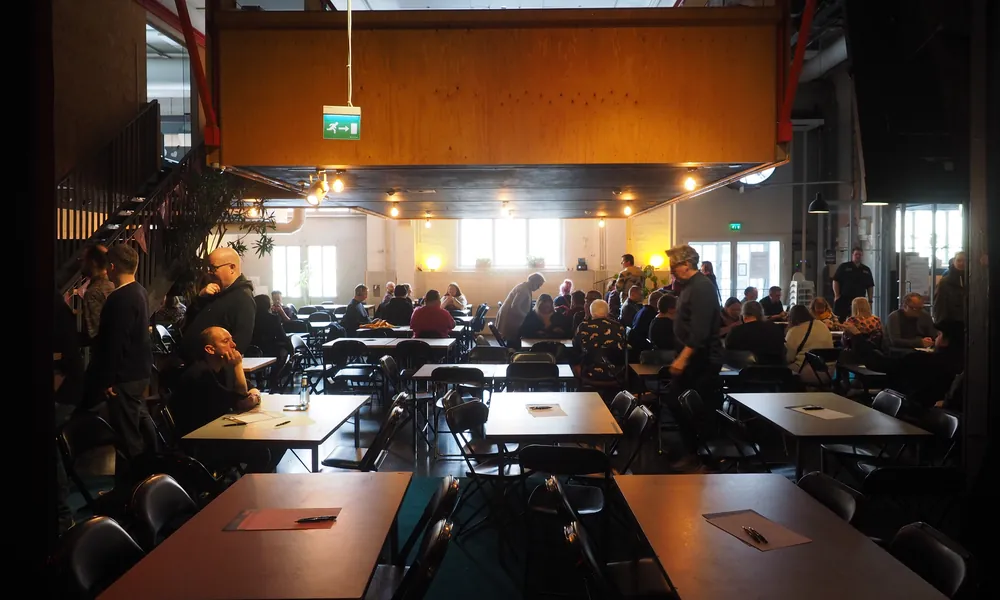
Before you write a single question, draw the room. Mark where the stage goes, where the screen goes, where the sound desk sits, and how the tables are arranged so that every team can see the screen and hear the speakers. Leave wide aisles for the collectors, because the people carrying answer sheets need to move fast between rounds.
Teams of Four to Six
Teams are the unit that makes a 399 player game possible. Everything else is built around them: the tables, the answer sheets, the leaderboard, and the final. Keep team sizes even where you can, and use a simple rule for uneven numbers, such as letting a team of three play with a small bonus point per round.
With 399 players you will have roughly 67 teams of six or close to 100 teams of four. Do not let teams grow past six: in a team of eight or ten, half the players stop talking. Four to six keeps every voice in the game.
The Room and the Sound
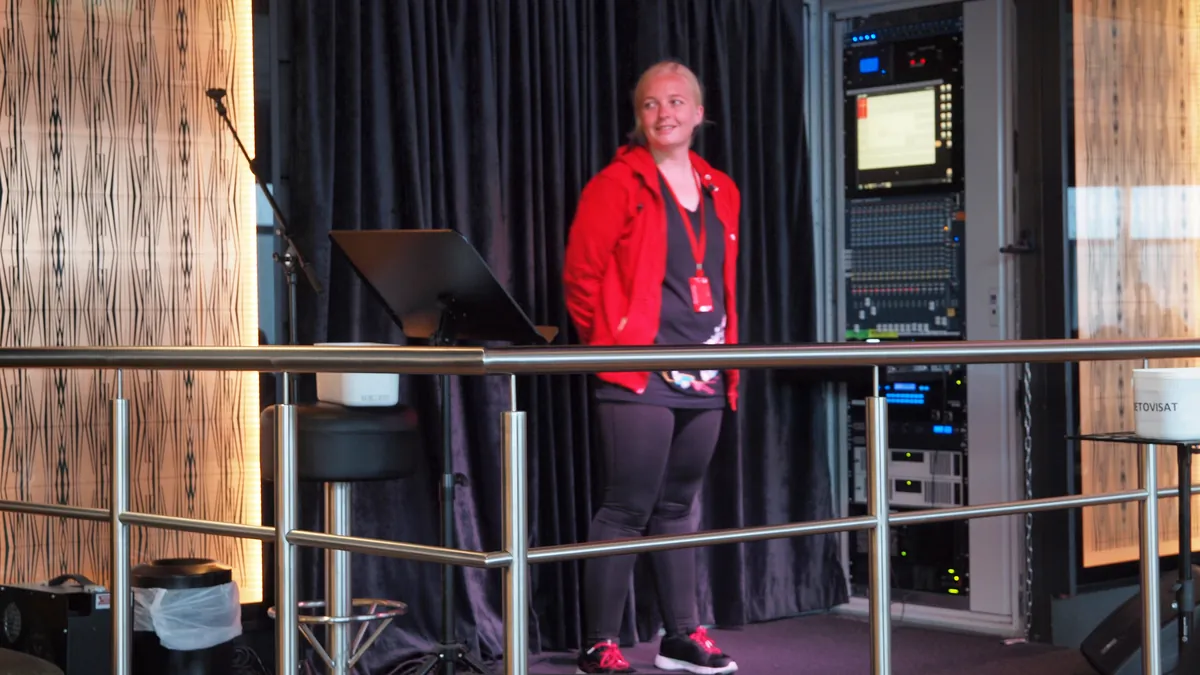
Put the screen high and central so the back tables can read it without craning their necks, and put speakers in the middle of the room as well as at the front. A single pair of speakers at the stage leaves the back half of the hall listening to echoes. Walk the room during the sound check and stand at the worst table.
Keep the stage bright and the tables lit enough to write, but dim the rest of the hall so the screen stays readable. Players who cannot read their answer sheets will guess, and players who cannot see the screen will stop watching it.
Scoring That Stays Fair
Score every round on the spot where you can, and collect sheets in waves rather than all at once. Send collectors down every aisle at the same time, and have two scorers work in parallel so the next round starts while the last one is still being marked.
Announce the top ten after every second round so the middle teams stay in the race. Keep a simple disputes rule and say it out loud before the first question: the host decides, the decision is final, and one point is never worth ten minutes of argument.
The 9 Best Trivia Games for 399 Players
Each game below works for the whole room at once, needs no more than a screen, a sound system, and printed sheets, and can be shortened or stretched to fit your evening. Run three or four of them, not all nine, and let the final bring the best teams together on stage.
1. Team Relay Trivia
In Team Relay Trivia, only one player answers each question, and the answering seat moves around the table after every question. The host reads a question, the player in the hot seat has ten seconds, and then the next player takes over. Nobody can hide, and nobody can dominate, because the whole team has to be ready.
This format shines with 399 players because it is self policing. Strong players cannot answer everything, quiet players get their moment, and the room stays loud. Use it as an opener: ten questions, one per seat, and the hall is awake by question three.
2. Mystery Box Round
In the Mystery Box Round, each team draws a sealed envelope at the start of the round. Inside is a surprise category, from capital cities to famous inventions, and the team does not know what they have drawn until the host counts down. Every team faces a different category, so the room is full of different conversations at the same time.
The surprise is the point. Teams that dread a history round may draw one anyway, and teams that love sport may draw cookery instead. Match difficulty across the envelopes, and let each team swap one envelope per night.
3. Trivia Auction
In Trivia Auction, teams bid points on questions they believe they can answer. The host shows a category and a difficulty level, teams bid in secret, and the highest bidder answers alone. A right answer earns the bid, a wrong answer loses it, and the scoreboard swings wildly in a single round.
Bidding takes seconds and the whole room watches one team at a time. It rewards judgment as much as knowledge: a team that knows its limits will outscore a team that knows more but bids badly. Cap the bids so no team can lose everything on one question.
4. Map and Geography Dash
In the Map and Geography Dash, teams get a blank map and a list of places, and they have three minutes to place as many as they can. Cities, rivers, mountains, and landmarks all count, and the host shows the correct map on the screen when time runs out. It is fast, visual, and completely different from a written question round.
Geography rounds level the field. Players who struggle with dates and names often shine at maps, and the whole team can argue over a single coastline. Print the maps large, give every team a pen, and score one point per correct placement, with a bonus for a perfect map.
5. True or False Lightning Wall
In the True or False Lightning Wall, the host reads a statement and every team holds up a red card for false or a green card for true. The whole room answers at once, the host reveals the answer, and the scoreboard updates in seconds. Twenty statements take about ten minutes, and the pace never drops.
This is the best game for waking a tired room. There is no writing, no collecting, and no waiting, so the energy stays high. Use it in the middle of the night, right after the break, when the room needs a jolt more than another written round.
6. Soundtrack and Slogan Sprint
In the Soundtrack and Slogan Sprint, teams hear five seconds of a song or read half a famous slogan, and they have fifteen seconds to name the song, the artist, or the brand. The clips come fast, the answers come faster, and the room erupts every time a team recognises a tune from the first note.
Music rounds are a crowd favourite, and this sprint version keeps them moving instead of letting them drag. If your crowd loves music, the trivia games for 395 players include a longer music section worth borrowing. Keep the clips short, the volume high, and the scoring instant.
7. Trivia Bingo Cross Over
In Trivia Bingo Cross Over, every team gets a bingo card filled with answers instead of numbers. The host reads questions, and teams mark the square that matches each answer. The first team to complete a row shouts, the host checks the card, and the game continues toward a full house.
Bingo adds luck to knowledge, which is what a long night needs. A team in the middle of the table can win a round they would never win on knowledge alone. Print fresh cards for every round so no team can reuse a lucky layout.
8. Head to Head Duel Ladder
In the Head to Head Duel Ladder, teams are paired off and answer the same five questions at the same time. The winner climbs the ladder, the loser drops down, and after three rounds the top of the ladder holds the strongest teams in the room. It feels like a tournament, but every team plays every round.
Duels work because they give the night a story. Teams follow their rivals up and down the ladder, and the room has something to talk about between rounds. Keep the questions the same for both teams in a pair, and announce the ladder after every round.
9. The Champions Gauntlet Final
The Champions Gauntlet Final brings the top eight teams onto the stage for a series of short elimination rounds. Each round removes the lowest scoring team, the questions get harder, and the last two teams face each other in a single sudden death question. The rest of the room watches, cheers, and plays along on their own sheets.
A good final is a show, not an exam. Keep the questions short, the pauses dramatic, and the host on the stage with the teams. Rehearse it before the night begins, because the final is the part the room will remember.
Compare the 9 Games at a Glance
Use this table to pick the three or four games that fit your room, your crowd, and your evening.
| Game | Players at once | Best moment | What you need |
|---|---|---|---|
| Team Relay Trivia | All 399 | Opening round | Printed sheets, timer |
| Mystery Box Round | All 399 | Surprise categories | Sealed envelopes |
| Trivia Auction | All 399 | Big bid swings | Scoreboard, bid cards |
| Map and Geography Dash | All 399 | Visual players shine | Printed maps, pens |
| True or False Lightning Wall | All 399 | Midnight energy boost | Red and green cards |
| Soundtrack and Slogan Sprint | All 399 | Music and atmosphere | Sound system, clips |
| Trivia Bingo Cross Over | All 399 | Lucky wins | Printed bingo cards |
| Head to Head Duel Ladder | All 399 | Rivalry and story | Ladder board, timer |
| Champions Gauntlet Final | Top 8 teams | The final show | Stage, buzzers, judge |
A Running Order for the Night
Start with Team Relay Trivia to wake the room, follow with the Map and Geography Dash while everyone is fresh, and run the Mystery Box Round before the break so teams have something to argue about over drinks. After the break, use the True or False Lightning Wall to bring the energy back, then the Trivia Auction and the Soundtrack and Slogan Sprint, and finish with the Champions Gauntlet Final on stage.
For the sports round, borrow a ready bank of questions rather than writing fifty fresh ones the night before. A solid set of 100 sports trivia questions with answers gives you a full round in minutes, and you can pick the twenty that fit your crowd. Allow three to four hours for the evening, including two short breaks, and keep every round to twenty minutes or less.
Checklist: Your 399 Player Trivia Night
- Book the hall, the stage, and a public address system with speakers in the middle of the room, and test the sound from the last table.
- Print answer sheets, maps, bingo cards, and bid cards for every team, plus spares for the teams that arrive late.
- Prepare a visible scoreboard and appoint a second checker for the top ten teams before the first question.
- Write or borrow every question in advance, check the answers twice, and keep a spare round ready in case a round runs short.
- Brief your collectors and volunteers on the aisles, the timing, and the disputes rule before the doors open.
- Rehearse the final round on the stage with the lights and the sound, so the ending feels like a show.
Frequently Asked Questions
Can trivia games really work for 399 players?
Yes, if the format is built for a crowd. Split the room into teams of four to six, give every team the same questions at the same time, and score with a visible leaderboard. The games in this guide all work for the whole room at once.
How many teams will 399 players make?
It depends on team size. Teams of six give you about 67 teams, teams of five give you about 80 teams, and teams of four give you close to 100 teams. Four to six is the sweet spot: small enough that every player talks.
How long should a trivia night for 399 players last?
Plan for three to four hours including breaks. That gives you time for five or six rounds, two short breaks, and a stage final without rushing the scoring. Shorter nights feel cramped, because collecting and marking sheets takes longer with a hundred teams.
What equipment do I need for a 399 player trivia night?
A public address system with mid room speakers, a large screen, printed answer sheets, pens, and a visible scoreboard cover most games. Add buzzers for the final and red and green cards for the Lightning Wall. Test everything from the back of the room before the doors open.
How do I keep scoring fair with so many teams?
Score in waves, use two scorers in parallel, and show the top ten after every second round. Keep a second checker for the leading teams and a simple disputes rule: the host decides and the decision is final.
What is the best final for a large trivia night?
A stage final with the top eight teams works best. Short elimination rounds, harder questions, and a sudden death finish turn the ending into a show. Rehearse it in advance and let the crowd play along on their own sheets.
Bottom Line
The best trivia games for 399 players are the ones that treat a huge crowd as a league of small teams, not as a single audience. Pick three or four formats from this guide, mix fast rounds with written rounds, keep the scoring visible, and finish on stage with the best teams in the room. Do that, and 399 players will feel like the best audience a trivia host will ever get.