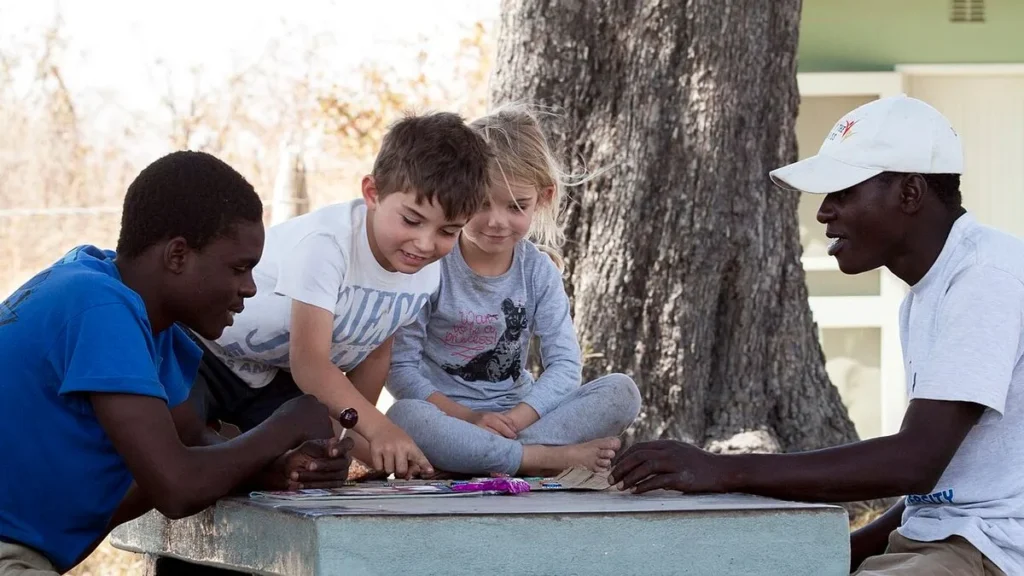
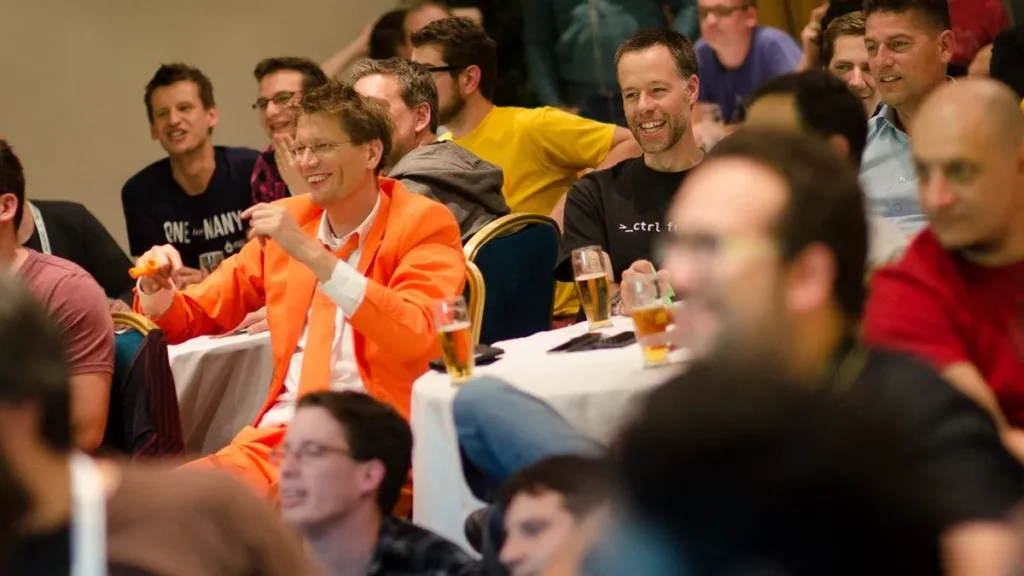
Four hundred and seventy two players in one hall sounds like chaos until the puzzles do the organising for you. Give every team the same nine games, the same clock and the same scoring sheet, and a crowd that size turns into a tidy tournament instead of a queue. Nobody waits long for a turn, nobody needs to learn nine rule books at once, and every team leaves with a result they can compare.
This guide sets out nine puzzle games that genuinely work at this scale. Each one plays in short rounds, needs only cheap and simple equipment, and rewards clear thinking more than fast fingers. Some are quiet table games for two players, some are team logic sheets, and one is a famous probability puzzle that surprises almost everyone who tries it. Together they fill a full day without repeating a single idea.
The plan below covers the games themselves, a simple station layout, a scoring system that fits on one sheet, and a checklist that gets the hall ready before the first team arrives. Our guide to puzzle games for 471 players shows how a group just one player smaller ran the same format, and the lessons from that day shaped the timings used here.
Key Takeaways
- Nine fresh games, each with its own station, so 472 players stay busy all day.
- Short rounds of 10 to 20 minutes keep every team moving and every score close.
- Simple equipment only: boards, tiles, cards, printed sheets and a few tablets.
- One shared scoring sheet per team makes the final standings easy to check.
- A mix of strategy, logic, pattern spotting and probability suits every kind of thinker.
The 9 Puzzle Games at a Glance
Use this table to plan the day. It shows what each game tests, how many players sit at one table, and how long a round lasts.
| Game | What it tests | Players per table | Round length |
|---|---|---|---|
| Quarto Line-Up Challenge | Strategy | Pairs | 15 minutes |
| Azul Pattern Tile Challenge | Pattern building | Four per table | 20 minutes |
| Ticket to Ride Route Challenge | Route building | Two or three per board | 20 minutes |
| Othello Flip Challenge | Tactics | Pairs | 10 minutes |
| Mancala Seed Sowing Challenge | Counting and tactics | Pairs | 10 minutes |
| Match-Three Swap Challenge | Pattern spotting | Four per table | 15 minutes |
| Monty Hall Choice Challenge | Probability | Teams of six | 15 minutes |
| Knights and Knaves Logic Challenge | Logic | Teams of six | 20 minutes |
| Baba Is You Rule Challenge | Rule changing | Teams of four | 20 minutes |
The 9 Puzzle Games for 472 Players
Each game below has its own station. Read the two short paragraphs for each one: the first explains how the game works, and the second explains how it runs with 472 players in the hall.
1. Quarto Line-Up Challenge
Quarto is a quiet duel played with sixteen wooden pieces. Each piece has four traits: tall or short, light or dark, round or square, and solid or hollow. On your turn you hand your opponent the piece they must place, so every move is a small trap. The first player to complete a line of four pieces that share any one trait wins the game.
That twist makes it ideal for a big event. Choosing your rival’s piece is easy to explain in one minute, yet the game stays tense until the last move. Set up one board per station with two players per board and a printed reminder of the four traits. Losers step aside and winners stay on, so a ladder forms naturally and the strongest players meet in the later rounds.
2. Azul Pattern Tile Challenge
Azul is a tile drafting game about building a beautiful wall. Players take coloured tiles from shared factory displays and place them on a five by five pattern board. Completing a row, a column or a set of one colour earns points, while tiles that do not fit drop to the floor and cost points at the end of the round.
It works at scale because the pieces are large, bright and easy to read from across a table, and a full game takes about twenty minutes. Give each table of four one set and a score pad. Teams rotate through the Azul station in fours, and the table winner banks the points for their team. The game rewards planning ahead without punishing new players, so mixed groups enjoy it together.
3. Ticket to Ride Route Challenge
Ticket to Ride asks players to claim railway routes across a map. You collect coloured train cards, spend them to claim a route between two cities, and score points for every route you complete. Secret destination tickets add bonus points if you connect the two cities named, and the longest continuous route earns a bonus at the end.
For 472 players, run short games with two or three players per board and a fixed twenty minute timer. When the timer ends, the player with the most points wins the board. The map is big and colourful, which makes the station easy to spot from the far side of the hall. Teams send their best route planner first, then rotate a fresh player in for the next round.
4. Othello Flip Challenge
Othello is played on an eight by eight board with black and white discs. On your turn you place a disc so that it traps a line of your opponent’s discs between two of your own, and every trapped disc flips to your colour. The board can swing wildly in a single move, and the player with the most discs showing at the end wins.
Rounds take only ten minutes, which makes Othello the fastest station in the whole day. That speed is useful: it clears queues, gives waiting teams something quick to play, and produces plenty of results for the scoreboard. Place one board per pair and a simple diagram showing the opening four discs. New players learn the rules in two minutes and are competitive within their first game.
5. Mancala Seed Sowing Challenge
Mancala is one of the oldest board games in the world. Each player owns six small pits and a store. On your turn you pick up all the seeds from one of your pits and sow them one by one around the board. Seeds that land in your store stay there, and clever sowing lets you capture your opponent’s seeds. The player with the most seeds at the end wins.
The game needs nothing more than a board and a bag of seeds or beads, so it is the cheapest station to set up and the easiest to replace if a set goes missing. Games last about ten minutes and the rules fit on a single card. Because the moves are calm and countable, Mancala gives quieter players a station where steady thinking beats quick talking.

6. Match-Three Swap Challenge
In a match-three game, players swap two neighbouring tiles to line up three or more of the same colour or shape. Each match clears those tiles and scores points, and longer chains earn bigger bonuses. The board keeps changing, so the best move is rarely the first one you notice.
For the hall version, use printed grids and coloured counters instead of screens, so every table plays the same board and nobody needs a device. Teams of four take turns calling the next swap, and the table scores together against a target. Fifteen minutes per round is enough for two full boards. The game suits players who love spotting patterns quickly, and it is easy for a steward to check the score.
7. Monty Hall Choice Challenge
The Monty Hall puzzle starts with three doors. One hides a prize and the other two hide nothing. A player picks a door, the host opens a different door to show it is empty, and then the player must choose: stay with the first door or switch to the other one. Switching wins two times out of three, which surprises almost everyone the first time they hear it.
At the station, teams play twenty quick rounds with cards instead of doors and record every result. Half the team always stays and half always switches, then the group compares the totals. The numbers on the sheet prove the point better than any speech. Fifteen minutes is enough for the full experiment, and the result gives teams something to argue about happily for the rest of the day.
8. Knights and Knaves Logic Challenge
On the island of knights and knaves, knights always tell the truth and knaves always lie. Each puzzle gives a few islanders and a few statements, and the team must work out who is a knight and who is a knave. A single statement can unlock the whole puzzle, or send the team down a dead end for ten minutes.
This is the written station of the day. Teams of six share a puzzle sheet, a pencil and twenty minutes. The puzzles get harder across the three sheets, so every team finishes the first and only the sharpest finish the third. Marking is quick because each sheet has one clear answer. It is the best test of careful reading and calm reasoning in the whole set, and it needs no equipment at all.
9. Baba Is You Rule Challenge
Baba Is You is a puzzle game where the rules are blocks you can push. A level might say that walls stop you and a flag is the goal. Push the words around and the rules change: walls can become passable, the flag can become you, and the goal can move. Every level is solved by rewriting the rules, not by finding a hidden key.
Run it on shared screens with teams of four gathered around each one. Twenty minutes is enough for three or four levels, and the team must agree on each move before anyone touches the controls. It is the most talked about station every year, because the moment a team realises they can change the rules is the moment the whole game clicks.
The variety matters. A day built only from word games or number grids would tire half the hall, but these nine games cover strategy, pattern, routes, tactics, counting, probability, logic and rule play. If your group also enjoys the older formats, the guide to puzzle games for 466 players is a useful companion for planning the next event.
How to Run the Day
Split the 472 players into 59 teams of eight. Each team sends two players to the pair stations, four to the table stations and six to the team stations, so every game runs at the same time. Colour code the teams with wristbands and give each team a scoring sheet with their colour and number printed at the top.
Lay the nine stations out in a loop around the hall with the quiet written games at one end and the lively board games at the other. A station steward stands at each game, explains the rules in under a minute, starts the timer and records the result. Rounds last ten to twenty minutes, and teams move to the next station when the bell rings.
Score each station the same way: the winning player or team earns ten points, second place earns six, third earns three and every team that finishes earns one point for taking part. The system follows the one used for puzzle games for 470 players, so stewards who ran that day will already know it. Add the nine station scores together for the final table. A single volunteer with a laptop can keep the leaderboard updated, and the hall screen shows the top ten teams after every round.
Plan for a lunch break after the fifth station and a short pause between rounds for water and fresh air. Keep spare sets of every game in a box by the door, because a lost piece should never stop a station. A ten minute briefing before the first round, with one steward demonstrating each game on the hall screen, saves an hour of questions later.
Setup Checklist
Work through this list the day before the event, and tick each item off as it is packed or put in place.
- Fifty nine team wristbands in nine colours, plus a printed scoring sheet for every team.
- One full set of each of the nine games, plus a spare set for the three most played stations.
- Nine station signs, nine timers, and a loud bell or whistle for the changeover.
- A leaderboard screen or whiteboard, a laptop, and a volunteer to update the scores.
- Printed rule cards for every station, written in large type so stewards can read them at a glance.
- Water, seating for 472 players, a first aid kit, and a clear plan for the lunch break.
Frequently Asked Questions
Do players need to know these games before the day?
No. Every station has a steward who explains the rules in under a minute, and each game has a printed rule card on the table. The games were chosen because new players can enjoy them straight away. Teams that arrive early can try a practice round, but it is not required.
How do 472 players fit into teams?
The hall works best with 59 teams of eight. Each team splits across the stations: pairs go to the two player games, fours go to the table games and sixes go to the team games. Nobody sits out, because every station runs at the same time and every team has a game to play in every round.
How long does the whole day take?
Plan for about six hours including the briefing, the lunch break and the final ceremony. The nine rounds take around three hours, with short pauses between them. If the day must be shorter, drop the longest two stations and run seven rounds instead of nine.
Do we need one big hall, or can we split across rooms?
One big hall works best, because teams can see the leaderboard and the bell reaches everyone. If the group must split, keep the pair games in one room and the team games in another, and give each room its own steward team and its own bell. The scoring sheet must be the same in both rooms.
What if a team has never played one of the nine formats?
That is normal and the day is built for it. The stewards demonstrate each game before the round starts, and the first round is scored lightly so new teams are not punished for learning. By the second round, every team knows what to do, and the scores tighten up quickly.
What should the winning team receive?
Keep the prize simple and shared: a trophy for the team, a small medal for each player, and the honour of choosing the first station at the next event. Announce the top three teams and the best score at each station, so more teams go home with something to celebrate.
The Bottom Line
Nine games, one hall, 472 players and a single scoring sheet: that is the whole plan. Keep the rounds short, the rules simple and the stations moving, and the day runs itself. The team that wins will be the one that thinks clearly across all nine games, not the one that is best at just one of them.