Best puzzle games for 238 players turn a very large crowd into one shared challenge, and the best puzzle games for 238 players work when every person has a clear job, a visible goal, and a way to contribute without waiting for a turn. A group of 238 people is larger than most classrooms, larger than many wedding receptions, and larger than a full lecture hall, so a single puzzle on a single table will never work. The solution is scale through teams, stations, and parallel puzzles that all feed into one final result.
When 238 players gather for a puzzle event, the energy in the room depends on structure. If only a few people can touch the pieces, the rest will drift away, check their phones, and lose interest within minutes. If every team has its own puzzle, its own table, and its own score sheet, the room stays busy, noisy in a good way, and full of people who feel useful. The best events feel like a festival of small puzzles rather than one long wait.
This guide covers the puzzle games that scale best, the formats that keep 238 players involved at the same time, and the practical steps that make a large puzzle event run smoothly from the first clue to the final score. You will find a comparison table, a planning checklist, and answers to the questions that organizers ask most often when they plan an event of this size.
Key takeaways
- Split 238 players into teams of 6 to 10 people so every player has a real job.
- Use parallel puzzles at stations so no team waits for another team to finish.
- Mix puzzle types so word lovers, picture lovers, and logic lovers all shine.
- Score progress in small steps so teams stay motivated from start to finish.
- Plan the room, the materials, and the timing before you plan the puzzles.

How to Run Puzzle Games for a Very Large Group
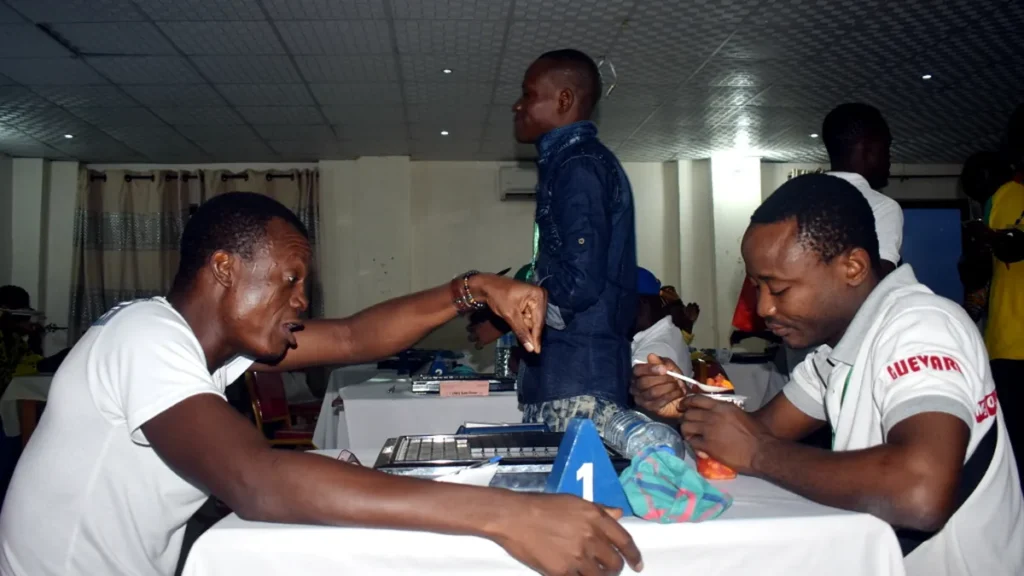
A group of 238 players needs a format that works in parallel. The simplest format is team stations. Set up 24 to 34 stations around a large hall, place one team at each station, and give every team the same set of puzzles or a different puzzle of equal difficulty. Teams work at the same time, and a central scoreboard shows progress as teams finish each round. This format keeps the whole room active and makes the event easy to watch and easy to judge.
For a slightly smaller crowd, the ideas in the best puzzle games for 237 players use the same team station format, and most of the planning steps transfer directly to a group of 238. The only real change is one extra player, which usually means one team grows by a single member or one new team forms with players from several other teams.
Best Puzzle Games for 238 Players at a Glance
The table below compares the puzzle formats that scale best for 238 players. Use it to pick a mix that suits your room, your budget, and the age and interests of your players. A strong event usually includes at least three different formats, so that a team that struggles with word puzzles can recover with picture puzzles or logic puzzles in the next round.
| Game Format | Players at Once | Best For | Setup Time | Difficulty |
|---|---|---|---|---|
| Jigsaw team race | All 238 players | Families and mixed ages | 30 minutes | Easy to medium |
| Logic puzzle stations | All 238 players | Thinkers and problem solvers | 45 minutes | Medium to hard |
| Word puzzle relay | All 238 players | Word lovers and fast teams | 20 minutes | Easy to medium |
| Picture and pattern hunt | All 238 players | Visual players and children | 25 minutes | Easy |
| Escape style puzzle chain | All 238 players | Teenagers and adults | 60 minutes | Medium to hard |
| Digital puzzle quiz | All 238 players | Large halls and schools | 15 minutes | Easy to medium |
Jigsaw and Table Puzzles
Jigsaw puzzles are the most reliable choice for a very large group because the rules are clear, the materials are cheap, and players of all ages can join in without learning a new game. Give each team a puzzle of 100 to 300 pieces, with the same picture or a picture of the same difficulty for every team, and set a time limit of 15 to 20 minutes. Teams that finish early can help with a bonus puzzle or sort pieces for the next round.
The key to a fair jigsaw race is equal difficulty. Puzzles with large areas of plain sky or plain water take much longer than puzzles with clear colours and clear shapes, even when the piece count is the same. Test every puzzle in advance with a small group, and time how long each puzzle takes. If one puzzle takes twice as long as the others, swap it for a puzzle with more colour variation and more distinct regions.
Logic and Word Puzzles
Logic puzzles work well at stations because they need little equipment and they reward careful thinking rather than speed alone. Classic choices include Sudoku grids, logic grid puzzles, number sequences, and simple code breaking puzzles where letters shift by a fixed number of places. Print each puzzle on a large sheet, give each team a pencil and an answer sheet, and ask teams to submit one answer per puzzle.
Word puzzles add variety and give strong readers a chance to lead their team. Crosswords, word searches, anagrams, and word ladders all work in a team format. For 238 players, choose word puzzles with a clear theme, such as animals, food, travel, or music, so that every team starts with some useful knowledge. Avoid puzzles that depend on rare words or local slang, because those puzzles favour a few players and frustrate the rest.
Picture and Pattern Puzzles
Picture puzzles are ideal for mixed age groups because they need no reading and no maths. Spot the difference sheets, hidden object pictures, pattern sequences, and tangram shapes all work well. Print picture puzzles in large format so that several players can look at the same sheet at the same time, and use colour printing where possible, because colour makes patterns easier to see and more enjoyable to solve.
Pattern puzzles also work well as a fast round between harder rounds. A five minute round of pattern matching gives teams a quick win, lifts the mood after a hard logic round, and keeps the scoreboard moving. Use simple patterns for the first round and harder patterns later, so that teams build confidence before they face the hardest puzzles of the day.
Team Relay Puzzles
Relay puzzles add movement and teamwork to a puzzle event, and they work well when you have space for teams to walk between stations. In a relay, each team member solves one short puzzle at a station and brings the answer back to the team. The team then uses all the answers together to solve a final puzzle. A relay of six short puzzles takes about 15 minutes per team and keeps every member involved.
The best relay puzzles are short, clear, and quick to check. A riddle with one clear answer, a three letter code, a simple maths question, or a picture clue all work well. Avoid puzzles that need long explanations or puzzles where the answer is a matter of opinion, because those puzzles slow the relay and cause arguments at the checking table. Every relay station needs a volunteer who can check answers quickly and hand out the next clue without delay.
Digital and Screen Puzzles
Digital puzzles solve one of the hardest problems in a large event, which is scoring 238 answers quickly and fairly. With a quiz app, a shared screen, or a simple online form, teams can submit answers from a phone or a tablet, and the scoreboard updates at once. Digital puzzles work well for trivia style puzzles, multiple choice logic questions, picture rounds, and timed word puzzles.
Before you rely on digital puzzles, test the internet connection in the room, test the quiz on several different phones, and prepare a paper backup for every round. A quiz that fails halfway through a round can spoil an event, so keep paper answer sheets ready and keep a volunteer at each table who can collect answers by hand if the connection drops. A simple backup plan turns a technical problem into a short pause rather than a ruined event.
Digital puzzles also help when players are spread across more than one room. Teams in different rooms can answer the same questions at the same time, and the central scoreboard can show results from every room at once. This format works well for schools with several classrooms, for companies with more than one office floor, and for community events where the main hall cannot hold all 238 players at once. The ideas in the best puzzle games for 236 players include a similar multi room format, and the same backup plan applies there too.
Memory and Matching Puzzles
Memory and matching puzzles test attention and teamwork, and they are easy to run for a large group. Classic choices include matching pairs cards, sequence recall games, and picture memory trays where teams study a tray of objects for one minute and then list as many objects as they can remember. These games need little preparation, and they work well as a warm up round at the start of an event.
Matching puzzles also work well for teams with mixed ages, because younger players often have strong visual memory and can contribute as much as older players. A matching round gives every team a fair chance to score, and it balances the event when other rounds favour older players or stronger readers. Keep matching rounds short, because memory games become tiring if they run for too long.
How to Organise 238 Players Without Chaos
Organisation starts with teams. Aim for 24 to 34 teams of 7 to 10 players, and name each team with a colour, an animal, or a simple number so that volunteers can direct teams quickly. Print team lists in advance, place team names on tables, and give each team a captain who collects answer sheets, checks the scoreboard, and asks volunteers for help. A clear captain saves time, because volunteers deal with one person per team instead of 238 separate questions.
Materials matter more than most organisers expect. Prepare one full set of puzzles, pencils, answer sheets, and score cards for every team, plus spare sets for the teams that lose a pencil or spill a drink. Count every set before the event, label every set with a team name, and place the sets on tables before players arrive. A team that starts with missing materials will fall behind in the first round and may never catch up.
Volunteers make the difference between a smooth event and a chaotic one. You need at least one volunteer per four teams, plus a host who explains the rules, a scorekeeper who updates the scoreboard, and a timekeeper who calls the start and end of every round. Brief every volunteer before the event, give each volunteer a written schedule, and give each volunteer a clear area to cover. Volunteers who know their job can solve small problems before those problems reach the host.
Scoring That Keeps Everyone Involved
Scoring should reward progress, not only perfect answers. Award points for each puzzle solved, partial points for a puzzle that is nearly complete, and bonus points for teamwork, such as a team that helps another team or a team that finishes a round early and tidy. Partial points keep teams motivated, because a team that is struggling still earns points and still has a reason to keep trying in the next round.
Offer more than one prize. A prize for the highest score, a prize for the best team name, a prize for the best teamwork, and a prize for the most improved team give more teams a reason to stay engaged until the end. Small prizes, such as puzzle books, board games, or certificates, work well and keep the focus on fun rather than competition. For more team game ideas that use the same scoring style, the best board games for 236 players guide shows how board game events handle large groups with shared scoreboards and multiple prizes.
Checklist for a 238 Player Puzzle Event
Use this checklist in the week before your event, and tick each item as you complete it. A short checklist prevents the small mistakes that cause the biggest delays on the day.
- Confirm the final player count, form 24 to 34 teams, and print a team list for every volunteer.
- Choose at least three puzzle formats from the table above and test every puzzle in advance.
- Prepare one full puzzle set per team, plus spare pencils, answer sheets, and score cards.
- Book a hall with wide paths between tables, a visible scoreboard, and a central checking table.
- Brief volunteers, the host, the scorekeeper, and the timekeeper, and share a written schedule.
- Prepare a paper backup for every digital round and a clear plan for the final scores and prizes.
Frequently Asked Questions
How many teams should 238 players form?
Form 24 to 34 teams of 7 to 10 players. Teams of this size are large enough to share ideas and small enough for every member to speak and contribute. Teams smaller than six players struggle with parallel puzzles, and teams larger than ten players leave some members with little to do. If your player count changes on the day, move one or two players between teams rather than remaking all the teams.
How long does a puzzle event for 238 players take?
Plan for 90 minutes to two hours, including welcome time, instructions, four to six puzzle rounds, and a closing ceremony. Each puzzle round should last 10 to 15 minutes, with short breaks between rounds for scoring and movement. Events shorter than one hour feel rushed for a group this large, and events longer than two hours tire players who are standing or moving between stations.
What is the best puzzle for a mixed age group?
Jigsaw puzzles and picture puzzles work best for mixed age groups because they need no reading and no special knowledge. Add a logic puzzle and a word puzzle in later rounds so that older players and stronger readers also have a chance to lead. A mix of three or four puzzle types gives every age group a round where it can shine, and it keeps the event fair for families with children and adults playing together.
Do we need a large budget for 238 players?
No, a puzzle event for 238 players can run on a modest budget. Printed puzzles, pencils, and answer sheets cost little, and many jigsaw puzzles can be borrowed or reused. The main costs are the venue, printing, and small prizes. Digital puzzles can reduce printing costs, but they need a reliable connection and a paper backup. Start with the puzzles you already own, and add new materials only where they improve the event.
How do we stop one strong player from doing all the work?
Use parallel puzzles, paired puzzles, and relay formats so that the team needs more than one answer to score. Give each team member a role, such as reader, sorter, checker, or timekeeper, and rotate roles between rounds. Award partial points for progress, so that the whole team earns points together. Teams that share the work will score more steadily than teams that rely on one strong player.
What should we do if a puzzle is too hard for most teams?
Offer a hint after five minutes, and offer a second hint after ten minutes. Hints cost a small number of points, so teams can choose between a hint and a lower score. If most teams are still stuck, stop the round early, explain the solution, and move to the next puzzle. A puzzle that frustrates most teams hurts the event more than a short round, so keep the pace moving and save hard puzzles for the final round.
Bottom Line
Best puzzle games for 238 players succeed when the event is built for parallel play, fair scoring, and a mix of puzzle types that gives every player a chance to contribute. Split the crowd into teams of 7 to 10 players, run short rounds at stations, test every puzzle in advance, and keep the scoreboard visible so that every team can see its progress. Plan the room, the materials, and the volunteers with the same care that you plan the puzzles, and the event will run smoothly from the first clue to the final prize. A large puzzle event works best when it feels like a shared challenge, not a contest between a few strong players, and when every team leaves with a puzzle solved, a story to tell, and a reason to play again.