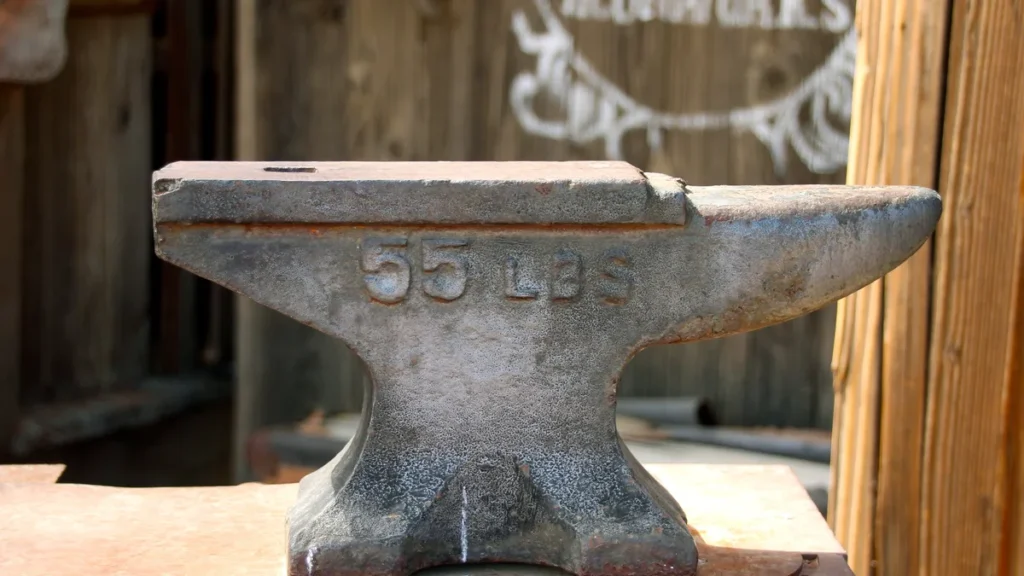
Five hundred and eight players, one forge theme, and a pocketful of dice. That sounds like a dare, not a party plan, until you remember how big group dice nights really work. Nobody gathers 508 people around a single table. Instead the room breaks into small tables, every table plays the same short game at the same time, and a shared clock keeps the whole evening moving as one event.
The forge theme is the secret ingredient. Every game below borrows its name and its spirit from the blacksmith shop: ringing anvils, glowing fires, bellows, coal, sparks, tongs, quenching water, ember beds, and the closing bell. The theme gives every table something to laugh about, and it gives the host a ready made way to decorate, name the teams, and hand out prizes that cost almost nothing. Players do not need to know anything about smithing to play, and the dice do all the heavy lifting.
This guide gives you nine fresh games, a table plan that fits a hall of any size, and a checklist that keeps the evening on track. Each game takes about ten minutes, uses one or two dice per table, and works for players of every age. Set up the tables, hand out the dice, and let the sparks fly.
Key Takeaways
- Split 508 players into tables of four to six, and run every table on the same short round.
- Give every table one or two dice, a score sheet, and a clear job, so nobody waits around.
- Keep each game to about ten minutes, then rotate tables on a single signal.
- Use the forge theme for team names, prizes, and decorations, so the evening feels like one event.
- Finish with a short final round for the top tables, then add up the scores together.
How 508 Players Actually Play Together
The maths is friendlier than it looks. With tables of five, 508 players need about 102 tables. With tables of six, the number drops to about 85. A school hall, a community centre, or a church hall with long tables can hold that many if the tables are set in rows and the aisles stay clear. If the room is smaller, run the evening in two sittings, with half the players starting while the other half watches, cheers, and learns the games.
Every round works the same way. The host explains one game, every table plays it for ten minutes, and a bell or a whistle ends the round. Scores go on a sheet at each table, and a runner collects the sheets while the next game is explained. Because every table plays the same game at the same time, the room stays together, and nobody feels left behind. The dice games for 507 players use the same table rotation, so a crew that played that night will already know the rhythm.
You do not need fancy equipment. A bag of standard six sided dice, printed score sheets, pens, and a loud timer are enough. One die per table is the minimum, two dice per table is better, and a spare box of dice at the host table covers the ones that roll under furniture. Keep the rules short, demo each game once at the front, and let the tables teach each other after the first round.
| Game | Players per table | Minutes | Dice per table |
|---|---|---|---|
| Dice Anvil Ring | 4 to 6 | 10 | 1 |
| Dice Forge Fire | 4 to 6 | 10 | 2 |
| Dice Bellows Blast | 4 to 6 | 10 | 1 |
| Dice Coal Shovel | 4 to 6 | 10 | 2 |
| Dice Spark Shower | 4 to 6 | 10 | 1 |
| Dice Tongs Grip | 4 to 6 | 10 | 2 |
| Dice Metal Quench | 4 to 6 | 10 | 1 |
| Dice Ember Bed | 4 to 6 | 10 | 2 |
| Dice Forge Bell | 4 to 6 | 10 | 1 |
The 9 Forge Dice Games
1. Dice Anvil Ring
Dice Anvil Ring is the easiest game to teach, which is why it opens the evening. Each player has an anvil that starts silent, and every roll helps it ring. Roll a two, three, four, five, or six, and your anvil gains that many rings on the score sheet. Roll a one, and the strike misses, so you lose one ring. The first player to reach twelve rings calls out that the anvil is singing, and the table cheers.
Keep the pace brisk by passing a single die around the table, so every player rolls in turn and nobody hogs the action. Younger players love watching their rings add up, and older players enjoy the small risk of the dreaded one. If two players reach twelve on the same round, they roll off with one die each, and the higher roll takes the table point.
2. Dice Forge Fire
Dice Forge Fire turns two dice into a fire that needs stoking. Each player starts with a cold forge, and on a turn they roll both dice and add the total to their fire as heat. The target is forty heat, and the first player to reach it exactly wins the round. Overshoot the target, and the fire flares out of control, so you drop back to thirty heat and keep going.
The flare rule keeps every table close, because a leader can tumble back just when victory looks certain. Players start calling out their totals like smiths feeding a fire, and the table soon works out which rolls are safe and which are risky. Play three short rounds, and give one table point to the winner of each round.
3. Dice Bellows Blast
Dice Bellows Blast is a covering game played on a small grid that the host prints on each score sheet. The grid has twelve squares, and a roll tells a player how many squares they can blast air across. Roll a six, and you cover six squares in a row. Roll a one, and you cover a single square, so progress feels slow but steady.
The twist is that a player may not cover a square that is already blasted, so the grid fills up fast and the last few squares become a race. The first player to blast all twelve squares wins, and ties are settled by a single roll each. The dice games for 506 players include a similar race to the finish, so returning players will settle into this one quickly.
4. Dice Coal Shovel
Dice Coal Shovel is a loading game where every roll adds coal to a scuttle. Each player has six loads to fill, and a roll of two, three, or four fills that many loads with one shovel each. A roll of five or six is a heaped shovel, so it fills two loads at once, and the player marks them with a star. A roll of one is a dropped shovel, so nothing gets loaded that turn.
Because the heaped shovel can change the game in a single roll, no lead is ever safe, and the table stays loud until the last load is filled. The first player to fill all six loads wins the table point. For a longer game, play with nine loads instead of six, and let the winner be the first to fill the whole scuttle.
5. Dice Spark Shower
Dice Spark Shower is a scattering race. Each player starts with a calm forge worth ten points of stillness, and every roll sends sparks flying. An even roll scatters sparks by the number shown, so a six is a great result. An odd roll is a dull strike, so the sparks fade by one point, and the player groans while the table laughs.
The mix of bright scattering and dull strikes means the game swings back and forth, and a player who looks beaten can still win with two strong even rolls. The first player to scatter their sparks to zero stillness wins. Play it as a quick two minute warm up between longer games, or run three rounds in a row and crown the table champion.
6. Dice Tongs Grip
Dice Tongs Grip is a holding race where the numbers must come in order. Each player needs to roll one, then two, then three, all the way up to six, and each correct roll grips one more piece of hot metal. Roll the wrong number, and the grip slips, so the player stays where they are and passes the die on. The first player to grip all six pieces wins the table point.
The game sounds easy until the die refuses to cooperate, and the player stuck on five while a neighbour grips their sixth piece is a familiar sight. Because only one die is needed, this game works well at crowded tables, and it is a good choice for the final round when the room is tired and wants something simple. Let the winner keep the die as a small prize.
7. Dice Metal Quench
Dice Metal Quench is a cooling game with a hissing twist. Each roll adds drops of water to a quench barrel, and the player who gathers twenty drops first cools the best blade. A roll of six is a full splash, worth double, so it adds twelve drops in one go. A roll of one is a dry dip, so it adds nothing, and the player must wait for the next turn.
The full splash rule means a player at the back can leap forward in a single roll, which keeps every table in the game until the end. Score the game over three rounds, and give the table point to the player with the most round wins. Younger players enjoy shouting out full splash, and the host can hand out a small metal token as the prize.
8. Dice Ember Bed
Dice Ember Bed is a tending game that turns rolling into steady work. Each player needs thirty tends to keep their ember bed glowing, and a roll tells them how many tends to add. Roll a four, and you tend four times, counting aloud so the table can follow along. Roll a six, and you tend six times, which feels like real progress.
The counting aloud is the heart of the game, because the whole table joins in and the room fills with a steady beat. If a player rolls a one, the bed cools, so they lose two tends and the table groans in sympathy. The first player to reach thirty tends wins, and the host can time the round to see which table finishes fastest.
9. Dice Forge Bell
Dice Forge Bell is a finishing game that closes the evening with a ring. Each player runs a forge with six jobs to finish, and a roll tells them how many jobs to complete. Roll a three, and three jobs are done and the bell rings softly. Roll a six, and the whole list clears at once, which brings a cheer from the table.
The catch is the late order rule: a roll of one means the next customer arrived before the work was ready, so the player finishes nothing that turn. The first player to finish all six jobs wins the table point and the title of master smith. Play it last, because it is fast, loud, and sends everyone home smiling.
Your Forge Night Checklist
Run through this list before the first roll, and the evening will take care of itself.
- Count the dice and the score sheets, and set one spare die at every tenth table.
- Print the bellows grid for Dice Bellows Blast and the load sheet for Dice Coal Shovel.
- Set the timer where every table can hear it, and agree on the signal for rotating.
- Name the tables after forge tools, such as anvils, tongs, bellows, and embers.
- Pick small prizes, such as a metal token, a paper smith hat, or a shiny pebble, for each table winner.
- Choose a runner for every row, so score sheets reach the host table without delay.
Frequently Asked Questions
How do 508 players all play at once?
They play in small groups at the same time. Split the room into tables of four to six, give every table the same game, and run each round on a shared timer. The host explains the game once, every table plays it, and a signal ends the round. Nobody waits for a turn at a single giant table, and the whole room moves together.
How many dice do we need for the whole night?
Plan on two dice per table, plus a spare box at the host table. With tables of five, that means about 204 dice for the room, and with tables of six, about 170 dice. Standard six sided dice are cheap in bulk, and borrowing a few sets from regular players covers any shortfall. Keep the spare box handy, because dice roll under furniture.
Can children play these forge dice games alongside adults?
Yes, and they often win. Every game uses simple counting and a single clear goal, so a child of seven or eight can play without help after the first demo. Seat children with an adult at first, let them roll the die themselves, and watch their confidence grow as the evening goes on. The games are gentle, quick, and free of tricky rules.
What if we do not have a hall with 100 tables?
Run the evening in two sittings instead. Half the players take the first sitting while the other half watches and learns the games, then swap over. You can also run the games outdoors in a yard or a park, using folding tables and blankets, as long as the dice have a tray or a box lid to roll in. The dice games for 505 players work the same way in a smaller room.
How long does the full rotation take?
About two hours from the first roll to the final scores. Nine games at ten minutes each take ninety minutes, and the breaks between games add about twenty minutes. Add ten minutes at the start for seating and explaining the plan, and finish with a short final round for the top tables. Keep the breaks short, and the energy stays high.
Do players need to know anything about smithing first?
No, and that is part of the fun. The forge theme is only a flavour: the games are simple dice games that anyone can learn in a minute. Players who have never struck an anvil in their lives will still enjoy rolling for anvil rings and bellows grids, and the theme gives the evening a warm glow of firelight without any real forging at all.
The Bottom Line
Five hundred and eight players sounds impossible until the tables are set and the first die rolls. Nine short forge games, a shared timer, and a room full of small tables turn a huge crowd into one lively evening. The dice keep every game fair, the theme keeps every table smiling, and the checklist keeps the host calm.
Set the tables, hand out the dice, and start with Dice Anvil Ring. By the time the last forge bell rings, the room will be asking when the next forge night begins.